
Why Travellers Choose Hostels Over Hotels
Something has shifted in how people think about travel accommodation. It used to be that budget travellers stayed in hostels because they couldn’t afford anything else, and hotels were the default for everyone who could. That framing no longer reflects reality.
62% of global budget travellers now actively choose hostels over budget hotels, and that number is growing. The choice is increasingly deliberate: travellers across every age group are picking hostels not as a compromise but as a preference. The beds are cleaner, the social environments are richer, the locations are smarter, and the experience of actually meeting people and exploring a city with others is simply not available at a Hilton.
This is not just a price argument. It’s a travel philosophy argument. Hostels offer something that hotels fundamentally cannot: a built-in community of people going the same direction you are, open to exactly the kind of spontaneous connection that makes travel worth talking about.
Here’s why travellers are choosing hostels over hotels in 2026, and why the trend is accelerating.

💸 The Price Difference Is Bigger Than You Think
The most obvious reason is cost, and the numbers are significant enough to change what’s possible on a trip entirely.
A hostel dorm bed in most European cities costs €15-30 per night. A budget hotel in the same city costs €80-150. That gap, compounding over a two-week trip, is the difference between flying home when planned and extending by a week. It’s the difference between eating at local restaurants every night and watching your budget anxiously. It’s the difference between doing the day trip and skipping it.
Instead of spending your whole budget on one expensive hotel room, you could fund a full week’s stay in a hostel and redirect the savings into memorable experiences: tours, local food, activities, extra nights. That’s the real case for cheap hostel accommodation over hotels. It’s not just that you pay less. It’s that you travel more.
Hostel private rooms change the equation further. Many top-rated hostels on Hostelworld now offer private rooms at prices that undercut budget hotels, while still giving guests access to the social infrastructure, communal kitchen, events, and common areas that make hostel stays so distinctive. You get the cost savings of a hostel and the privacy of a hotel room.

🤝 Meeting People: The Thing Hotels Simply Cannot Offer
This is the reason that comes up most consistently when travellers explain why they prefer hostels to hotels. Not the price. The people.
A hotel puts you in a room. It gives you a bed, a bathroom, a TV, and breakfast if you pay for it. It is designed, intentionally, for privacy and separation. The lobby is a pass-through. The other guests are strangers you share an elevator with and nothing else. Hotels are not built for connection. That’s not a criticism. It’s a design choice. But it’s a choice that costs you something.
A good social hostel is designed around the opposite principle. The communal kitchen is where you end up talking to someone who’s been travelling for three months and knows exactly which market to go to. The common room is where tomorrow’s plans form. The rooftop terrace is where someone who just got back from the thing you’re thinking of doing tells you whether it’s worth it.
Solo travellers understand this most clearly. A solo traveller in a hotel is alone in their room. A solo traveller in a social hostel is almost never alone unless they choose to be. The infrastructure of connection: common areas, events, shared meals, organised activities, makes meeting people the default rather than the exception.

📱 The Hostelworld App: Social Travel Starts Before You Arrive
One of the most underappreciated advantages of booking a hostel through Hostelworld is that the social experience starts before check-in, not after. No hotel booking platform offers anything close to this.
When you book any hostel on Hostelworld, you immediately get access to two powerful chat features:
Hostel Chat connects you with other guests staying at your specific hostel, joinable 48 hours before check-in. By the time you arrive, you can already know who else is checking in that day, what plans are forming, and whether anyone wants to explore together. You arrive knowing people. That changes everything.
City Chat connects you with travellers staying at any hostel in the same city. Not just yours. All of them. It’s where group meetups form, where questions get answered by people who arrived yesterday, where the spontaneous evening plan comes from. Real messages from real travellers in real time.
You don’t get this with a hotel booking. You don’t chat with other Marriott guests before you arrive. You don’t see who’s checking into the same hotel that week. The social layer that makes hostel travel so rewarding is simply unavailable in the hotel model, and Hostelworld has built it directly into the booking experience.

🌍 Hostels Are Built for Real Travel, Not for Familiarity
Hotels optimise for comfort, familiarity, and predictability. The Hilton in Amsterdam looks a lot like the Hilton in Singapore. That consistency is a feature for business travellers and a significant drawback for anyone who actually wants to experience where they are.
The best independent hostels on Hostelworld are embedded in their neighbourhoods. Their staff live there. They know which restaurant is worth the walk, which day trip is overpriced, which street market to hit on which morning. The local knowledge that flows through a good hostel’s front desk, common room, and app chats is one of the most practical travel advantages you can have and it’s completely free.
Travellers increasingly choose hostel accommodation not simply for the price, but for the social energy, the events, the atmosphere, and the promise of meeting others on the same wavelength. The best hostels run event calendars: neighbourhood walking tours, cooking classes using local ingredients, pub crawls to bars that locals actually go to. These aren’t tourist experiences. They’re insider experiences, organised by people who genuinely know the city and want guests to actually understand where they are.

🎉 Linkups and Hostelworld Events: Activities Built Into the Stay
One of the clearest gaps between hostel vs hotel experience is what happens between check-in and sleep.
In a hotel, you’re on your own. You consult TripAdvisor, make a reservation somewhere, and go independently. The hotel’s involvement in your experience of the destination is approximately zero.
In a hostel, the property is actively invested in what you do with your time. Linkups, visible on each hostel’s property page in the Hostelworld app, are hostel-run events organised by the property itself. These range from group dinners and pub crawls to city tours, cooking nights, and rooftop sunset sessions. They exist specifically to give guests a reason to be in the same space together, doing something worth doing.
Beyond the hostel itself, the Hostelworld Events page surfaces events happening in cities worldwide: music festivals, food markets, cultural experiences, all searchable by destination and date. Knowing what’s happening in a city before you arrive changes how you plan your time and your budget. Hotels don’t offer this. Hostelworld does.
🏆 The Modern Hostel: Not What the Stereotype Says
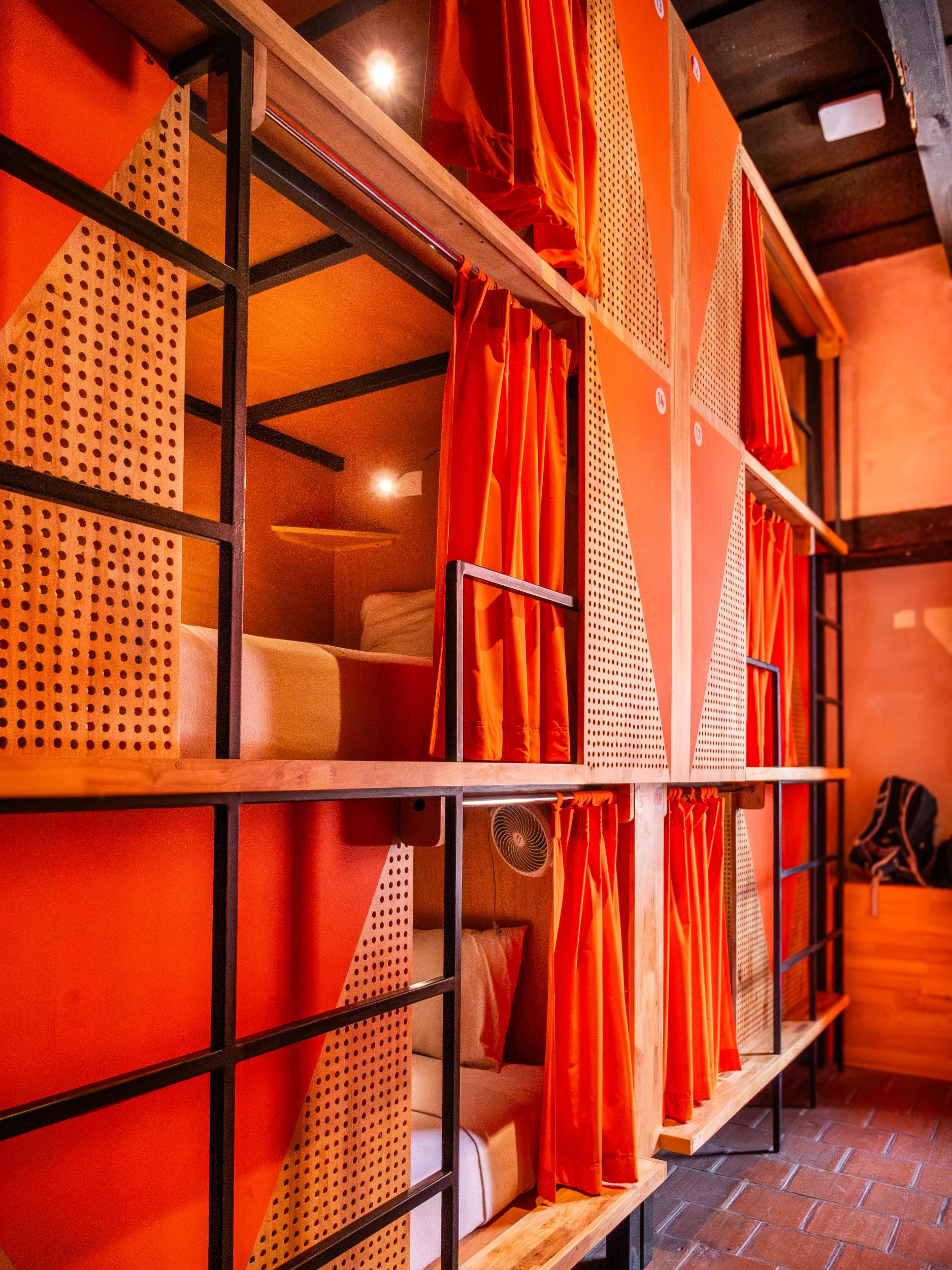
The image of a hostel as a cramped, dirty dorm with twelve strangers and one shared bathroom is decades out of date and was always a caricature. The reality of top-rated hostels on Hostelworld in 2026 looks considerably different.
Private rooms with en-suite bathrooms. Rooftop pools. Co-working spaces. Design-led interiors. Craft beer on tap. Yoga decks. High-speed fibre broadband. The hostel industry has invested significantly in the physical product, and the properties that consistently earn 9.0+ ratings with thousands of verified reviews are genuinely excellent places to stay, not just affordable ones.
Solo travel is now one of the fastest-growing travel segments globally, and it is almost synonymous with hostel accommodation. The growth in solo travel has driven investment in hostel quality because solo travellers pay full rates, leave the most honest reviews, and have high expectations. The result: the best hostels today rival boutique hotels on comfort while offering something boutique hotels cannot match on community and price.
Hostelworld’s 13 million+ verified reviews are the most reliable guide to what a hostel is actually like. A property with a 9.2 rating from 4,000 reviews is not a gamble. It is a better-informed choice than most hotel bookings, backed by more evidence than almost any other purchase you make on a trip.

🌱 Hostels vs Hotels: The Environmental Case
Shared resources produce less waste. This is not a controversial claim.
A hostel dorm of eight guests shares lighting, heating, water infrastructure, kitchen facilities, and common areas across those eight people. The per-person environmental footprint of staying in a hostel is dramatically lower than staying in a hotel room designed for one or two guests with its own HVAC system, lighting, minibar, and daily linen change.
Research by Bureau Veritas, conducted in partnership with Hostelworld, found that hostels produce 82% fewer carbon emissions per guest than hotels. Not slightly less. 82% less. That is a structural advantage built into the shared-resource model that defines hostel accommodation, and no amount of hotel greenwashing closes that gap.
For travellers who care about sustainable travel, the accommodation decision is one of the highest-impact choices available. Choosing a hostel over a hotel is one of the most effective environmental decisions a traveller can make, before any other consideration comes into play.

🗺️ Location: Hostels Are Where You Actually Want to Be
Hotels cluster in business districts, airport corridors, and tourist zones. Hostels cluster in the neighbourhoods where the city actually lives: the old town, the market area, the creative district, the streets with the good coffee and the local restaurants.
Being in the right neighbourhood changes the trip entirely. Walking out of your hostel into a street market at 8am is a fundamentally different experience from taking a taxi from a corporate hotel to reach one. The budget hostel that sits two minutes from Lisbon’s Alfama, or in the backstreets of Chiang Mai’s old city, or next to the entrance of a national park, is offering something location-wise that the airport Marriott cannot replicate at any price.
This is partly economics and partly philosophy. Hostel guests want to be embedded in the city, not adjacent to it. And the best properties on Hostelworld build their entire identity around neighbourhood access, local knowledge, and genuine proximity to the places worth being.
✅ Final Thoughts: The Case for Hostels Has Never Been Stronger
The conversation about hostels vs hotels used to be primarily about price. It still includes price, but it has become about much more: community, local knowledge, environmental impact, neighbourhood access, and the growing recognition that the best travel experiences happen when you’re genuinely connected to the place and the people around you.
Backpacking today is no longer defined solely by cost-saving strategies. Travellers are placing more weight on how their accommodation contributes to social interaction, meaningful experiences, and overall trip quality. Hostels win on every one of those criteria.
Hostelworld exists at the centre of this shift: with 13 million+ reviews, social features that start before check-in, Linkups that build community into the stay, and a platform that has been connecting travellers with the best hostels in the world for over 25 years.
The hotel is a room. The hostel is an experience. For an increasing number of travellers, that distinction is the whole point.
Download the Hostelworld app to start booking now


❓FAQs: Hostels vs Hotels


 Get the App.