Harbour
First-timersThe centre of Svolvær.

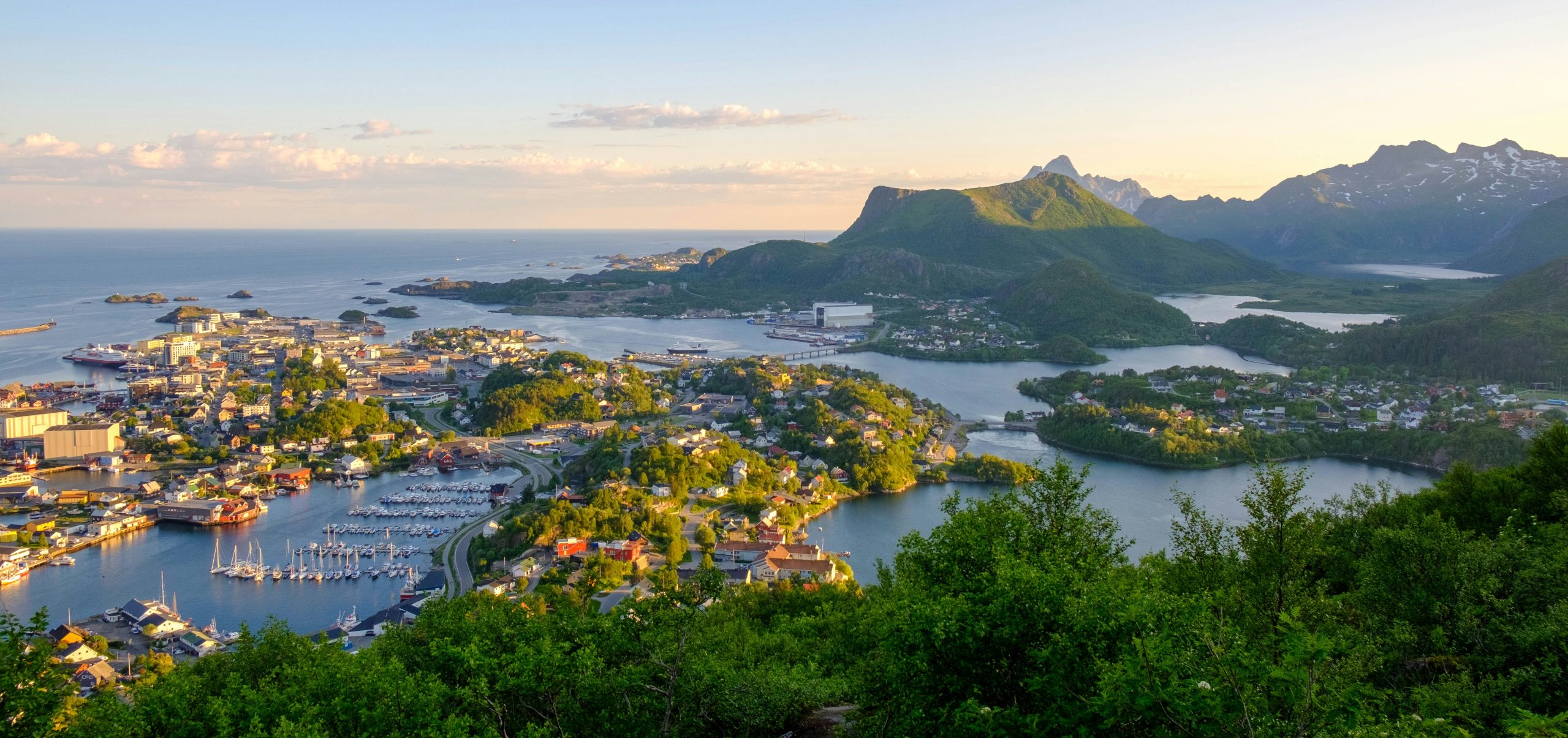
The main town of Lofoten, where granite peaks rise straight out of the sea, red fishing cabins stand on stilts and cod dries on wooden racks. The midnight sun in summer, the northern lights in winter.
Lofoten is a chain of islands off Norway's northern coast, with jagged mountains rising straight out of the sea, white beaches and fishing villages of red rorbu cabins. For a thousand years, the islands have lived from the winter cod, the skrei, which is still dried on wooden racks all over the islands.
Svolvær is the largest town and the main gateway, with the most services, boats and buses. It is small, but it is the natural base for the eastern islands, and the famous villages of Reine and Hamnøy are a couple of hours west.
Lofoten is best with a car and several days. Three or four days is the minimum.
Svolvær is small. Stay near the harbour, or in a rorbu cabin.
The centre of Svolvær.
An old fishing village just west of town.
Map © MapTiler © OpenStreetMap contributors.
Hike up Fløya above Svolvær for the view over the islands; the rock pinnacle of Svolværgeita, the Goat, is a famous climb.
Take a boat into the Trollfjord, a narrow fjord between steep walls, with sea eagles overhead.
Henningsvær, a fishing village spread across small islands, with a football pitch on the rocks, is half an hour away. Further west, Reine and Hamnøy are the classic Lofoten views, and Haukland and Uttakleiv are white beaches under the mountains.
The Lofotr Viking Museum at Borg has a reconstructed Viking chieftain's longhouse.
The hiking, the beaches and the views are free.
Watching the midnight sun or the northern lights costs nothing.
Cod is the thing: fresh skrei in winter, and dried stockfish all year. Restaurants on the harbour serve fish soup and seafood.
Supermarkets are the budget answer, and many rorbu cabins have kitchens.
A restaurant main is €30 to €45.
Svolvær has a few bars on the harbour, busier in summer and during the winter fishing season.
A beer is €10 to €13.
Svolvær has a small airport with flights from Bodø. Express boats and the coastal ship run from Bodø, and a car ferry runs from Bodø to Moskenes in the west.
Buses link the islands but are infrequent. A car is the best way to see Lofoten.
Roads are narrow and busy in summer; park only in designated places.
Lofoten is expensive, and accommodation is limited in summer. Book early. A careful day is €70 to €90.
The costs that add up are car hire, boat trips and rorbu cabins.
The currency is the Norwegian krone, and Norway is close to cashless: cards work everywhere. Prices here are euro equivalents.
Svolvær is very safe.
The mountains are steep and the weather changes fast. Many trails are exposed; wear proper boots and check the forecast.
The sea is cold all year.
Emergency numbers are 112 for police, 113 for ambulance and 110 for fire.
The islands of Lofoten.
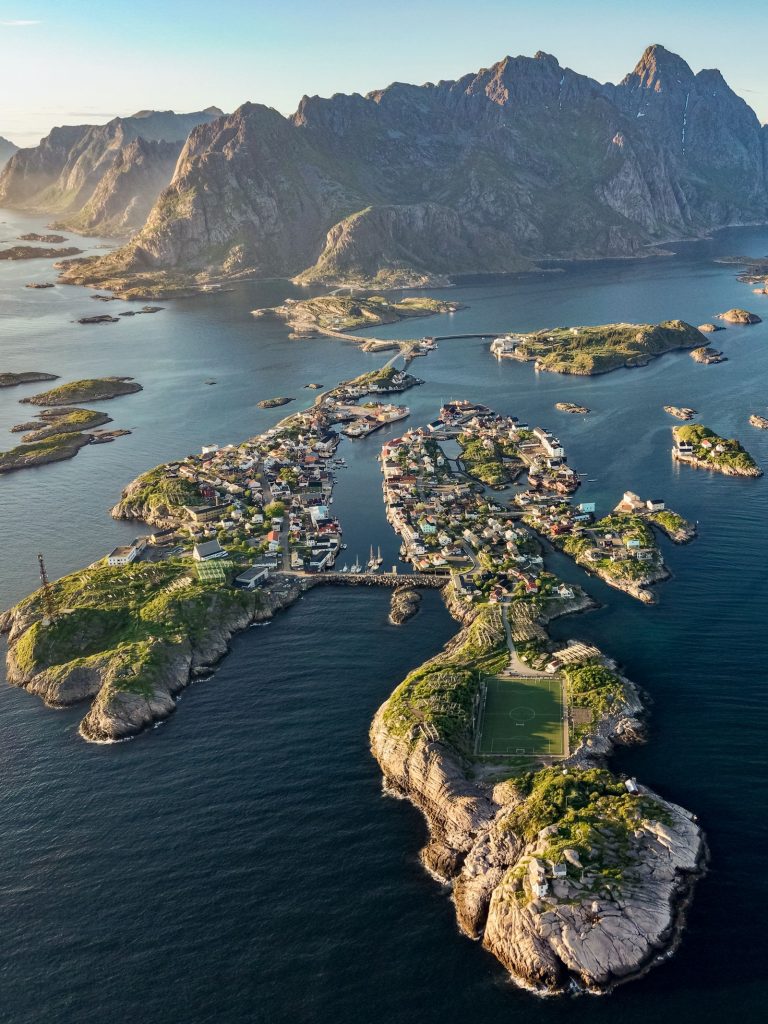
A fishing village on small islands.
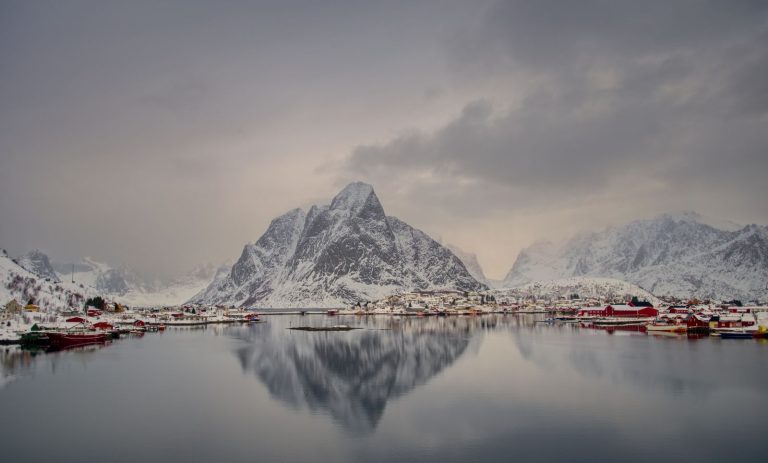
Red cabins under the mountains.
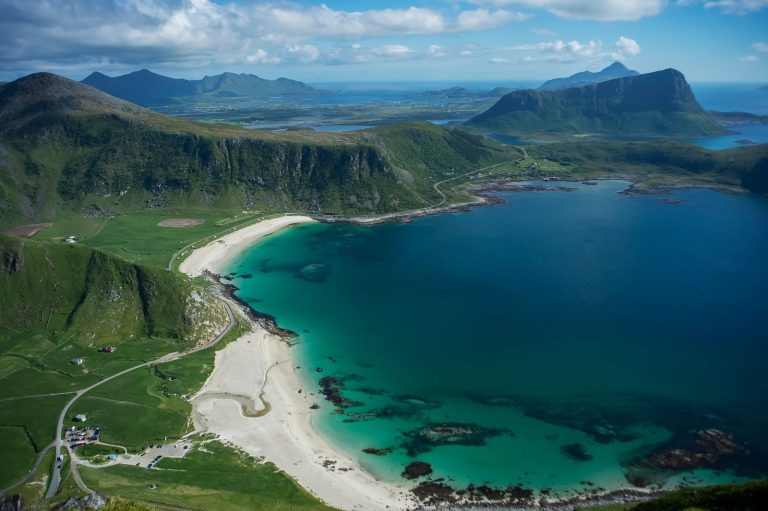
White beaches under the peaks.
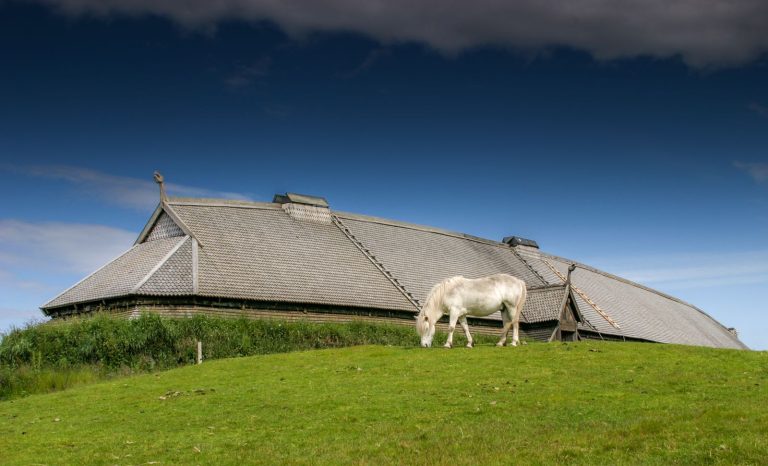
A reconstructed chieftain's longhouse.
The cod fishing season, from February to April, is the islands' oldest event.
The winter cod fishery, and the drying racks fill.
A cod-fishing competition in the harbour.
The sun does not set.
June to August for the midnight sun and hiking; September to March for the northern lights.
Average highs. The midnight sun runs from late May to mid-July.
Pick how you travel. Per person per night, in euros.
Prices are in kroner locally; these are euro equivalents. Excludes car hire and boat trips.
The ones we get asked most.

Compare Svolvær hostels — live prices, real reviews and free cancellation on most bookings. Then meet the people already there in the app.

 Get the App.
 Get the App.