Fira
Transport and nightlifeThe island capital on the rim, and the bus hub. Busy, with the bar street.

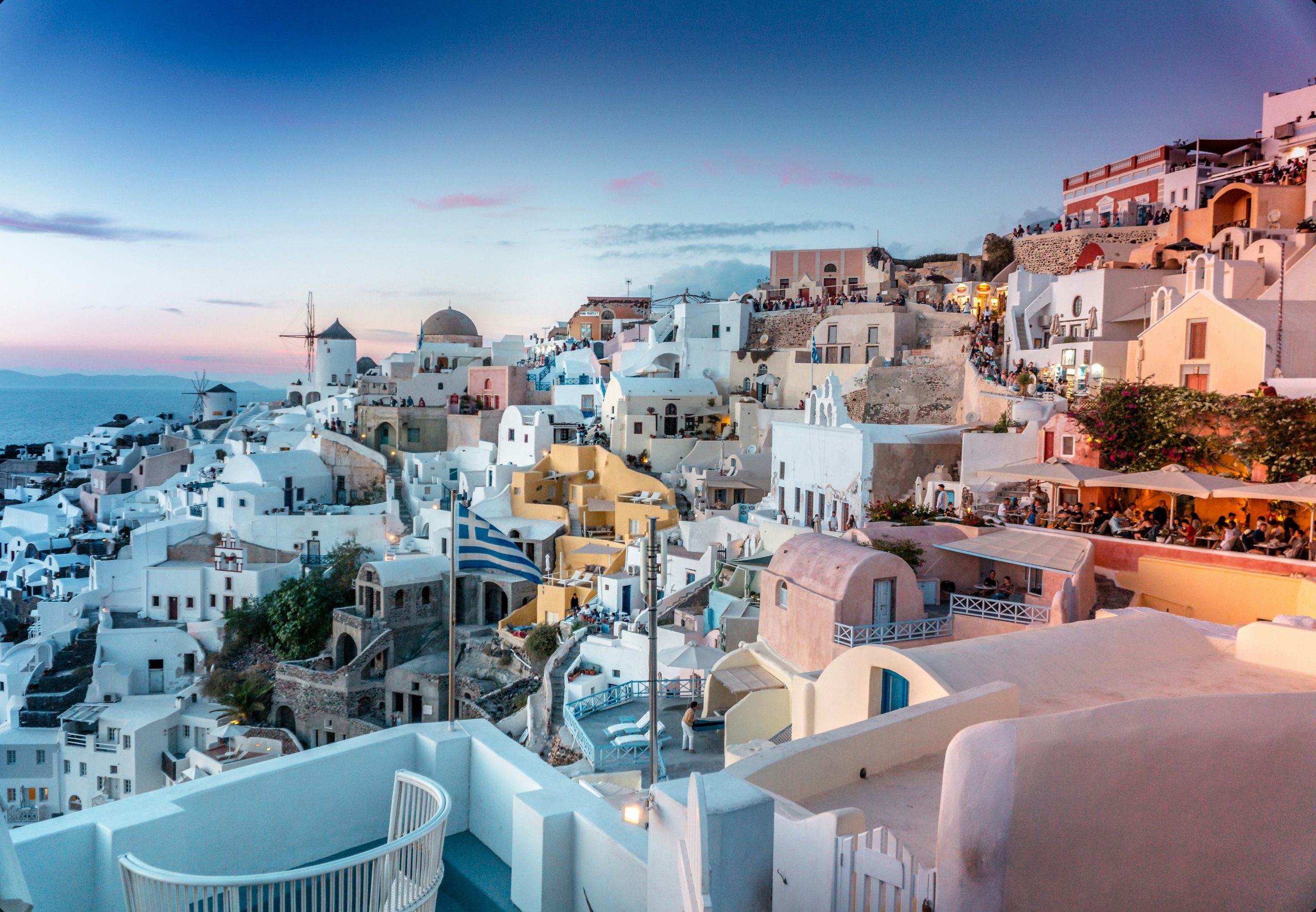
A drowned volcano with white villages on the rim of its crater, black-sand beaches on the other side, and the most photographed sunset in Europe. Beautiful, crowded, and expensive in August.
Santorini is what was left after one of the largest volcanic eruptions in human history, around 3,600 years ago, blew out the middle of the island and flooded it with sea. The result is the caldera: a lagoon ringed by cliffs three hundred metres high, with Fira, Imerovigli and Oia built along the top.
The eruption buried a Bronze Age town at Akrotiri under ash, which preserved it the way Vesuvius preserved Pompeii. The volcano is still active; the islands in the middle of the caldera are its newest parts, and the island went through an intense series of earthquakes in early 2025.
The caldera side is the famous one and the expensive one. The east side slopes gently down to long black-sand beaches at Kamari and Perissa, where most of the hostels are. Three days is enough for most people; stay on the beach side and visit the rim.
The caldera villages are for the view; the beach villages are for sleeping on a budget. Buses link them all through Fira.
The island capital on the rim, and the bus hub. Busy, with the bar street.
The postcard village at the northern tip. Beautiful, very expensive, packed at sunset.
The highest point on the rim, between Fira and Oia. Views without the Oia crowds.
Black-sand beach village on the south-east coast, with most of the hostels.
A longer black-sand beach with bars and tavernas, and Ancient Thera above it.
Orange labels are neighbourhoods, dots are the 12 top-rated hostels. Map © MapTiler © OpenStreetMap contributors.
Walk the caldera path from Fira to Oia. It runs about ten kilometres along the rim, through Firostefani and Imerovigli, with the crater below you the whole way, and takes three to four hours. Start early, go north, and take the bus back from Oia.
Akrotiri, the Bronze Age town buried by the eruption, is under a modern roof at the south of the island and is the most important site in the Cyclades: multi-storey houses, streets and drainage, preserved by the ash.
Take a boat into the caldera to walk on the newest volcanic island, Nea Kameni, and swim in the warm, sulphurous water off Palea Kameni. Wine is the other thing the island does well: the vines are grown in low baskets on the ground against the wind, and the white assyrtiko and the sweet vinsanto are worth a tasting at one of the wineries near Pyrgos and Megalochori.
The sunset in Oia is famous, and so are the crowds that watch it — thousands of people on the walls around the castle. Watch it from Imerovigli or Pyrgos instead, or from the caldera path.
Do not ride the donkeys up the steps from the Old Port. Take the cable car or walk.
The caldera path from Fira to Oia is free, and the best thing on the island. So are the views from every village along the rim.
The black-sand beaches at Kamari and Perissa are free if you skip the sunbeds, and Perivolos beyond Perissa is long and quieter.
Pyrgos, the highest village inland, has a ruined castle, lanes of whitewashed houses and a sunset view with a fraction of the Oia crowd.
The walk up Mesa Vouno from Kamari to the ruins of Ancient Thera is free as far as the site gate, and has views over both sides of the island.
State museums and sites are free on the first Sunday of the month from November to March.
Eating on the caldera is paying for the view, often a great deal. The same food is half the price in Fira's back streets, in the inland villages and at the beach towns.
Gyros and souvlaki are the budget standby, at €4 to €6. Look for the local dishes: tomatokeftedes, fritters of the small, sweet Santorini tomatoes; fava, the yellow split-pea purée the island is known for; and white aubergine.
The tavernas in Pyrgos, Megalochori and Exo Gonia, away from the rim, are where the island's own residents eat. Perissa and Kamari have cheap beach tavernas.
The wineries do tastings with small plates and caldera views, and are better value than a caldera dinner.
Santorini is for sunsets rather than clubbing. Fira has the island's bar street, busy and loud in summer with cocktail bars and a few clubs.
Kamari and Perissa have beach bars and a more relaxed night out, and the hostels in Perissa tend to have their own bars.
For serious nightlife, Ios is a short ferry ride away. On Santorini, a cocktail with a caldera view costs €15 or more; a beer at a beach bar €5 to €7.
KTEL buses run everything through Fira. Most routes cost €2.20, and the Perissa, Perivolos and Athinios port routes €2.70, paid on board. To go between two villages that are not Fira, change there and buy a second ticket. There is no day pass.
Buses to the airport run from Fira, and the airport is about fifteen minutes away. Ferries dock at Athinios, down a long switchback road below the cliffs. Buses meet the boats and go to Fira; there are no direct buses to the other villages.
Taxis are few, especially in summer, so book transfers ahead for early ferries or flights. ATVs and scooters are widely rented and involved in a lot of accidents.
Ferries from Piraeus take five to eight hours, and the island has direct flights from Athens and much of Europe.
Santorini is one of the most expensive islands in Greece, and in August it is one of the most expensive places in Europe. Dorms that cost €20 in May can pass €40 in August, and a caldera dinner is easily €50.
A careful day is €60 to €90 in summer. The costs that add up are caldera food and drink, boat trips, and transport to and from the port.
Stay on the beach side, in Perissa or Kamari. Eat inland. Walk the caldera path instead of paying for a sunset cruise. And come in May or October, when the island is half the price and half as busy.
Santorini is safe, with low crime. Pickpocketing happens in the sunset crowds in Oia and around the Fira cable car.
The cliffs are the real hazard. Paths along the caldera have steep, unfenced drops, and Red Beach, below cliffs that shed rock, has restricted access because of rockfalls. Respect the signs.
ATVs and scooters are involved in many accidents on the island's narrow roads. Wear a helmet and check your licence and insurance.
The island is volcanically and seismically active. In the event of earthquakes, follow the instructions sent by 112 SMS. Emergency number is 112.
The best trip from Santorini is into the caldera. The others are islands.
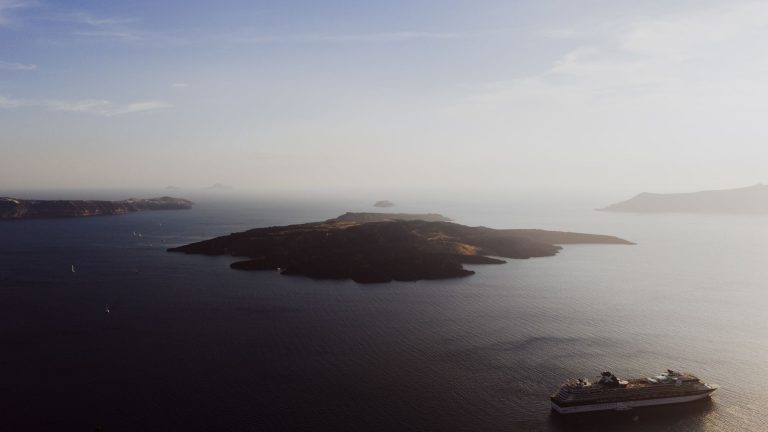
Walk across Nea Kameni to the crater and swim in the warm sulphurous water off Palea Kameni.
The island's calendar is quiet compared to its crowds. Easter and the late-summer festivals are the ones to catch.
Candlelit processions, and in Pyrgos the village lights its walls with thousands of small flames on Good Friday.
The Assumption, with church festivals and the island at its absolute fullest.
Concerts and exhibitions in a seventeenth-century mansion in Fira.
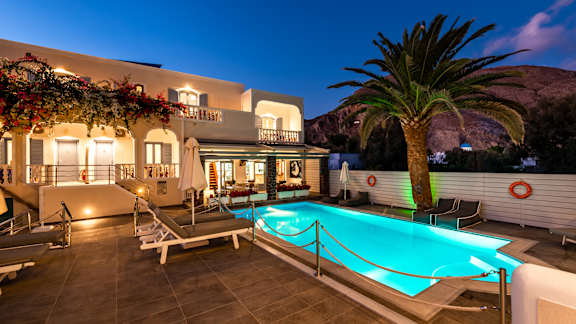
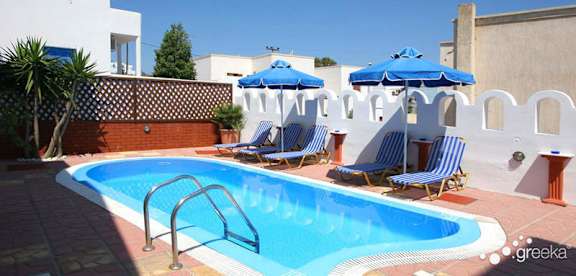
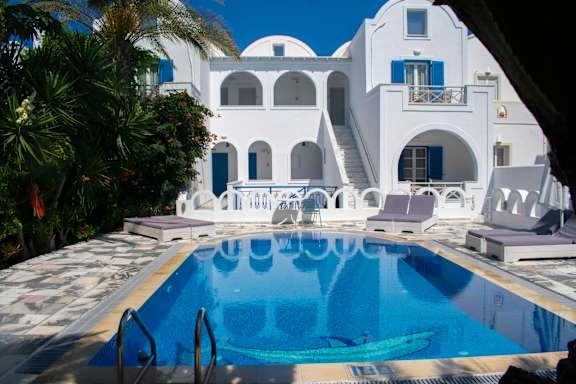
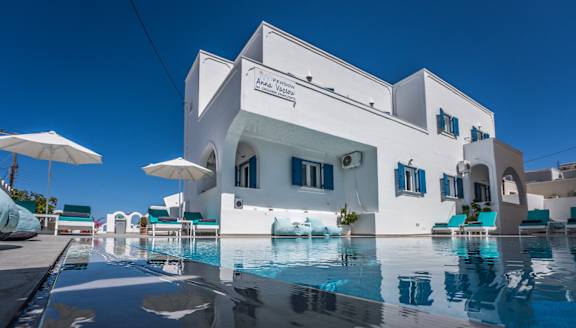
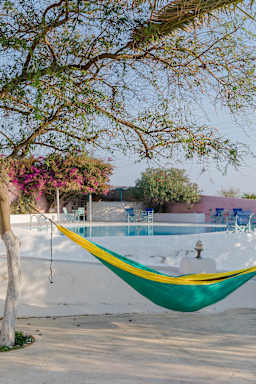
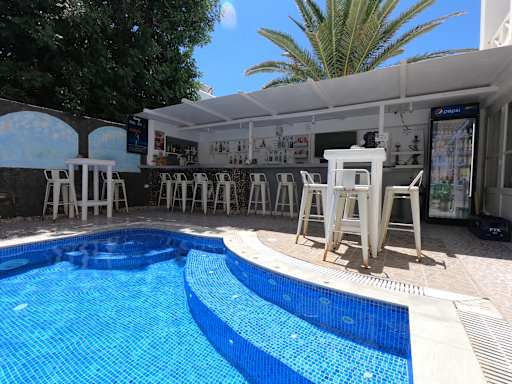
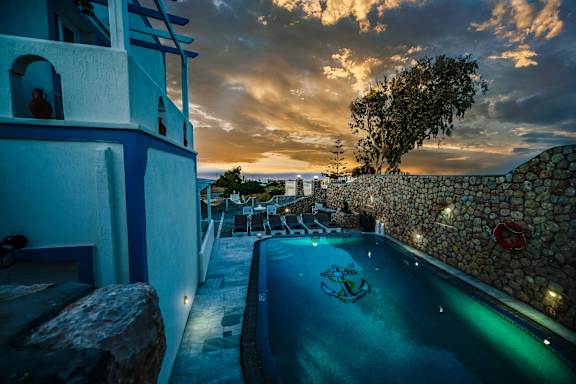
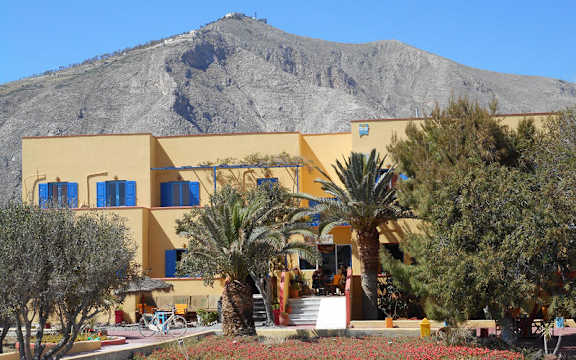
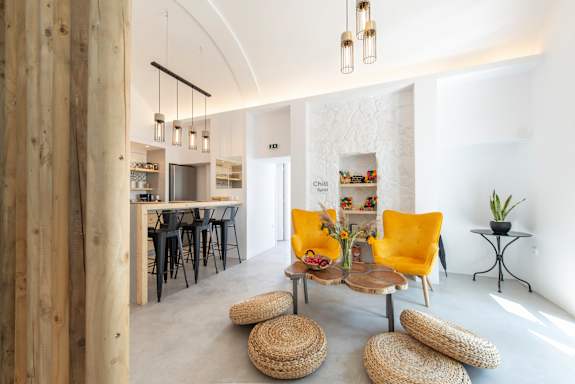
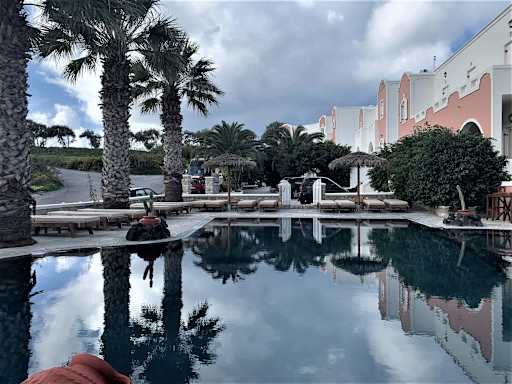
Santorini's hostels are mostly in Perissa, Kamari and Fira, and book up early for summer. These are the top-rated right now, live from Hostelworld.
May, June, September and October are ideal. July and August are very busy, and the island mostly closes in winter.
Average highs. The Meltemi wind blows hard in July and August and can cancel boats.
Pick how you travel. Per person per night, in euros.
Transport assumes KTEL buses. A caldera boat trip adds €30 to €60.
The ones we get asked most.

Compare Santorini hostels — live prices, real reviews and free cancellation on most bookings. Then meet the people already there in the app.

 Get the App.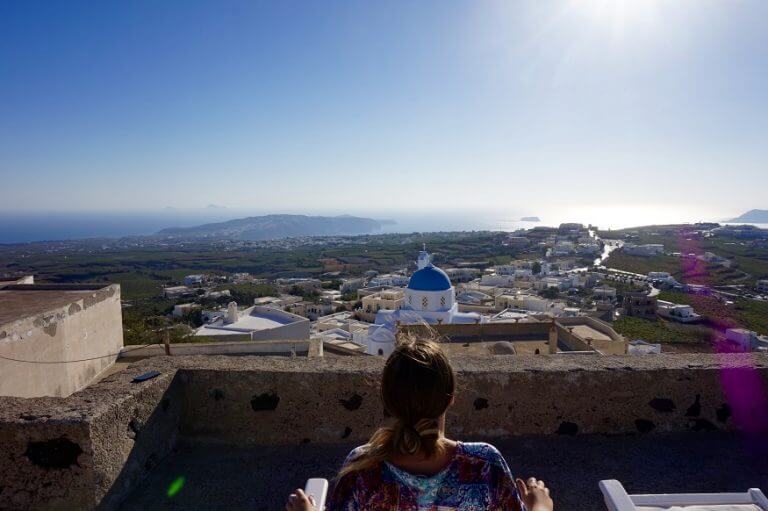
 Get the App.