Old Town
AtmosphereNeoclassical mansions, marble squares and the harbour, under the fortresses. Car-free in the centre.

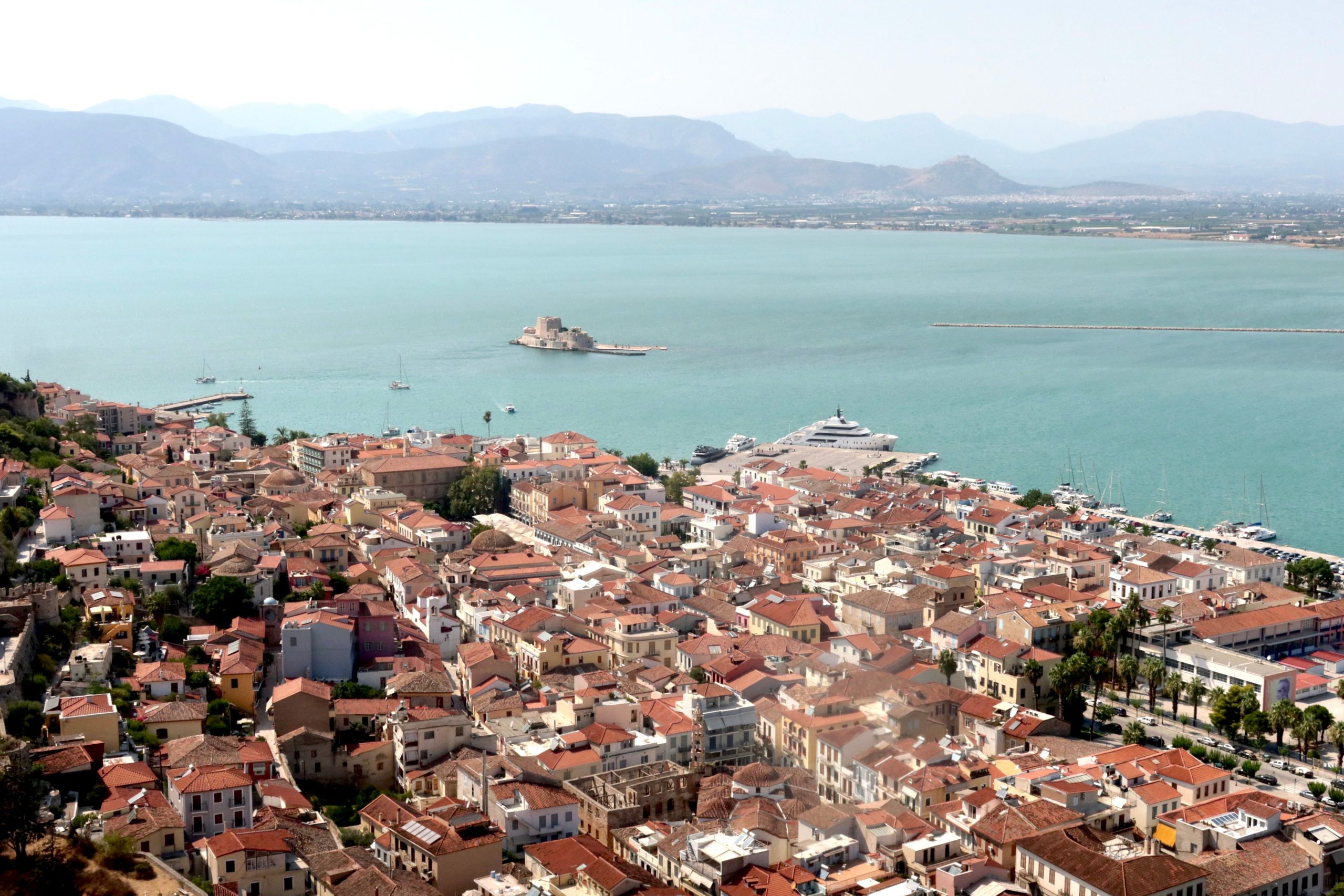
The first capital of modern Greece: neoclassical mansions, Venetian fortresses and a harbour castle on its own islet. Two hours from Athens, and the base for Mycenae and Epidaurus.
Nafplio sits on a peninsula in the Argolic Gulf, under two fortresses and facing a third on an islet in the bay. It was the first capital of independent Greece, from 1829 until the government moved to Athens in 1834, and the old town still looks like a small nineteenth-century capital: balconied mansions, marble-paved squares and a harbour front of cafés.
The Venetians built most of what defends it, including the Palamidi fortress on the cliff above, and the first head of the Greek state, Ioannis Kapodistrias, was assassinated outside a church in the old town in 1831.
Athenians come for the weekend, and the town is busiest from Friday to Sunday. Two or three days is right: one for the town and the fortresses, and one or two for Mycenae, Epidaurus and Tiryns, three of the great ancient sites in Greece, all within forty minutes.
Stay in the old town if you can. It is small, walkable and car-free in the centre.
Neoclassical mansions, marble squares and the harbour, under the fortresses. Car-free in the centre.
The newer quarter east of the old town, at the foot of Palamidi. Cheaper and a short walk in.
The pebble beach and promenade below Akronafplia, on the other side of the headland.
A beach village twenty minutes south-east, with sand and cheaper rooms.
Orange labels are neighbourhoods, dots are the 2 top-rated hostels. Map © MapTiler © OpenStreetMap contributors.
Climb Palamidi first, early, before the heat. The Venetian fortress sits on a cliff above the town, and the stairway up has about 900 steps — not the 999 of local legend, but enough. The view over the bay and the old town from the top is the best in the Peloponnese. You can also drive or take a taxi to the top.
Then walk the old town. Syntagma Square, paved in marble, has the Archaeological Museum in a Venetian arsenal from 1713. The church of Agios Spyridon has the bullet mark from Kapodistrias's assassination in its wall. The Peloponnesian Folklore Foundation museum is one of the best in Greece for costume and textiles.
Bourtzi, the little castle on its islet in the harbour, was built by the Venetians to close the bay. It is best seen from the harbour front at sunset.
The Arvanitia promenade, a paved path cut into the cliff around the headland below Akronafplia, is the town's evening walk. Keep going and it leads to Karathona beach.
The old town is free to walk and it is the main attraction: the marble squares, the lanes of bougainvillea and the harbour front.
The Arvanitia promenade around the headland is free, and the best walk in town at sunset. The path continues to Karathona beach, a long sandy bay about forty minutes on foot.
Akronafplia, the older fortress on the rock directly above the old town, is free to wander, with views over the harbour.
State museums and sites, including Mycenae and Epidaurus, are free on the first Sunday of the month from November to March.
Nafplio eats well for a small town, because Athenians expect it to. The harbour-front restaurants charge for the view; the tavernas in the lanes behind them, and along Staikopoulou Street, are better value, with a meal and wine for €15 to €22.
The Argolid is orange-growing country, and the plain behind the town is full of groves, so fresh juice is everywhere. Nemea, half an hour north, is one of Greece's best-known wine regions, and its red agiorgitiko is on every wine list.
The town is known for its ice-cream shops, and the old-town squares are busy with them until late on summer evenings.
Nafplio has a relaxed night out rather than a loud one. The harbour front and Syntagma Square fill with people after dinner, and the bars in the old-town lanes stay open late on weekends, when Athenians are in town.
It is a place for a long dinner and a few drinks under the fortresses, not for clubs. A beer is €4 to €6.
The old town is small and walkable. The KTEL bus station is at the edge of it, with buses to Athens's Kifissos terminal in about two and a quarter hours.
Buses run to Argos and Tolo, and less often to Mycenae and Epidaurus. For Mycenae, you may need to change at Fichti, and timetables are thin, especially outside summer.
For the ancient sites, a hire car is far easier, and makes Mycenae, Epidaurus and Tiryns possible in a single day. Taxis are an alternative for one site.
Nafplio has no airport or train. Most people arrive by bus or car from Athens.
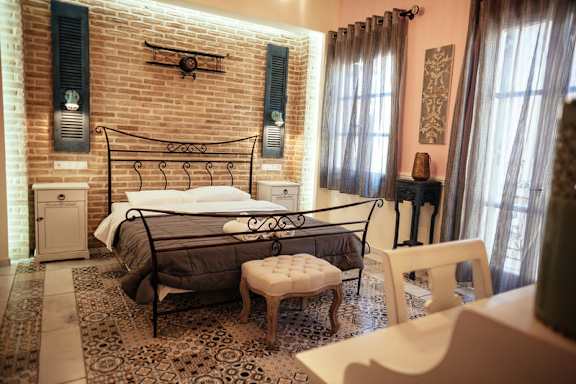
Nafplio is mid-priced, and more expensive on summer weekends when Athenians fill it. There are no dorm hostels in the town itself, so budget for a room: small pensions and rooms start around €40 a night outside peak weekends.
A taverna meal is €15 to €22, and the ancient sites each have their own ticket. A careful day, with a shared room, is €55 to €75.
Come midweek rather than at the weekend, and share a car for the sites.
Nafplio is very safe, with almost no crime to speak of.
The hazards are practical: the Palamidi steps are steep and exposed, with no shade, so climb early with water. The marble streets of the old town are slippery when wet.
If you drive to the sites, roads in the Argolid are good but local driving can be fast. Summer heat at Mycenae and Epidaurus is intense and both have little shade. Emergency number is 112.
Three UNESCO sites within forty minutes. Nafplio is the best base in Greece for ancient history outside Athens.
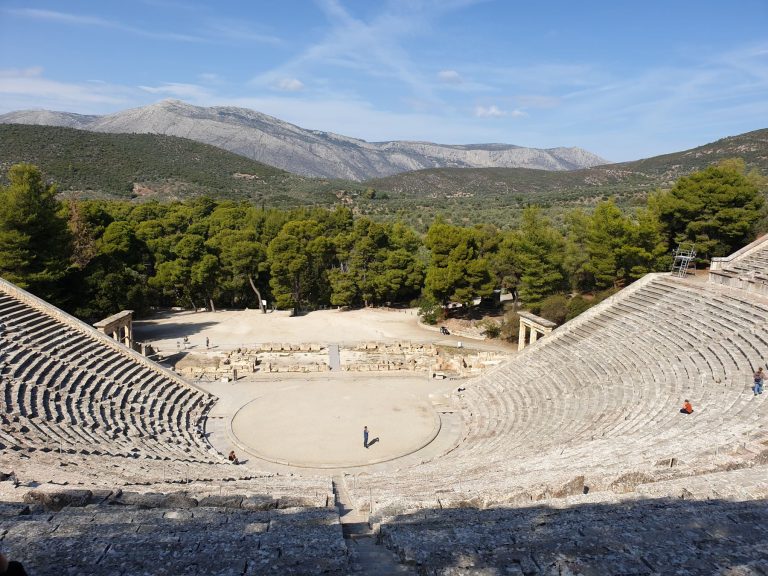
The best-preserved ancient theatre in Greece, with acoustics so good a coin drop carries to the back row.
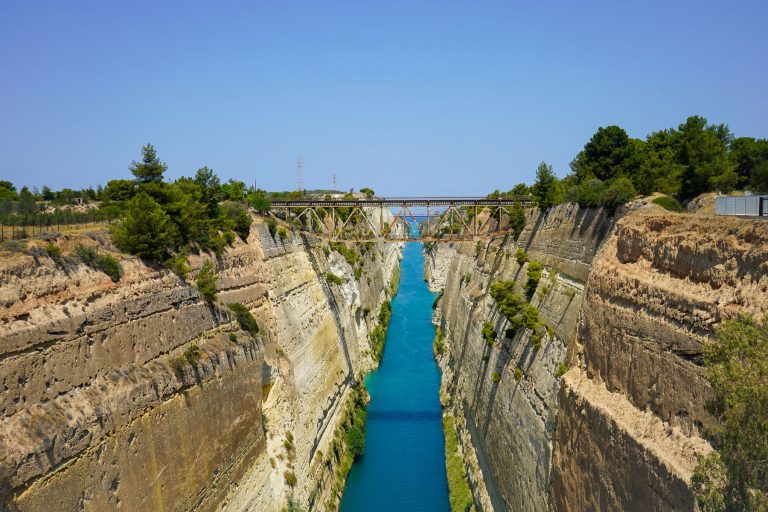
The Roman city where Paul preached, the Acrocorinth fortress above it, and the canal cut through the isthmus.
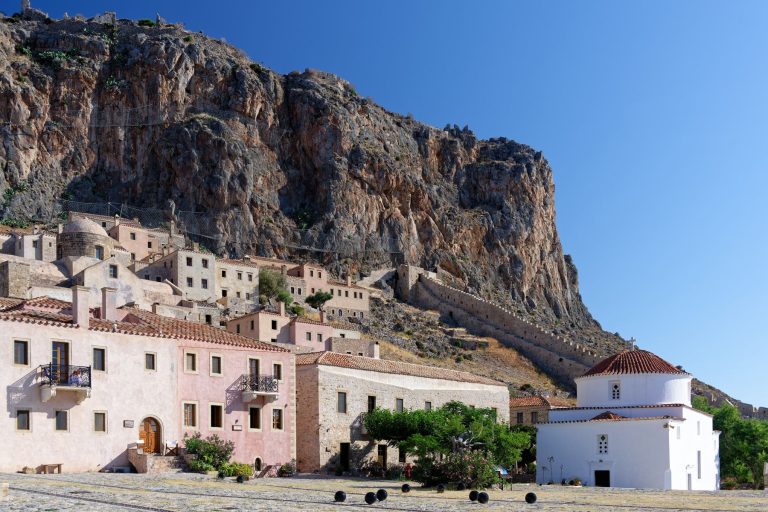
A Byzantine town on a rock joined to the mainland by a causeway. Better as an overnight.
Summer weekends at Epidaurus are the big draw. The town's own feast day is in November.
Candlelit processions through the old town and midnight fireworks over the harbour.
Classical and chamber music in the town's historic buildings.
Ancient drama on summer weekend nights in the 2,300-year-old theatre, part of the Athens Epidaurus Festival.
The town's patron saint, on the anniversary of its capture from the Ottomans in 1822.
Nafplio has no dorm hostels in town. Hostelworld lists a handful of rooms and pensions in and around it, shown here live.
Spring and autumn are ideal. Summer weekends are busy with Athenians, and midweek is quieter.
Average highs for the Argolid. The plain behind the town is one of the hottest parts of Greece in July and August.
Pick how you travel. Per person per night, in euros.
Beds are for a room shared between two, as there are no dorms in town. Transport assumes buses; car hire adds about €20 to €30 a day each, shared.
The ones we get asked most.

Compare Nafplio hostels — live prices, real reviews and free cancellation on most bookings. Then meet the people already there in the app.

 Get the App.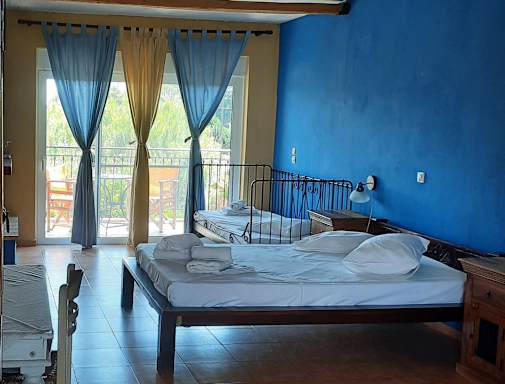
 Get the App.