Skagen town
First-timersThe yellow houses, the museum, restaurants and the station. Everything walkable or a short cycle.

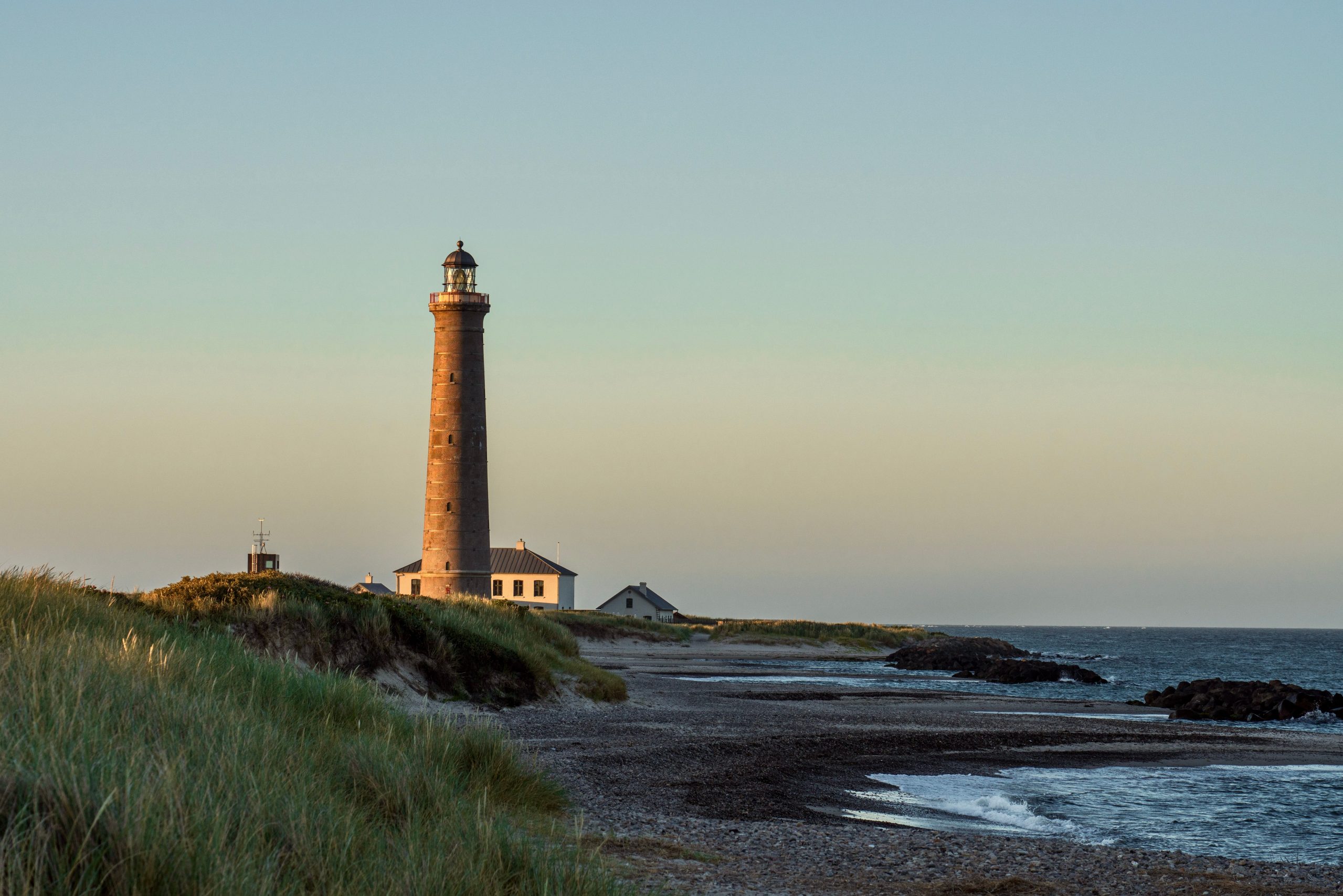
Denmark's northern tip, where two seas meet on a sandbar you can stand on with a foot in each, under a light that drew a whole school of painters here in the 1870s.
Skagen sits at the very top of Jutland, where the Skagerrak and the Kattegat meet on a curving sandbar. You can walk to the point and stand with one foot in each sea, watching the two swells collide — it is a genuinely strange thing to see, and you cannot swim there because the currents are lethal.
The light at this latitude, reflected off water on three sides, brought a colony of painters here from the 1870s, and the Skagens Museum holds what they produced. The yellow houses with red tiled roofs and white trim are a protected local style.
Inland, Råbjerg Mile is a migrating sand dune of four million cubic metres, moving about fifteen metres a year, and the Tilsandede Kirke is a church tower sticking out of the sand that buried the rest of it.
Two days. It is a summer town and much of it closes otherwise.
A small town between the harbour and the beaches, with the point a few kilometres north.
The yellow houses, the museum, restaurants and the station. Everything walkable or a short cycle.
East of the centre: a working fishing port, fish restaurants and the summer evening crowd.
Old Skagen on the west coast, four kilometres away, with dunes, the best sunsets and a calmer feel.
Map © MapTiler © OpenStreetMap contributors.
Walk to Grenen, the sandbar at the very tip, where the Skagerrak and Kattegat meet and the two swells visibly collide in a line of breaking water. It is about a forty-minute walk from the car park along the beach, or a tractor-bus runs in season. Standing with a foot in each sea is the thing everyone comes for — and swimming there is prohibited and genuinely dangerous.
Skagens Museum holds the paintings the artists' colony made here from the 1870s, and Anchers Hus, the home of Michael and Anna Ancher, is preserved as they left it.
Råbjerg Mile is a migrating dune of four million cubic metres, walkable across and shifting about fifteen metres a year.
The Tilsandede Kirke — the Sand-Buried Church — is a tower standing alone in the dunes, the rest of the building lost under sand in the eighteenth century.
Grenen itself is free — only the car park and the tractor-bus charge — and the walk out along the beach is the best hour here.
Råbjerg Mile is free and open, and climbing the dune costs nothing.
The beaches are free, and Sønderstrand near the town is the swimmable one. Gammel Skagen on the west coast has the sunsets.
The harbour is free to wander and the fish auction still runs.
The yellow houses of the old town, and the Skagen lighthouse area, cost nothing.
Fish, from a harbour that still lands it. Fresh plaice, cod and the local shrimp are the things to order, and a harbour restaurant main is €22 to €35.
The cheap version is better: smoked fish from the harbour smokehouses, eaten outside with bread and a beer, at €10 to €16.
Skagen is also where Skagenröra comes from — a shrimp, dill and mayonnaise mixture served on toast or rye — though the Swedes have claimed it more successfully.
A beer is €6 to €9, and the town has a summer drinking culture centred on the harbour that goes late in July.
Prices rise noticeably in the peak weeks.
Seasonal and concentrated on the harbour, where in July the bars and restaurants run late and the town fills with Danes on holiday — including a substantial well-off Copenhagen crowd.
Gammel Skagen has a more expensive and sedate version of the same thing.
A beer is €6 to €9.
Outside June to August there is very little: a couple of places in town, and early nights.
The appeal here is a long evening outdoors in light that barely goes at midsummer, rather than anything resembling a club.
Bikes. The town is flat, everything is within a few kilometres, and rental is €10 to €15 a day — it is how Danes do Skagen.
Trains run from Frederikshavn in 35 minutes on the Skagensbanen line, and Frederikshavn connects to Aarhus in about two hours and Copenhagen in five.
The Sandormen tractor-bus runs out to the point at Grenen in season for about €6 return, which saves the walk both ways.
Buses connect the town, Gammel Skagen and Råbjerg Mile in summer, and much less often outside it.
Ferries from Frederikshavn reach Gothenburg and Oslo, which makes this a plausible route into Norway or Sweden.
A Danish summer resort, which means it is not cheap. Beds are €30 to €60 in July and considerably less either side, a harbour main €22 to €35, and a beer €6 to €9.
A day is €60 to €100 in season.
Skagens Museum is about €17 and the tractor-bus €6. Grenen itself, Råbjerg Mile, the beaches and the sunsets are free, which is most of what the place is.
Denmark uses the krone at around 7.45 to the euro, and cards and MobilePay work everywhere.
Skagen is a very safe town, and there is one serious hazard.
Do not swim at Grenen. Where the two seas meet, the currents and undertow are powerful and unpredictable, swimming is prohibited, and people have drowned there. Wade to the ankles at the tip and swim at Sønderstrand instead.
The North Sea beaches on the west coast have rip currents and no lifeguards outside the main summer weeks.
Råbjerg Mile is exposed with no shade and no water, and it is bigger than it looks from the car park.
Ticks are present in the dune vegetation and grass. Emergency number is 112.
Dunes, a buried church and a ferry port with boats to two countries.
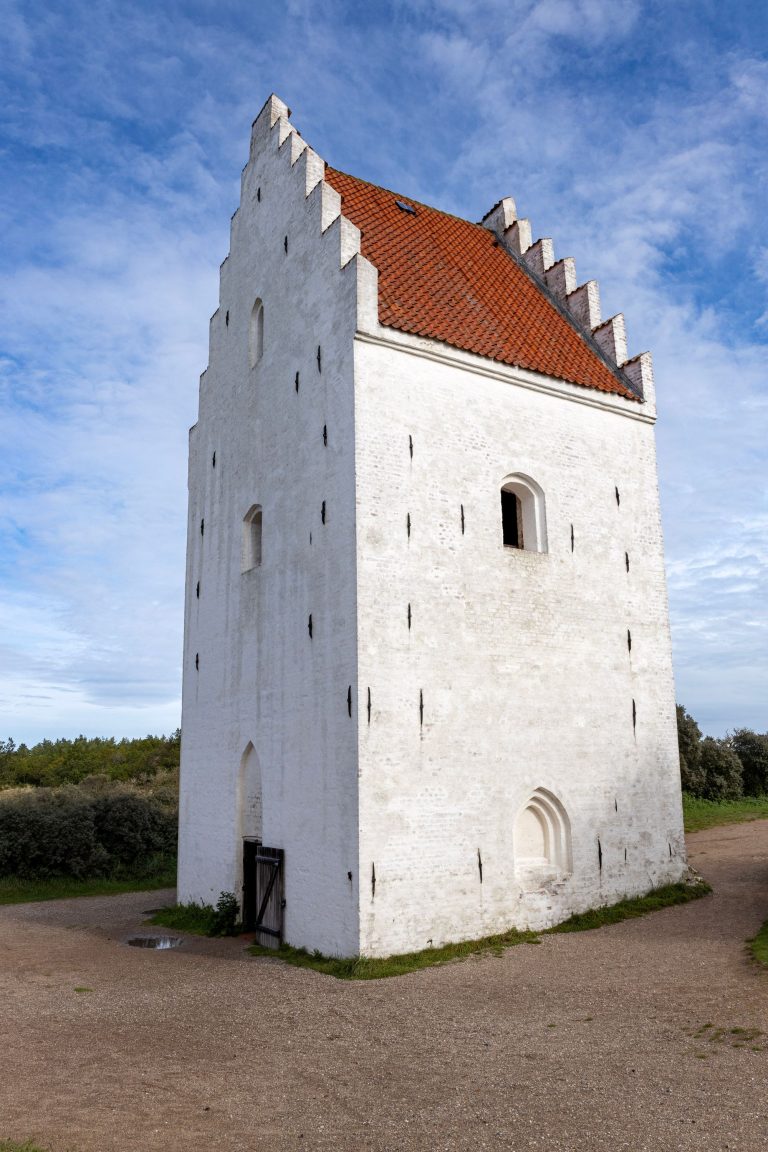
The Sand-Buried Church: a tower alone in the dunes, the rest lost under sand in the eighteenth century.
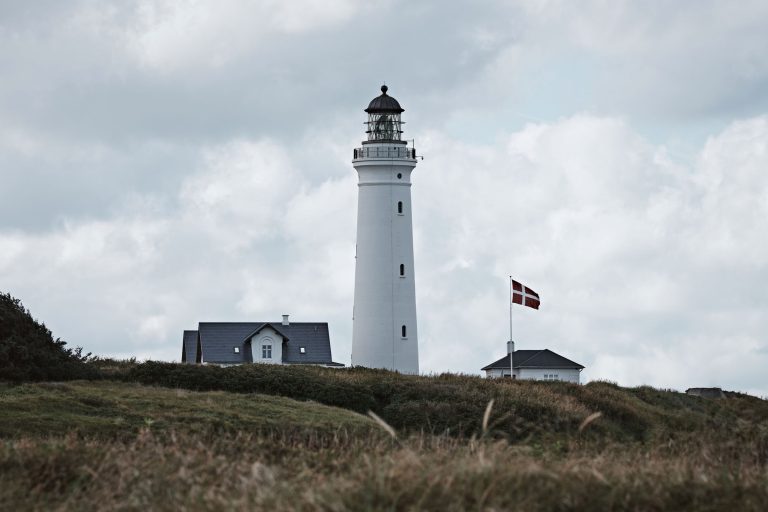
A North Sea aquarium with one of Europe's largest tanks, and ferries to Norway and Iceland.
A festival in the harbour and a very short summer.
A folk and roots music festival in the harbour, running since 1971 and the busiest weekend of the year.
When everything is open, the tractor-bus runs and the beaches are staffed.
The point is a major migration bottleneck, with raptors and seabirds passing in numbers.
Midsummer bonfires on the sand, as across Denmark, in almost full daylight.
Most of the town closes. The light and the storms are the reason to come anyway.
June to August is the season and July is the peak. Outside it, a lot is shut.
Average highs. This is the windiest corner of Denmark and the season is genuinely short — much of the town operates only from June to August, and September has the best light with a fraction of the people.
Pick how you travel. Per person per night, in euros, in season.
July runs well above these figures. May, June and September are considerably cheaper for better light.
The ones we get asked most.

Compare Skagen hostels — live prices, real reviews and free cancellation on most bookings. Then meet the people already there in the app.

 Get the App.
 Get the App.