Centre
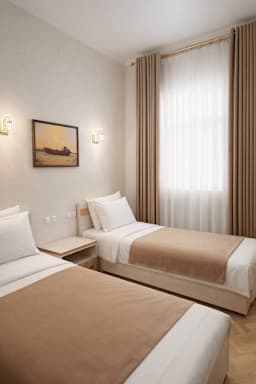
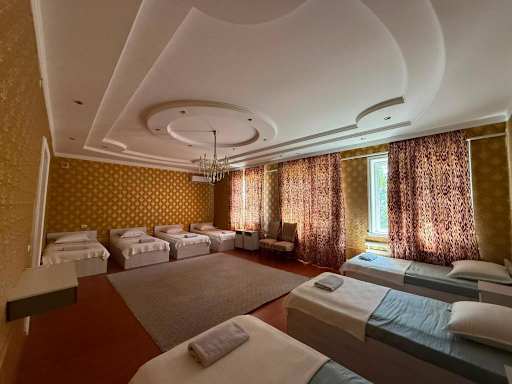
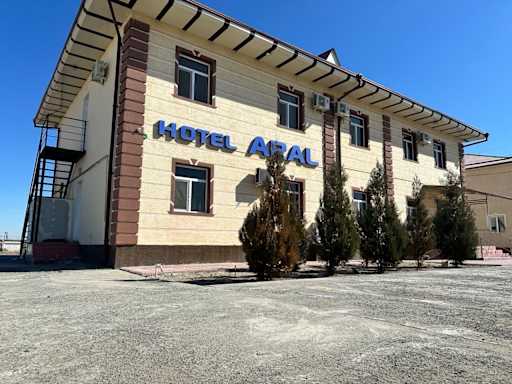
First-timersGuesthouses and hotels within walking distance of the Savitsky Museum and the main bazaar.

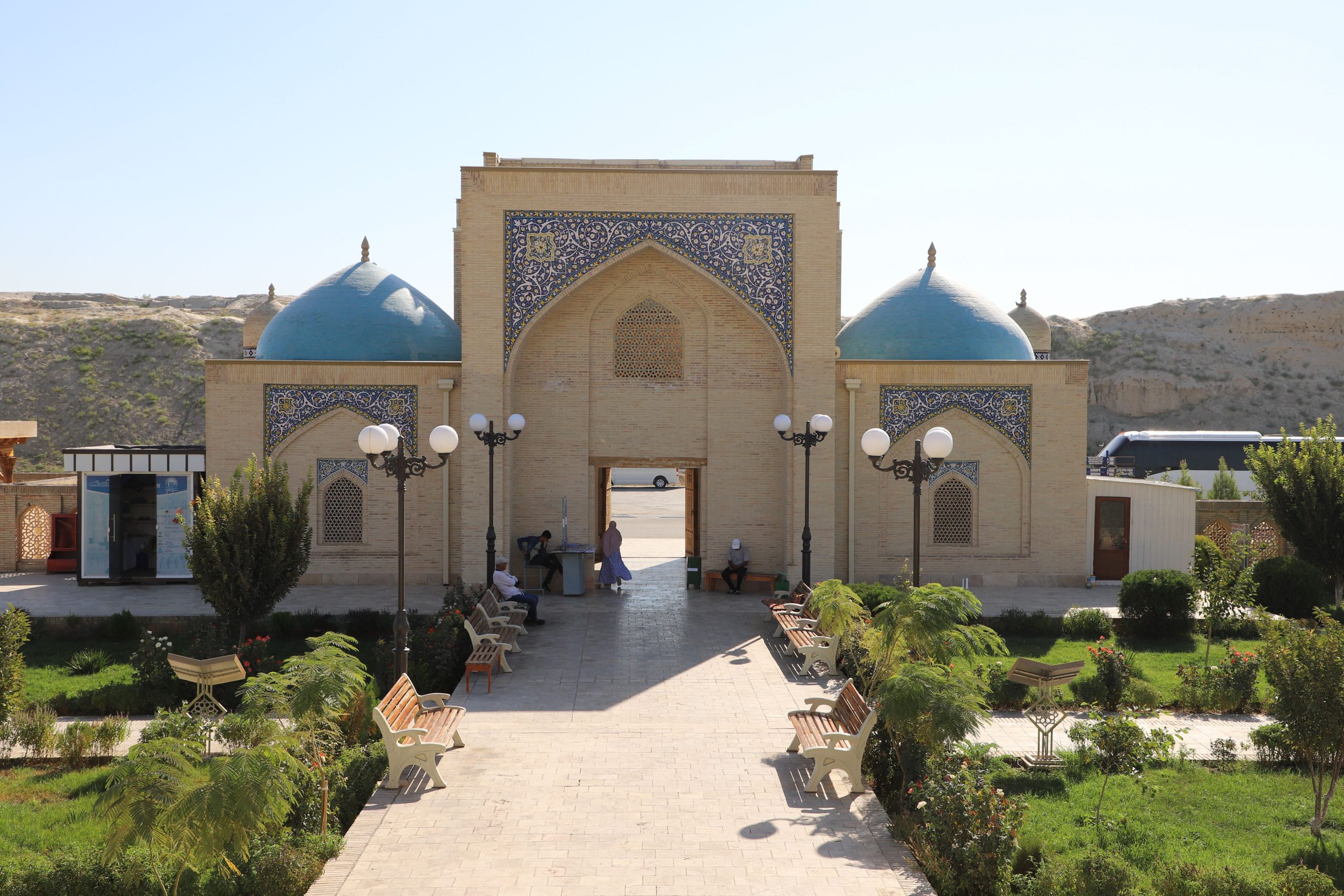
A remote desert city holding one of the world's great collections of banned Soviet art, and the base for the ship graveyard on the vanished shore of the Aral Sea.
Nukus is the capital of Karakalpakstan, an autonomous republic in the far west of Uzbekistan, on the edge of the Kyzylkum desert. On its own it is a quiet, low-rise Soviet city. What brings people here is the Savitsky Museum, where the artist Igor Savitsky gathered tens of thousands of avant-garde works that were banned in Moscow and hid them about as far from the authorities as he could get.
Nukus is also the base for Moynaq, three hours north, where rusting fishing boats lie in the sand on what used to be the shore of the Aral Sea. The sea's collapse is one of the worst environmental disasters of the last century, and seeing it for yourself is sobering.
Give it two days: one for the museum and the necropolis at Mizdakhan, and one for Moynaq. Add a night if you want to reach what's left of the sea itself.
Stay in the centre, near the museum.
Guesthouses and hotels within walking distance of the Savitsky Museum and the main bazaar.
Orange labels are neighbourhoods, dots are the 4 top-rated hostels. Map data from OpenStreetMap contributors.
Start at the Savitsky Museum, the reason most people come. Its collection runs to more than 100,000 objects: Russian and Uzbek avant-garde paintings that Soviet censors wanted gone, plus Karakalpak jewellery, carpets, costumes and finds from the ancient desert fortresses. A renovation in 2025 turned the third floor into a new gallery. It is open 9am to 6pm and closed on Mondays. Foreigners pay 100,000 som (about €7), students 80,000. Give it at least half a day.
Take a taxi 20 km west to Mizdakhan, near the town of Khodjeyli. It is a hilltop necropolis that has been used for more than two thousand years, with crumbling mud-brick mausoleums, the restored twelfth-century underground tomb of Mazlum Khan Sulu, and the ruins of the ancient city of Gyaur Kala beside it. Agree a return price, with waiting time, before you set off.
On the road towards Khiva, about 40 km south of Nukus, Chilpik is a ruined Zoroastrian tower of silence on a hill above the Amu Darya river, where the dead were once left for vultures. It is a short climb for a wide view over the desert.
Spend a day in Moynaq for the ship graveyard and the Aral Sea museum (see Day trips), and finish at the central bazaar near the bus station, the busiest place in town.
Nukus doesn't have much that is free, so time your visit if you can. The Savitsky Museum is free on the first Sunday of every month, which saves you 100,000 som.
The central bazaar, by the bus station, is the liveliest place in the city and costs nothing to wander. Look for qurt, the hard balls of dried sour yoghurt, and the stalls of Korean salads, a legacy of the Koreans deported to Central Asia under Stalin.
At Mizdakhan your main cost is the taxi. Once you're there you can walk the whole hill and the ruins of Gyaur Kala at your own pace.
Karakalpak food sits between Uzbek and Kazakh cooking. Expect plov, lagman noodle soup, samsa pastries baked in a tandoor, and beshbarmak, boiled meat served over flat noodles. Shashlik grills open in the evening.
The bazaar is the best place to eat cheaply and to try qurt, sour dried yoghurt balls, and the Korean-style carrot salad sold all over Central Asia.
Restaurants are few and close early, so eat at your guesthouse if it serves dinner. In Moynaq there is almost nothing, so take food and water with you. A meal in Nukus costs €3 to €6 (about 40,000 to 80,000 som).
Nukus has no nightlife to speak of. Evenings mean a long dinner at your guesthouse or a teahouse, and an early night if you are leaving for Moynaq in the morning.
Beer is sold in some restaurants and shops, at €1.50 to €3. If you want bars, save them for Tashkent.
Nukus Airport has flights to Tashkent that take about 1 hour 45 minutes. The overnight train from Tashkent takes about 17 hours. The new high-speed line to Khiva does not reach Nukus.
Khiva is about 200 km south, roughly three hours by shared taxi from the bus station, crossing the river at Urgench.
For Moynaq, a minibus leaves the bus station at 9am (arrive by 8:30, it fills up) for about 20,000 som and comes back at 3pm. A taxi for the day costs around $60 to $70 and lets you stay for sunset. Around town, taxis are cheap and the centre is walkable.
Nukus is cheap. A careful day costs €20 to €30, plus 100,000 som (about €7) for the Savitsky Museum.
The Aral Sea is the big expense. The minibus to Moynaq is about 20,000 som each way, a taxi for the day is around $60 to $70, and a two-day 4x4 tour to the shore with a yurt camp starts at about $440 for one person. Share it with other travellers and the price per head drops a lot.
The currency is the som (UZS): about 13,700 to the euro, paid in thick bundles of notes. Bigger hotels take cards, but bring cash for taxis, the bazaar and Moynaq.
Nukus is safe and people are friendly. Your accommodation registers you with the authorities; keep the registration slips, as they can be checked when you leave the country.
The climate is extreme. Summer days reach the mid-30s°C and the desert road to Moynaq has little shade, so carry water. Winter nights drop well below freezing.
Emergency: 102 police, 103 ambulance, 101 fire.
Most people come to Nukus for the Aral Sea. You can see Moynaq in a long day; the shore itself needs a night.
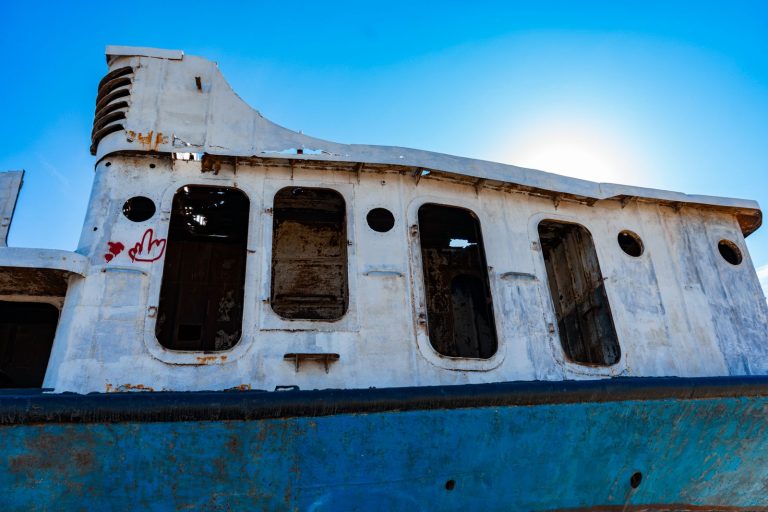
Rusting fishing boats on the dry seabed, a memorial above where the shore used to be, and the Aral Sea museum (30,000 som, closed Mondays).
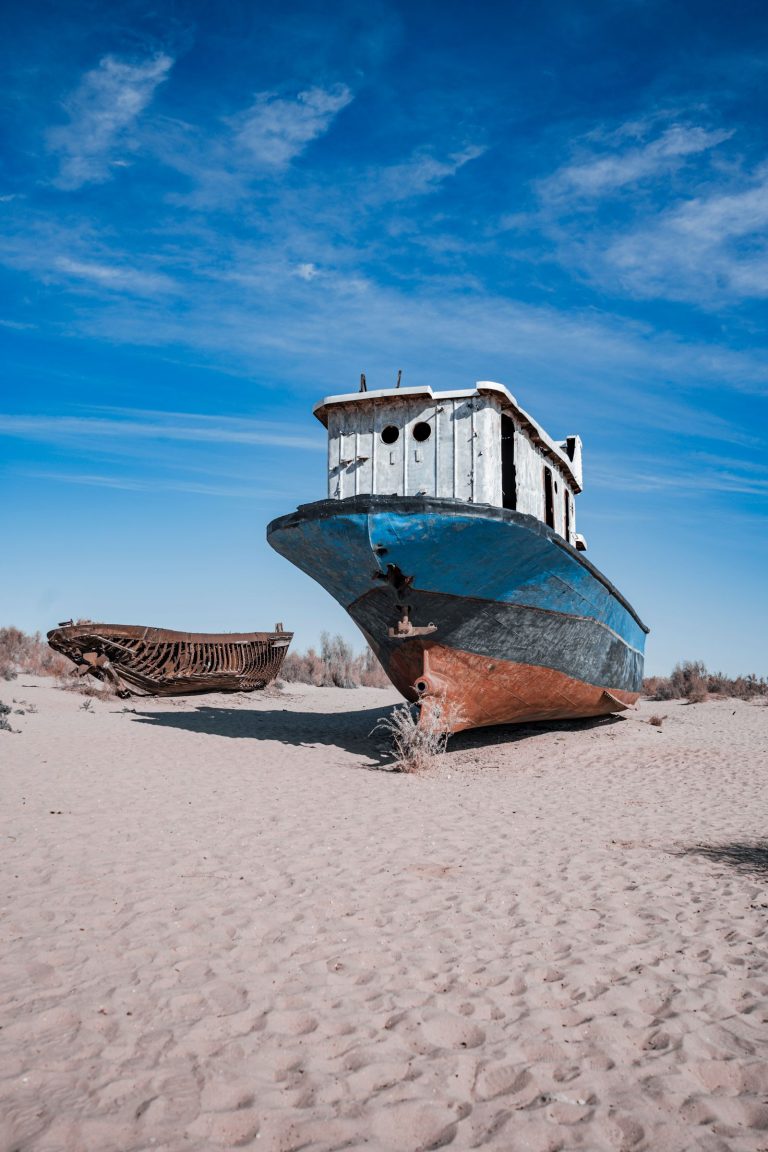
The water is now around 80 km past Moynaq, reachable only by 4x4. Tours stop at the Ustyurt plateau and sleep in a yurt camp by the shore.
The Stihia music festival has been held at the Moynaq ship graveyard.
Electronic music at the ship graveyard.
The spring new year.
The top-rated places to stay in Nukus right now, live from Hostelworld.
Go in April and May or September and October. July and August are very hot, and winter is bitterly cold.
Average highs.
Pick how you travel. Per person per night, in euros.
Prices are in som locally; these are euro equivalents. Excludes the Aral Sea trip.
The ones we get asked most.

Compare Nukus hostels — live prices, real reviews and free cancellation on most bookings. Then meet the people already there in the app.

 Get the App.
 Get the App.