Fort
AtmosphereInside the walls.

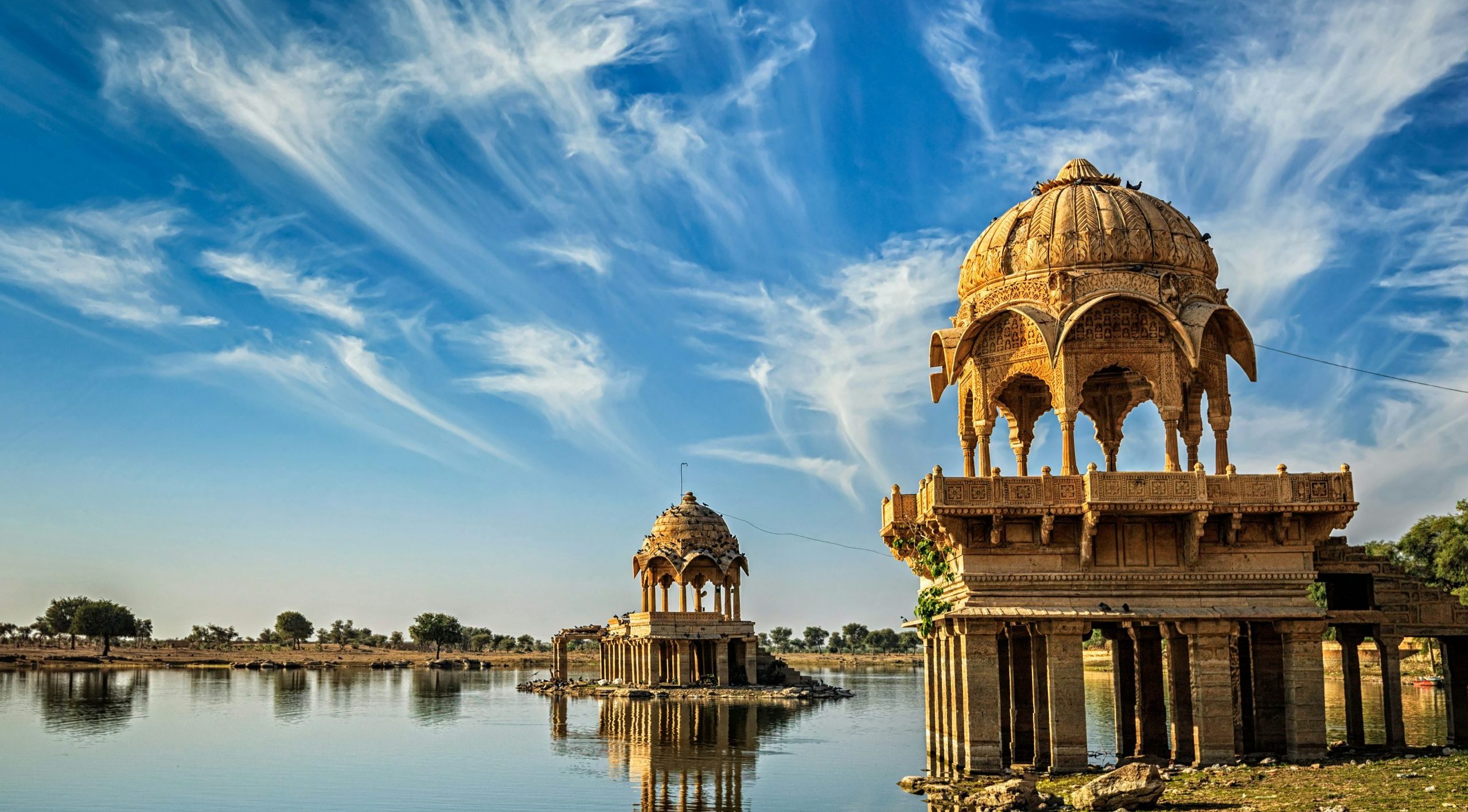
A golden sandstone fort rising from the Thar desert, still lived in by thousands, with carved havelis in the lanes below and nights under the stars on camel safari.
Jaisalmer grew rich as a caravan stop on the routes between India and Central Asia, and its merchants built havelis of honey-coloured sandstone carved like lace. The fort, founded in 1156, is one of the few living forts in the world, with thousands of people still living inside its walls. It is a UNESCO World Heritage Site.
The town sits in the Thar desert, close to the Pakistani border, and it is the base for camel safaris into the dunes.
Two or three days is right, with a night in the desert.
Stay near the fort, or inside it for atmosphere.
Inside the walls.
Near the havelis.
Orange labels are neighbourhoods, dots are the 8 top-rated hostels. Map data from OpenStreetMap contributors.
Jaisalmer, the 'Golden City', rises from the Thar Desert near the Pakistan border, its twelfth-century sandstone fort glowing gold at sunset.
Jaisalmer Fort is one of the few 'living forts' in the world: around a quarter of the town's people still live inside its walls, among Jain temples, shops and guesthouses. Its foundations are under strain from water use, so many visitors choose to stay outside the fort to reduce the pressure.
The havelis, merchants' mansions, are covered in extraordinarily fine sandstone carving; Patwon ki Haveli, a cluster of five, is the most famous. Gadisar Lake, an old reservoir with temples and pavilions, is lovely at sunrise.
The classic Jaisalmer experience is a camel safari into the desert, with a night under the stars in a camp. The Sam dunes are busy and touristy; the Khuri dunes, and non-touristy desert camps further out, are quieter. Choose operators that treat their camels well.
Kuldhara, an abandoned village said to be cursed, is a short drive away.
Walking the fort's lanes is free, and so is Gadisar Lake at sunrise and the views of the fort from the town at sunset.
The havelis' facades are free to admire; going inside costs a small fee.
Jaisalmer's food is desert food: ker sangri, desert beans and berries, dal baati churma and gatte ki sabzi. Rooftop restaurants serve Rajasthani thalis with fort views.
A meal is €2 to €6.
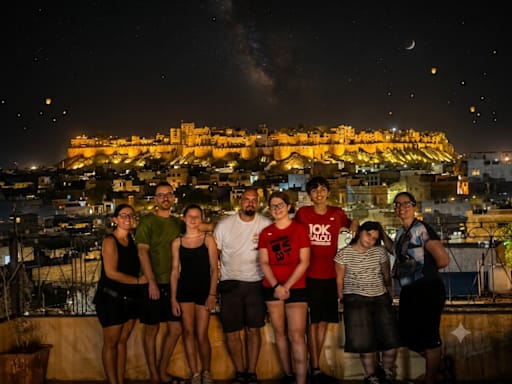
Jaisalmer's evenings are rooftop dinners with views of the lit fort, and in the desert, music around the camp fire.
A beer is €3 to €5.
Trains reach Jodhpur in about five and a half hours and Jaipur and Delhi overnight. Jaisalmer Airport has limited flights.
The town is walkable; jeeps take you to the dunes, about an hour away.
Jaisalmer is cheap. Dorms start around €5 and a careful day is €18 to €28.
An overnight camel safari with a desert camp is €20 to €50, depending on the operator. The fort museum and havelis charge a few euros each.
The currency is the rupee (INR), at roughly 95 to 100 rupees to the euro; prices here are euro equivalents. UPI phone payments are everywhere, and some apps now accept foreign cards; carry cash for small shops, autos and markets.
Jaisalmer is safe. Choose camel safari operators carefully: agree what is included, and check the camels are well treated.
The desert is extremely hot from April to June, and cold at night in winter. Bring warm layers for the desert camps from November to February.
Women travellers often face staring and comments, and sometimes groping in crowds; dress conservatively, use women's carriages on metros and trains, and book cabs through apps. Drink only bottled or filtered water, and be wary of raw salads and ice; stomach upsets are common.
Most visitors need an Indian e-Visa, applied for online before travel. Since 1 April 2026, all foreign nationals flying in must also submit the free e-Arrival Card online within 72 hours before landing; screenshot or download the QR code, as it cannot be retrieved later.
Emergency number is 112.
The Thar desert.
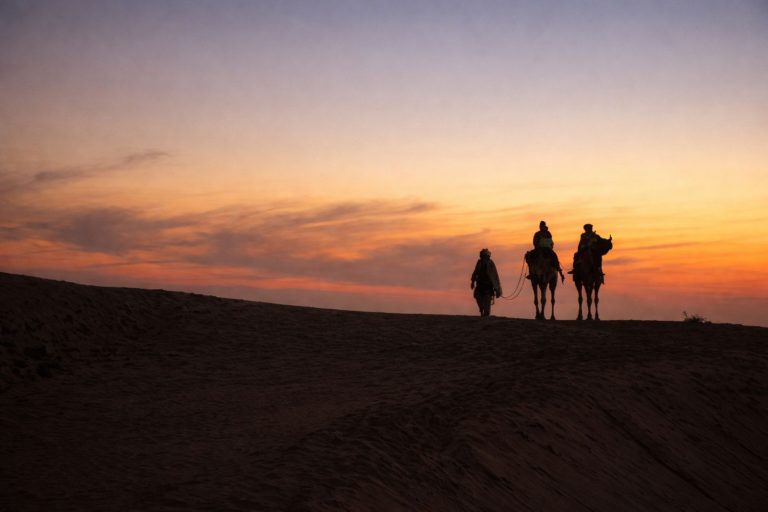
The busier dunes.
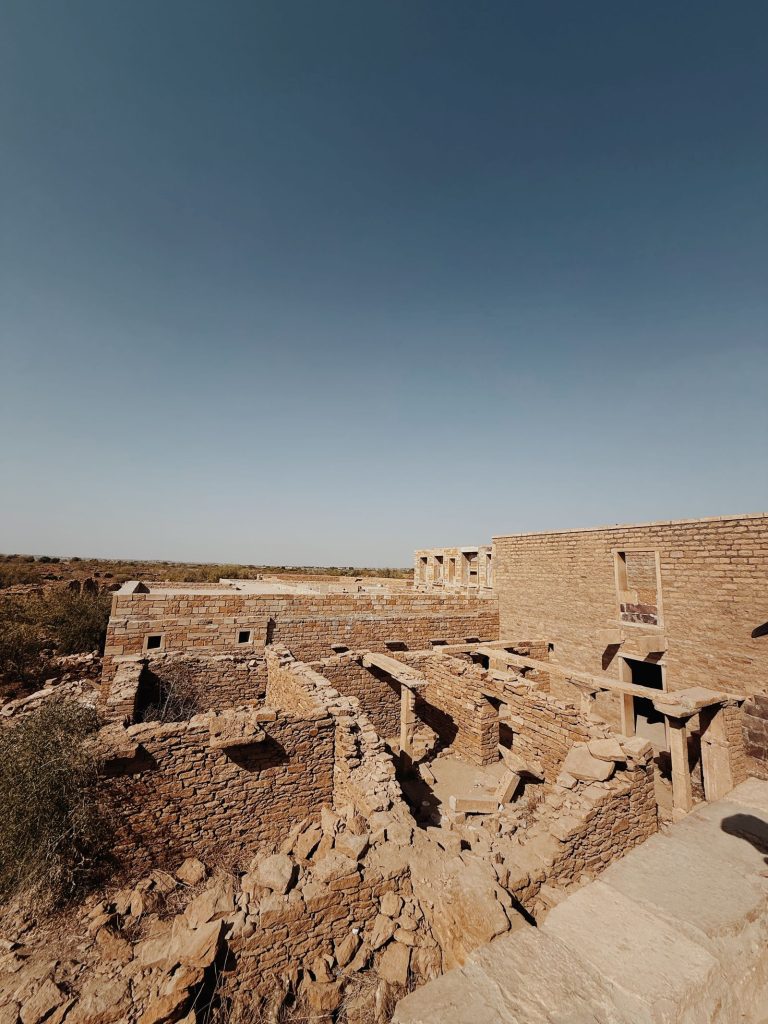
An abandoned village.
The Desert Festival fills the town in February.
Camel races, music and dance.
The best months.
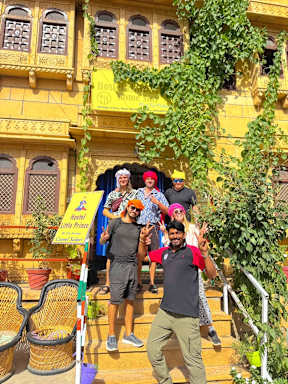
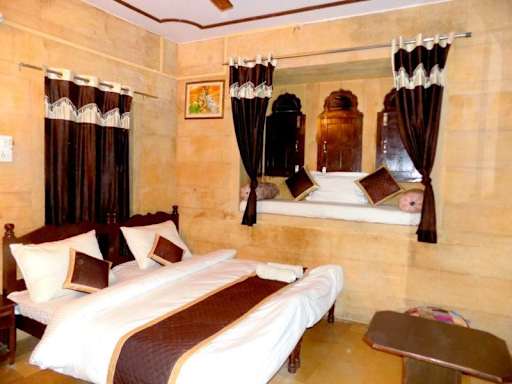
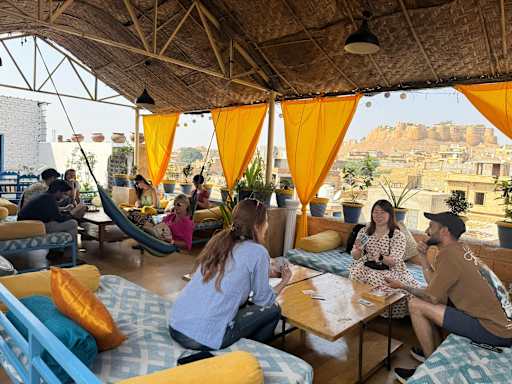
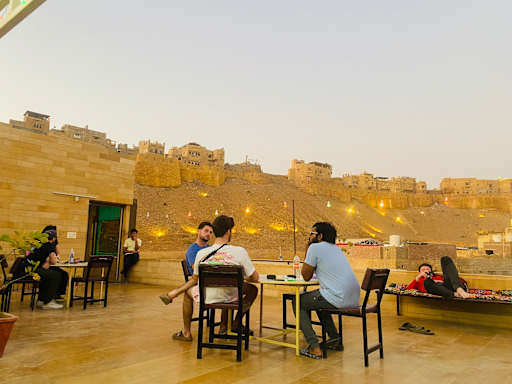
The top-rated places to stay in Jaisalmer right now, live from Hostelworld.

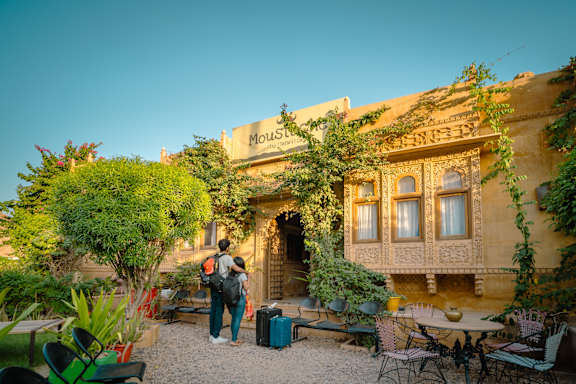
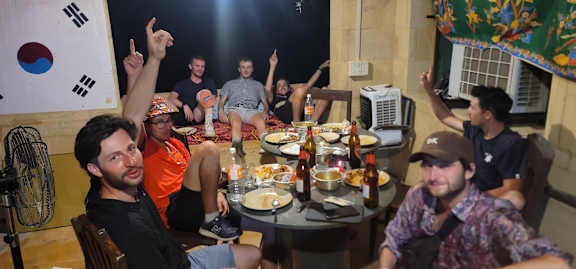
October to March. Summers are brutal.
Average highs. Desert nights are cold in winter.
Pick how you travel. Per person per night, in euros.
Prices are in rupees locally; these are euro equivalents. Excludes the camel safari.
The ones we get asked most.

Compare Jaisalmer hostels — live prices, real reviews and free cancellation on most bookings. Then meet the people already there in the app.

 Get the App.
 Get the App.