
The Ultimate (Actually Useful) Travel Guide to Rio Carnival 2026
There are festivals… and then there’s Rio Carnival — a full‑body, multi-sensory experience where the whole city feels like it’s vibrating. Crowds dance on sun‑drenched boulevards, drums rattle your ribcage, samba schools parade with skyscraper‑tall floats, and it somehow feels both chaotic and beautifully organized at the same time. And in 2026, it’s shaping up to be one of the biggest editions yet.
Before we dive in: Rio Carnival 2026 officially runs from February 13 to February 21, with events spread across the Sambadrome and every corner of the city.
Below, you’ll find the full day‑by‑day schedule, details on tickets, hostels, blocos, safety, visa rules, and everything you wish someone had told you before going.
Book Hostels In Rio De Janeiro

🗓️ The Real Day‑By‑Day Breakdown (2026)
Friday, Feb 13 — The City Switches On
Carnival doesn’t “build up” — it erupts. By the time Série Ouro (Access Group) schools enter the Sambadrome, blocos have already taken over Centro, the South Zone, and random street corners you didn’t know could fit speakers that big. These first parades feature ambitious samba schools fighting for a coveted promotion to the elite league. The energy is competitive but joyful — a perfect warmup for the days ahead.
Saturday, Feb 14 — More Parades, More Street Takeovers
Night two of the Access Group brings even fiercer performances, but the street parties are where Saturday goes wild. Massive blocos in Avenida Presidente Antônio Carlos flood downtown, and the city’s special transport plan kicks in with extended metro hours and extra train/ferry service. Expect crowds, color, and zero chance of getting bored.
Sunday, Feb 15 — The Elite Arrive (Special Group Night 1)
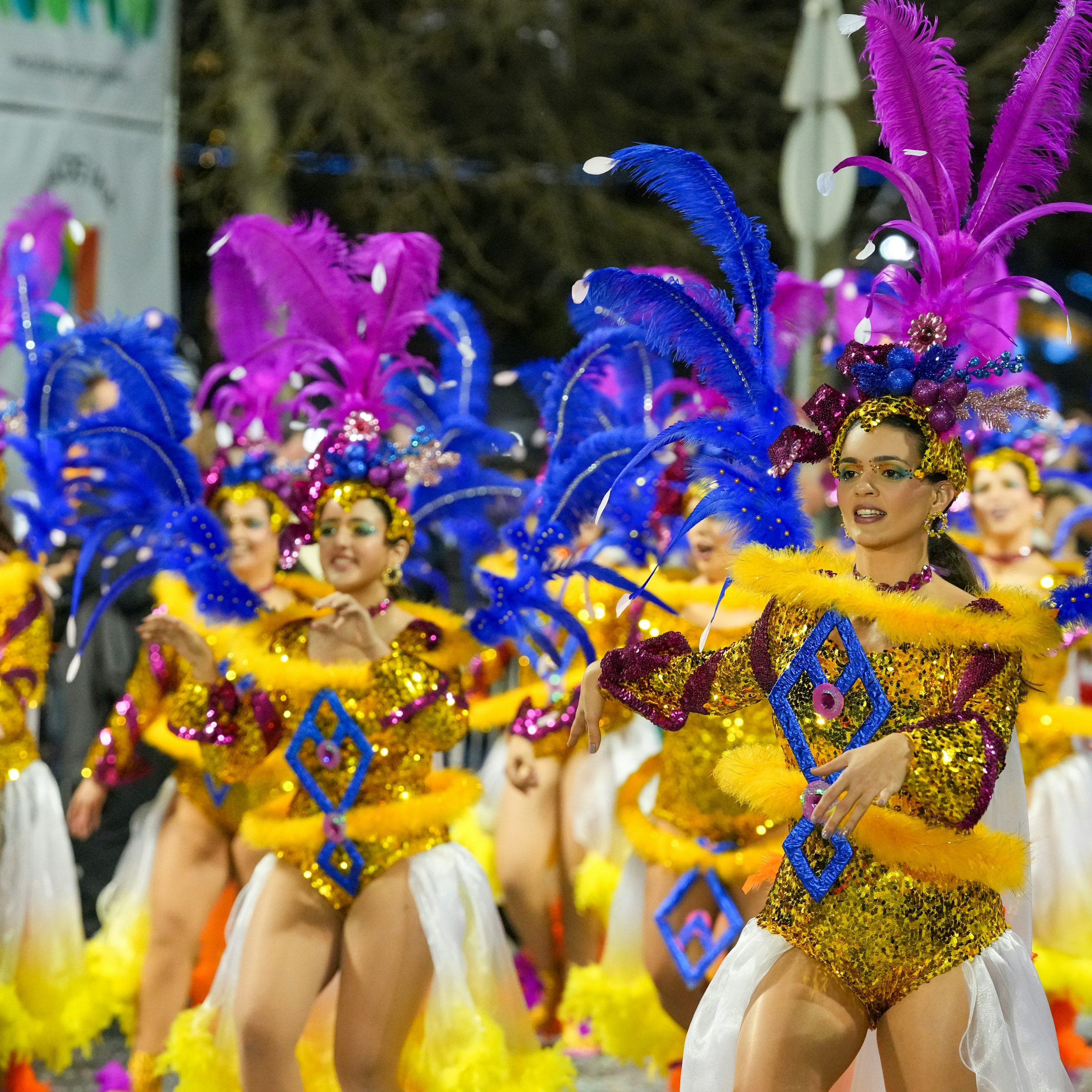
Tonight is a must‑see. The Special Group — the top 12 samba schools — begins its three‑night showdown. Think Olympic‑level choreography, thunderous drum sections, floats the size of buildings, and 4,000+ performers moving like a single organism. This is Carnival’s “main event” energy.
Monday, Feb 16 — Special Group Night 2
The rhythm intensifies. Every school knows that a single costume mishap or timing slip can cost them the championship. The Sambadrome crowd feels electric, and even if you don’t speak Portuguese, you’ll feel the narratives through the performance.
Tuesday, Feb 17 — Fat Tuesday, Final Special Group Night
The last four elite schools take their shot, often pulling out the boldest creative risks. Meanwhile, blocos rage from sunrise and don’t slow down. Hydrate. Trust me.
Wednesday, Feb 18 — Ranking & Winner Announcement
Although Carnival “ends,” Rio doesn’t suddenly get quiet. The official scoring happens in the afternoon, where judges weigh nine strict criteria — from thematic storytelling to costumes and choreography — and announce the champion school. Locals treat this like sports finals.
Friday, Feb 20 — Children’s Parade
This wholesome, heart‑melting event features young samba groups performing with impressive skill. It’s family friendly, endearing, and a sweet breather before the grand finale.
Saturday, Feb 21 — Champions’ Parade
The six top Special Group schools return to perform their winning routines one more time — with even more joy and less competitive stress. If you want the best parades without peak prices, this is your night.
🎟️ Tickets Demystified (Grandstand vs Frisa vs Camarote)
Buying tickets can feel like choosing between three concerts at once. Here’s how to pick the one that matches your vibe.
⭐ Grandstands (Arquibancadas): High‑Energy + Affordable
If you want the local experience, the cheering, the singing, and the panoramic view of the entire parade route, this is your zone.
- Concrete bleachers — simple but iconic
- Best budget choice
- Sector 9 = numbered seats (good for planners)
- Great view of the entire runway
- Prices range from US$30–130 on Access nights; US$180–370 for Special Group; ~US$200–220 for Champions
Who it’s for: Travelers who love atmosphere more than luxe seating.
⭐ Frisas (Front Boxes): Up Close & Personal
These open‑air boxes place you right at runway level, close enough to see glitter, feathers, and performers’ reactions.
- Numbered chairs
- Best spot for photos
- Rows A–D, A being closest to the runway
- From ~US$50 (Access nights) and much higher for Special Group
Who it’s for: Anyone who wants to feel the drums.
⭐ Camarotes (VIP Suites): The Elevated Experience
Imagine Carnival mixed with a high‑end music festival lounge. That’s a camarote.
- All‑inclusive food, drinks, DJs
- Private restrooms (huge deal)
- Some lounges offer makeup touch‑ups, spa services, and live acts
- Prices range ~US$290–490; premium lounges can exceed US$1,200+
Who it’s for: If your ideal Carnival includes comfort, Instagrammable décor, and unlimited caipirinhas.
🛏️ Where to Stay: Best Hostels
Carnival week is intense — where you sleep matters more than you think. You want safety, walkability, and quick access to the metro.

Aquarela do Leme (Leme/Copacabana)
A calm, friendly neighborhood tucked next to Copacabana. Perfect if you want beach access without the nonstop chaos.
- Excellent for quieter nights + easy transit
- Listings start from “€…” off‑peak
- Book early & aim to stay 3–5 blocks from the beach for maximum comfort
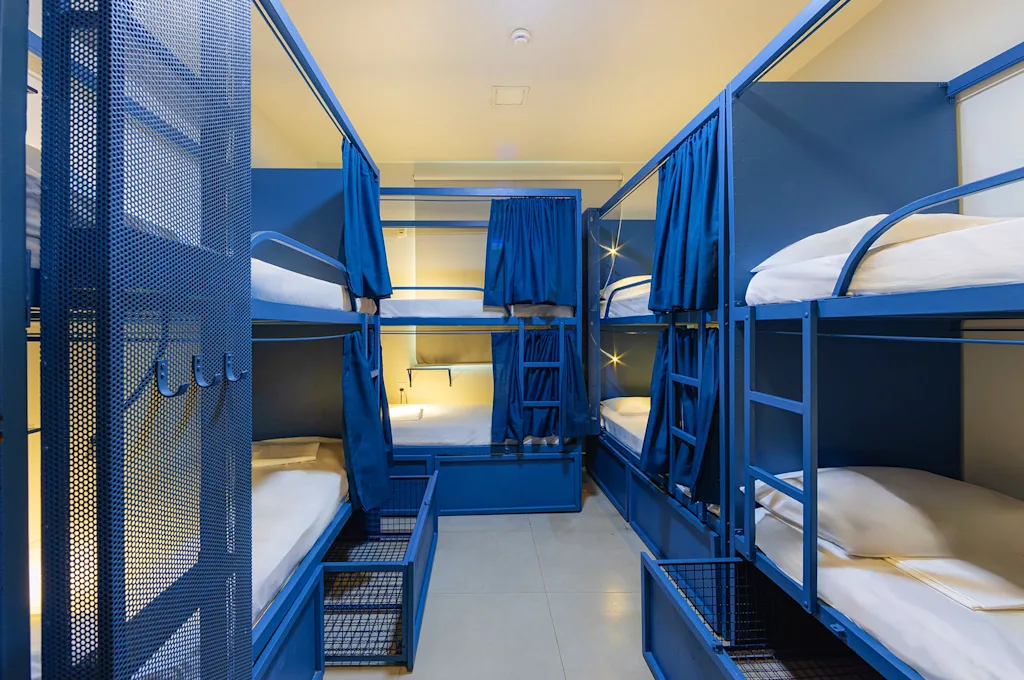
El Misti Ipanema (Ipanema)
Ipanema is the stylish heart of Rio’s South Zone — safe, walkable, and buzzing in a good way.
- Steps from the beach + metro
- From ~€23.55 dorms / €38.85 privates
- Great for anyone wanting nightlife + easy Sambadrome access

Ipanema Beach Hostel (Ipanema)
A lively option near the best sunsets in the city.
- From €32.45 for dorms
- Expect Carnival minimum stays & full houses — book early
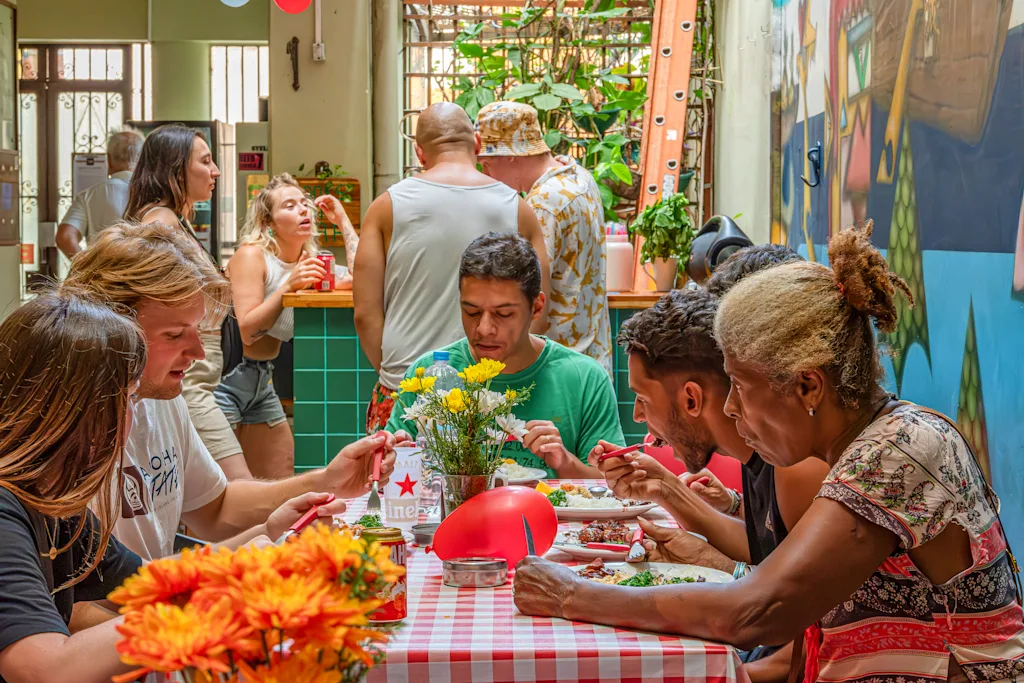
Books Hostel (Santa Teresa/Lapa)
If you want character, creativity, and nightlife, this is your spot.
- From €17.95 off‑peak
- Perfect for Lapa parties; use Uber/metro for Sambadrome (Central station for odd‑numbered sectors)
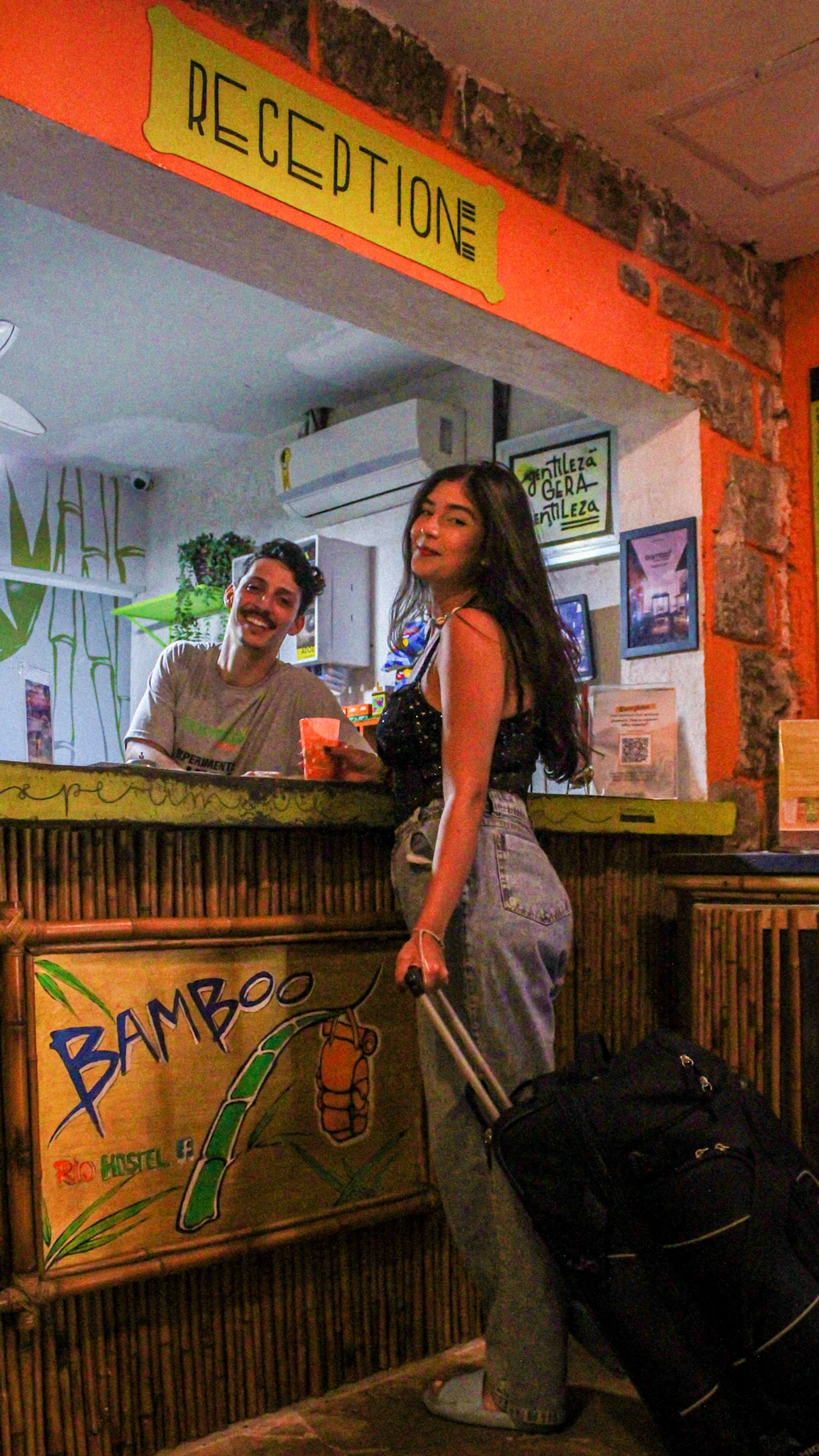
Bamboo Rio (Copacabana)
Social, friendly, and as beach‑adjacent as you’d want.
- From €20–29 normally
- Don’t try to book Copacabana last minute — it fills up the fastest

🎺 Blocos: The Beating Heart of Carnival
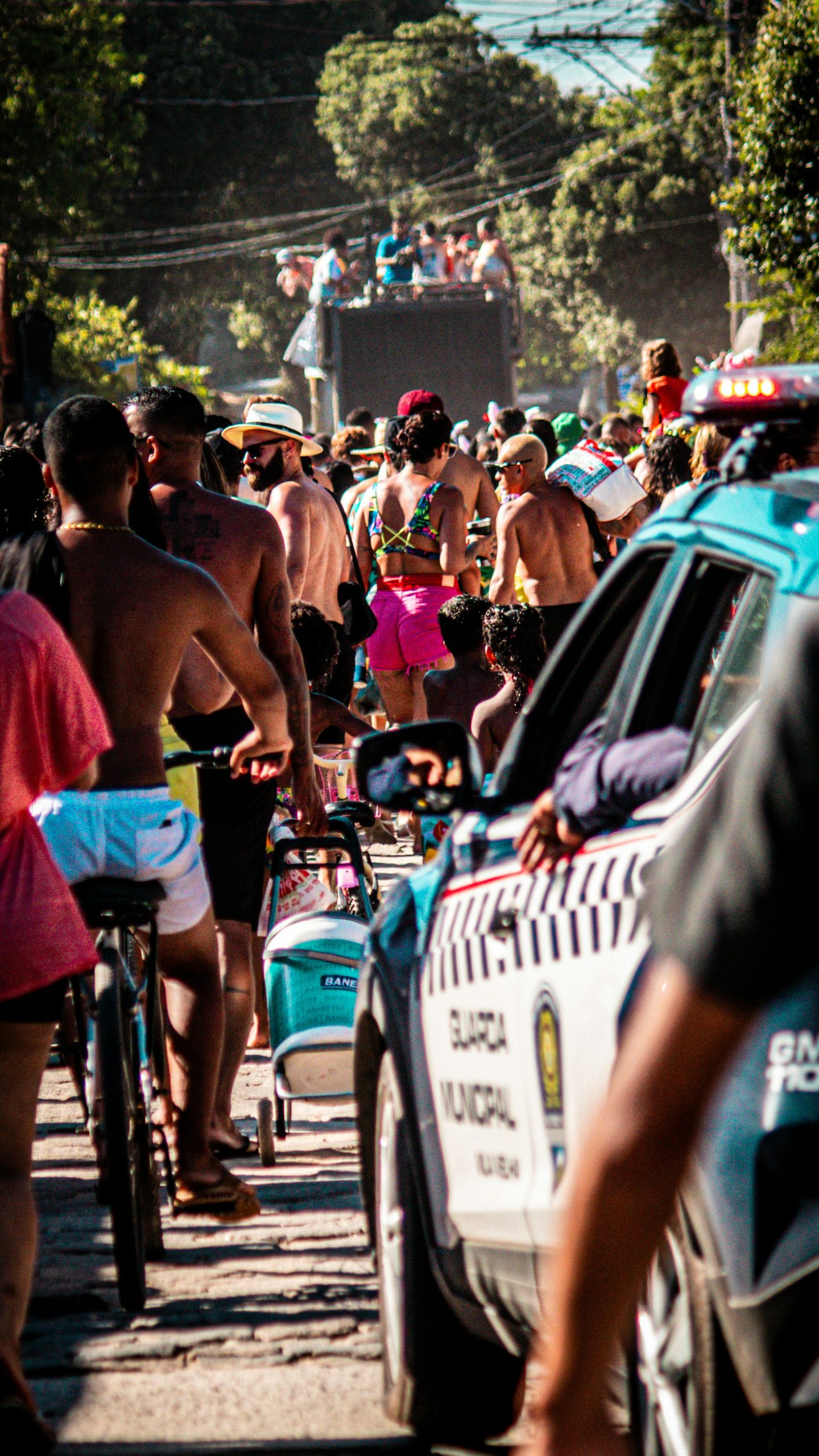
If the Sambadrome is the official show, blocos are Rio’s open‑air festival — free, spontaneous, and everywhere.
- Over 460 blocos span Centro, Zona Sul, Santa Teresa, and beyond
- Mega‑blocos downtown can pull crowds of hundreds of thousands
Recommended blocos for first-timers:
- Céu na Terra (Santa Teresa) — whimsical morning vibes
- Banda de Ipanema — iconic LGBTQ+ friendly crowd
- Simpatia é Quase Amor — pure joy in yellow shirts
Download the official Riotur “Blocos” app to navigate the madness like a local.

🚇 How to Get Around Without Stress
Getting around Rio during Carnival is its own adventure — but once you know the system, it becomes shockingly easy. The city essentially shifts into “festival mode,” with extended hours, reinforced transit lines, and clear routes designed to move millions of people safely. Below is everything you need to navigate like someone who’s been doing this for years.
First: The Only Sambadrome Rule You Must Memorize
The Sambadrome is long, and sectors are split between the even side and odd side of the parade runway. Your navigation depends entirely on which ticket you bought — so don’t mix these up.
🎯 If your ticket is for EVEN‑numbered sectors (2, 4, 6, 8, 10, 12):
➡️ Get off at Praça Onze station
➡️ Use Exit B — Marquês de Sapucaí
From there, the Sambadrome is right in front, with signage pointing you toward the correct sector.
🎯 If your ticket is for ODD‑numbered sectors (3, 5, 7, 9, 11, 13):
➡️ Get off at Central do Brasil station
Just follow the crowd — genuinely, you can’t miss the flow of costumed revelers heading to the gates.
This tiny piece of information will save you an enormous amount of time and confusion.
🚆 The Metro: Your Carnival MVP
Rio’s metro system becomes the backbone of Carnival, and honestly, it’s the best decision you’ll make all week.
Why the metro is your best friend:
- It runs 24/7 on all parade nights, which is a lifesaver when the parades end at 3–6 a.m.
(Yes, they go that late — and yes, it’s worth it.) - Trains come roughly every 10 minutes, even in the early hours.
- Stations are heavily staffed, well‑lit, and filled with fellow festival‑goers — safety in numbers.
- You avoid unpredictable road closures and heavy traffic around the Sambadrome.
Pro tip: Load your metro card ahead of time to avoid the long lines on parade nights.
The Citywide Transport Boost
Carnival brings millions of people to Rio, and the city prepares for it like a logistical Olympic event.
During the pre‑Carnival rehearsals and the mega‑blocos, Rio activates a special operations plan:
What this means for you:
- Extra metro, train, and ferry trips across key dates
- Reduced intervals between trains (especially on the Santa Cruz & Japeri lines)
- Extended service hours on Fridays, Saturdays, and Sundays leading up to Carnival
- More boats on the Arariboia–Praça XV line, often every 15–20 minutes during peak hours
This reinforced network keeps the city moving even when crowds are massive. If you’ve ever been to a major event where transit collapses — this is not that.
After the Parade: What to Expect
When a school finishes parading, tens of thousands of people move at once. Streets immediately surrounding the Sambadrome close for safety and flow control, so your exit path is controlled but smooth.
Here’s the realistic experience:
- After leaving your sector, you’ll walk 10–20 minutes to reach authorized taxi, Uber, or rideshare zones.
This is very normal — everyone does it. - Expect a crowd, but it moves steadily.
- If you want the fastest exit, avoid stopping to take photos right away — move with the initial wave, then pause later.
- If using Uber or 99, set your pickup spot after reaching the permitted area.
Don’t try to get picked up right outside the Sambadrome. The perimeter is blocked, and cars can’t reach you.
Bonus Tips to Make Getting Around Even Easier
- Arrive early — not only for good seats, but to beat the metro rush and find your gate calmly.
- Wear comfortable shoes — you will walk a lot.
- Screenshot your route — cell networks sometimes congest near big blocos.
- Look for volunteers — during Carnival, there are usually event staff around major stations to guide visitors.

✈️ Visas, Money, and SIM Cards (Don’t Skip!)
Travel logistics aren’t the glamorous side of Carnival planning, but they are the difference between landing in Rio ready to dance… or being stuck at the airport Googling “Brazil visa help.” This section gives you the real‑world essentials — explained clearly and without panic — so you can arrive confident, connected, and prepared.
Visa rules:
If you’re from the U.S., Canada, or Australia
You must apply for an e‑Visa before entering Brazil.
Brazil reinstated this requirement on April 10, 2025, meaning you cannot board your flight without it. The process is online, but don’t leave it for the last week — the system can get busy around Carnival.
The e‑Visa typically grants a stay of up to 90 days, and officers may ask for proof of accommodation or onward travel, so keep digital copies handy.
If you’re from the EU/UK or most Latin American countries
You’re in luck — most EU, UK, and LATAM citizens can enter Brazil visa‑free for short tourism stays. Still, immigration officers can request proof of lodging and sufficient funds, so be prepared.
💸 Money: currency, pricing, and what to expect
Carnival is magical, but it’s also peak tourism season, so budgeting smartly matters.
🇧🇷 Brazil’s currency
Brazil uses the Brazilian real (BRL). Cash is still useful at blocos, small bars, and street food stalls, though most larger venues accept cards.
🧾 ATMs & card usage
- ATMs are widely available but may charge international withdrawal fees.
- Rio is card‑friendly, but always have a small amount of BRL for taxis, water vendors, and blocos.
- Split emergency funds between two locations — one in your bag, one hidden on you.
📱 SIM Cards & eSIMs: staying connected during Carnival
Carnival is huge, hot, and crowded — which means you will absolutely need reliable internet. Whether it’s finding your friends in a bloco or ordering an Uber at 3 a.m., connectivity matters more than you think.
📍 Option 1: Airport SIM kiosks (physical SIM)
You can buy a prepaid SIM upon arrival at the airport. This works, but expect:
- Occasional lines after long‑haul flights
- Tourist‑oriented pricing
- Shops that sometimes require a CPF (Brazilian tax ID) for activation — this can make the process messy
Because of that CPF requirement, travelers often hit delays or walk away frustrated. Many carriers are improving foreigner support, but experiences vary.
⚡ Option 2: eSIM — the easiest choice for 2026
Travel eSIMs are the smoothest, fastest, frustration‑free option for Carnival visitors.
Why?
- No need to stand in line.
- No need for a CPF.
- You install the eSIM digitally before boarding your flight.
- Instant connectivity when the plane lands — meaning you can immediately message your accommodation, call a rideshare, or check directions.
This is especially important during Carnival, when:
- Airport crowds are heavy
- Traditional SIM stores can run low on inventory
- Network congestion is common at blocos, and you want a strong local connection
- You may need to coordinate with friends in huge crowds, where timing matters
Popular providers include Ubigi, Airalo, Nomad, MobiMatter, and others — and most offer Brazil‑specific plans with solid data allowances.
🔌 Connectivity during big events
Because Carnival draws millions of people, cell networks get heavily congested, especially in mega‑blocos. eSIMs that partner with top local carriers (like Vivo or Claro) tend to perform best during these peak moments.
🧠 First‑Timer Wisdom (Learn From Others’ Mistakes)
- Champions’ Parade is underrated. Same elite schools, less pressure, better prices.
- Choose Zona Sul (South Zone) — Ipanema, Leblon, Leme, Copacabana, Botafogo.
- Book everything early, even transport.
- Set meeting points before entering big blocos — cell congestion is real.
- Hydrate more than you think. February heat can hit 35–40°C.
🔐 Safety: Practical, Not Paranoid
Rio isn’t “dangerous,” but Carnival crowds are intense. A few simple habits go far:
- Don’t bring valuables — one card, some cash, that’s it.
- Stick to busy, well-lit streets at night.
- Keep your drink with you — don’t accept open cans.
- Wear breathable clothes and sunscreen.
🎒 Packing Checklist (Save This!)
- Passport + e‑Visa (if needed) + your ticket QR codes
- Small cross‑body or money belt
- SPF 50, water bottle, electrolytes
- Power bank (your battery will die early)
- Comfy shoes (seriously)
- Glitter, face gems, or accessorizing flair
🌅 Final Thoughts
Rio Carnival isn’t just a trip — it’s an energy you carry home. It’s the heat, the music, the blurring of day and night, the way strangers link arms in the street and suddenly you’re all dancing together. Whether you’re in the Sambadrome at 3 a.m. or swaying with a bloco at sunrise on Ipanema Beach, Carnival 2026 will stay with you.
Download the Hostelworld app to start booking now


FAQ: Rio Carnival
What’s the best night to attend the Sambadrome?
Most first‑timers pick Sunday or Monday of the Special Group for peak spectacle; Champions’ Saturday is great value with the top six schools repeating under less pressure.
How early should I arrive at the Sambadrome?
Plan to arrive 1.5–2 hours before your parade night officially begins. Crowds are huge, security checks take time, and seating in most grandstands is first‑come, first‑served (except Sector 9’s numbered seats). A calm arrival = a way better night.
What are the main parades I should see?
The absolute must‑see events are the Special Group parades on Feb 15, 16, and 17, where the top 12 samba schools compete with their most elaborate performances. The Champions’ Parade on Feb 21 is also a crowd‑favorite because the winning schools repeat their best routines with a celebratory vibe.
Is it worth going to the Champions’ Parade?
Yes — many locals swear it’s the best night. You see the top six samba schools performing again with peak joy and less competitive pressure, often at cheaper ticket prices than the Special Group nights.
What time do parades end?
Special Group parades often go until 3–6 a.m. Depending on your school’s position in the order, you might be leaving at sunrise — which is exactly as magical as it sounds.
Do parades happen if it rains?
Yes. Carnival parades run rain or shine — and honestly, rainy-night parades are legendary. Bring a light poncho; umbrellas aren’t allowed in some sectors.
What’s the difference between the Access Group and the Special Group?
The Access Group (Série Ouro) parades on Feb 13–14 and features strong up‑and‑coming samba schools vying for promotion into the top league. The Special Group is the elite division — the 12 most prestigious schools — performing Feb 15–17 for the championship title.
Can I bring food and drinks into the Sambadrome?
You can bring:
- Sealed water bottles
- Small snacks
- A small bag (security limits size; avoid big backpacks)
Alcohol is sold inside, and vendors pass through aisles regularly.
What’s the best night for first-timers?
If you want the full “wow” factor, Sunday or Monday of the Special Group is unbeatable.
If you want incredible performances for a lower price, the Champions’ Parade is the perfect pick
Which ticket should I buy?
On a budget and love the vibe? Grandstand. Want up‑close photos? Frisa. Prefer comfort and open bar? Camarote. Prices range from ~US$30 grandstands (Access) to US$300–$1,200+ camarotes on peak nights.
How do I get to my sector?
Even sectors → Praça Onze; Odd sectors → Central do Brasil. Allow 10–20 minutes on foot from the station due to closures.
How do I know which metro station to use for my Sambadrome sector?
This is the most important transit rule:
- Even‑numbered sectors (2/4/6/8/10/12): get off at Praça Onze (Exit B)
- Odd‑numbered sectors (3/5/7/9/11/13): get off at Central do Brasil
The metro runs 24/7 on parade nights with trains every ~10 minutes.
How long is the walk after the parade?
Because of street closures around the Sambadrome, expect a 10–20 minute walk to reach the authorized taxi, Uber, or rideshare zones. This is normal and part of the post‑parade flow.
Are blocos free to attend?
Yes! Blocos are completely free street parties happening across Rio from January through late February. Some are tiny neighborhood gatherings; others attract hundreds of thousands of people. You can check schedules through Riotur’s official Carnaval app/calendar.
Are blocos safe?
They’re festive but crowded—use money belts, avoid showing phones, set meeting points, and stick to daytime or morning blocos if you dislike dense crowds.
Which blocos are best for first-timers?
Popular, safe, and iconic choices include:
- Céu na Terra (Santa Teresa, early morning)
- Banda de Ipanema (beachfront classic)
- Simpatia é Quase Amor (fun, yellow, energetic)
If you want something calmer, choose morning or early‑afternoon blocos — they’re less crowded and easier to navigate.
Should I worry about getting lost during blocos?
Not exactly — but you will get separated from your group at least once.
Set a pre-arranged meeting point, download offline maps, and screenshot your accommodation’s address.
Do U.S./Canadian/Australian citizens need a visa?
Yes—e‑Visa required from 10 April 2025 onward; apply before travel. EU/UK and many LATAM nationals are visa‑exempt for short tourism.
Should I get a local SIM?
If your phone supports eSIM, it’s the easiest path (no CPF); otherwise, some carrier shops still ask for CPF for prepaid activation.
Are children allowed at Carnival events?
Yes. The Children’s Parade on Feb 20 is specifically family‑friendly. Kids can attend blocos and Sambadrome nights, but be mindful of heat, late hours, and crowds.


 Get the App.