Inside the walls
First-timersThe medieval town: the lanes, the church ruins, the squares and the most atmospheric beds.

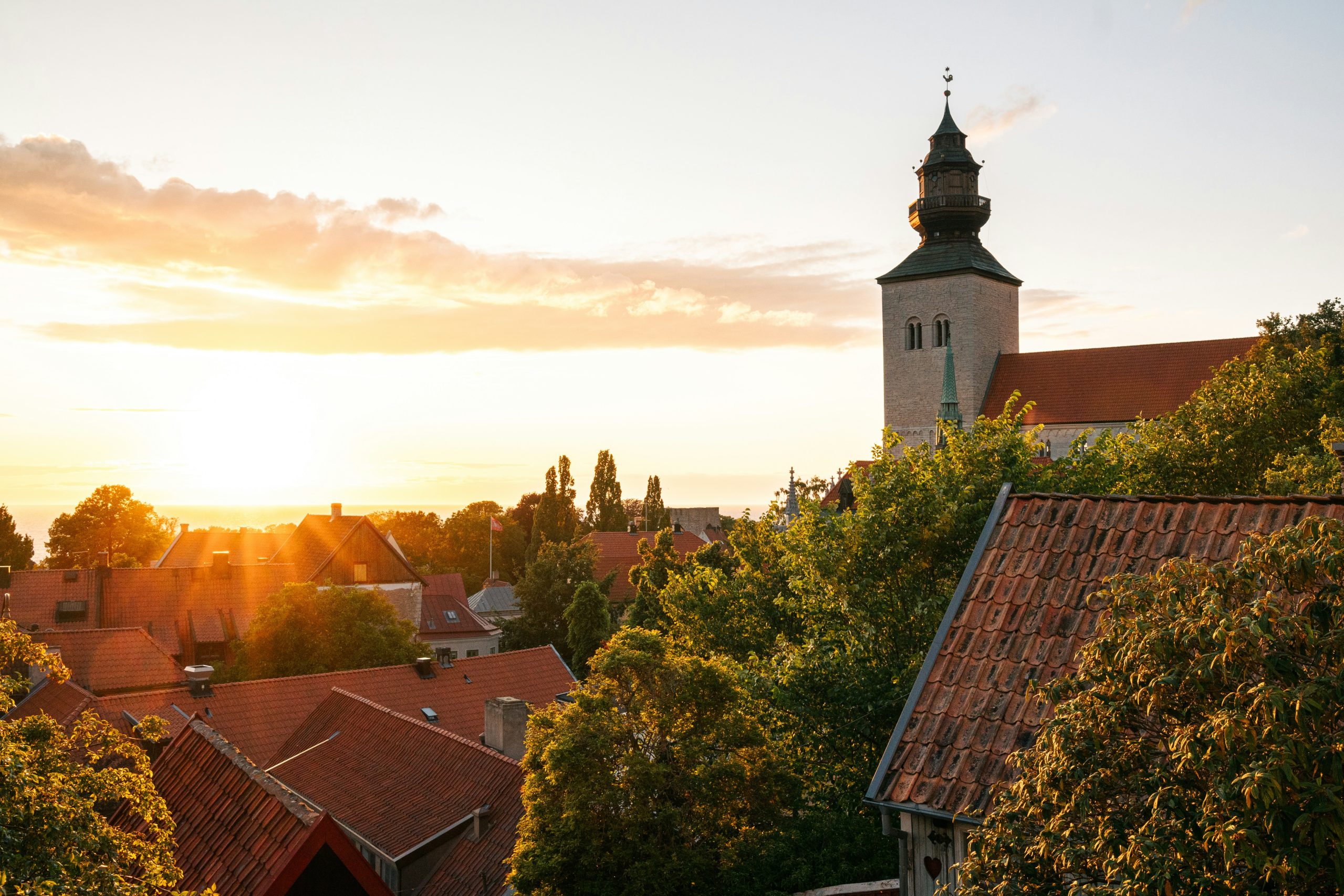
A walled medieval Hanseatic town on the island of Gotland, with more than three kilometres of intact wall, the ruins of a dozen churches, and a summer that fills the whole island.
Visby was one of the great Hanseatic trading towns of the Baltic, and it grew rich enough in the Middle Ages to build a ring wall around itself — three and a half kilometres long, with dozens of towers, and still almost complete. It is the best-preserved walled town in Scandinavia and is UNESCO-listed.
Inside the walls are cobbled lanes, rose-covered houses and the ruins of around a dozen medieval churches, left roofless after the town's decline.
Gotland, the island it sits on, is the largest in the Baltic. It has a mild climate by Swedish standards, long beaches, and on its northern tip at Fårö, a landscape of limestone sea stacks called raukar, where the film director Ingmar Bergman lived and is buried.
In summer the island is where much of Sweden goes on holiday. Medieval Week in August turns the town into a costumed fair, and Almedalen Week, a politics festival, fills it with Swedish politicians and journalists.
Outside summer it is very quiet, and many places close. Two or three days in season.
A walled town on a slope above the harbour, and an island beyond it.
The medieval town: the lanes, the church ruins, the squares and the most atmospheric beds.
Just beyond the ring wall: cheaper rooms, the harbour and a short walk in.
Map © MapTiler © OpenStreetMap contributors.
Walk the ring wall. It runs three and a half kilometres around the town, almost complete, and walking its outside or along its inside is free. The views from the gates and towers over the rooftops and the sea are the image of Gotland.
Explore the church ruins. Around a dozen medieval churches stand roofless inside the walls, left after the town's decline, and St Karin's on the main square and St Nicolai are the most striking. Most are free to walk into.
The cathedral of St Mary, the one medieval church still in use, is free.
The Gotland Museum, Fornsalen, holds picture stones, Viking silver hoards and the history of the island.
The Botanical Garden, inside the walls, is free and full of roses.
Then hire a bike or a car and go north to Fårö, to see the raukar — limestone sea stacks shaped by the waves — and the landscape Ingmar Bergman made his home.
The ring wall is free to walk, inside and out.
Most of the church ruins are free to enter, and so is the cathedral.
The Botanical Garden is free.
The lanes, the rose-covered houses and the squares inside the walls cost nothing.
The beaches around the island are free, and the right of public access lets you walk the coast freely.
Expensive in summer, as holiday towns are. A main is 200 to 320 SEK (€18–29).
Saffranspannkaka, a saffron pancake baked with rice, served with dewberry jam and cream, is the Gotland speciality.
Gotland lamb is highly regarded, and the island's truffles have a following.
Gotlandsdricka, a traditional home-brewed juniper-smoked beer, is the historic local drink, though rarely found commercially.
A beer is 80 to 110 SEK (€7–10).
Many restaurants close outside the summer season.
In summer, Visby is one of the liveliest places in Sweden, with bars and clubs around Stora torget and the harbour busy late into the long light evenings.
A beer is 80 to 110 SEK (€7–10) and cocktails 150 to 190 SEK (€14–17).
Medieval Week in August brings feasting, music and costume.
Outside the summer season the town is very quiet, and most of the nightlife closes.
Visby itself is walkable.
Ferries run from Nynäshamn, south of Stockholm, and from Oskarshamn on the mainland, taking about three hours. In summer they sell out, so book well ahead. Short flights also connect Visby with Stockholm.
To see the rest of Gotland, hire a bike — the island is fairly flat — or a car. Buses exist but are limited.
Fårö, in the north, is reached by a short free car ferry from the main island.
Expensive in summer and much cheaper out of season, when a lot of it closes. Beds are 350 to 750 SEK (€32–68) in summer, a main 200 to 320 SEK (€18–29), and a beer 80 to 110 SEK (€7–10).
A day is €70 to €120 in season.
The wall, the ruins, the Botanical Garden and the beaches are free.
The ferry is a significant cost, and it sells out in July and August.
Card only, almost everywhere.
Visby is very safe and crime against visitors is minimal.
The cobbles inside the walls are steep and uneven, and slippery in rain.
The church ruins have uneven ground and unfenced walls — take care, especially with children.
The sea around Gotland is cold for much of the year, and some beaches have currents; swim where others are swimming.
During Almedalen Week and Medieval Week the town is extremely crowded.
Emergency number is 112.
Limestone sea stacks, sandy beaches and Bergman's island.
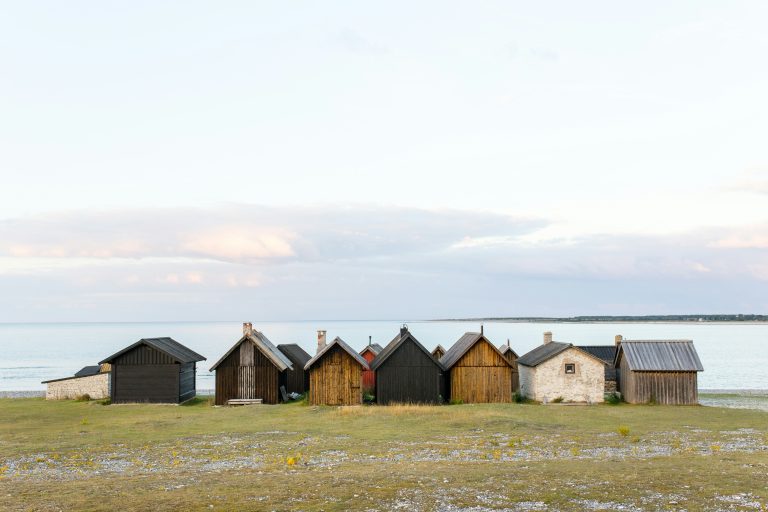
Limestone raukar sea stacks, empty beaches and the island where Ingmar Bergman lived and is buried.
A medieval fair in August, and a politics festival in late June.
A week of costume, markets, jousting and feasting across the medieval town. Beds and ferries sell out.
A political festival where Swedish parties, journalists and organisations gather. The town fills.
When the island fills with Swedish holidaymakers.
A small market inside the walls.
When many places close and the island is very quiet.
June to August for the full island. Late May and September are quieter but still open.
Average highs. Gotland is sunnier than most of Sweden, but the season is short — outside roughly June to August, many restaurants and hotels close.
Pick how you travel. Per person per night, in euros, in summer — you will pay in kronor, at roughly 11 to the euro.
Shown in euros for comparison; these are summer figures. The ferry is a separate and significant cost, and it sells out in July and August.
The ones we get asked most.

Compare Visby hostels — live prices, real reviews and free cancellation on most bookings. Then meet the people already there in the app.

 Get the App.
 Get the App.