Old town
First-timersThe hilltop old town and Market Square.

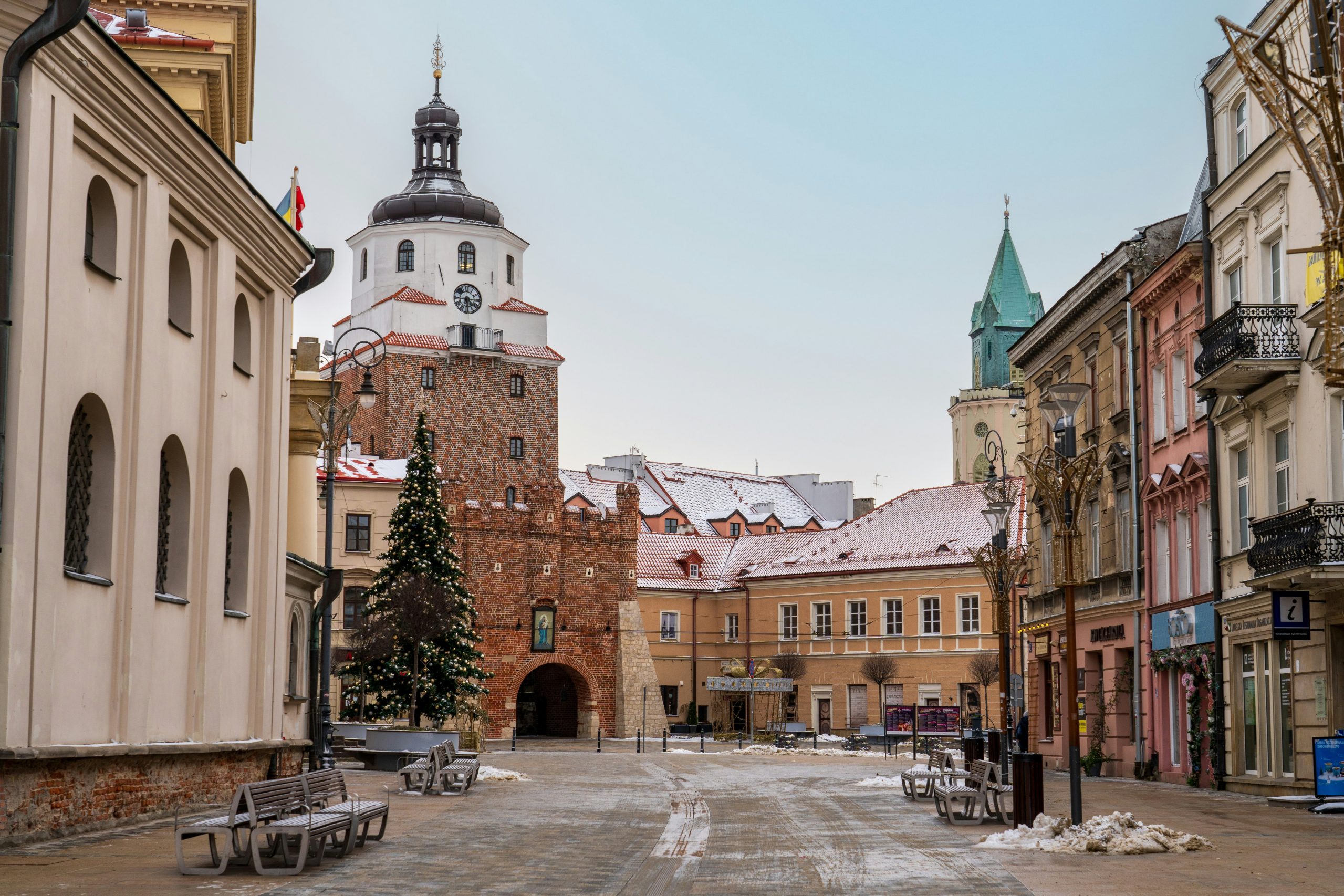
The largest city in eastern Poland: a hilltop old town, a castle chapel painted by Byzantine artists, the memory of a great Jewish community, and Majdanek on its edge.
Lublin sits in eastern Poland, and it has always stood between Catholic and Orthodox, Polish and Ruthenian, Christian and Jewish. The Union of Lublin, signed here in 1569, joined Poland and Lithuania into one of the largest states in Europe.
For centuries it was one of the great centres of Jewish learning. Almost all of its Jewish population was murdered in the Holocaust, and the Nazi concentration camp of Majdanek, on the edge of the city, is one of the best preserved in Europe.
Today Lublin is a big university city with a lively, affordable old town and very few foreign visitors. Two days is right, with Zamość and Kazimierz Dolny as day trips.
The old town is compact and hilly. Stay in or near it.
The hilltop old town and Market Square.
The main street west of the Kraków Gate.
The castle and the site of the Jewish town below it.
Orange labels are neighbourhoods, dots are the 2 top-rated hostels. Map © MapTiler © OpenStreetMap contributors.
Enter the old town through the Kraków Gate and walk its lanes of painted houses to the Market Square and the Crown Tribunal. The Lublin Underground Route runs through cellars beneath the old town.
Lublin Castle, below the old town, holds the Chapel of the Holy Trinity, painted in 1418 with Russo-Byzantine frescoes commissioned by a Catholic king, a rare meeting of eastern and western art.
The Grodzka Gate, known as the Jewish Gate, houses the Grodzka Gate – NN Theatre centre, which keeps the memory of the Jewish town that once lay below the castle.
Majdanek, about four kilometres from the centre, was a Nazi concentration and extermination camp, and much of it still stands. Entry to the grounds is free. Allow several hours.
The old town and its squares are free.
Entry to the grounds of the Majdanek State Museum is free.
The views from the castle hill are free.
Lublin's speciality is the cebularz, a flatbread topped with onion and poppy seed, protected by EU law. Pierogi and milk bars are cheap.
A meal is €7 to €14.
Lublin has a lively student nightlife in the old town, with bars in cellars and courtyards.
A beer is €2.50 to €3.50.
The old town is walkable. Trolleybuses and buses cover the rest, and a bus runs to Majdanek.
Lublin Airport is east of the city, with a train to the centre.
Trains reach Warsaw in about two hours. Buses run to Zamość and Kazimierz Dolny.
Lublin is cheap. A careful day is €30 to €40.
The currency is the złoty, not the euro. Cards are accepted almost everywhere; use a bank ATM and decline the machine's currency conversion.
Lublin is safe, with low crime.
Lublin is close to the borders with Ukraine and Belarus. Restrictions near the eastern border change; check current advice if you plan to travel further east.
Emergency number is 112.
A Renaissance ideal town and a Vistula artists' village.
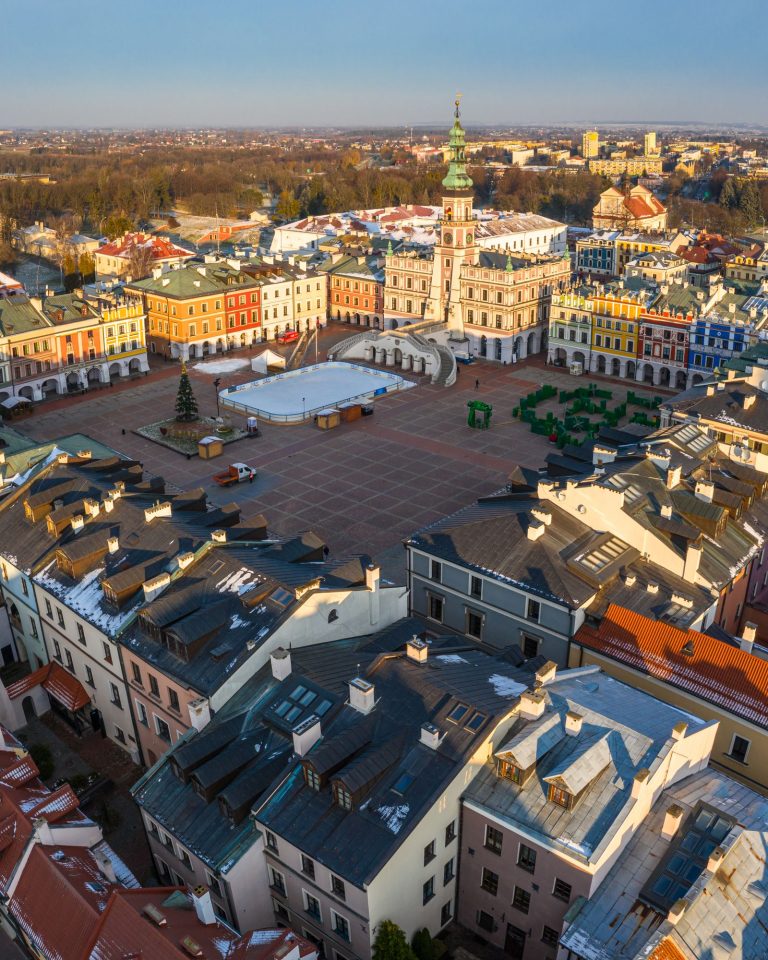
A Renaissance ideal town, planned in the sixteenth century, a UNESCO World Heritage Site.
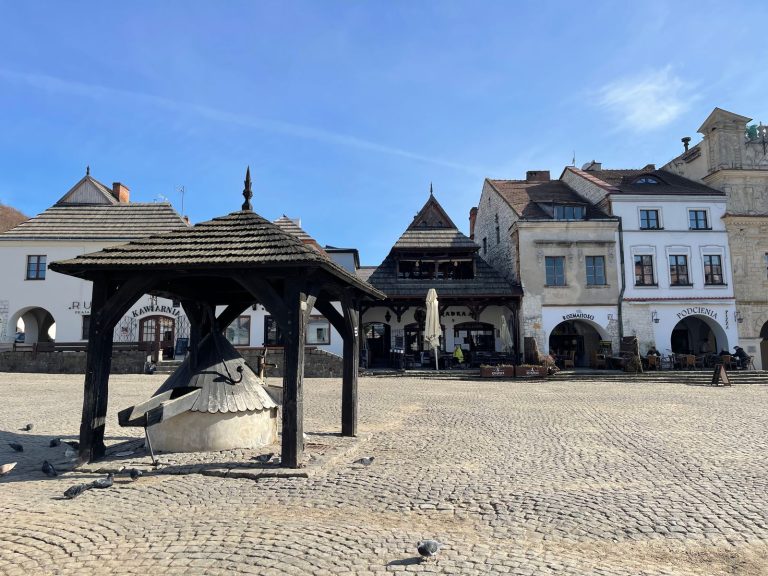
A small town on the Vistula, popular with artists.
The Carnival of Street Performers turns the old town into a stage.

The Simon & Garfunkel Songbook Show celebrates the iconic career of the legendary folk-rock duo through music and a storyline based on the biography…
The top-rated places to stay in Lublin right now, live from Hostelworld.
May to September is best. The festival of street performers fills the old town in July.
Average highs. The east is colder in winter than the west of Poland.
Pick how you travel. Per person per night, in euros.
Prices are in złoty locally; these are euro equivalents.
The ones we get asked most.

Compare Lublin hostels — live prices, real reviews and free cancellation on most bookings. Then meet the people already there in the app.

 Get the App.
 Get the App.