Old Town
First-timersAt the meeting of two rivers: the castle, the town hall square, restaurants and most beds.

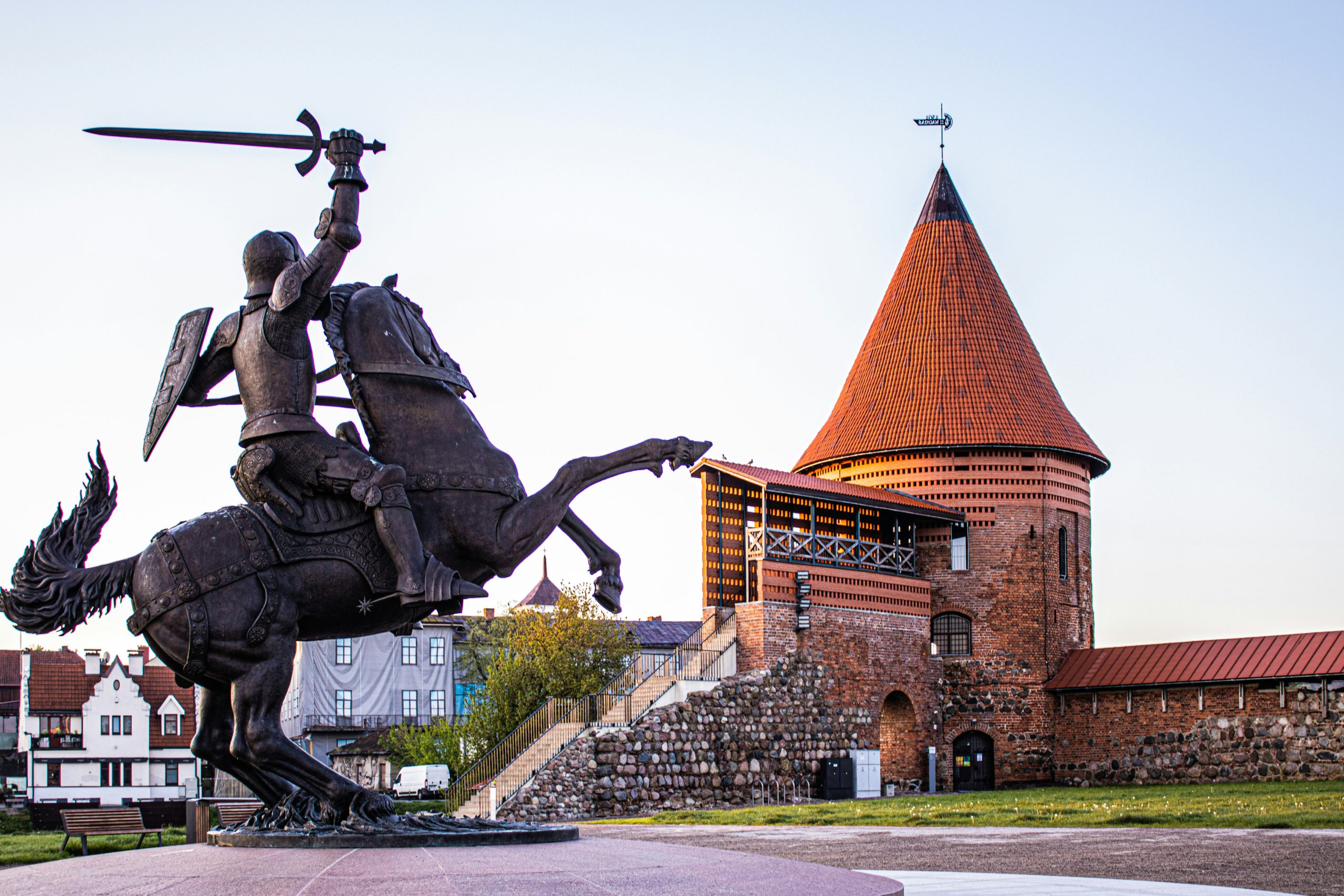
The interwar capital: a modernist city built in twenty years, two wooden funiculars from the 1930s, a museum of devils, and the consulate where one man wrote thousands of visas that saved lives.
Between 1920 and 1939 Vilnius was held by Poland, and Lithuania made Kaunas its temporary capital. The country spent those two decades building a modern state in a provincial town — ministries, banks, a university, thousands of apartment blocks — in an optimistic modernist style all its own.
That architecture is the reason to come. It earned Kaunas a European Heritage Label and it is unlike the interwar modernism of anywhere else, partly because it was built fast, cheaply and with local materials by architects who had trained abroad and come home.
The city also holds two pieces of Second World War history that should be visited together. Sugihara House was the Japanese consulate, where Chiune Sugihara issued thousands of transit visas to Jewish refugees in 1940 against his government's instructions. The Ninth Fort, on the edge of the city, is where tens of thousands of people were murdered.
Kaunas was European Capital of Culture in 2022 and has the student population and the street art to show for it. Two days.
An old town at the river junction, a modernist new town east of it.
At the meeting of two rivers: the castle, the town hall square, restaurants and most beds.
East along the pedestrian avenue: the interwar architecture, the bars, the cafés and the students.
Up the funicular: a hillside district of wooden houses and the Christ's Resurrection basilica.
Orange labels are neighbourhoods, dots are the 2 top-rated hostels. Map © MapTiler © OpenStreetMap contributors.
Walk Laisves aleja, the 1.6-kilometre pedestrian avenue, and look up. The interwar modernist buildings along it and in the streets around are the city's real subject — banks, ministries and apartment blocks from the 1920s and 30s, built in a distinctive national style. The tourist office runs a modernism route and it is worth following.
Ride a funicular. Two of them, both from the 1930s, both still running with original wooden carriages, at about €1. The Zaliakalnis one comes out near the Christ's Resurrection basilica, whose roof terrace gives the best view of the city.
Sugihara House, about €5, was the Japanese consulate where Chiune Sugihara issued thousands of transit visas to Jewish refugees fleeing east in 1940, working against his own foreign ministry's instructions. It is a small museum and a large story.
The Ninth Fort, on the edge of the city, is a tsarist fortification used by the Nazis as a killing site — tens of thousands of people died there. The grounds and monument are free.
The Devils' Museum, about €5, holds some three thousand depictions of the devil from around the world and exists nowhere else.
The modernist architecture is free — Laisves aleja, the streets around it and the New Town grid are an open-air survey of interwar building.
The old town, the castle grounds, the town hall square and the river confluence cost nothing.
The Ninth Fort grounds and the enormous concrete monument there are free, with only the museum charging a small fee.
Kaunas street art is extensive and free to find, including several large and well-known murals that have become city landmarks.
Pazaislis monastery, a baroque complex on the edge of the city by the reservoir, is free to walk to and charges only a small amount inside.
Cheaper than Vilnius across the board. A main is €8 to €14 and lunch specials €5 to €8.
The Lithuanian repertoire applies: cepelinai, the zeppelin-shaped potato dumplings, and saltibarsciai, the cold pink beetroot soup in summer.
Kaunas also has a good modern restaurant scene for its size, a legacy of the 2022 Capital of Culture year.
The central market is cheap and good for produce and smoked goods.
A beer is €2.50 to €4.50, and the Lithuanian farmhouse beer tradition is well represented here — ask for kaimiskas styles rather than the industrial lagers.
Student cafés along and around Laisves aleja do the cheapest eating in the city.
Student-driven and cheap. Several universities put tens of thousands of students in a city of under three hundred thousand, and term time from September to June is when it works.
The bars are concentrated along and just off Laisves aleja, with more in the old town.
A beer is €2.50 to €4.50 and cocktails €6 to €10, noticeably below Vilnius.
The 2022 Capital of Culture year left a stronger venue and events scene than the city had before, and there is a reasonable amount of live music.
Summer moves onto the avenue, which has terraces along much of its length and stays busy into the evening.
Trolleybuses and buses cost about €1, and the centre is flat and walkable — the old town to the eastern end of Laisves aleja is about half an hour on foot.
The two funiculars, both from the 1930s, run up to Zaliakalnis and Aleksotas for about €1 and are transport rather than an attraction, although they are also an attraction.
Trains from Vilnius take an hour and cost around €7, running frequently.
Kaunas airport is a budget hub with routes across Europe, and a bus runs into the city for a couple of euros. For many visitors this is the cheapest way into Lithuania.
Buses reach Klaipeda and the coast in about three hours, and Riga in about four.
Cheaper than Vilnius, and Vilnius is already cheap. Dorms are €9 to €20, a main €8 to €14, and a beer €2.50 to €4.50.
A day is €26 to €50.
Lithuania uses the euro, so these are the prices you pay.
The modernist architecture, the Ninth Fort grounds and the street art are free. The paid sites — Sugihara House, the Devils' Museum, the fort museum — are about €5 each.
Lunch specials at €5 to €8 are the main saving.
The airport being a budget hub means Kaunas is often the cheapest entry point to the Baltics, and staying here rather than Vilnius saves money throughout.
Kaunas is a safe city and crime against visitors is low.
Petty theft happens around the bus and train stations and on Laisves aleja at weekends, at ordinary levels.
Winter brings ice on pavements, roof ice falling into the street and short days — about seven hours of light in December.
The Ninth Fort is a place where tens of thousands of people were murdered, most of them Jews from Kaunas and from across Europe. It is a memorial rather than an attraction: keep to the paths, and do not photograph yourself at the execution sites or the monument.
The same applies at Sugihara House, which is a small museum about a rescue rather than a feel-good story — around six thousand visas were issued, and most of the community they were issued from did not survive.
Emergency number is 112.
A baroque monastery, a hill of crosses and the capital an hour away.
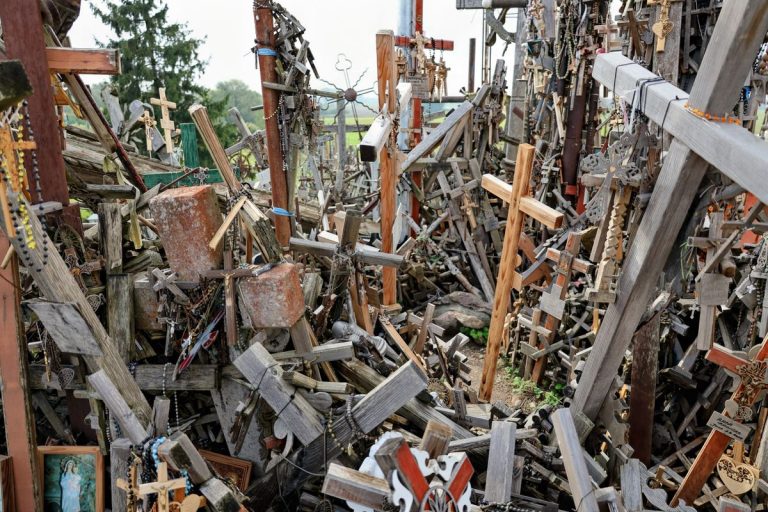
Hundreds of thousands of crosses on a mound, bulldozed repeatedly by Soviet authorities and rebuilt overnight each time.
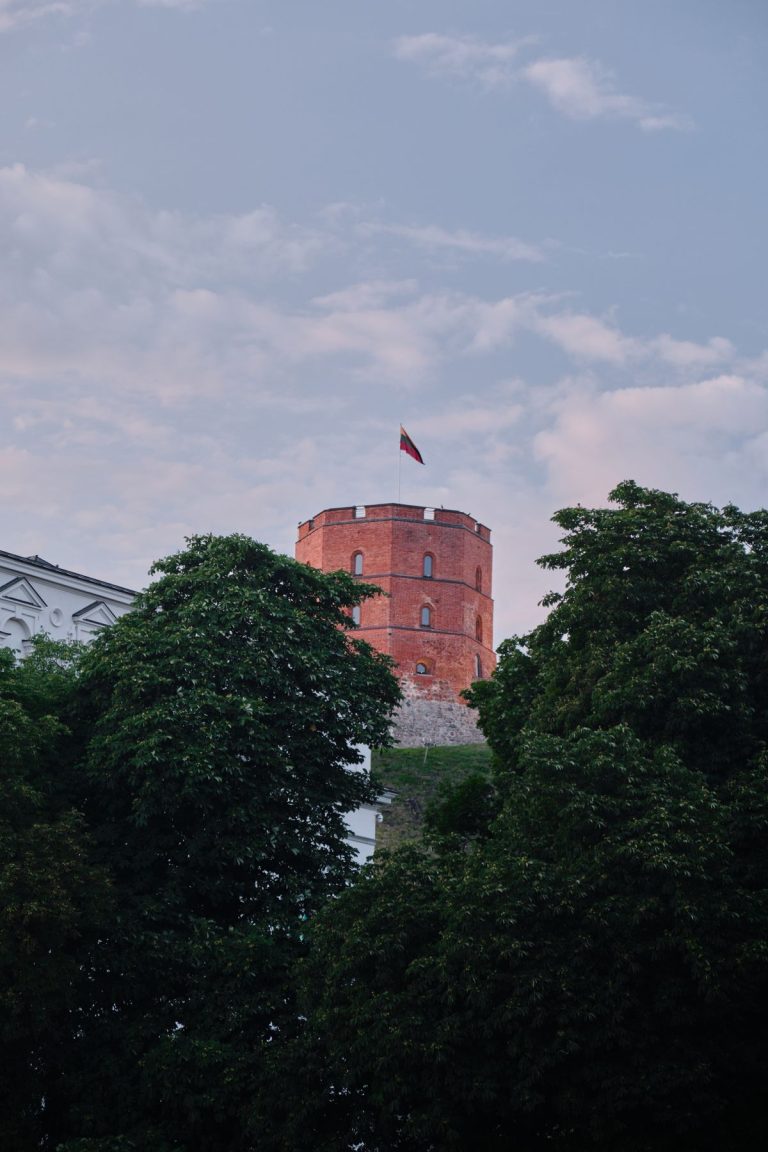
The capital, with the baroque old town and Uzupis.
A baroque music festival in a monastery, and a legacy of Capital of Culture year.
Classical concerts in a baroque monastery on the reservoir, running through the summer.
A long-running festival bringing international acts to venues across the city.
A self-guided architecture trail through the interwar buildings that earned the city a European Heritage Label.
When tens of thousands of students fill the bars and cheap cafés.
A market in the old town, smaller and calmer than Vilnius.
A small scene in the old town and along the avenue, cheaper than Vilnius. Live from Hostelworld.
May to September, and term time for the city at full strength.
Average highs. Kaunas is inland and continental like Vilnius, with roughly seven hours of daylight in December against seventeen in June, and the student calendar matters as much as the weather.
Pick how you travel. Per person per night, in euros — Lithuania uses them.
Lithuania is in the eurozone, so these are the prices you will pay. Kaunas runs below Vilnius across the board.
The ones we get asked most.

Compare Kaunas hostels — live prices, real reviews and free cancellation on most bookings. Then meet the people already there in the app.

 Get the App.
 Get the App.