City centre
First-timersAround the central square and the river: the market, restaurants, transport and most beds.

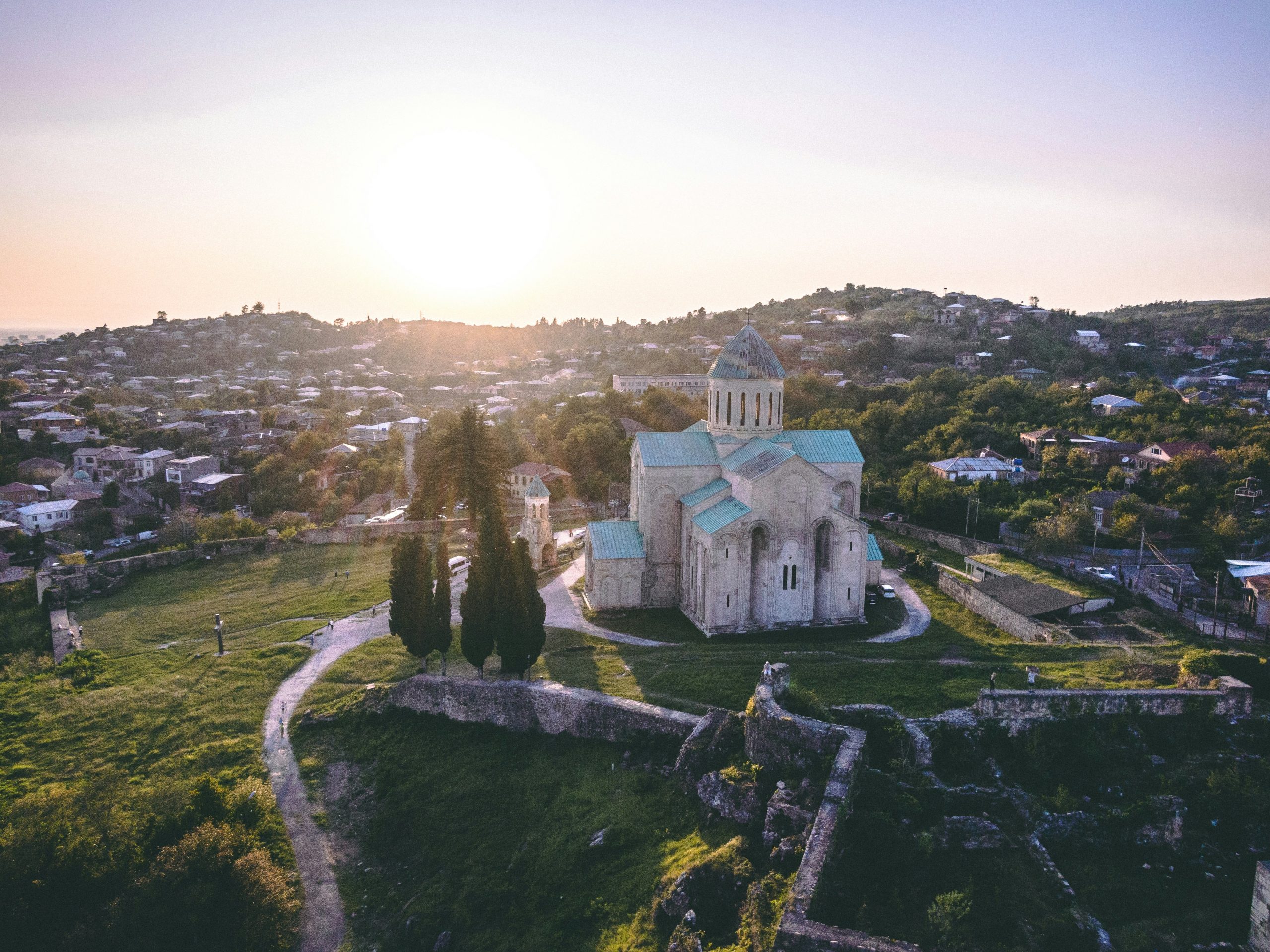
The cheap-flight gateway to Georgia: cave monasteries, canyons and karst caves around a working city that was never built for visitors.
Kutaisi has an airport that European low-cost carriers use heavily, which means a great many visitors arrive here and get straight on a bus to somewhere else.
That is a reasonable decision and also a slightly unfair one. The city itself is workaday — Soviet apartment blocks, a decent market, a river through the middle — but what surrounds it is some of the best sightseeing in Georgia.
Gelati monastery, founded in 1106 by King David the Builder, is UNESCO-listed and holds mosaics and frescoes spanning several centuries. Bagrati cathedral sits on the hill above the city.
Prometheus Cave and Sataplia have karst formations and, at Sataplia, preserved dinosaur footprints. Martvili and Okatse canyons are an hour or so away, with walkways bolted to the rock above the water.
It is one of the oldest continuously inhabited cities in Europe and one of the cheapest. One or two days, used as a base.
A compact centre on a river, with the sights spread around the region.
Around the central square and the river: the market, restaurants, transport and most beds.
North towards the cathedral: older streets, balconied houses and a short walk into town.
Orange labels are neighbourhoods, dots are the 8 top-rated hostels. Map © MapTiler © OpenStreetMap contributors.
Gelati monastery, about 25 minutes out and free to enter, is the main thing. Founded in 1106, UNESCO-listed, and holding a mosaic of the Virgin in the apse plus layers of fresco added across centuries. David the Builder, the king who founded it, is buried at the gate so that visitors would step over him.
Bagrati cathedral above the city is free, eleventh-century, and heavily rebuilt in the 2010s — controversially enough that UNESCO removed it from the World Heritage list over the reconstruction.
Prometheus Cave, about 25 GEL, has a 1,400-metre lit walkway past karst formations and an optional boat section at the end.
Martvili Canyon, about 20 GEL plus transport, has a walkway above turquoise water and short inflatable boat trips through the gorge. Okatse has a walkway bolted along a cliff face.
In the city itself, the central market is the best hour — produce, spices, churchkhela and a working Georgian city getting on with things.
Gelati monastery is free to enter, which for a UNESCO site of that quality is remarkable.
Bagrati cathedral on the hill is free, as is the walk up to it and the view over the city and the Rioni river.
The central market costs nothing to walk through and is the most interesting thing inside the city limits.
The Rioni riverbanks and the Colchis Fountain on the central square, ringed with enlarged replicas of Bronze Age goldwork found in the region, are free.
Motsameta monastery, on a cliff above a river bend near Gelati, is free and considerably quieter than its famous neighbour.
This is western Georgia, so the food shifts: more walnut, more herbs, more of the spicy adjika paste, and cornbread rather than wheat.
Khachapuri here is the Imeretian version — a flat round cheese bread rather than the Adjarian boat — at 8 to 15 GEL.
Elarji, cornmeal cooked with cheese until it stretches, is the regional speciality and very heavy.
A full meal with wine is 25 to 50 GEL, cheaper than Tbilisi.
The market sells churchkhela, the candle-shaped strings of walnuts dipped repeatedly in grape must, which is the national snack and travels well.
A beer is 5 to 10 GEL. Local wine is often homemade and sold by the litre from plastic bottles, which is exactly as good and as risky as it sounds.
Limited. Kutaisi is a working city of about 130,000 and not a going-out destination.
There are bars around the central square and a few places near the university, and a beer is 5 to 10 GEL.
The student population gives term time a little more life than the summer.
Most visitors here are in transit and the evening tends to be a long dinner with wine rather than a night out, which suits the city.
If you want a proper night, Tbilisi is four hours away and has one of the best scenes in the region.
The centre is small and walkable, and Bolt taxis cost a few lari for anything further.
Kutaisi airport is 25 minutes away and is the reason most people come. Buses are timed to arriving flights and run directly to Tbilisi and Batumi as well as into the city — book online in advance, because they fill.
Marshrutkas from the central station reach Tbilisi in four hours for about 15 GEL and Batumi in two and a half.
For the caves and canyons you need a taxi or a tour. A car for the day covering Prometheus, Martvili and Okatse runs 80 to 150 GEL, split between a group, and is the efficient way to do it.
Gelati and Motsameta are a short taxi ride and can be done in a morning.
The cheapest of Georgia's main cities. Dorms are 20 to 45 GEL, roughly €7 to €15, a meal with wine 25 to 50 GEL, and a beer 5 to 10 GEL.
A day is €15 to €35.
Gelati, Bagrati and Motsameta are all free. The spends are Prometheus Cave at about 25 GEL, Martvili at about 20 GEL, and the transport to reach them.
Sharing a taxi for the day at 80 to 150 GEL between three or four people is the sensible approach and makes the canyons cheap per head.
Carry cash — the sights outside the city are not reliably card-friendly.
Kutaisi is a safe city with low crime against visitors.
Traffic is the standard Georgian hazard — aggressive driving, and crossing roads requires more care than the lights suggest.
The canyon walkways at Martvili and Okatse are bolted to rock above water, get slippery in rain, and have queues in summer that make them feel less stable than they are. Hold the handrails and do not rush.
Prometheus Cave is wet, cool and has a long flight of steps; the temperature inside is around 14°C year-round, so take a layer even in August.
Roads to the canyons are mountain roads and drivers take them fast. If a driver is going too quickly, say so — it is normal and they will slow down.
Stray dogs are common; tagged ones are vaccinated. Emergency number is 112.
Monasteries, caves and canyons, all within ninety minutes.
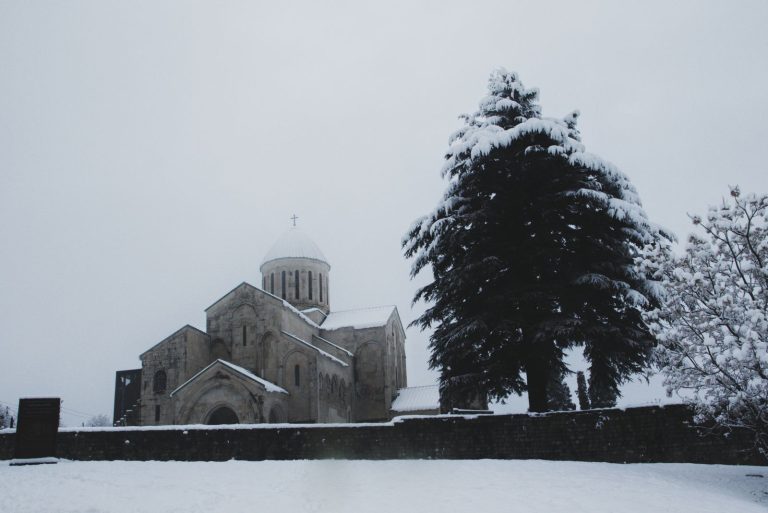
A UNESCO monastery from 1106 with centuries of frescoes, and a quieter cliff-top monastery nearby. Both free to enter.
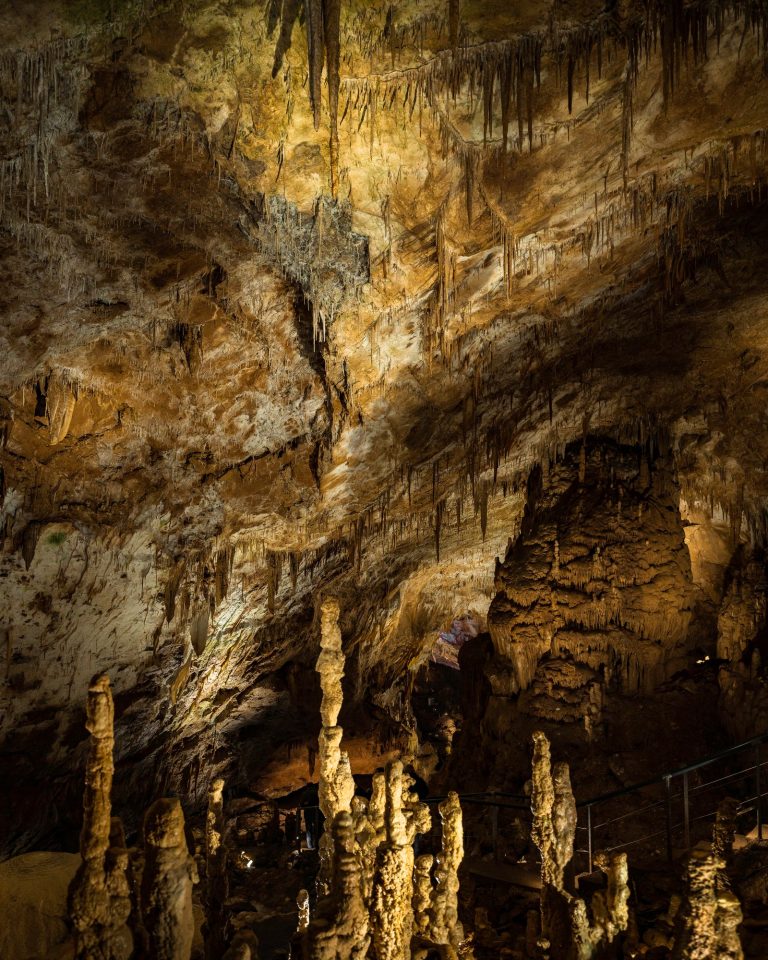
A 1,400-metre lit walkway through karst formations, with an optional underground boat at the end.
A harvest in autumn, and flights that make the city busy year-round.
 Staff pick
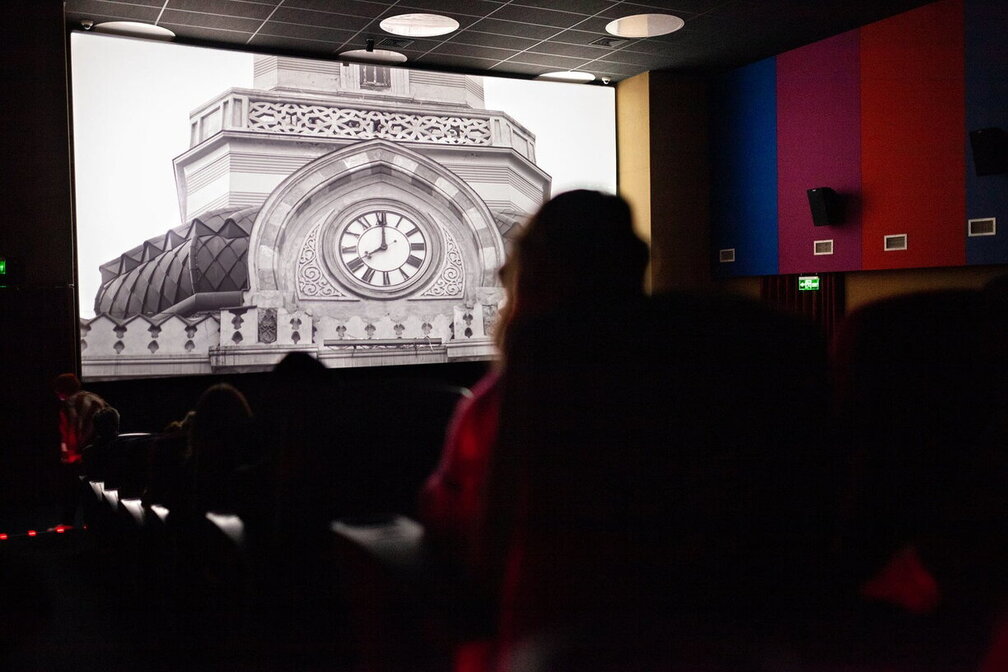
The Kutaisi International Short Film Festival is a must-visit event for cinephiles around the world. With a diverse selection of short films from talented…
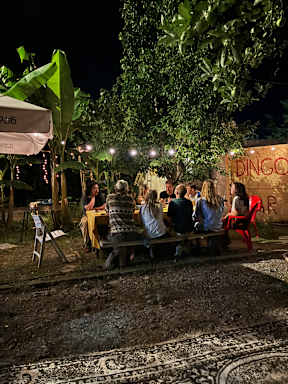
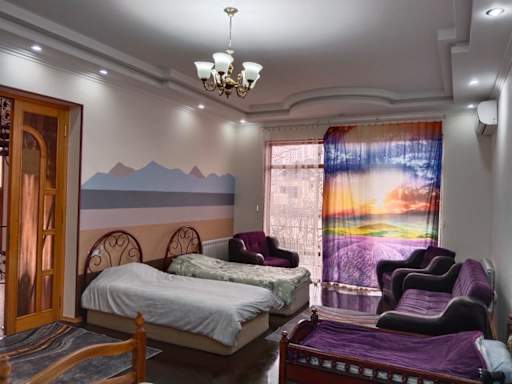
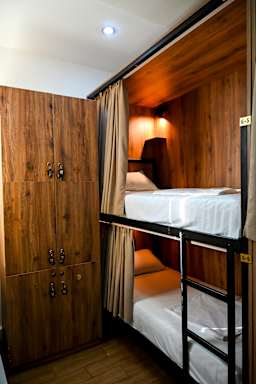
A small scene built around the airport traffic, at the lowest prices in Georgia. Live from Hostelworld.
 Sustainable

May, June, September and October. Summer is hot and humid, winter is wet.
Average highs. Western Georgia is much wetter than the east — Kutaisi gets substantial rain in most months, and the canyons run high and fast after it.
Pick how you travel. Per person per night, in euros.
Prices are shown in euros for comparison, but you will pay in lari. The doing line assumes a shared taxi to the canyons and caves.
The ones we get asked most.

Compare Kutaisi hostels — live prices, real reviews and free cancellation on most bookings. Then meet the people already there in the app.

 Get the App.
 Get the App.