Lumbini Bazaar
First-timersGuesthouses by the main gate.

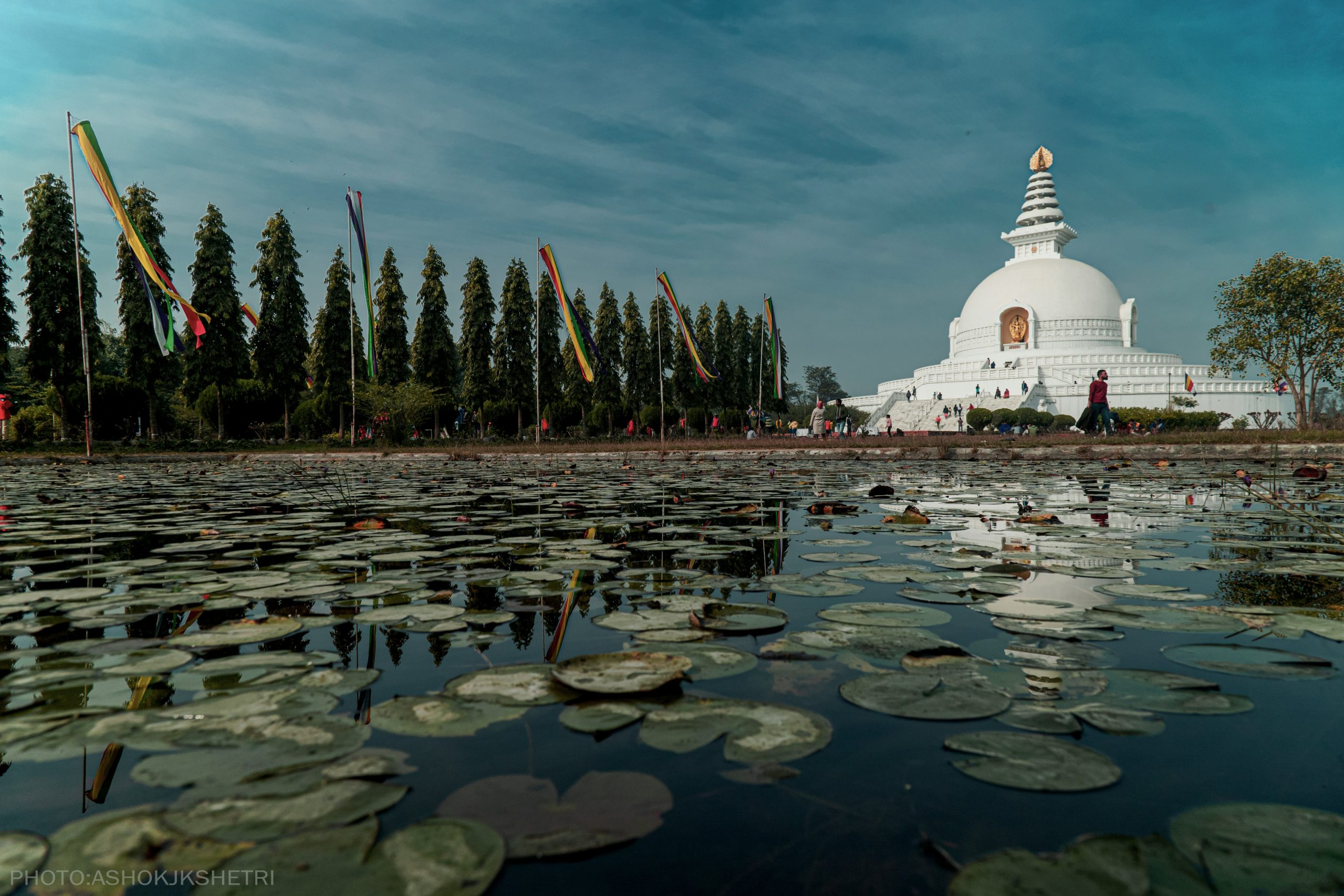
The birthplace of the Buddha, on the plains near the Indian border: a sacred garden, an Ashokan pillar, and a zone of monasteries built by Buddhist countries around the world.
Siddhartha Gautama, who became the Buddha, was born in Lumbini around 563 BCE. The Emperor Ashoka marked the spot with a pillar in 249 BCE, and today the sacred garden is a UNESCO World Heritage Site and one of Buddhism's holiest places.
Around it, a monastic zone holds temples and monasteries built by Buddhist countries from Myanmar to Germany, each in its own style.
Lumbini is quiet, flat and hot. One or two days is right.
Most guesthouses are in Lumbini Bazaar, the small town by the main gate of the sacred area. Some monasteries in the Monastic Zone offer simple rooms to visitors.
Guesthouses by the main gate.
Map data from OpenStreetMap contributors.
Lumbini is the birthplace of the Buddha, born here around the sixth century BCE, and a UNESCO World Heritage Site since 1997. At its heart, the Maya Devi Temple shelters the marker stone said to show the exact spot of his birth, with excavated ruins inside. Beside it stands the Ashoka Pillar, erected by the Mauryan emperor Ashoka in 249 BCE, whose inscription identifies the place as the Buddha's birthplace; and the sacred pond, where his mother is said to have bathed.
The Monastic Zone, a long landscaped park, holds monasteries built by Buddhist countries and communities: Myanmar's golden pagoda, Thailand's white marble temple, the Chinese, Korean, Vietnamese and German temples. Cycle or take an e-rickshaw between them; the zone is several kilometres long.
The Eternal Peace Flame burns at the north end of the central canal, and the World Peace Pagoda, built by Japanese monks, stands at the edge of the area.
Kapilvastu, about an hour away, has the ruins of Tilaurakot, believed to be the palace where the Buddha grew up.
Most of the monasteries in the Monastic Zone are free to visit, and the park itself is free to walk or cycle.
The Eternal Peace Flame and the World Peace Pagoda are free. The Maya Devi Temple charges foreigners an entry fee.
Lumbini Bazaar has simple restaurants serving dal bhat, momos and Indian dishes. Some monasteries serve simple vegetarian meals to visitors.
A meal is €1.50 to €4.
Lumbini is a pilgrimage site and quiet at night, with no bars to speak of. Evenings are for the monasteries' chanting and early nights.
Gautam Buddha International Airport, near Bhairahawa, is about thirty minutes away. Buses reach Kathmandu in eight to ten hours and Pokhara in about eight. The Indian border at Sunauli is about thirty minutes away.
Rent a bicycle or take an e-rickshaw to get around the sacred area, which is several kilometres long.
Lumbini is cheap. A careful day is €15 to €20.
The Maya Devi Temple charges foreigners a few euros; bicycle hire is about €2 a day. Monastery donations are welcome.
The currency is the Nepalese rupee (NPR); prices here are euro equivalents, at roughly 155 rupees to the euro. Cash is essential outside the cities and on treks; ATMs have low withdrawal limits and fees.
Lumbini is very safe. The heat from April to June is intense, often above 40°C; visit early or late in the day. Winter mornings, from December to January, can be foggy and cold.
Inside temples and monasteries, remove shoes, dress modestly and keep quiet.
Emergency: 100 police, 102 ambulance. Tourist Police: 1144.
The Buddha's childhood palace, the Indian border and rhinos.
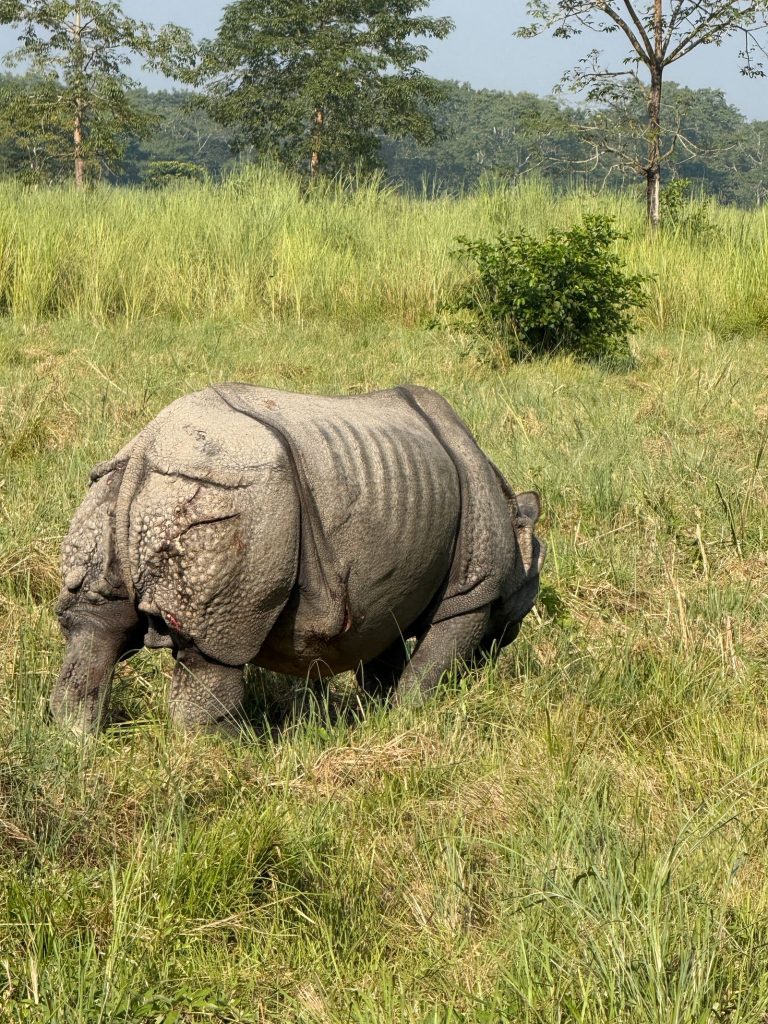
Rhinos and elephants in the national park.
Buddha Jayanti, the Buddha's birthday, is the biggest day.
The Buddha's birthday.
The best weather.
October to March. April to June is very hot.
Average highs.
Pick how you travel. Per person per night, in euros.
Prices are in rupees locally; these are euro equivalents.
The ones we get asked most.

Compare Lumbini hostels — live prices, real reviews and free cancellation on most bookings. Then meet the people already there in the app.

 Get the App.
 Get the App.