Centre
First-timersNear the tourist information office and the bazaar.

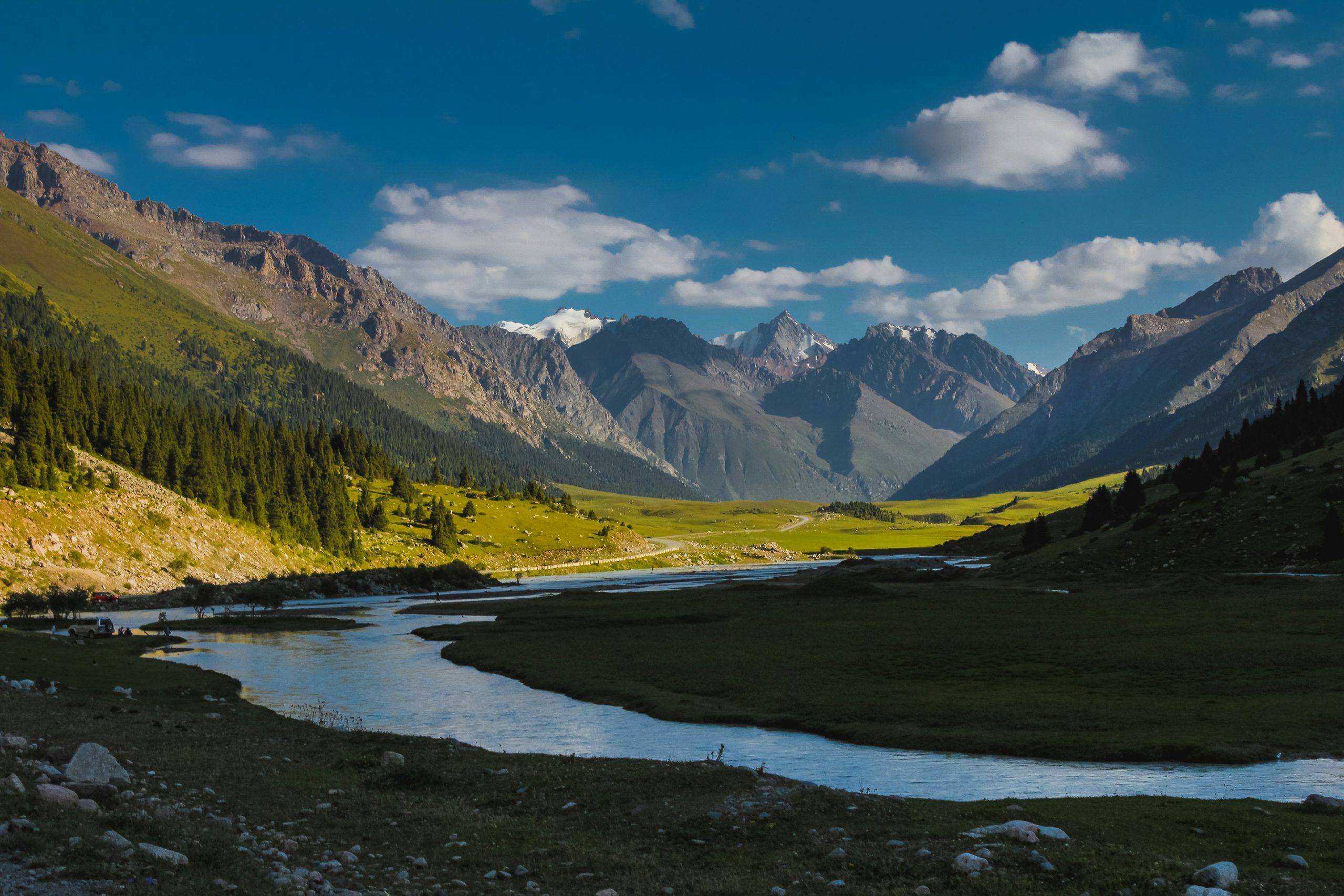
The trekking capital of Kyrgyzstan, at the eastern end of Lake Issyk-Kul, with a wooden mosque built without nails, valleys of hot springs and alpine lakes, and a ski base in winter.
Karakol was founded as a Russian garrison town in the nineteenth century, and it still has wooden houses, an Orthodox cathedral and a remarkable Dungan mosque, built by Chinese Muslims without a single nail.
It sits near the eastern shore of Issyk-Kul, the second-largest alpine lake in the world, beneath the Terskey Alatau range, and it is the country's main base for trekking.
The Ala Kul trek, over a high pass to a turquoise lake and down to hot springs, starts here. Three days or more is right.
Karakol is a small, low-rise town of wooden houses in a grid of streets. Stay in the centre, near the tourist information office and the main bazaar, within walking distance of the mosque, the cathedral and the marshrutka stops for the valleys.
Near the tourist information office and the bazaar.
Orange labels are neighbourhoods, dots are the 10 top-rated hostels. Map data from OpenStreetMap contributors.
Karakol, at the eastern end of Issyk-Kul, is Kyrgyzstan's trekking capital, with valleys and glaciers of the Terskey Ala-Too range rising just south of town.
In town, see the Dungan Mosque, built in 1910 by Chinese Muslim craftsmen in the style of a Chinese temple, without a single nail, and the wooden Holy Trinity Cathedral, a Russian Orthodox church with golden domes. On Sunday mornings, the animal market on the edge of town is one of the most memorable sights in Central Asia: horses, cattle and sheep traded in a field from dawn; go early.
The classic trek goes to Ala Kul, a turquoise lake at about 3,500 metres, over a pass of about 3,900 metres, and down to the Altyn Arashan hot springs, usually over three days. Altyn Arashan alone is a day's walk or a bumpy jeep ride up the valley, with natural hot pools.
Jeti-Oguz, about an hour away, has red sandstone cliffs, the Seven Bulls, and the Broken Heart rock. Skazka, the Fairytale Canyon, on the south shore of Issyk-Kul, is a maze of red and orange eroded rock. Jyrgalan, a quieter valley, is good for trekking and horse riding.
In winter, the Karakol ski base, about half an hour away, has some of the best skiing in Central Asia, at low prices.
The Dungan Mosque and the Holy Trinity Cathedral are free or ask a small donation, and so is wandering the town's streets of wooden houses.
The Sunday animal market is free to watch, and Issyk-Kul's beaches are free. Trekking is free, apart from small park fees in some valleys.
Karakol is famous for ashlan-fu, a cold, spicy noodle soup with jelly made by the town's Dungan community, eaten with a fried bread; the bazaar has stalls selling nothing else.
Otherwise, food is Kyrgyz and Russian: lagman, plov, manty and shashlyk, grilled meat skewers. On treks, yurt camps serve simple meals.
A meal is €2 to €6.
Karakol is quiet at night, with a few bars and cafés in the centre. Most people are resting before or after treks.
A beer is €1.50 to €3.
Shared taxis and marshrutkas reach Bishkek in about five to six hours, and Cholpon-Ata in about two and a half.
Marshrutkas run from town to the trailheads at Ak-Suu for Altyn Arashan, and to Jeti-Oguz. The tourist information office and CBT, Community Based Tourism, arrange drivers, horses, guides and yurt stays for the valleys.
The town is walkable; taxis are cheap for longer trips.
Karakol is very cheap. Dorms start around €7 and a careful day is €15 to €25.
A guide for the Ala Kul trek is about €25 to €40 a day; yurt camps and guesthouses in the valleys €10 to €20 a night with meals. A jeep to Altyn Arashan is shared between passengers. Ski passes at the Karakol ski base are cheap by European standards.
The currency is the som (KGS); prices here are euro equivalents, at roughly 100 som to the euro. Cards work in Bishkek's bigger shops and restaurants; cash is essential elsewhere, and there are no ATMs in the mountains.
Karakol is safe.
In the mountains, weather changes within an hour, phone coverage is absent in most valleys and rescue is slow. Go with a guide or at least tell someone your route, carry warm and waterproof layers, and allow for altitude: climb slowly above 3,000 metres. The Ala Kul pass is high enough for altitude sickness; acclimatise before you go.
The trekking season is short, roughly June to September; snow can close passes outside it.
Emergency number is 112, or 102 police and 103 ambulance.
The lake, red canyons, hot springs and riding valleys.
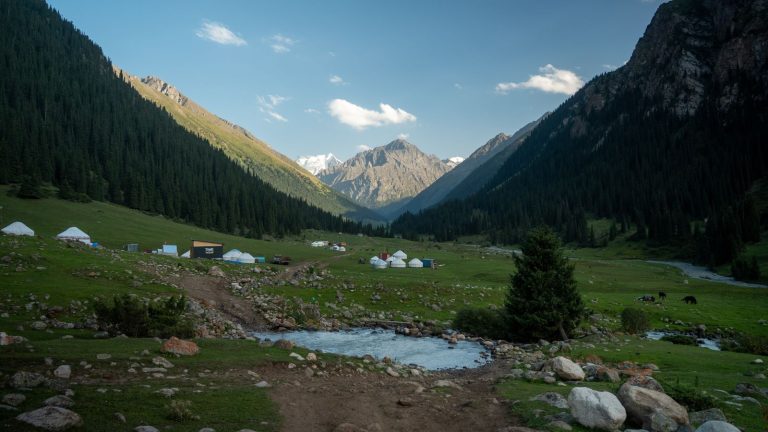
A turquoise lake over a high pass, and hot springs.
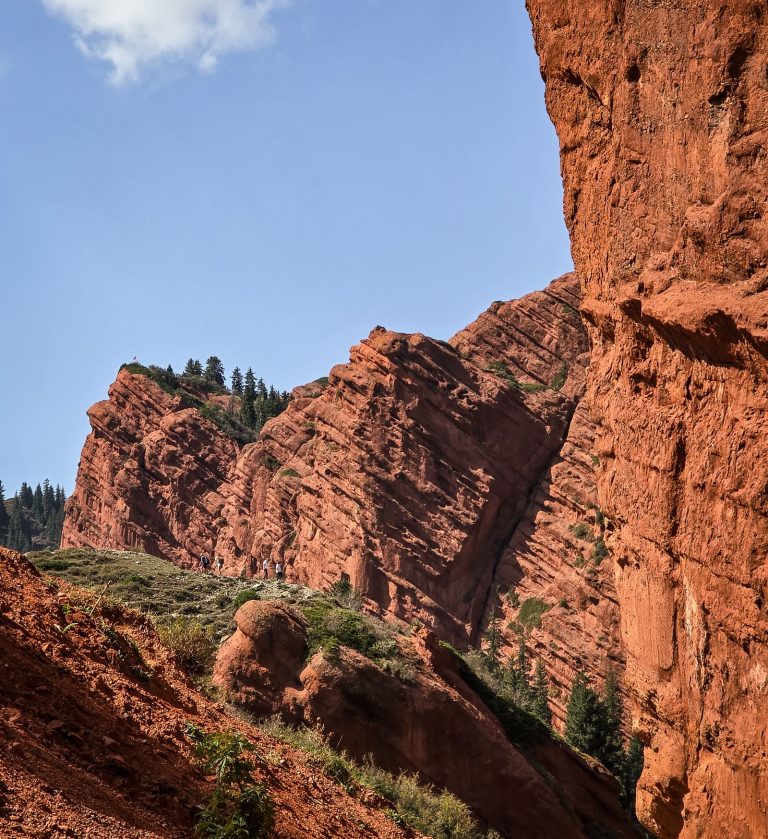
Red sandstone cliffs, the Seven Bulls.
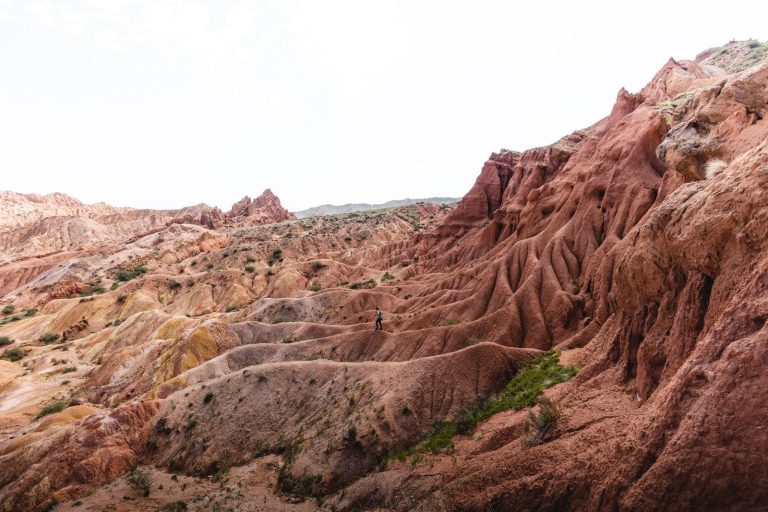
The fairy-tale canyon of eroded red rock by the lake.
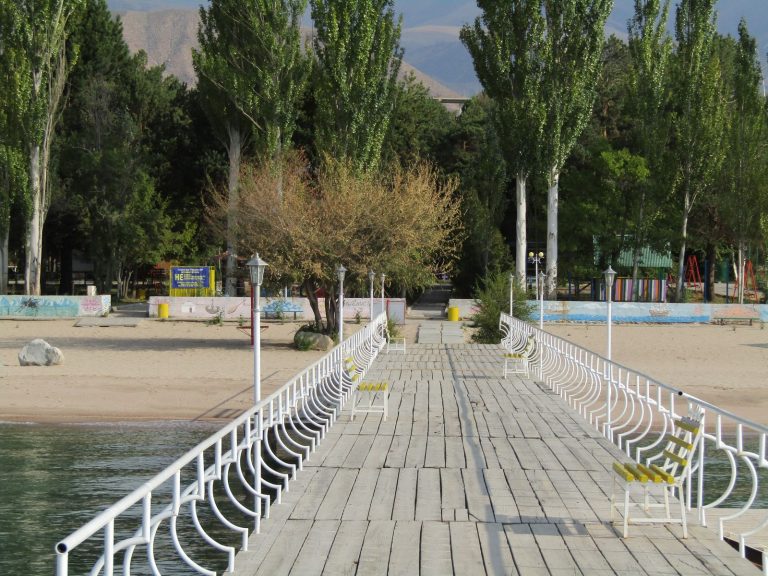
The north-shore beach resort, with a field of ancient petroglyphs.
The trekking season is short, from June to September.
Short and busy.
Cheap skiing.
The top-rated places to stay in Karakol right now, live from Hostelworld.
 Sustainable
 Sustainable
 Sustainable
 Sustainable
June to September for trekking, December to March for skiing.
Average highs. Much colder in the mountains.
Pick how you travel. Per person per night, in euros.
Prices are in som locally; these are euro equivalents. Excludes treks and guides.
The ones we get asked most.

Compare Karakol hostels — live prices, real reviews and free cancellation on most bookings. Then meet the people already there in the app.

 Get the App.
 Get the App.