North Goa
PartiesAnjuna, Vagator and Arambol.

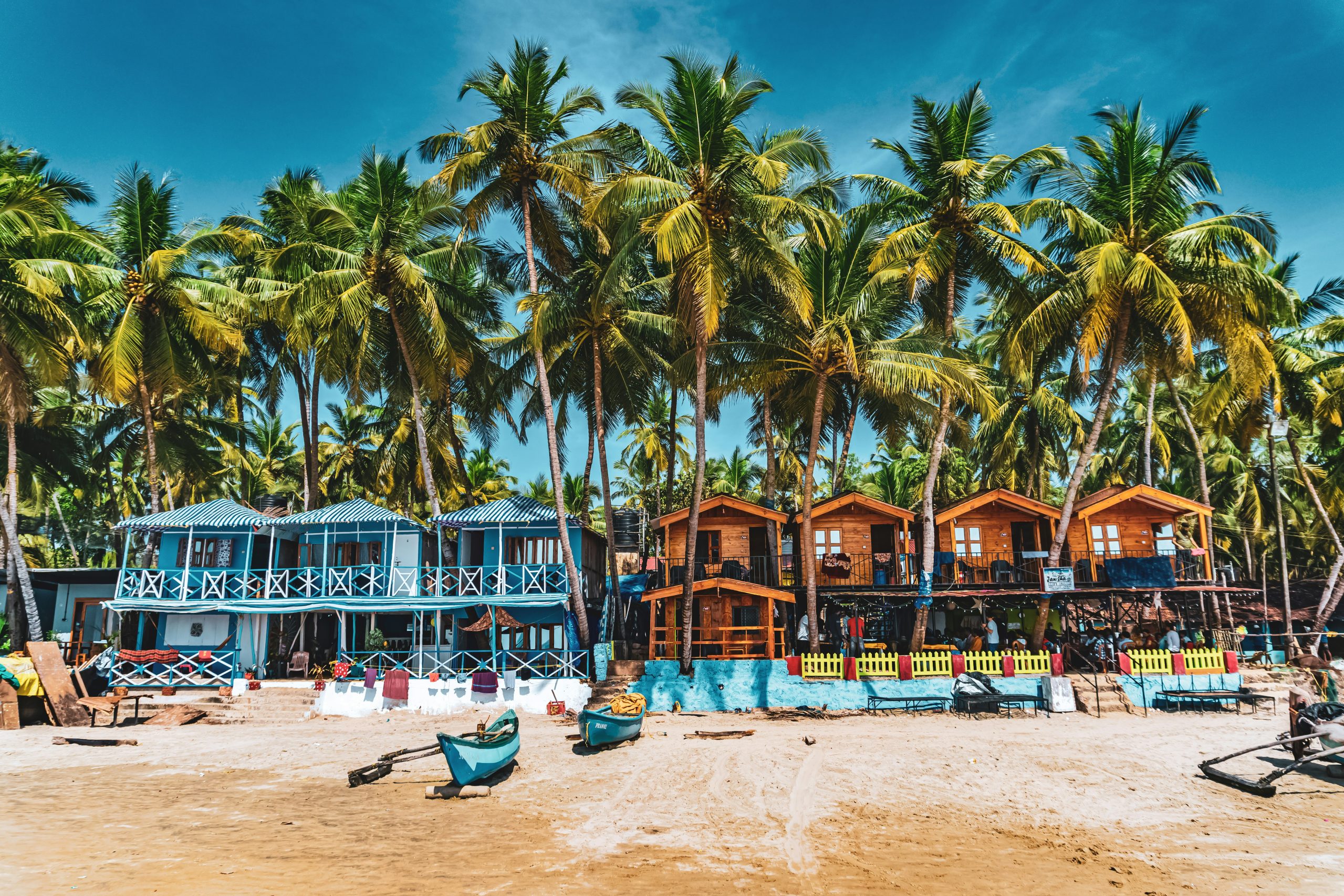
India's beach state: palm-lined sands, Portuguese churches and Latin-quarter lanes, spice plantations, and a party scene that runs from November to March.
Goa was a Portuguese colony for four and a half centuries, until 1961, and it still feels different from the rest of India: whitewashed churches, colourful houses, Catholic festivals and a relaxed pace.
Its coast is lined with beaches, from the busy party beaches of the north to the quiet coves of the south.
Goa is the easiest landing in India, and a place to slow down. A week is right.
Stay in the north for parties, the south for quiet, or Panjim for the old town.
Anjuna, Vagator and Arambol.
Palolem and Agonda.
The capital and Fontainhas.
Orange labels are neighbourhoods, dots are the 7 top-rated hostels. Map data from OpenStreetMap contributors.
Goa, on India's west coast, was a Portuguese colony until 1961, and its mix of beaches, churches, whitewashed villages and laid-back life makes it unlike anywhere else in India.
North Goa has the busiest beaches and the party scene: Anjuna, with its Wednesday flea market, Vagator's cliffs, and Arambol, a bohemian beach with a drum circle at sunset. South Goa is quieter and more beautiful: Palolem, a crescent bay, Agonda, with nesting turtles, and Cola Beach, with a lagoon.
Old Goa, the former Portuguese capital, has grand churches and convents, a UNESCO site; the Basilica of Bom Jesus holds the remains of St Francis Xavier. In Panjim, the capital, the Latin Quarter of Fontainhas has colourful Portuguese houses and narrow lanes.
Inland, spice plantations offer tours and lunches, and Dudhsagar Falls, a four-tiered waterfall, is reached by jeep in the dry season. Saturday night markets at Arpora and the Wednesday Anjuna flea market sell everything.
The season runs from November to March; many beach shacks close in the monsoon.
The beaches are free, and so are sunsets with Arambol's drum circle and the churches of Old Goa. Fontainhas is free to wander.
The flea markets are free to browse.
Goan food mixes Indian and Portuguese: fish curry rice, prawn balchão, pork vindaloo, from the Portuguese 'vinha d'alhos', and xacuti, a coconut and spice curry. Bebinca, a layered coconut cake, is the classic dessert. Feni, a spirit distilled from cashew fruit or coconut, is the local drink.
Beach shacks serve fresh seafood. A meal is €2 to €8.
Goa has India's most famous party scene: beach clubs and bars in North Goa, around Baga, Anjuna and Vagator, and quieter beach bars in the south. The psytrance parties of the past have largely moved indoors, as loud outdoor music is restricted after 10pm.
Alcohol is cheap: a beer is €1.50 to €3.
Goa has two airports: Dabolim, in the centre, and Manohar International at Mopa, in the north. Trains on the Konkan Railway reach Mumbai and Kerala.
Rent a scooter to get around; taxis are expensive and unionised, though app-based cabs operate in places. Buses link the main towns.
Goa is cheap to mid-priced, and pricier in peak season around Christmas and New Year. Dorms start around €7 and a careful day is €20 to €35.
Scooter hire is €4 to €7 a day. Beer is cheap because of low taxes.
The currency is the rupee (INR), at roughly 95 to 100 rupees to the euro; prices here are euro equivalents. UPI phone payments are everywhere, and some apps now accept foreign cards; carry cash for small shops, autos and markets.
Goa is generally safe. The sea is rough and currents strong during the monsoon; swim between the flags in season. Do not drink and ride.
Drugs are illegal and police checks are frequent. Drinking alcohol in public places, such as on the street, is fined. Women travellers often face staring and comments, and sometimes groping in crowds; dress conservatively, use women's carriages on metros and trains, and book cabs through apps.
Most visitors need an Indian e-Visa, applied for online before travel. Since 1 April 2026, all foreign nationals flying in must also submit the free e-Arrival Card online within 72 hours before landing; screenshot or download the QR code, as it cannot be retrieved later.
Emergency number is 112.
Waterfalls, spices and ruins.
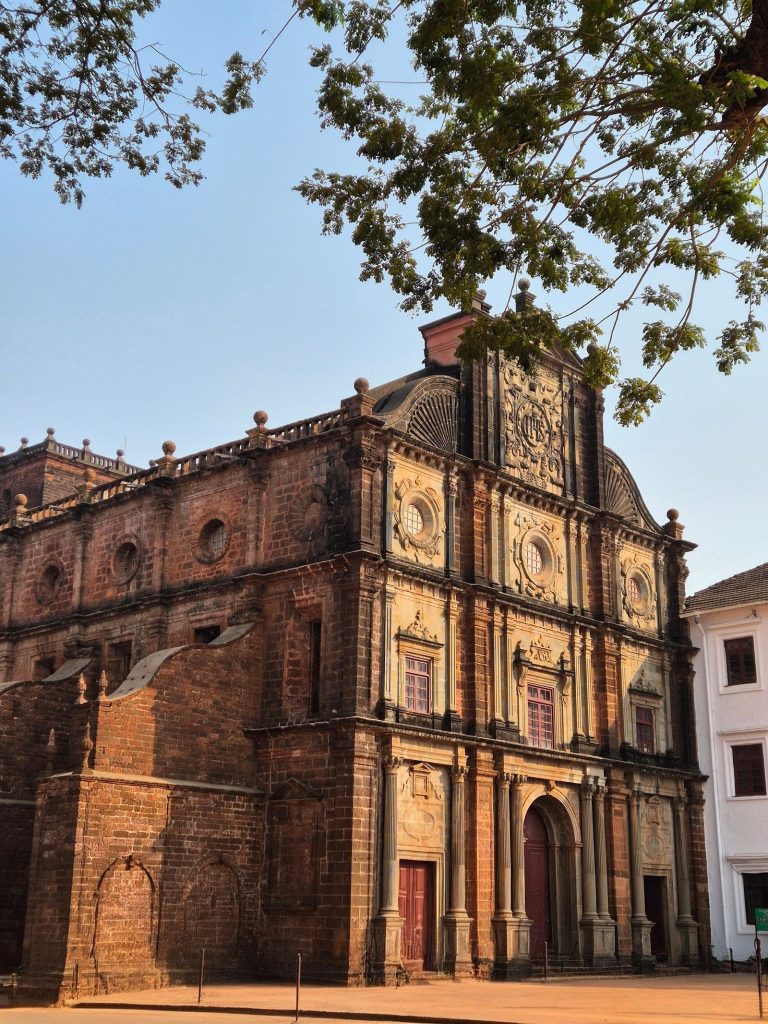
Portuguese churches.
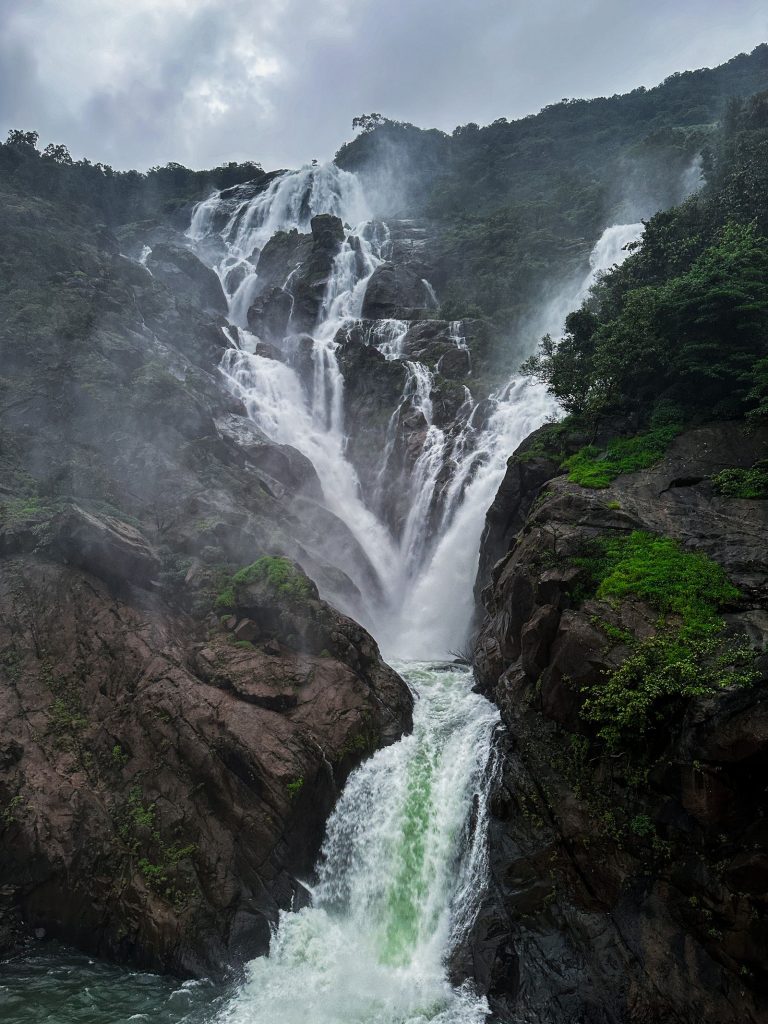
A huge waterfall.
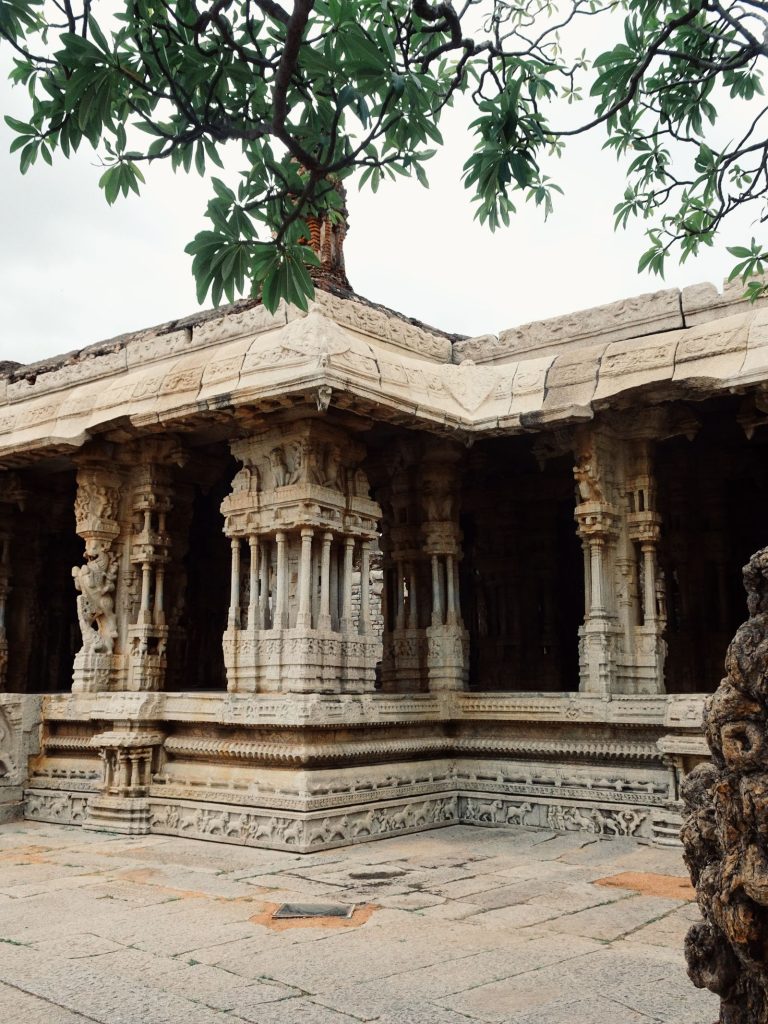
The boulder ruins.
Goa's Carnival fills the streets in February.
Parades and music.
The busiest and priciest weeks.
Spring festival parades.
The top-rated places to stay in Goa right now, live from Hostelworld.
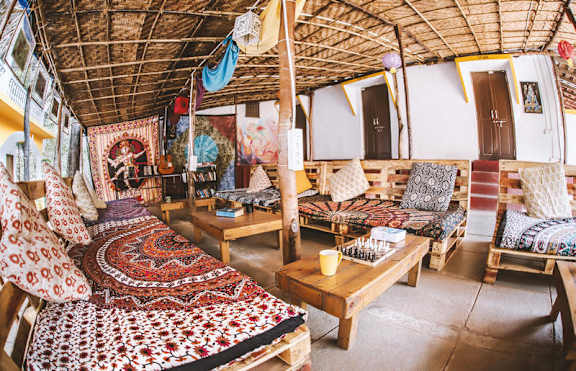
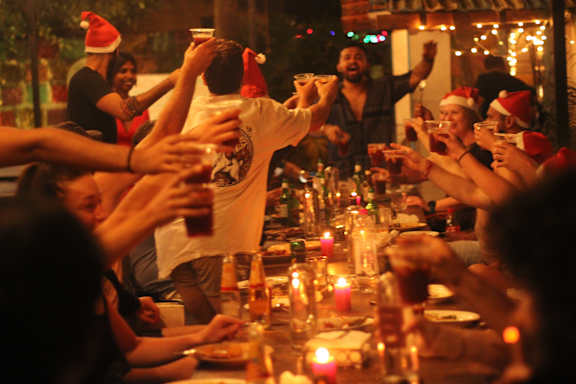
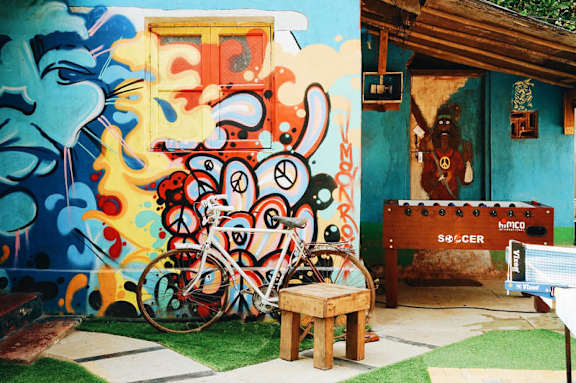
November to March. Many beach businesses close in the monsoon.
Average highs.
Pick how you travel. Per person per night, in euros.
Prices are in rupees locally; these are euro equivalents. Christmas and New Year run much higher.
The ones we get asked most.

Compare Goa hostels — live prices, real reviews and free cancellation on most bookings. Then meet the people already there in the app.

 Get the App.
 Get the App.