Old town
First-timersAround Pingjiang Road and the canals.

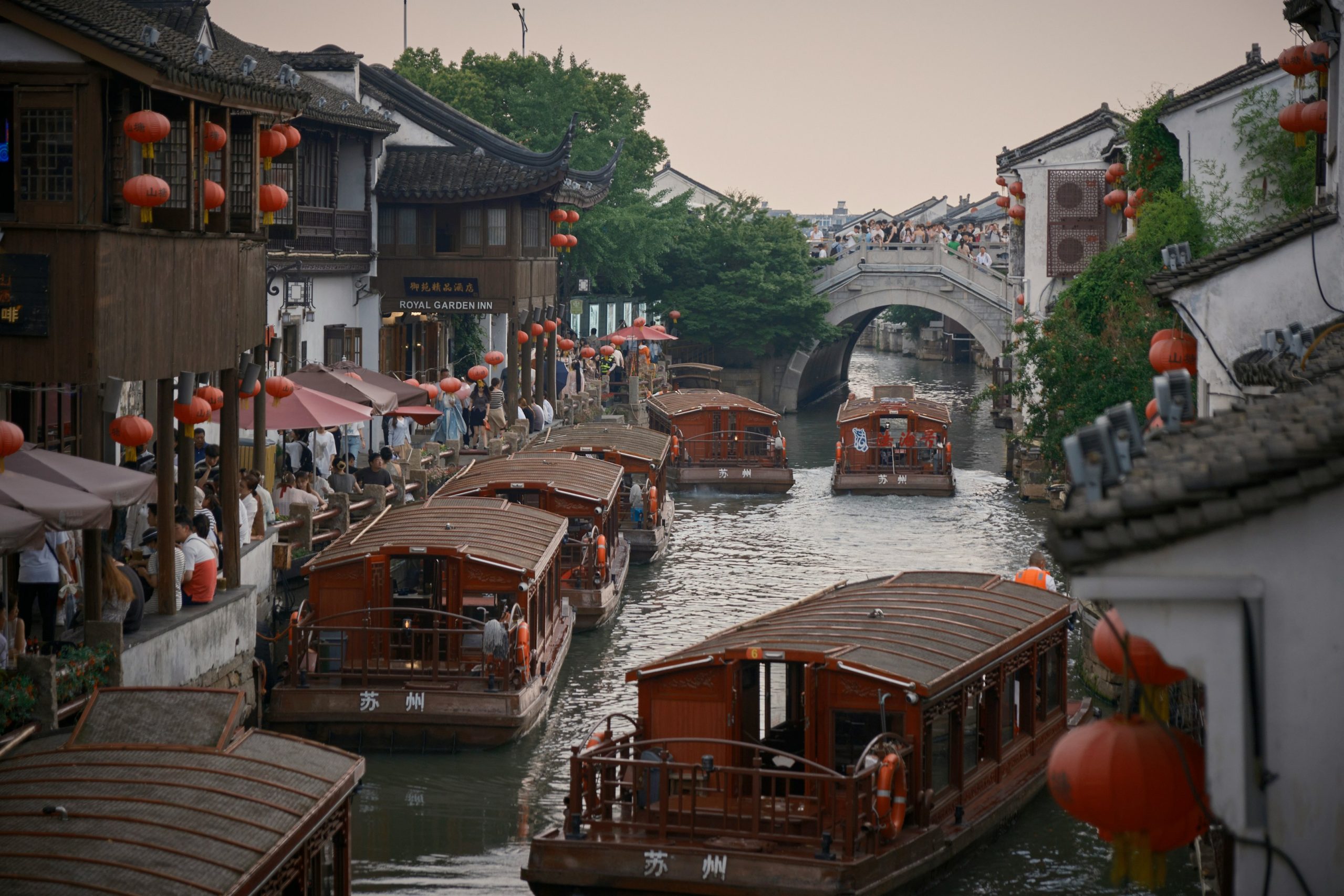
The finest classical gardens in China, canals lined with whitewashed houses, silk and water towns, half an hour from Shanghai.
Suzhou has been a city of scholars, merchants and silk for two and a half thousand years, and its wealthy families built private gardens behind their walls: rocks, ponds, pavilions and framed views designed to create a whole landscape in a small space. Nine of them are a UNESCO World Heritage Site.
The old town is crossed by canals, and nearby are the water towns of Tongli and Zhouzhuang, where life still runs along the waterways.
Suzhou is thirty minutes from Shanghai by high-speed train, and it is worth staying a night or two.
Stay in the old town, around Pingjiang Road and the canals, where the gardens are walkable and the streets are lined with whitewashed houses. Shantang Street, to the north-west, is another historic canal street.
Around Pingjiang Road and the canals.
A historic canal street.
Orange labels are neighbourhoods, dots are the 4 top-rated hostels. Map data from OpenStreetMap contributors.
Suzhou, a canal city of whitewashed houses and stone bridges, is famous for its classical gardens, nine of which are UNESCO-listed, created by scholars and officials over a thousand years.
The Humble Administrator's Garden, the largest, is a composition of ponds, pavilions, rockeries and bridges; book tickets ahead and go at opening. The Lingering Garden is known for its corridors and rocks, and the Master of the Nets Garden, small and perfect, runs evening performances in summer. The Lion Grove Garden has a maze of limestone rockeries.
The Suzhou Museum, designed by I. M. Pei, who grew up in the city, is a modern take on the garden style; it is free with a reservation.
Walk Pingjiang Road, a canal street of teahouses and shops, and take a boat on the canals. Shantang Street has more canals and snacks. Tiger Hill, with a leaning pagoda, is a short ride away.
The water towns of Tongli and Zhouzhuang, with canals and old houses, are about an hour away.
The Suzhou Museum is free with a reservation. Walking Pingjiang Road, Shantang Street and the canals is free.
The gardens all charge, but the canal-side streets and bridges of the old town are free to explore.
Suzhou cuisine is slightly sweet and delicate. Squirrel-shaped mandarin fish, deep-fried and served in a sweet-sour sauce, is the signature dish. Suzhou noodles, with toppings like braised pork and eel, are the breakfast.
Try Suzhou mooncakes, with flaky pastry, and seasonal sweets from the old shops. A meal is €4 to €12.
Suzhou is quiet at night, though Pingjiang Road's teahouses and bars and the Jinji Lake area, in the new town, are lively. Evening Kunqu opera performances are held in some gardens.
A beer is €3 to €6.
Suzhou station is about 30 minutes from Shanghai by high-speed train. The metro and buses cover the city, and the old town is walkable or cycleable.
Buses run to Tongli and Zhouzhuang.
Suzhou is mid-priced. Dorms start around €12 and a careful day is €30 to €45.
The Humble Administrator's Garden is about €10, the other gardens €5 to €8 each. The Suzhou Museum is free.
The currency is the yuan (CNY), at roughly 8 yuan to the euro; prices here are euro equivalents. Almost everyone pays by phone: set up Alipay or WeChat Pay with a foreign card before you arrive, and carry some cash as a backup.
Suzhou is very safe.
The gardens are very crowded at weekends and holidays; go at opening. Google, WhatsApp and Instagram are blocked; use an eSIM with international roaming, and Amap or Baidu Maps for directions. Carry your passport: it is needed for trains, hotels and many sights, which are booked by real name.
Many nationalities can now enter China visa-free for up to 30 days, under a scheme extended to the end of 2026, and 240-hour visa-free transit covers many more; check the rules for your passport before you travel.
Emergency: 110 police, 120 ambulance, 119 fire.
Water towns and a great lake.
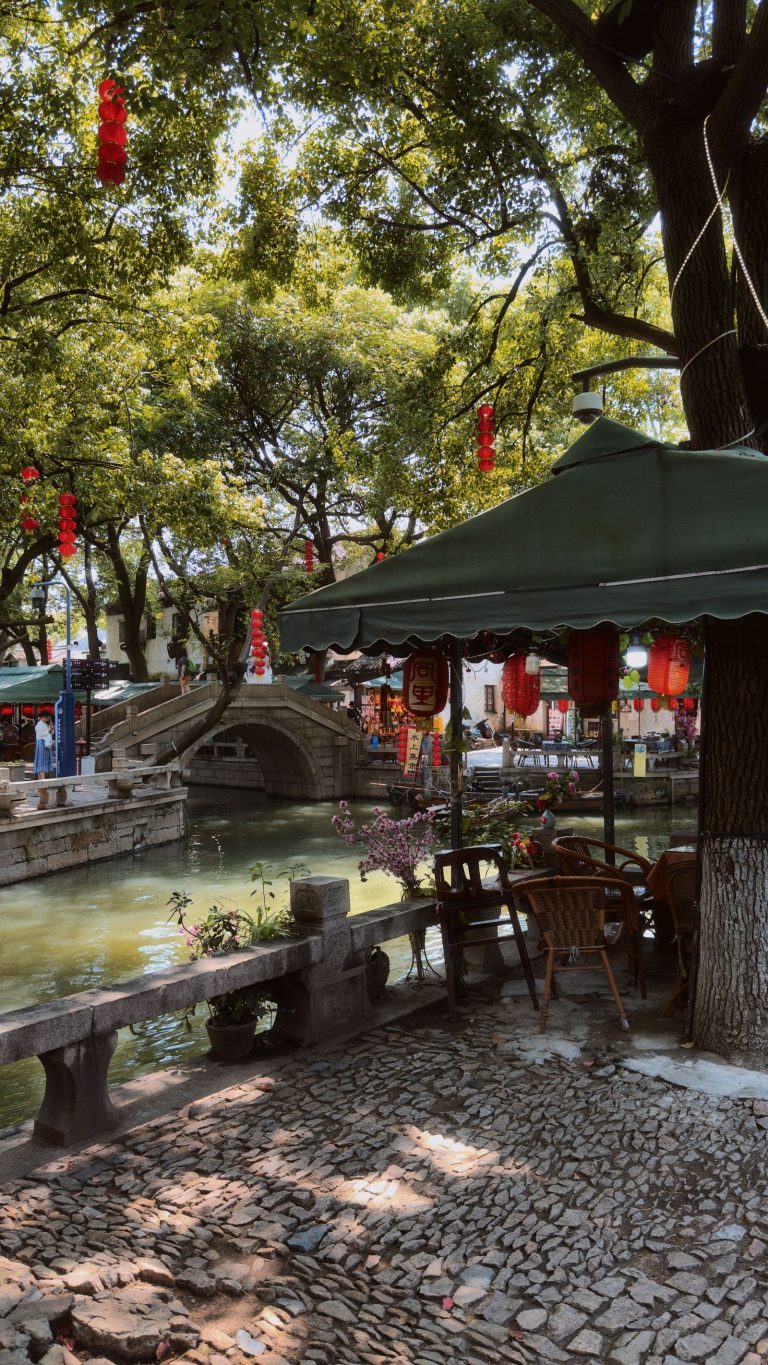
A canal water town.
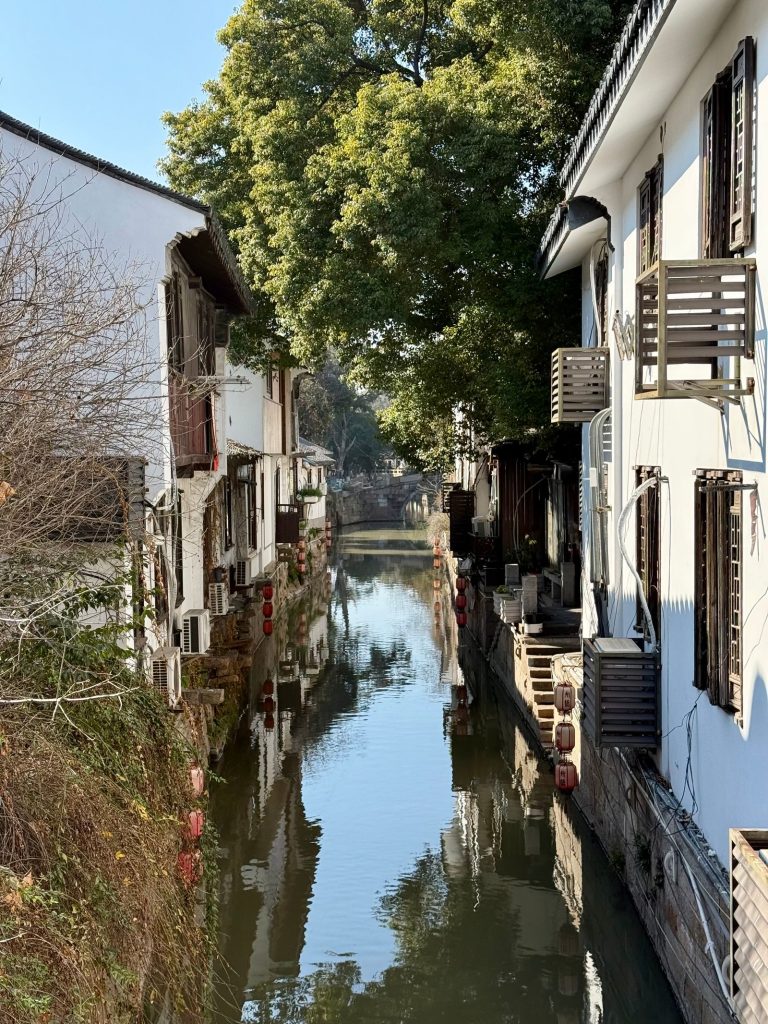
The famous water town.

A huge lake.
Kunqu opera, one of China's oldest art forms, comes from here.
Performances of one of China's oldest operas.
Very crowded.
The top-rated places to stay in Suzhou right now, live from Hostelworld.
March to May and September to November. Avoid Golden Week (1–7 October) and Chinese New Year if you can, when the whole country travels.
Average highs.
Pick how you travel. Per person per night, in euros.
Prices are in yuan locally; these are euro equivalents. Garden tickets are extra.
The ones we get asked most.

Compare Suzhou hostels — live prices, real reviews and free cancellation on most bookings. Then meet the people already there in the app.

 Get the App.

 Get the App.