Inside the walls
First-timersNear the Bell Tower.

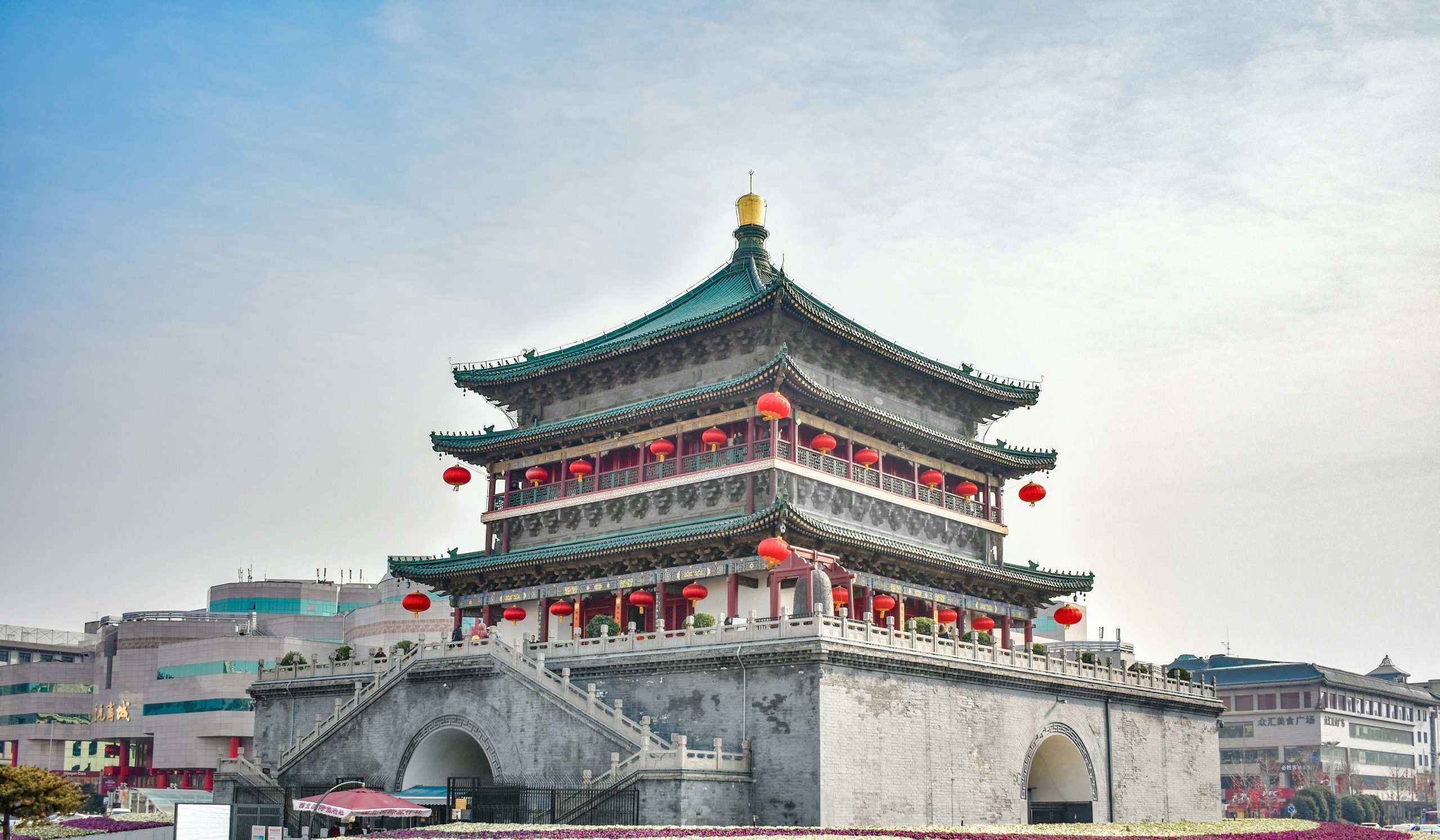
The Terracotta Army, intact Ming city walls you can cycle on top of, and a Muslim Quarter of street food. The start of the Silk Road and capital of thirteen dynasties.
Xi'an, once called Chang'an, was the capital of China for more than a thousand years, under thirteen dynasties including the Qin and the Tang, and the eastern end of the Silk Road.
Its great treasure is the Terracotta Army, thousands of life-size clay soldiers buried with the first emperor, Qin Shi Huang, discovered by farmers in 1974. The city itself is still enclosed by complete Ming dynasty walls.
The Muslim Quarter, home to the Hui community for centuries, is one of the best food streets in China. Two or three days is right.
Stay inside the city walls, near the Bell Tower and Drum Tower, where the Muslim Quarter, the walls and the metro are all within walking distance. The Muslim Quarter itself is the place for street food, busy until late.
Near the Bell Tower.
Street food, busy until late.
Orange labels are neighbourhoods, dots are the 9 top-rated hostels. Map data from OpenStreetMap contributors.
Xi'an, the start of the Silk Road, was the capital of thirteen dynasties, including the Qin, whose first emperor unified China in 221 BCE, and the Tang, when it was one of the largest cities in the world.
The Terracotta Army, discovered by farmers digging a well in 1974, guards the tomb of the first emperor: thousands of life-size soldiers, each with a different face, in three pits. Book tickets ahead with your passport, go early, and hire a guide or audio guide; the site is about an hour away.
Cycle the city walls, a fourteen-kilometre loop on top of the best-preserved city walls in China, built in the Ming dynasty; it takes about two hours.
The Muslim Quarter, behind the Drum Tower, is home to the Hui Muslim community, with a Great Mosque built in Chinese temple style, and the city's best street food. The Big Wild Goose Pagoda, a Tang dynasty pagoda, has a musical fountain show in the evening.
Mount Huashan, two hours away by high-speed train, is a sacred mountain with steep paths and the famous plank walk on a cliff.
The Muslim Quarter's streets, the Bell and Drum Tower squares, and the city's evening squares are free.
The musical fountain show at the Big Wild Goose Pagoda's north square is free, every evening. The parks around the walls are free, though the walls themselves charge.
Xi'an has some of China's best street food, especially in the Muslim Quarter. Roujiamo, a bread bun filled with stewed meat, is often called the Chinese burger. Biangbiang noodles, wide hand-pulled noodles with chilli oil, have one of the most complex characters in Chinese writing.
Yangrou paomo, lamb soup with crumbled flatbread, and liangpi, cold noodles in chilli and vinegar, are local classics. A street meal is €2 to €5.
Xi'an's nightlife centres on the Muslim Quarter's food streets, busy until late, and the bars around Defu Lane, near the South Gate. The Tang dynasty-themed Grand Tang Mall area is lit up at night.
A beer is €2 to €5.
Xianyang Airport is about an hour away by metro or airport bus.
The metro covers the city, including the line to the Terracotta Army area, with a bus for the last stretch; tourist buses also run from the station.
High-speed trains reach Beijing in about four and a half hours, Chengdu in about three, and Mount Huashan in about two.
Xi'an is mid-priced. Dorms start around €10 and a careful day is €30 to €45.
The Terracotta Army is about €15, the city walls about €7, and bicycle hire on the walls a few euros. A roujiamo is under €2.
The currency is the yuan (CNY), at roughly 8 yuan to the euro; prices here are euro equivalents. Almost everyone pays by phone: set up Alipay or WeChat Pay with a foreign card before you arrive, and carry some cash as a backup.
Xi'an is very safe.
At the Terracotta Army, avoid unofficial guides and touts at the entrance; book official tickets online. Google, WhatsApp and Instagram are blocked; use an eSIM with international roaming, and Amap or Baidu Maps for directions. Carry your passport: it is needed for trains, hotels and many sights, which are booked by real name.
Many nationalities can now enter China visa-free for up to 30 days, under a scheme extended to the end of 2026, and 240-hour visa-free transit covers many more; check the rules for your passport before you travel.
Emergency: 110 police, 120 ambulance, 119 fire.
The Terracotta Army, a sacred mountain and a Buddhist temple.
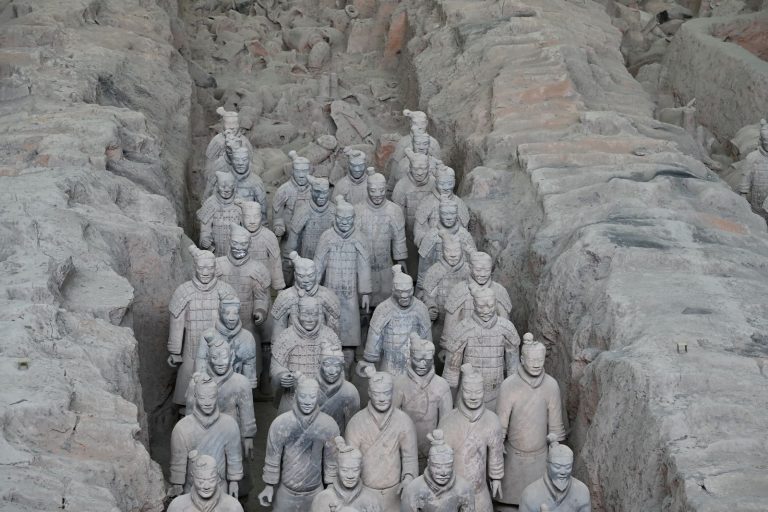
The first emperor's army.
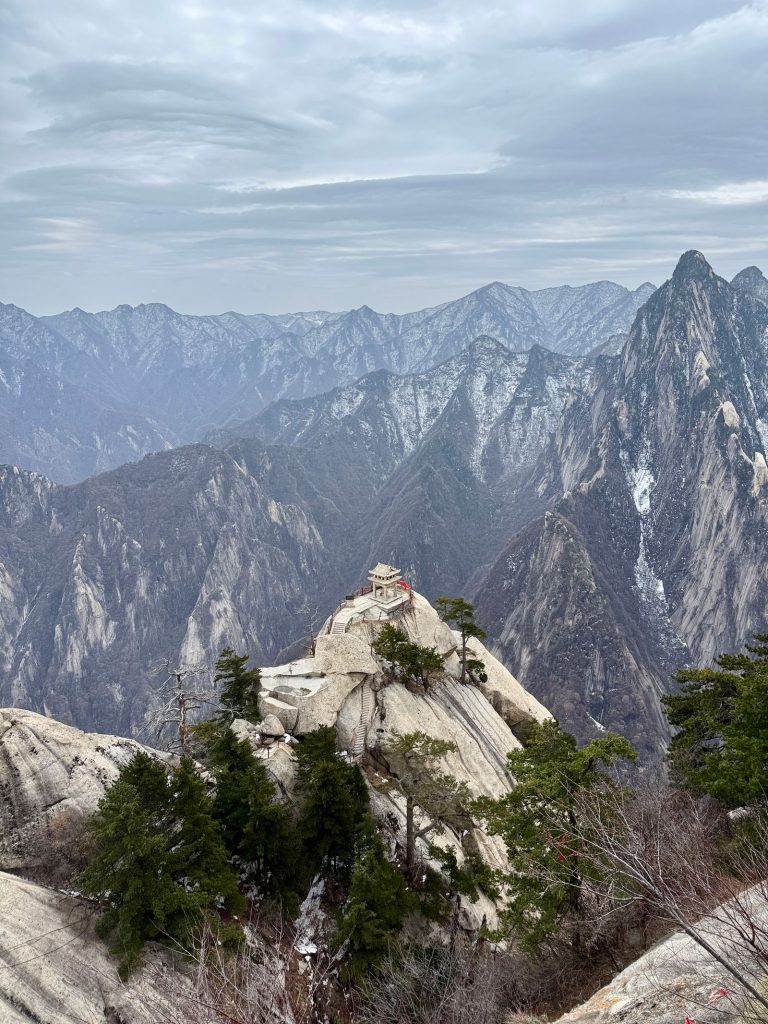
A sacred mountain with a plank walk.
Lanterns on the city walls at Chinese New Year.
Lanterns along the walls.
National holiday crowds.
The top-rated places to stay in Xi'an right now, live from Hostelworld.
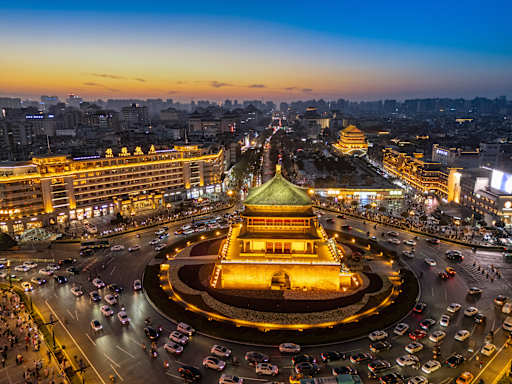


April, May, September and October. Summers are hot. Avoid Golden Week (1–7 October) and Chinese New Year if you can, when the whole country travels.
Average highs.
Pick how you travel. Per person per night, in euros.
Prices are in yuan locally; these are euro equivalents.
The ones we get asked most.

Compare Xi'an hostels — live prices, real reviews and free cancellation on most bookings. Then meet the people already there in the app.

 Get the App.
 Get the App.