Panglao
First-timersAlona Beach, with dive shops and most hostels.

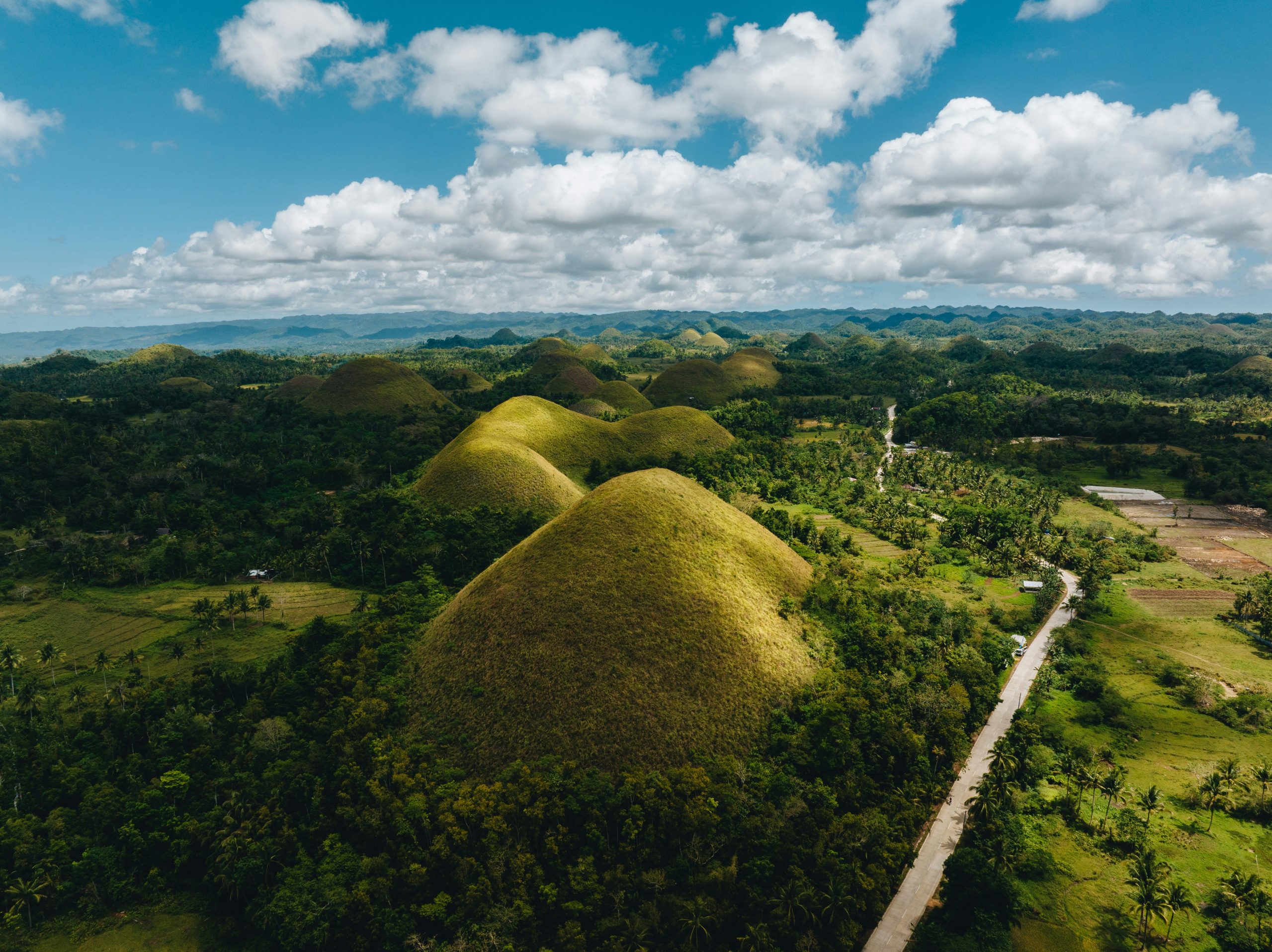
An island of over a thousand grassy Chocolate Hills, tiny tarsiers with enormous eyes, river cruises through the jungle, and beaches and reefs on Panglao next door.
Bohol is an island in the central Philippines, two hours by ferry from Cebu. It is famous for the Chocolate Hills, more than a thousand near-symmetrical grassy mounds that turn brown in the dry season, and for the Philippine tarsier, one of the world's smallest primates.
Most visitors stay on Panglao, a small island joined to Bohol by bridges, with white beaches and dive sites.
Three days is right.
Panglao Island, joined to Bohol by bridges, has the beaches, dive shops and most hostels, around Alona Beach. Tagbilaran, the capital, is the ferry port and has cheaper rooms. Anda, on the east coast, is quieter, with fine beaches but long drives to the sights.
Alona Beach, with dive shops and most hostels.
The capital and ferry port, with cheaper rooms.
East-coast beaches, far from the sights.
Map data from OpenStreetMap contributors.
The Chocolate Hills, near Carmen, are more than a thousand near-identical grassy domes that turn brown in the dry season, giving them their name. See them from the viewing deck at sunrise or late afternoon.
The Philippine tarsier, one of the world's smallest primates, with huge eyes, lives in Bohol's forests. Visit the Philippine Tarsier Sanctuary in Corella, the ethical option, where they live in the wild and visitors stay quiet; avoid roadside places that keep them in cages.
Take a lunch cruise on the Loboc River through the jungle, and see Baclayon Church, one of the oldest stone churches in the country. The man-made forest of mahogany trees is a common stop on the road.
Off Panglao, Balicasag Island has turtles, reef walls and some of the best snorkelling in the area. Dolphin-watching trips leave at dawn.
Panglao's beaches, including Alona and Dumaluan, are free, and the man-made forest is free to walk through.
Baclayon Church is free to visit, though its museum charges, and the countryside roads past rice fields are free to explore by scooter.
Bohol's food is simple and fresh: grilled fish and seafood along the beaches, and Filipino dishes in local canteens. Kalamay, a sticky sweet of coconut and sugar sold in coconut shells, is a Bohol speciality, and peanut kisses are the classic souvenir.
The Loboc River cruises include a buffet lunch.
A meal is €2 to €7.
Alona Beach has bars along the sand, some with fire shows and live music, and the island's nightlife is relaxed.
A San Miguel is €1 to €2.50.
Ferries from Cebu reach Tagbilaran in about two hours. Bohol-Panglao International Airport has flights from Manila and some international routes.
The sights are spread out: hire a scooter, or a driver for a day to see the Chocolate Hills, tarsiers and river in one loop. Tricycles cover short trips around Panglao.
Bohol is mid-priced. Dorms start around €8 and a careful day is €20 to €30.
A private driver for a countryside tour is around €30 to €50 for the car; a scooter is about €6 to €8 a day. The Chocolate Hills, tarsier sanctuary and Loboc cruise each charge small to moderate fees. A Balicasag snorkelling trip is €15 to €30.
The currency is the Philippine peso (PHP); prices here are euro equivalents, at roughly 65 pesos to the euro.
Bohol is safe. At the tarsier sanctuary, keep quiet and use no flash: tarsiers are nocturnal and easily stressed.
On scooters, take care on the countryside roads, which have fast traffic.
Typhoons hit roughly from June to November and can cancel flights and ferries for days; build slack into island plans.
Emergency number is 911.
The hills, turtle reefs and quieter beaches.
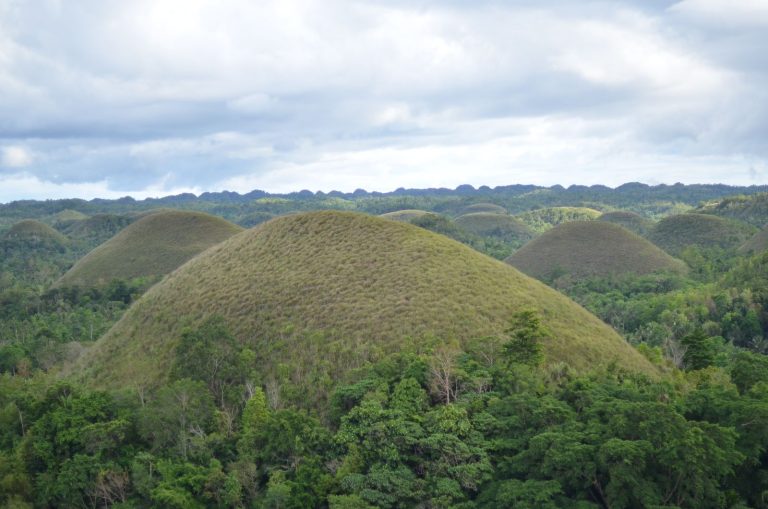
More than a thousand grassy domes.
The Sandugo festival celebrates Bohol's history in July.
Street dancing and history.
Brown hills from March.
December to May is dry; the hills turn brown from March.
Average highs.
Pick how you travel. Per person per night, in euros.
Prices are in pesos locally; these are euro equivalents.
The ones we get asked most.

Compare Bohol hostels — live prices, real reviews and free cancellation on most bookings. Then meet the people already there in the app.

 Get the App.
 Get the App.