City centre
First-timersAround Liela iela: the Walk of Fame, restaurants, the concert hall and most beds.

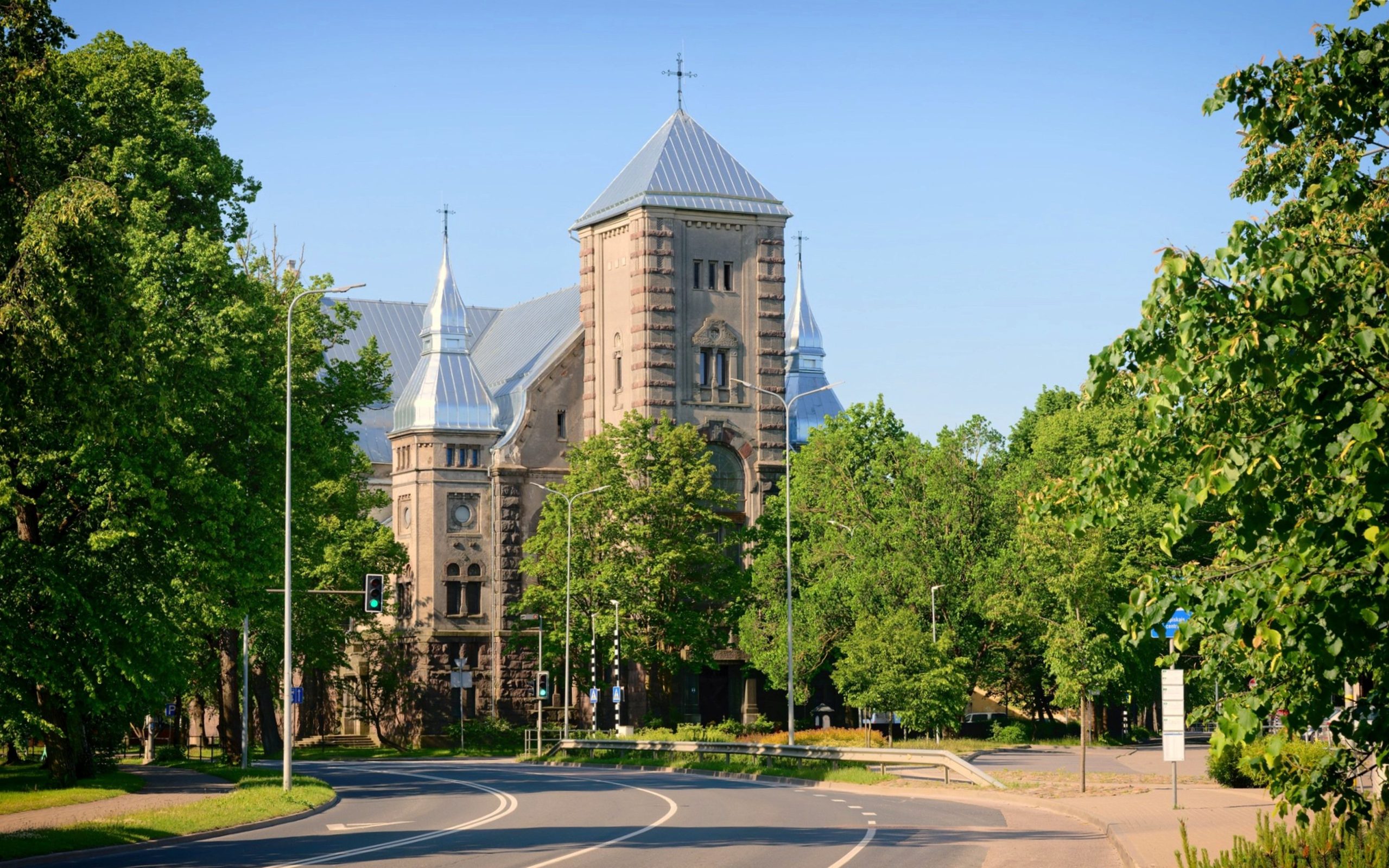
A western port with a wide white beach, the ruins of a closed Soviet naval city crumbling into the sea, and a claim to be where Latvian rock music came from.
Liepaja sits on Latvia's western coast, calls itself the city where the wind is born, and has a seven-kilometre white sand beach running along the edge of it.
North of the town is Karosta, and it is the reason to come. The tsar built a fortified naval port here in the 1890s; the Soviets took it over and closed it entirely — an off-limits military city within a city, sealed even to most Latvians. It was abandoned in 1994 and left largely as it was.
What remains is the Northern Forts, enormous concrete gun emplacements collapsing into the Baltic, a vast Orthodox naval cathedral, blocks of decaying officers' housing still partly inhabited, and a military prison that now runs tours — including one where you can be locked in overnight and shouted at by actors in Soviet uniform.
Liepaja is also Latvia's music town. The Walk of Fame along the main street honours Latvian musicians, and the Great Amber concert hall is the modern statement.
Two days.
A compact centre between a lake and the sea, with Karosta to the north.
Around Liela iela: the Walk of Fame, restaurants, the concert hall and most beds.
West: the seafront park, the wooden villas behind it and a short walk into town.
Map © MapTiler © OpenStreetMap contributors.
Go to Karosta. The Northern Forts are free and unguarded — vast blocks of tsarist-era concrete fortification, blown up and abandoned, now half in the sea and being taken apart by the Baltic. You walk among them. Nothing is fenced and nothing is explained, which is both the appeal and the hazard.
The Karosta Prison, about €10, was a military lock-up used by the tsarist navy, the Soviets and briefly independent Latvia, and it closed in 1997. Tours run through the cells and the exercise yards. There is also an overnight programme where visitors are processed as prisoners by actors, which is either an excellent idea or a terrible one depending on temperament.
St Nicholas Naval Cathedral, the Orthodox church at the heart of the base, is free and still in use.
In town, the beach runs seven kilometres and holds a Blue Flag, and the seafront park behind it has the Musicians' Walk of Fame.
The Great Amber concert hall is worth looking at even if nothing is on.
The Northern Forts at Karosta are free and entirely open, which is unusual for a site like this anywhere in Europe.
The beach is free, all seven kilometres, with the seafront park and the amber-themed clock behind it.
The Musicians' Walk of Fame runs along Liela iela and costs nothing to walk.
St Nicholas Naval Cathedral is free to enter.
Wandering Karosta's residential blocks is free and strange — this was a closed military city until 1994 and parts of it are still lived in, so it is a working neighbourhood rather than a ruin park. Be respectful about photographing homes.
Coastal and cheap. A main is €8 to €15, less at the market.
Smoked fish is the local product — the coast here has smokehouses and the Baltic supplies flounder, herring and eel.
The Liepaja market does hot food and produce cheaply, and it is where the town shops.
Latvian standards apply otherwise: rye bread, grey peas, sour cream, pickles.
A beer is €3 to €4.50, and Liepaja has its own long-standing brewery.
The seafront has summer cafés and bars that close outside the season, so in winter eating moves entirely into the centre.
Small, and more musically serious than the size suggests. Liepaja is Latvia's music town — a number of the country's best-known rock bands came from here, and the Walk of Fame is not an empty gesture.
Live music happens in small venues through the year, and the Great Amber concert hall carries the bigger programme.
The bars are concentrated on and around Liela iela, and a beer is €3 to €4.50.
Summer moves things to the seafront, where beach bars open for the season and close again in September.
This is a town of about seventy thousand and the evening is a bar and a band rather than a club night.
The centre is walkable and the beach is a ten-minute walk west of it.
Karosta is about six kilometres north. Buses run there for around €1, or a taxi is a few euros. Allow half a day.
Buses from Riga take about three hours and cost around €10, running several times a day. Trains are slower and less frequent.
Liepaja has a small airport with limited seasonal routes, so most people arrive by bus.
The Lithuanian border is an hour south, which makes Liepaja a reasonable stop on a coastal route between Riga and Klaipeda.
Cheaper than Riga. Beds are €10 to €25, a main €8 to €15, and a beer €3 to €4.50.
A day is €28 to €55.
Karosta is free apart from the prison at about €10, the beach is free, and the town's attractions are either free or a few euros.
Summer is the peak and beds tighten in July and August, particularly around festival weekends.
Carry some cash for buses and smaller places, though cards are widely accepted in the centre.
Liepaja is a safe town and crime against visitors is low. The risk here is the Karosta site itself.
The Northern Forts are unfenced, unlit, structurally unstable and partly in the sea. There are no barriers, no signage and no supervision. Reinforcing bar protrudes from broken concrete, there are unmarked drops into flooded chambers, and the tide moves around the seaward sections. Wear proper shoes, do not climb on the structures, do not go inside enclosed sections, and do not go at all after dark or alone.
The sea at Karosta has strong currents around the breakwaters and is not a swimming spot. Swim at the town beach instead, where there are lifeguards in season.
Parts of Karosta are still residential and were never a tourist site. Treat it as a neighbourhood rather than a ruin park.
Winter ice and a constant wind. Emergency number is 112.
Capes, waterfalls and the Lithuanian coast.
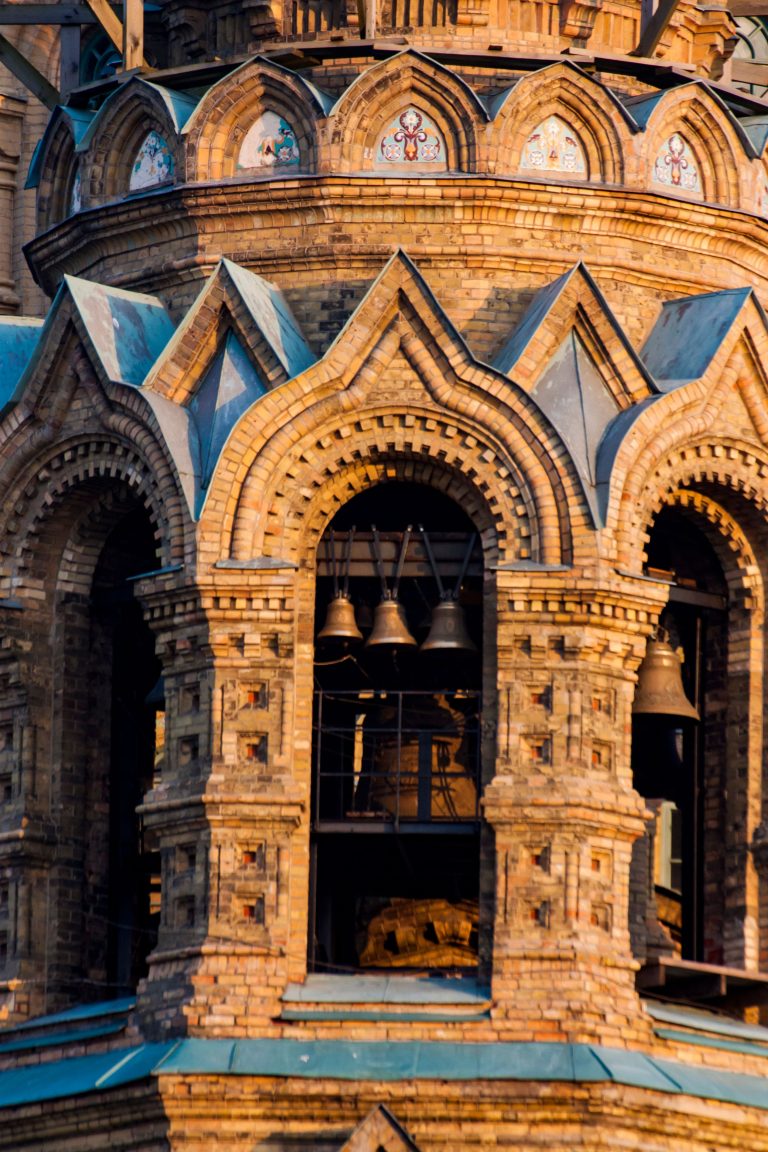
The abandoned naval base: forts, cathedral, prison and a residential district that was closed to outsiders until 1994.
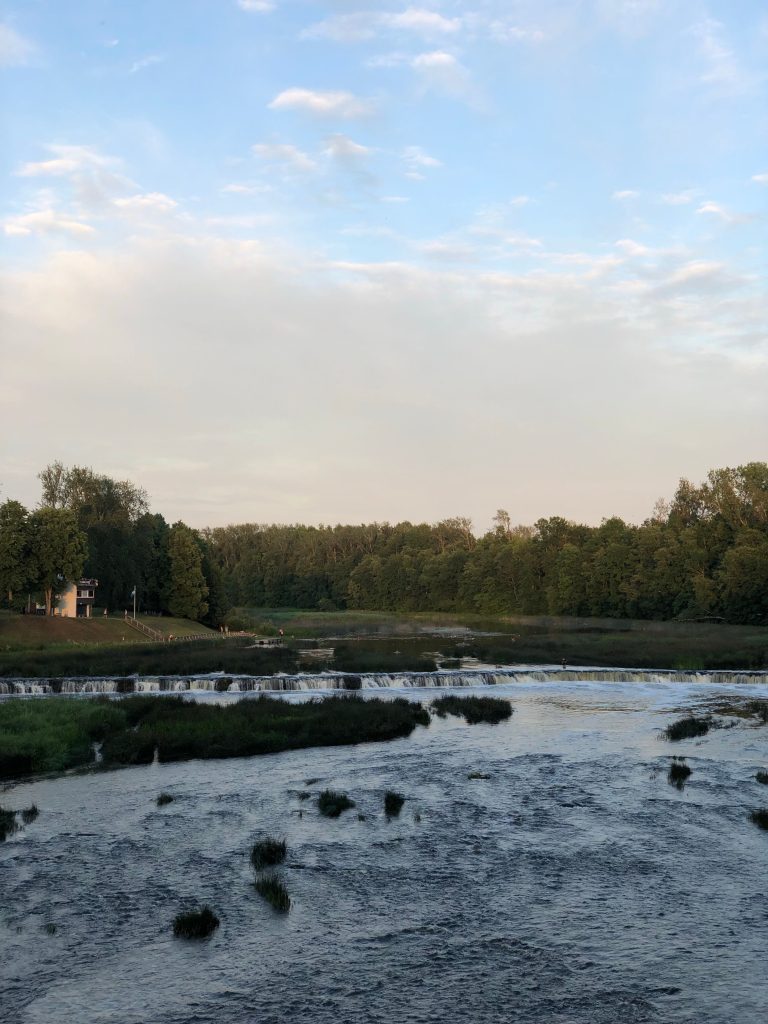
A small town with the widest waterfall in Europe, wooden architecture and a long brick bridge.
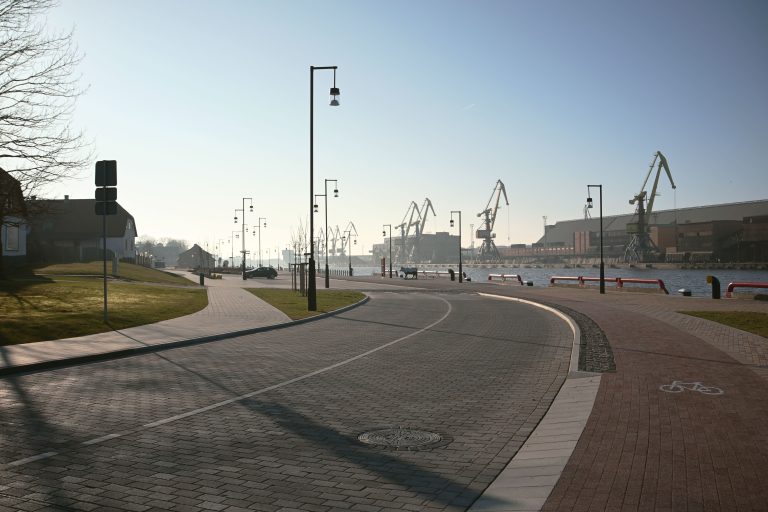
A port town with a good beach, a narrow-gauge railway and cow sculptures throughout.
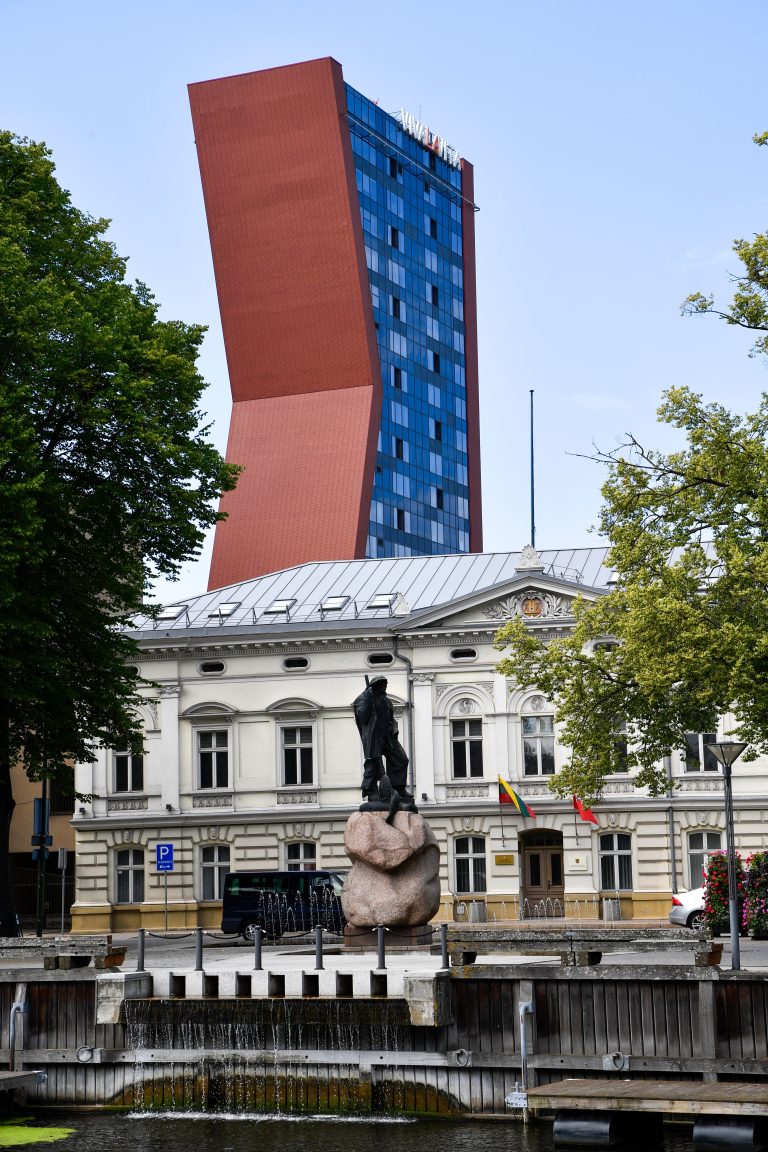
A different country, and the gateway to the Curonian Spit.
A summer festival season built around the town's music history.
Music festivals through the summer, reflecting the town's standing as Latvia's rock capital.
Bonfires and all-night celebrations. Much of the town closes and people head to the coast and countryside.
Standard tours around €10, plus an overnight programme where visitors are processed as prisoners by actors.
When the beach bars open and the seven-kilometre strand is actually usable.
The modern concert hall carrying the town's main classical and contemporary programme.
June to August for the beach. Karosta is arguably better in bad weather.
Average highs. The wind is constant here — the town's own slogan refers to it — and it makes the beach feel colder than the numbers and the Karosta ruins feel considerably more atmospheric.
Pick how you travel. Per person per night, in euros — Latvia uses them.
Latvia is in the eurozone, so these are the prices you will pay. Karosta is free apart from the prison.
The ones we get asked most.

Compare Liepaja hostels — live prices, real reviews and free cancellation on most bookings. Then meet the people already there in the app.

 Get the App.
 Get the App.