Sentrum
First-timersAround the harbour.

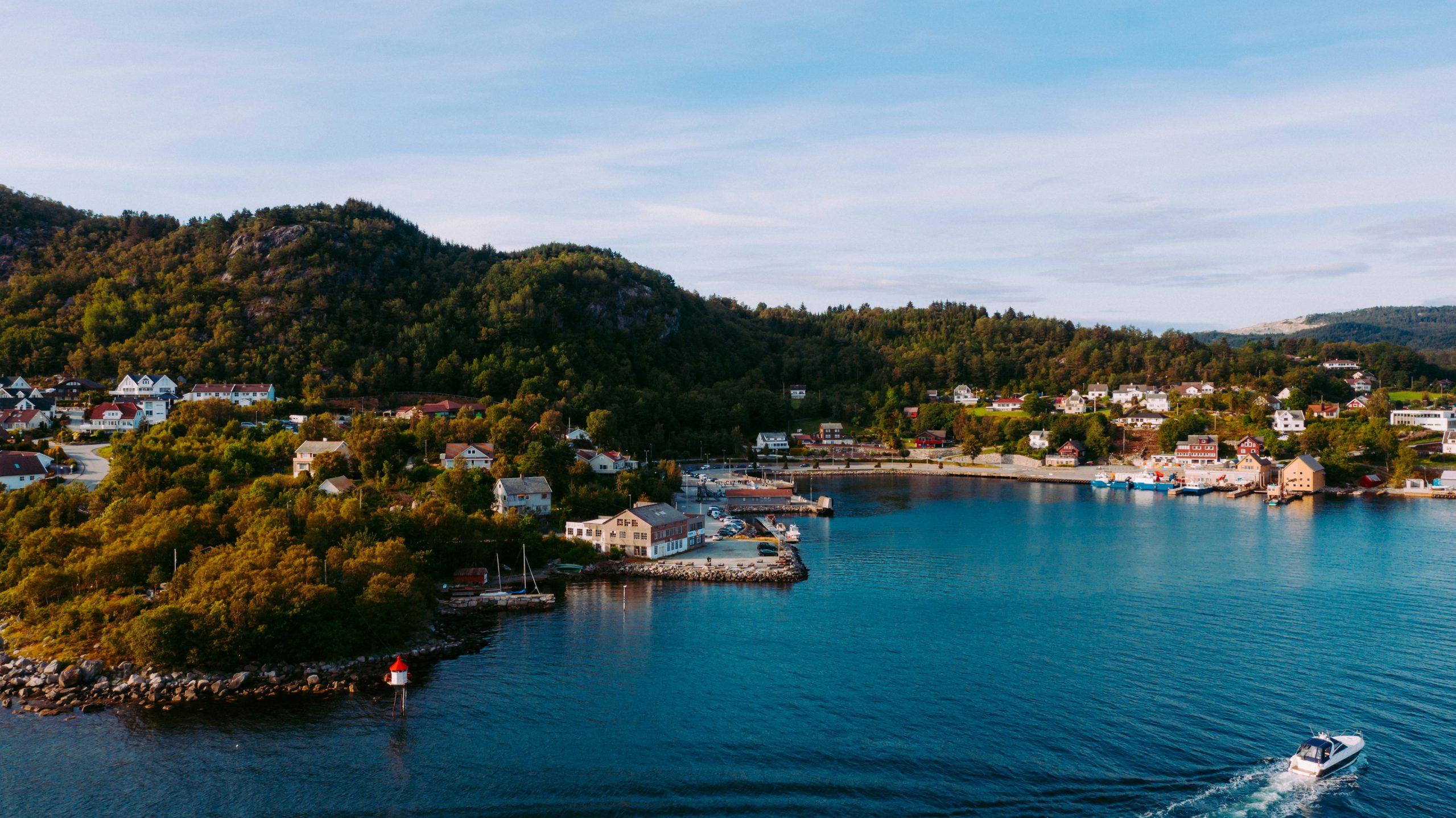
An oil city with an old town of white wooden houses, and the base for Preikestolen and the Lysefjord, the most famous cliff and fjord in Norway.
Stavanger grew rich twice, first on sardines and then on North Sea oil, and it is now one of Norway's wealthiest cities. The old town, Gamle Stavanger, has more than 170 white wooden houses from the eighteenth and nineteenth centuries, and the harbour is lined with restaurants.
Most visitors come for what is outside it. The Lysefjord, a narrow fjord between granite walls, is an hour away, and above it stands Preikestolen, the Pulpit Rock, a flat-topped cliff 604 metres above the water. Kjeragbolten, a boulder wedged in a crevasse, is further down the same fjord.
Two or three days is right: one for the city, one for Preikestolen, and one for Kjerag or a fjord cruise.
The centre is compact around the harbour. Stay near the harbour or the old town.
Around the harbour.
The old town of white wooden houses.
Orange labels are neighbourhoods, dots are the 1 top-rated hostels. Map © MapTiler © OpenStreetMap contributors.
Hike to Preikestolen. The trail from the car park takes about four hours return, rocky in places, and it is busy in summer; start early. Buses run from Stavanger to the trailhead in season, through the road tunnels under the fjord.
Kjeragbolten, the boulder stuck in a crevasse, is a longer and harder hike of about six hours return, and the road there is open only in summer.
A boat cruise on the Lysefjord passes under Preikestolen and past waterfalls.
In the city, walk through Gamle Stavanger and Øvre Holmegate, the street of brightly painted houses. The Norwegian Petroleum Museum explains the oil industry, and the Swords in Rock monument stands by the fjord outside town.
The old town, Øvre Holmegate and the harbour are free.
The Preikestolen hike is free; the car park and buses cost money.
The beaches at Sola, near the airport, are free.
Stavanger has a strong food scene, with seafood and the Gladmat food festival in summer.
Supermarkets and bakeries are the budget answer. A restaurant main is €30 to €45.
Bars cluster around the harbour and Øvre Holmegate, busy at weekends.
A beer is €10 to €13.
The centre is walkable. Buses run from Sola Airport to the centre in about thirty minutes.
Trains run to Oslo in about eight hours and to Kristiansand. Buses go to the Preikestolen trailhead in season.
For Kjerag, a car or a tour is needed.
Stavanger is expensive, one of the priciest cities in Norway. Dorms start around €38. A careful day is €70 to €90.
The costs that add up are fjord cruises and buses to the trailheads.
The currency is the Norwegian krone, and Norway is close to cashless: cards work everywhere. Prices here are euro equivalents.
Stavanger is very safe.
Preikestolen and Kjerag are serious hikes with sheer drops and no railings. Wear proper boots, check the weather, start early, and stay back from the edge.
Emergency numbers are 112 for police, 113 for ambulance and 110 for fire.
The Lysefjord and its cliffs.
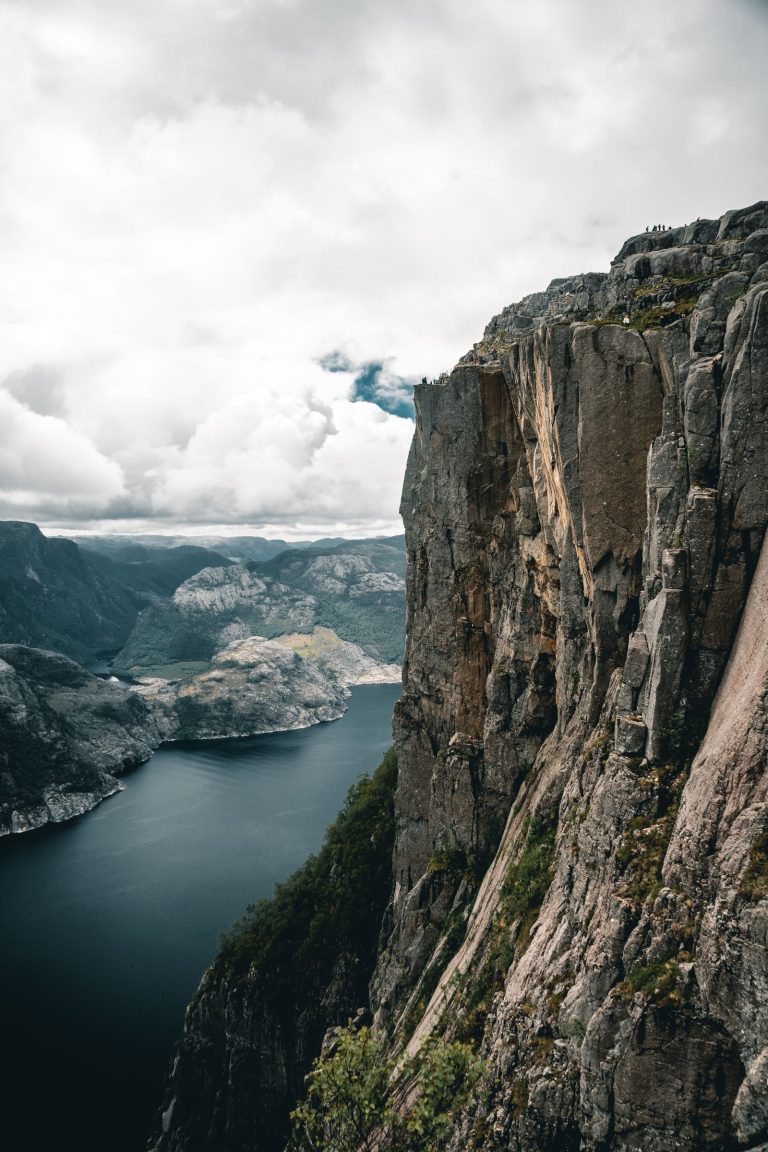
The Pulpit Rock above the Lysefjord.
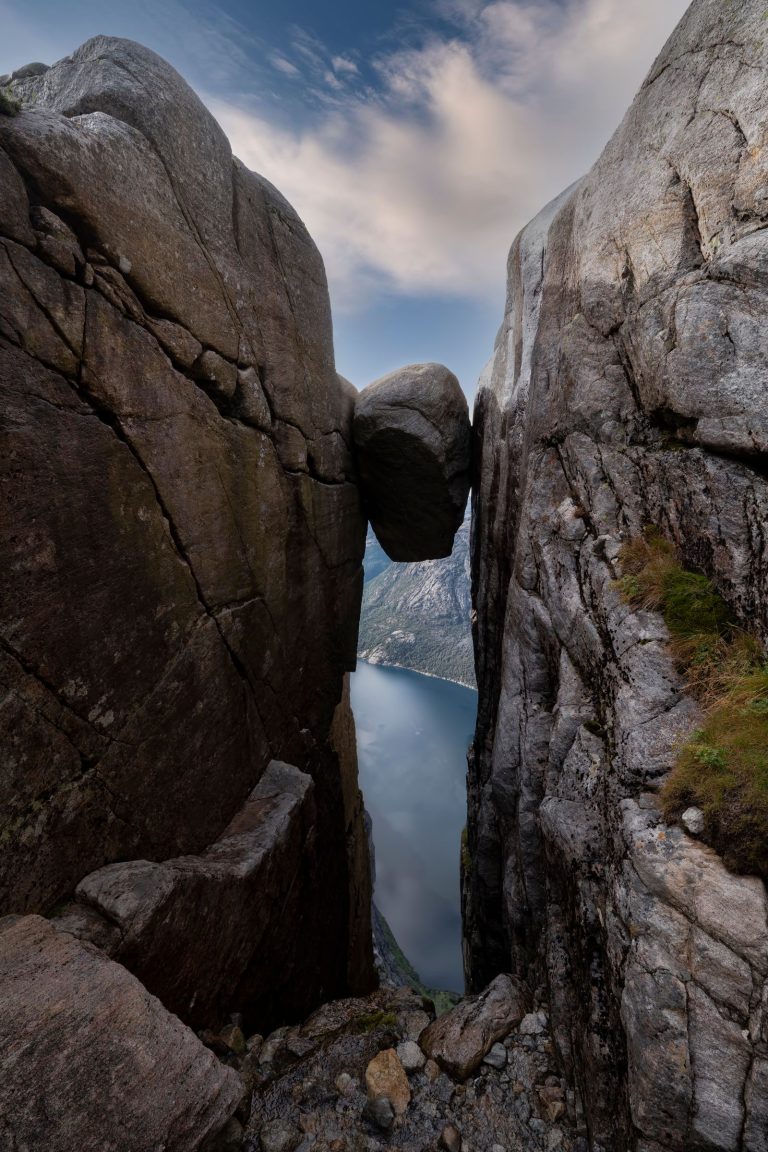
The boulder wedged in a crevasse.
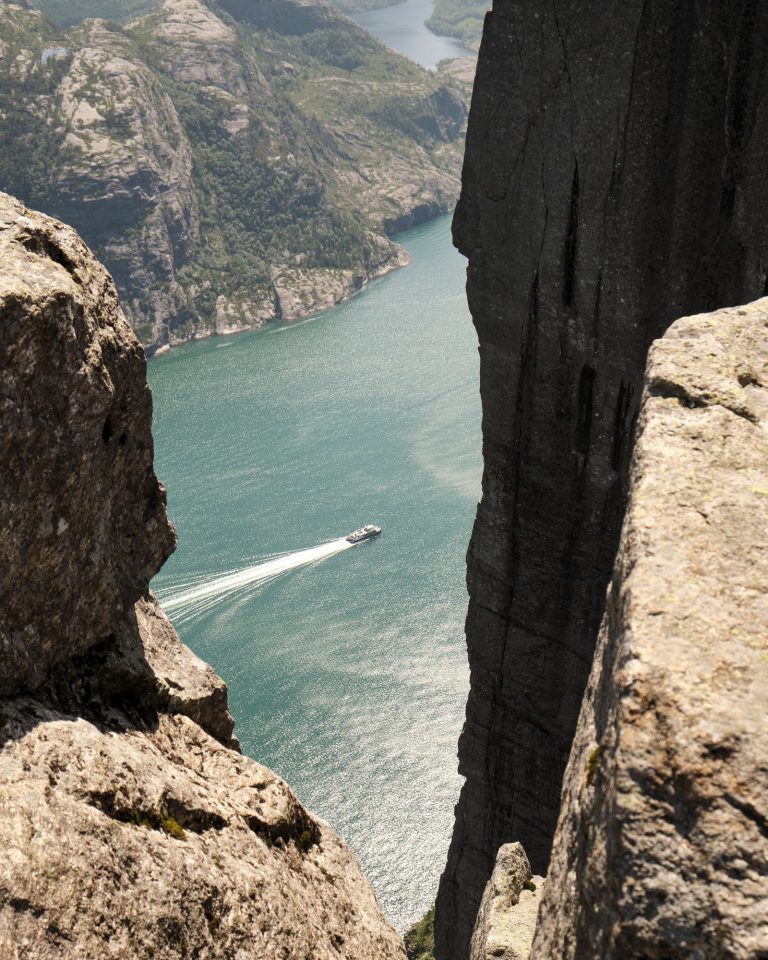
Waterfalls and cliffs, under Preikestolen.
Gladmat is one of Scandinavia's biggest food festivals.
One of Scandinavia's biggest food festivals.
When the trails and the Kjerag road are open.
The top-rated places to stay in Stavanger right now, live from Hostelworld.
June to September for the hikes. Kjerag's road opens only in summer.
Average highs. It rains often.
Pick how you travel. Per person per night, in euros.
Prices are in kroner locally; these are euro equivalents. Excludes fjord cruises.
The ones we get asked most.

Compare Stavanger hostels — live prices, real reviews and free cancellation on most bookings. Then meet the people already there in the app.

 Get the App.
 Get the App.