Centro Histórico
First-timersThe baroque centre around the cathedral and Praça da República: everything walkable, most of the beds and the bars.

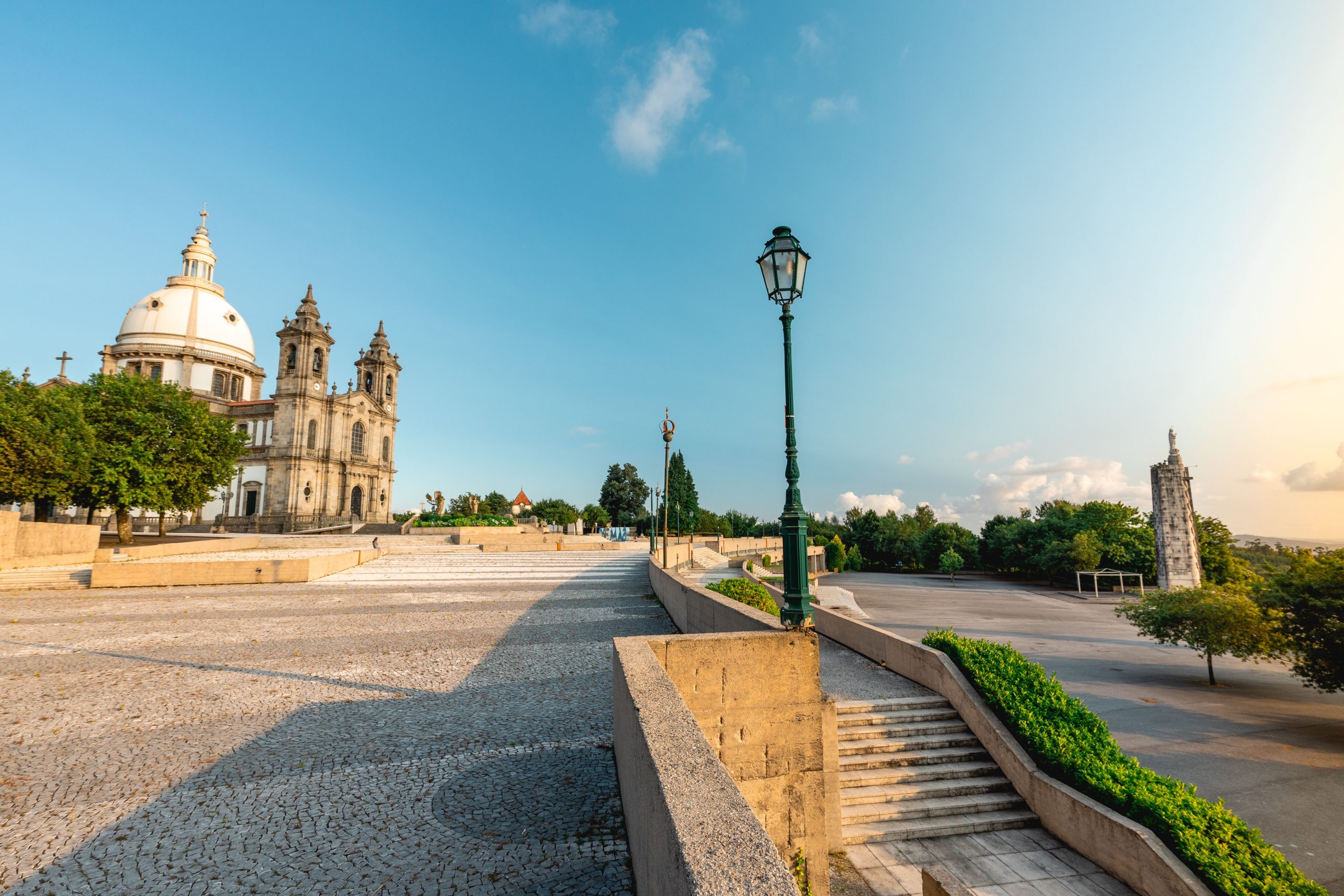
Older than Portugal, with more churches than anywhere else in the country and a baroque stairway climbing a wooded hill above it. Also, improbably, a student party town.
Braga was Bracara Augusta under the Romans and has been an archbishopric since the third century, which makes it older than Portugal by several hundred years. It has the country's oldest cathedral and, by reputation, more churches per head than anywhere else in it.
It is also a university city of 20,000 students, which means the baroque centre is full of cheap bars, and Braga has a nightlife that surprises everyone who arrives expecting a cathedral town.
Bom Jesus do Monte, on a wooded hill outside the centre, is the reason it is on most itineraries: a zigzag baroque stairway of 577 steps, climbed barefoot by pilgrims, with a water-counterweight funicular from 1882 running alongside for anyone sensible.
A day and a night, or use it as a base for Guimarães and the Peneda-Gerês park.
The centre is compact and flat, which is a relief after Porto.
The baroque centre around the cathedral and Praça da República: everything walkable, most of the beds and the bars.
North-east of the centre, cheaper, and where the student bars and late nights actually are.
Five kilometres out on a wooded hill, with the sanctuary, forest walks and air ten degrees cooler in August.
Orange labels are neighbourhoods, dots are the 5 top-rated hostels. Map © MapTiler © OpenStreetMap contributors.
Bom Jesus do Monte is the one. A baroque stairway zigzags up a wooded hillside in a sequence representing the senses and the virtues, with fountains at each landing, and pilgrims still climb it on their knees. The funicular beside it has run on water counterweights since 1882 and is the oldest of its kind in the world, at about €2.
The Sé de Braga is the oldest cathedral in Portugal, begun in the eleventh century, with a treasury and the tombs of the parents of the country's first king.
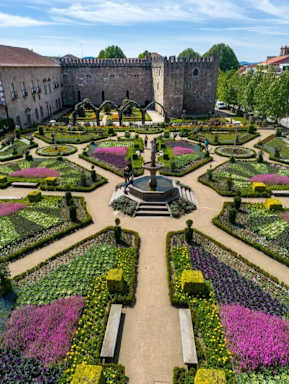
The Roman baths and the Idade Média ruins sit in the middle of town, and the Biscainhos palace has gardens that almost nobody visits.
Semana Santa here is the most serious Holy Week in Portugal, with barefoot processions through the streets.
Climbing the Bom Jesus stairway costs nothing — only the funicular charges — and the woods at the top have walking trails and a view over the Minho.
The cathedral's exterior and most of the city's churches are free to enter, and there are a great many of them.
Praça da República and the arcaded Avenida da Liberdade are where the city sits in the evening, and the Santa Bárbara garden behind the archbishop's palace is free and rarely busy.
The university campus, ten minutes out, has a modernist library worth a look.
The Minho eats well and cheaply. Bacalhau à Braga — salt cod fried with onions and potatoes — is the city's dish, and rojões, chunks of fried pork, are the regional standby.
Frigideiras do Cantinho has been selling small meat pies on the same street since 1796, and they cost about €1.50.
A prato do dia is €7 to €10, and the student population keeps it there.
Vinho verde comes from the countryside around the city: young, slightly fizzy, low in alcohol, and about €1.50 a glass. Drinking it anywhere else is never quite the same.
This is the surprise. Twenty thousand students give Braga a nightlife that outsizes the city, concentrated in the streets around the historic centre and out towards the university.
It runs Wednesday to Saturday in term time, starts at eleven and goes until four, and a beer costs €1.50 to €2.50.
Enterro da Gata in May is the student festival week, when the whole city gives up on getting anything done.
Out of term, from July to September, it is a quiet cathedral town again.
The centre is flat and walkable, which after Porto is a novelty.
Trains from Porto Campanhã take about an hour and cost €3.25, running roughly hourly, which makes Braga an easy day trip or a cheaper base.
Bus 2 runs from the centre to the foot of the Bom Jesus stairway in about fifteen minutes for a couple of euros, and the funicular takes you up from there.
Buses reach Guimarães in 45 minutes and Peneda-Gerês national park in about ninety, though park services are sparse and a car helps.
Braga is among the cheapest cities in Portugal. Dorms are €14 to €22, a prato do dia is €7 to €10, and a beer is €1.50 to €2.50.
A day is €35 to €45.
Almost everything worth doing is free or nearly so — the stairway, the churches, the gardens — and the funicular and a museum or two are a couple of euros each.
Braga is a safe, quiet city with very little crime affecting visitors, including late at night in the student areas.
The Bom Jesus steps are steep, worn and slippery when wet, and the Minho is one of the wettest parts of Portugal between November and March.
Semana Santa and Enterro da Gata both bring large crowds into narrow streets, and ordinary caution about bags and drinks applies.
If you head into Peneda-Gerês, that is mountain country with changeable weather and limited phone signal. Emergency number is 112.
Two UNESCO towns and a national park, all within ninety minutes.
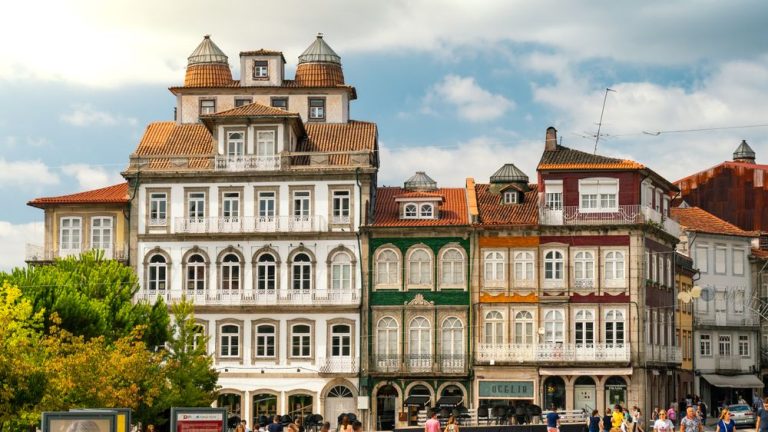
Where Portugal was founded in the twelfth century, with a castle, a ducal palace and a UNESCO-listed medieval centre.
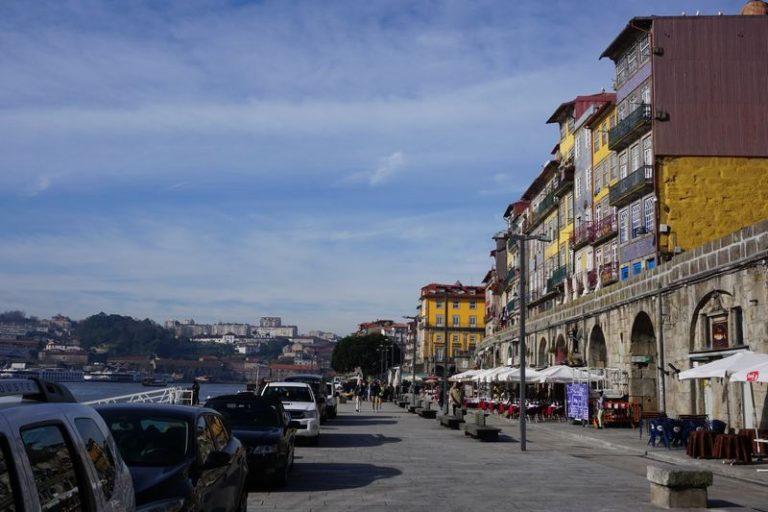
The second city, and close enough that plenty of people base in Braga and commute in.
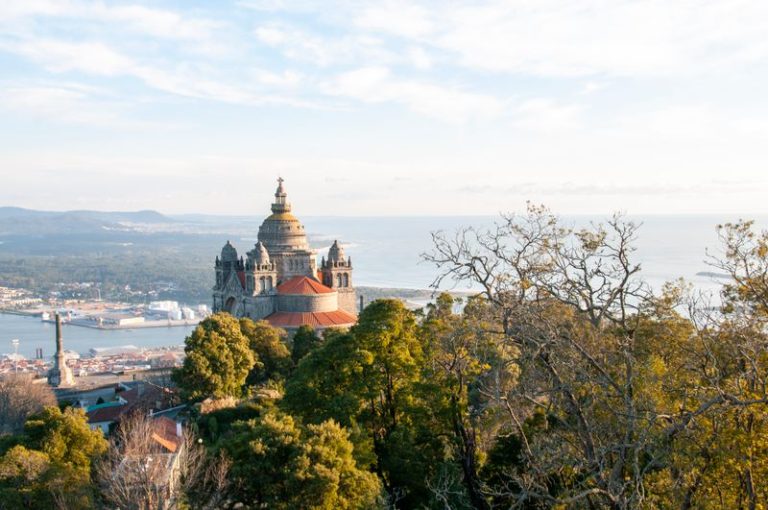
A Minho coastal town with a basilica on the hill above it and a long Atlantic beach.
Holy Week here is the most serious in the country, and May belongs to the students.
The biggest Holy Week in Portugal: barefoot penitents, hooded processions and the whole city out for a week. Accommodation books months ahead.
The student festival week, with parades, concerts and very little studying.
The city's own São João, older than Porto's and with a medieval parade.
The Roman city recreated for a weekend, with markets and re-enactments.
A white night of street performance and late openings.
A small, cheap scene in and around the historic centre, and a good base for the Minho. Live from Hostelworld.
Term time for the city, Easter for the processions, and summer for the park. It rains a lot here.
Average highs. The Minho is the wettest region in Portugal, and Braga gets roughly twice Lisbon's annual rainfall.
Pick how you travel. Per person per night, in euros.
Almost everything worth seeing here is free. Semana Santa is the one week when accommodation prices jump.
The ones we get asked most.

Compare Braga hostels — live prices, real reviews and free cancellation on most bookings. Then meet the people already there in the app.

 Get the App.
 Get the App.