Old town
First-timersAround Széchenyi Square and the cathedral: the mosque, the Roman tombs, bars and most beds.

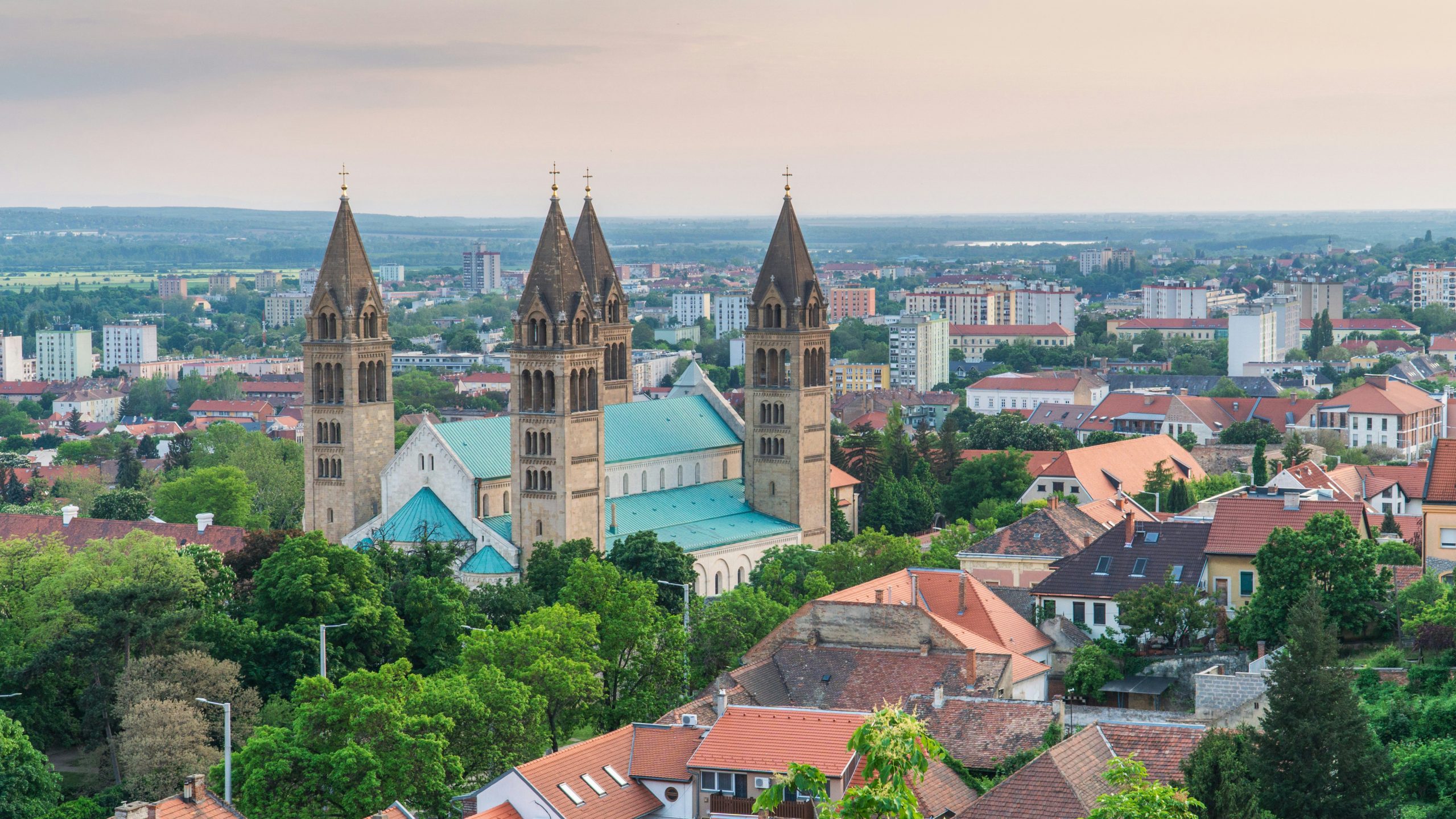
Southern, sunny and layered: a Roman burial ground under the cathedral, an Ottoman mosque serving as a Catholic church, and a porcelain factory turned cultural quarter.
Pécs sits in the far south of Hungary against the Mecsek hills, close to the Croatian border, and it has been continuously important for about seventeen hundred years.
The Romans called it Sopianae, and the early Christian burial chambers they left — painted tombs from the fourth century, under the cathedral square — are UNESCO-listed and genuinely rare.
The Ottomans held the city for a hundred and forty-three years, and the Mosque of Pasha Qasim still stands on the main square. It is now a Catholic church, and it has kept the mihrab, the prayer niche facing Mecca, alongside the Christian altar. Very few buildings anywhere carry both that plainly.
Zsolnay porcelain was made here from 1853, and its distinctive iridescent glaze covers roofs across Hungary including the parliament in Budapest. The old factory is now a cultural quarter.
It was European Capital of Culture in 2010 and has a large student population. Two days.
A compact centre on a hillside, with the Zsolnay quarter east of it.
Around Széchenyi Square and the cathedral: the mosque, the Roman tombs, bars and most beds.
East: the converted porcelain factory with museums, workshops and a calmer feel.
Map © MapTiler © OpenStreetMap contributors.
The Mosque of Pasha Qasim dominates Széchenyi Square, the main square, and is the largest surviving Ottoman building in Hungary. It became a Catholic church after the Ottomans left and has kept both identities visibly — the mihrab is still in the wall. Entry is a few hundred forint and takes twenty minutes.
The early Christian necropolis beneath the cathedral square is the UNESCO site: fourth-century burial chambers with painted walls, preserved underground and reached by a modern visitor centre. About 2,500 HUF, roughly €6.
The Zsolnay Cultural Quarter, in the old porcelain works, holds museums covering the factory and the family, plus the eosin glaze that made their name — an iridescent finish they developed and kept secret.
The cathedral, with four corner towers, sits at the top of the square and is free or close to it.
Then take the chairlift or walk up into the Mecsek hills behind the city for the view south towards Croatia.
Széchenyi Square and the old town cost nothing, and the mosque exterior is the centrepiece of both.
The cathedral square and the walk around the medieval city walls are free.
The Zsolnay Quarter is free to walk through — only the individual museums charge — and the buildings and glazed fountains are the best part anyway.
The Mecsek hills start at the edge of the city with free marked trails, and the TV tower on Misina peak has a paid viewing deck above a free forest.
The padlock wall on Janus Pannonius utca, where students started attaching locks decades before the practice spread across Europe, is free and predates the Paris bridges.
Southern Hungarian cooking, which means more paprika, more peppers and Balkan influence from across the Croatian border.
A main is 3,500 to 6,000 HUF, about €9 to €15, and student places do considerably less.
The Villány wine region is thirty minutes south and produces Hungary's best reds — Cabernet Franc in particular does unusually well there. A glass in town is 800 to 1,500 HUF, about €2 to €4.
Szentlőrinc and the Mecsek villages supply the markets, and the covered market is cheap and good.
A beer is around 900 to 1,500 HUF, about €2.50 to €4, and the student bars are cheaper again.
Student-driven and cheap. The university is one of the oldest in central Europe, founded in 1367, and term time from September to June fills the centre.
The bars cluster around Király utca, the pedestrian street running east from the main square, and the courtyards off it.
A beer is €2.50 to €4 and cocktails €5 to €8, which is low even by Hungarian standards.
Summer moves outdoors — the squares and courtyards fill, and Pécs is one of the sunniest and mildest places in the country, so the season runs long.
Out of term, particularly July and August, the city is noticeably quieter.
The old town is small and walkable, though it sits on a slope and the cathedral end is a climb.
Buses cost a few hundred forint and reach the Zsolnay Quarter and the Mecsek trailheads.
Trains from Budapest take just under three hours for around 4,500 HUF (about €11), several times a day.
Pécs is close to the Croatian border, and buses run south towards Osijek, which makes it a reasonable overland link between Hungary and Croatia.
Villány, the wine region, is about thirty minutes by train or bus and is the obvious half-day.
One of the cheapest cities in Hungary outside Budapest. Beds are €11 to €26, a main €9 to €15, and a beer €2.50 to €4.
A day is €28 to €55.
Most of the city is free — the squares, the Zsolnay grounds, the walls and the hills. The paid sites are cheap: the necropolis at about €6 and the mosque at a couple of euros.
Villány wine at €2 to €4 a glass is the best value red wine in Hungary.
Term time is when the cheap student places are all open; July and August are quieter and slightly less good value as a result.
Pécs is a safe city and crime against visitors is low.
Petty theft happens around the station and in the student bar streets at weekends, at ordinary levels.
The old town is on a slope with cobbled and uneven streets that are slippery in rain, and the cathedral end is a real climb.
The necropolis chambers are underground, cool and reached by steps, and can be damp underfoot.
In the Mecsek hills, trails are marked but phone coverage thins, and ticks are present from spring to autumn across this part of Hungary — check after walking in long grass or woodland.
Emergency number is 112.
A red wine region, a hill range and the Croatian border.
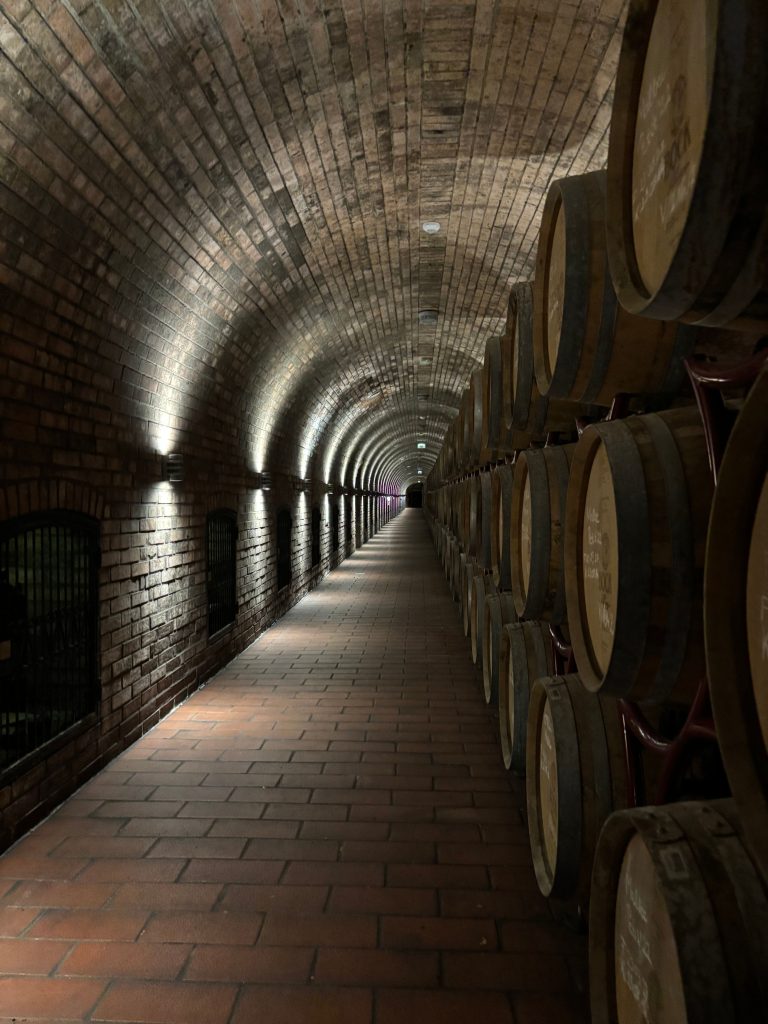
Hungary's best red wine region, with a cellar row in Villánykövesd and Cabernet Franc that beats its reputation.
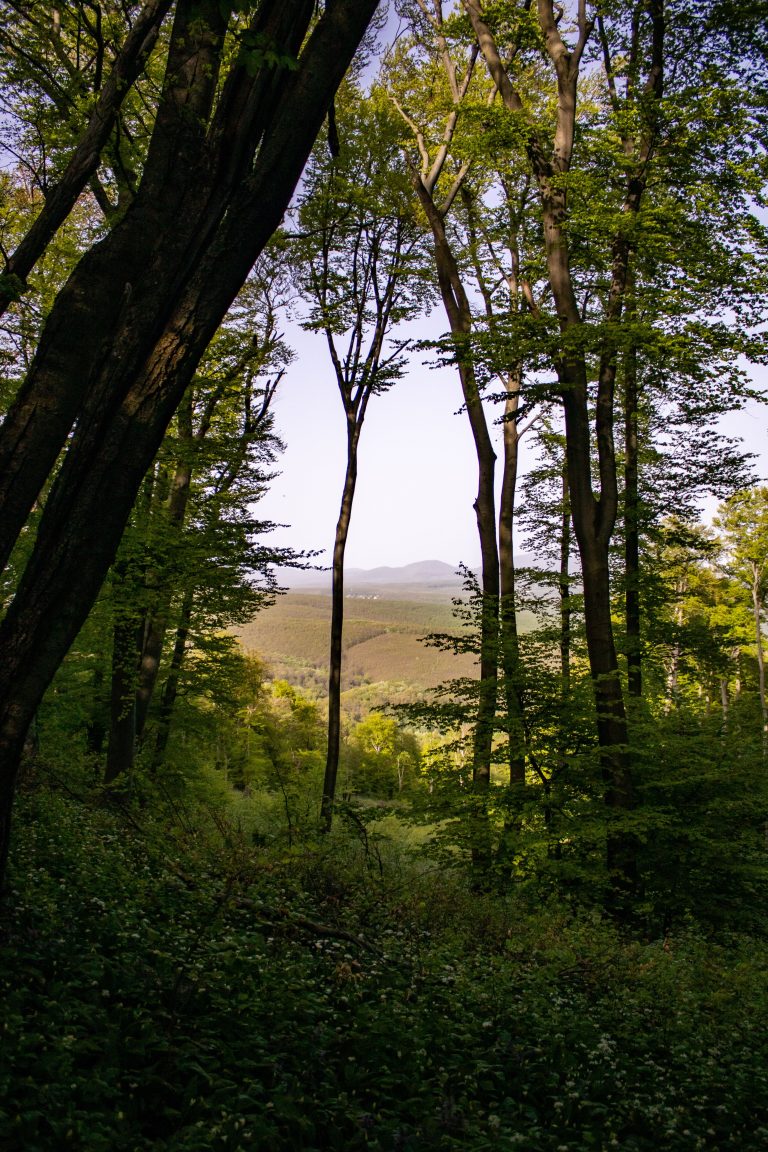
Forested hills immediately north, with marked trails, a chairlift and the TV tower on Misina.
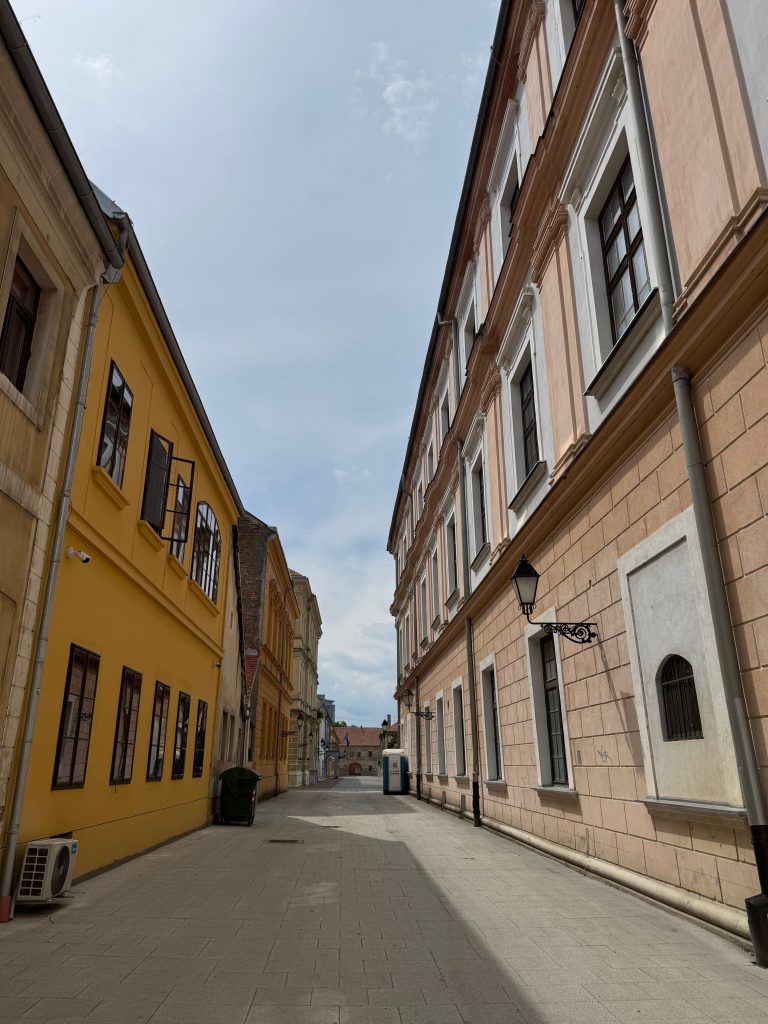
Across the border into Slavonia, and the overland route towards Croatia.
A harvest in Villány and a city with a long cultural season.
The vintage in Hungary's best red wine region, with cellar events through the villages.
Light installations and projections across the city over several nights.
The city's own festival, with music and markets in the squares.
When the university fills the bars and the cheap student places are all open.
A small market beneath the mosque, with mulled Villány red.
April to June and September to October. It is the mildest corner of Hungary.
Average highs, and among the highest in Hungary — Pécs sits in the sheltered south and runs a few degrees milder than Budapest year-round, with more sunshine.
Pick how you travel. Per person per night, in euros — you will pay in forint.
Shown in euros for comparison; you pay in forint. The doing line is low because most of the city costs nothing.
The ones we get asked most.

Compare Pécs hostels — live prices, real reviews and free cancellation on most bookings. Then meet the people already there in the app.

 Get the App.
 Get the App.