City centre
First-timersAround the castle and the promenade: the museum, the river views and most beds.

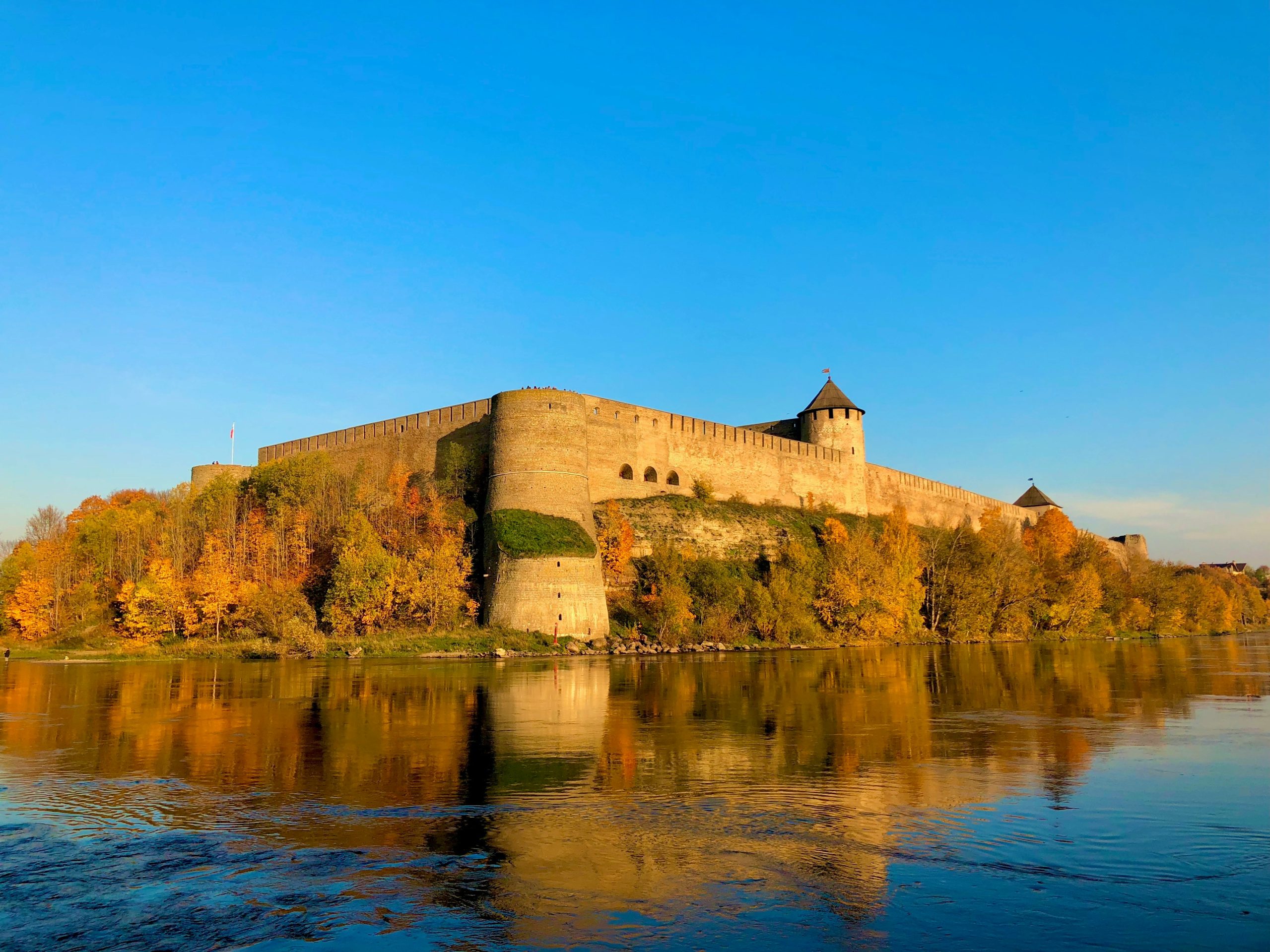
Two castles facing each other across a river that is also the EU's eastern border, in a city where almost everyone speaks Russian and nowhere else in Estonia feels like it.
Narva sits on the Narva river, which is the border between Estonia and Russia and therefore the eastern edge of the EU. Hermann Castle stands on one bank and the Russian fortress of Ivangorod on the other, about a hundred and fifty metres apart, built to watch each other and still doing it.
The city was destroyed in 1944 and rebuilt Soviet, so the baroque old town is gone and what stands is mostly post-war housing. Around ninety-five per cent of residents are Russian-speaking, and the atmosphere, signage and daily life reflect that.
Kreenholm, a vast nineteenth-century textile mill on an island in the river, was once among the largest factories in the world and is now a spectacular industrial ruin opening slowly to visitors.
It is a genuinely unusual place and it rewards curiosity rather than sightseeing. One day, or two with the coast at Narva-Jõesuu.
A small centre near the castle, with a beach resort fifteen minutes north.
Around the castle and the promenade: the museum, the river views and most beds.
Fifteen minutes north where the river meets the sea: a long sand beach, pine forest and spa hotels.
Map © MapTiler © OpenStreetMap contributors.
Hermann Castle is the reason to come. The Danish-founded keep holds the Narva Museum at about €8, and from the tower you look straight across the river at Ivangorod fortress — two systems of Europe staring at each other over a hundred and fifty metres of water. There is no comparable view anywhere else on the continent.
The riverside promenade below the castle runs along the border itself and is free, with the fortress opposite the whole way.
Kreenholm, the nineteenth-century textile mill on the island, was once one of the largest factories in the world. Guided tours run in season at around €15 and are the only way in — it is an extraordinary industrial ruin and it is not safe to enter alone.
The Soviet-era town centre, the war memorials and the Alexander Cathedral are free to walk, and they are the honest record of what happened here in 1944.
Narva-Jõesuu, fifteen minutes north, has a long sand beach and pine forest at the river mouth.
The riverside promenade is free and gives the castle-to-fortress view along its whole length.
The Soviet town centre, the Alexander Cathedral and the war memorials cost nothing and are the substance of the place.
Narva-Jõesuu beach and the pine forest behind it are free, and the walk along the sand runs for kilometres with almost nobody on it.
The Kreenholm exterior and the surrounding workers' housing can be walked freely even without a tour, and the scale of it is visible from outside.
The bastions of the old Swedish fortifications around the city are open parkland.
Cheap, and different from the rest of Estonia. The food is largely Russian and Soviet-era in character — pelmeni, borscht, blini, shashlik — and a main runs €8 to €14.
The market by the bus station is the cheapest eating and where the city shops.
There are few places aimed at visitors, which is part of the appeal and also means menus are often in Russian and Estonian only.
A beer is €3 to €5, among the cheapest in the country.
Narva-Jõesuu has the more resort-oriented restaurants in summer, and prices there sit a few euros above the city.
Limited. Narva is a working city of about fifty thousand with a handful of bars and very little aimed at visitors.
Drinks are cheap — a beer €3 to €5 — and the bars are local in the plainest sense.
Narva-Jõesuu has some seasonal life in July and August around the spa hotels and the beach.
There is no real club scene and nobody comes here for the evening.
If you want a night out in eastern Estonia, this is not where you find it; the city rewards daytime curiosity instead.
The centre is small and walkable, with the castle, promenade and museum all together.
City buses are about €1, and buses to Narva-Jõesuu take fifteen minutes.
Trains from Tallinn take about two and a half hours for around €12 and run several times a day; buses are similar. It is the easiest long day trip in the country by rail.
Tartu is about three hours by bus.
The Narva river crossing is an international border and its rules have changed repeatedly since 2022 — do not plan a route through it without checking the current position with official sources first.
The cheapest city in Estonia. Dorms are €10 to €20, a main €8 to €14, and a beer €3 to €5.
A day is €25 to €45.
The promenade, the Soviet centre and the beach are free. Hermann Castle at about €8 and a Kreenholm tour at around €15 are the only real entries.
Beds are limited rather than expensive — there is not much accommodation here, so book rather than arrive hoping.
Narva is a safe city for ordinary purposes and crime against visitors is rare. The cautions here are about the border rather than personal safety.
Do not photograph border infrastructure, checkpoints or guards on either side. This is taken seriously and it is the most likely way to get into difficulty here.
Stay on marked paths along the river. The border runs down the middle of the water and the banks are monitored.
Crossing rules and the status of the checkpoint have changed repeatedly since 2022. Check the position with your own foreign ministry and Estonian border authorities before making any plan that depends on it.
Kreenholm is a derelict industrial site and unsafe to enter outside a guided tour. Emergency number is 112.
A battle reenactment at the castle, and a summer festival on the beach.
A historical reenactment of the 1700 battle, with encampments in the castle grounds.
A music and city festival using Kreenholm and other industrial spaces as venues.
The guided tours of the mill run seasonally and are the only way inside.
When the beach resort north of the city is actually open and busy.
Bonfires and all-night parties across Estonia.
May to September. Winter here is the coldest in Estonia.
Average highs. North-east Estonia runs a couple of degrees colder than Tallinn in winter, and the Kreenholm tours and Narva-Jõesuu season are both roughly May to September.
Pick how you travel. Per person per night, in euros.
The cheapest city in Estonia. The castle at about €8 and a Kreenholm tour at around €15 are the only significant entries.
The ones we get asked most.

Compare Narva hostels — live prices, real reviews and free cancellation on most bookings. Then meet the people already there in the app.

 Get the App.
 Get the App.