Old town
First-timersThe colonial riverside, walkable.

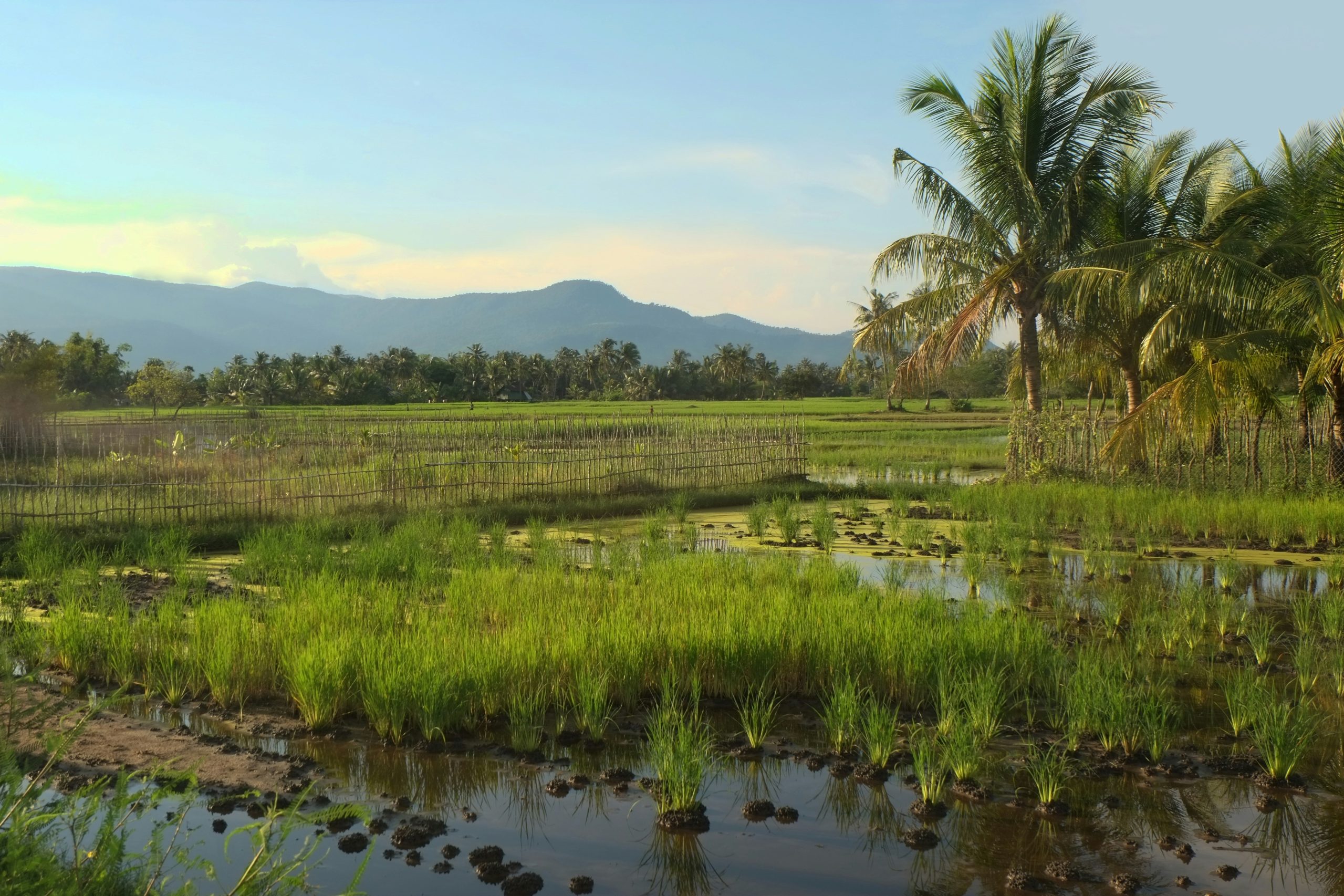
A sleepy riverside town of colonial shophouses beneath a mountain, famous for its pepper, with Bokor National Park above and Kep's crab market down the road.
Kampot sits on the Praek Tuek Chhu river near the south coast, a town of faded French shophouses, riverside bars and very little hurry. It is famous for Kampot pepper, grown on farms in the countryside and prized by chefs worldwide.
Above the town rises Bokor Mountain, with the ruins of a French hill station in the national park. Down the road is Kep, a small seaside town known for its crab market.
Kampot is where travellers slow down. Three days is right.
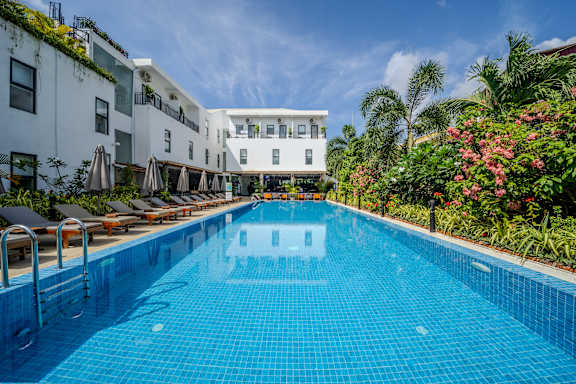
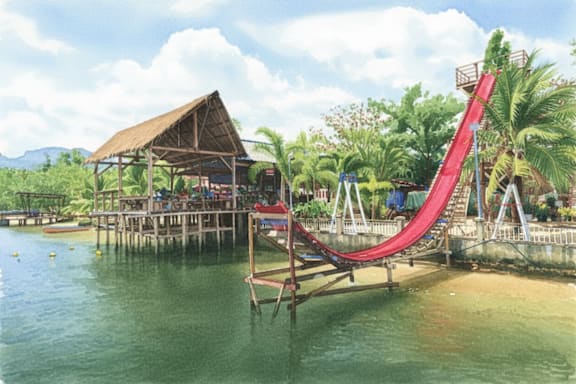
The old town, along the riverside, has the colonial shophouses, cafés and most guesthouses, all walkable. Upstream, along the Praek Tuek Chhu river, bungalows and hostels sit in gardens by the water, quieter and with river activities, a short tuk-tuk ride out.
The colonial riverside, walkable.
Riverside bungalows in gardens.
Orange labels are neighbourhoods, dots are the 6 top-rated hostels. Map data from OpenStreetMap contributors.
Kampot is a sleepy riverside town of faded French colonial shophouses beneath the Bokor mountain, known for its pepper and its slow pace.
Visit a pepper farm: Kampot pepper, with protected geographical status, is among the world's finest, and farms such as La Plantation run free tours and tastings among the vines. The salt fields between Kampot and Kep are worked by hand in the dry season.
Bokor National Park, about an hour up a winding road, holds an abandoned French hill station: the empty Catholic church, the old Bokor Palace hotel and casino, and a misty plateau with views over the coast. Go by scooter or on a tour.
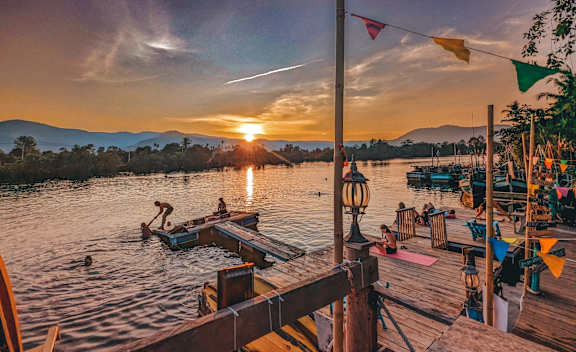
Take a sunset boat on the river, and in the evening look for the fireflies along the banks. Kayaking and paddleboarding are popular upstream.
Kep, half an hour away, is famous for its crab market, where crab is cooked with green Kampot pepper, and boats leave for Rabbit Island, a quiet island with simple bungalows.
Walking the old town, the riverside and the Old Bridge is free, and so are the views of Bokor from the river.
Pepper farm tours are often free, and the salt fields can be seen from the road. The town's roundabouts, including the famous Durian Roundabout, are a quirky free sight.
Kampot pepper is the star: green peppercorns cooked with crab at Kep's crab market, and black pepper with lok lak and stir-fries everywhere. Fresh seafood, fish amok and Khmer curries are on every menu.
Kampot also has a strong café scene and international restaurants run by long-term expats. A meal is €2 to €8.
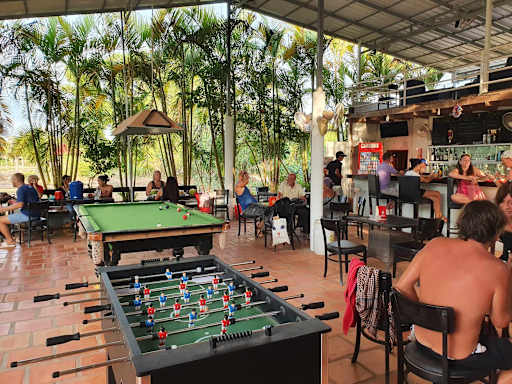
Kampot is relaxed at night, with riverside bars and a few live-music venues. Sunset drinks by the river and fireflies after dark are the evening's main events.
A beer is €1 to €2.50.
The town is walkable. Rent a scooter or bicycle for the countryside, pepper farms and Bokor. Tuk-tuks reach Kep in about 30 minutes.
Buses reach Phnom Penh in three to four hours, and the slow train runs to Phnom Penh and Sihanoukville several days a week. Buses also reach Sihanoukville, for Koh Rong, in about two hours.
Kampot is cheap. Dorms start around €5 and a careful day is €15 to €25.
A Bokor tour is €10 to €20, a sunset boat a few euros, and a crab dinner in Kep €6 to €12. Scooter hire is about €5 a day.
Cambodia uses two currencies: US dollars for most prices, and the riel (about 4,000 to the dollar) for small change. Prices here are euro equivalents. Bring clean, untorn dollar notes; ATMs dispense dollars but charge fees. Cards work only in hotels and upmarket places.
Kampot is safe.
The road up Bokor is winding; take care on scooters, and wear a helmet. Swimming in the river is popular, but watch the current after rain.
Emergency: 117 police, 119 ambulance.
An abandoned hill station, the crab market and a quiet island.
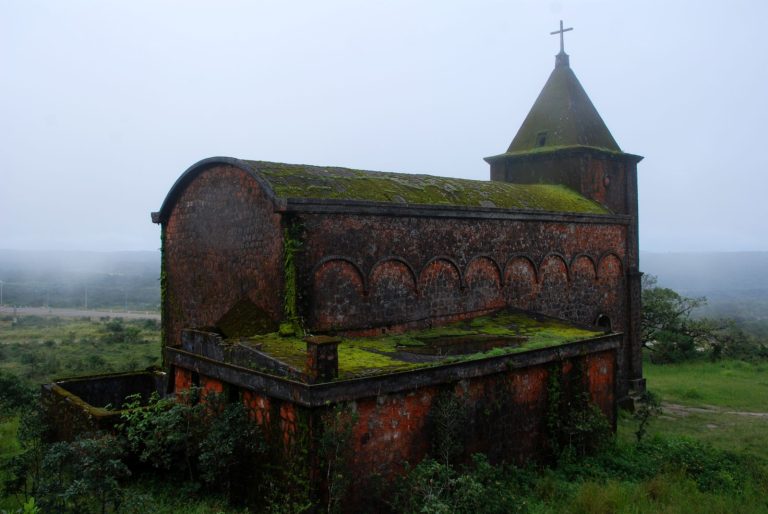
An abandoned French hill station.
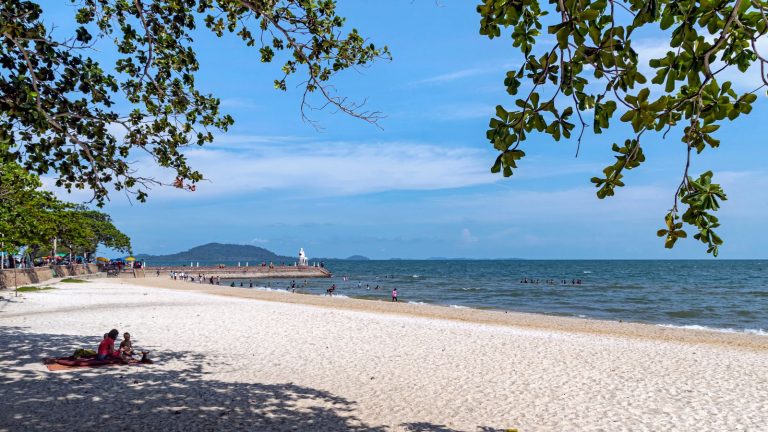
The crab market.
The pepper harvest runs through the dry season.
 Staff pick
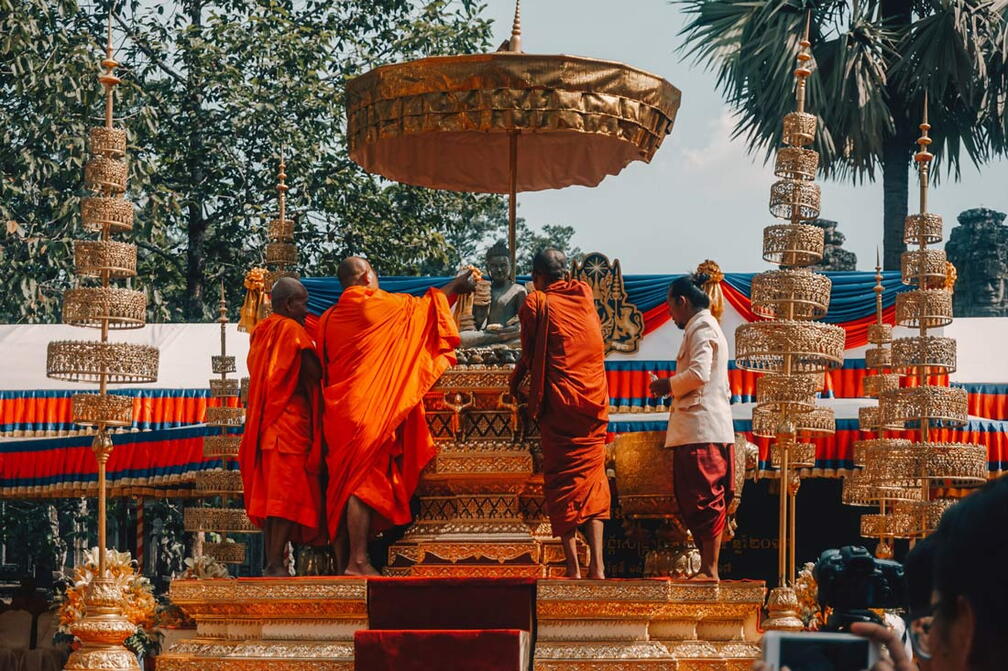
Pchum Ben in Kampot, Cambodia, is a deeply meaningful Buddhist festival where families gather at local pagodas to honor their ancestors through prayers and…

Every Wednesday night at 10pm, Madi Bar in the heart of Kampot, right next to the old market, opens its stage to musicians, poets,…
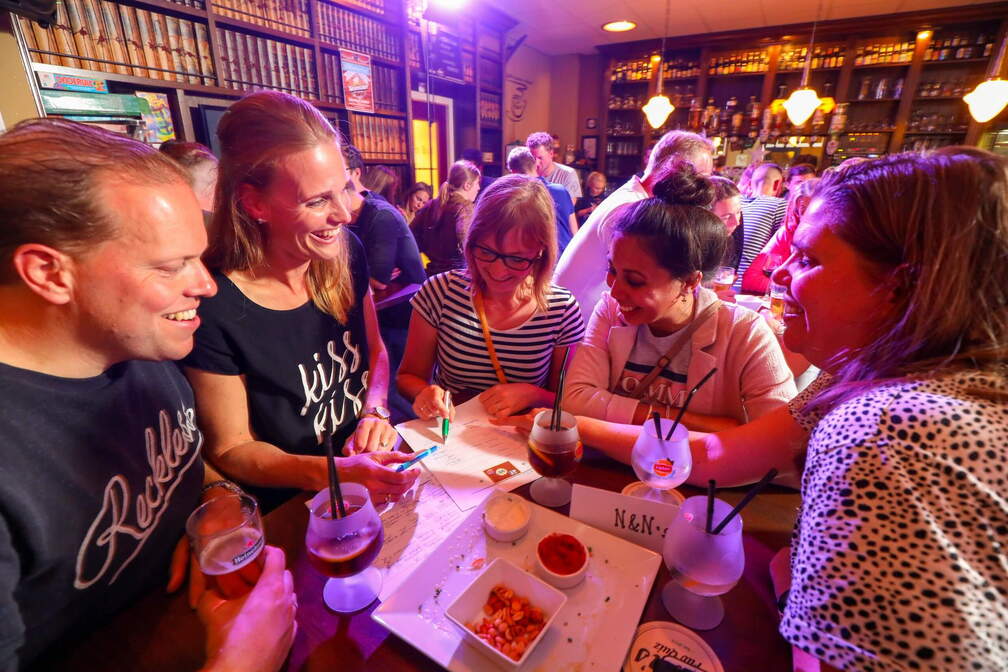
Grab your drink and your sharpest trivia knowledge for 90 minutes of questions pulled from around the world. The atmosphere leans into friendly heckling…
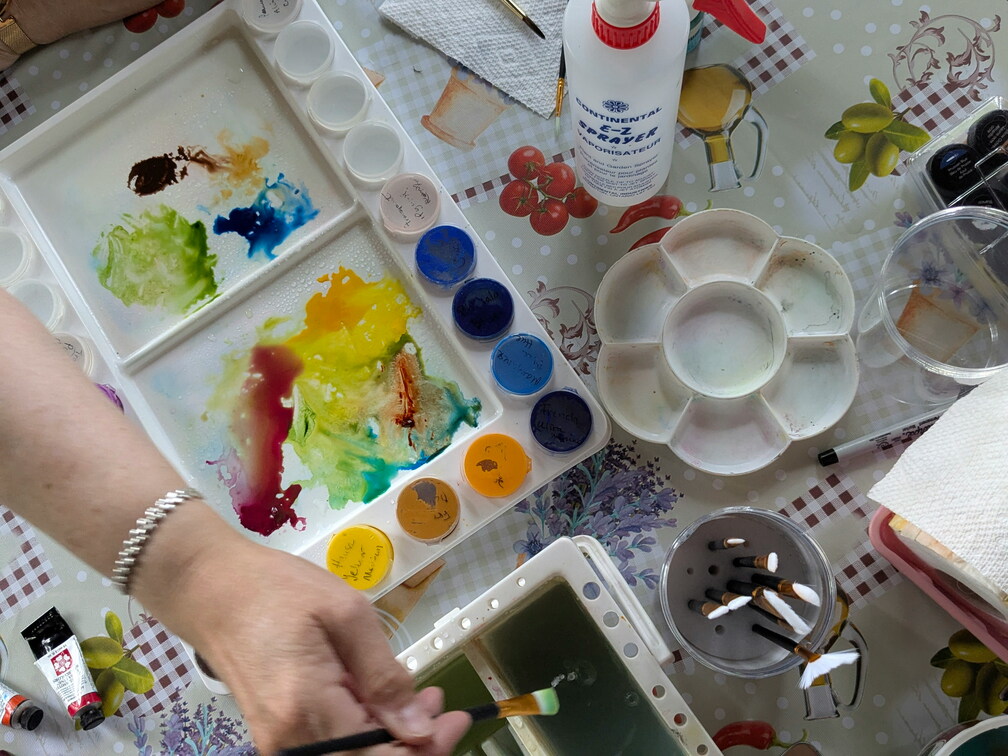
A casual gathering where you can bring whatever creative project you're working on and make progress alongside other artists and makers. The vibe is…

Mondays at Vietnamese Kitchen Kampot are for board games, good food, and easy company. Grab a seat, play some Monopoly or whatever else is…
The top-rated places to stay in Kampot right now, live from Hostelworld.
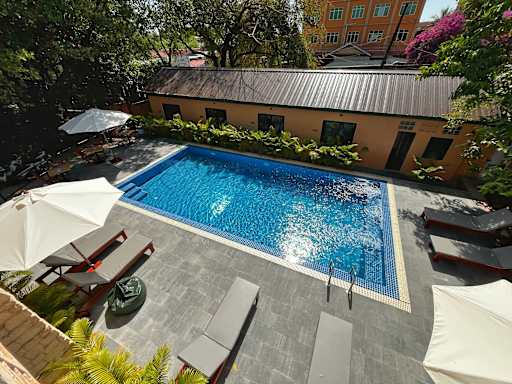
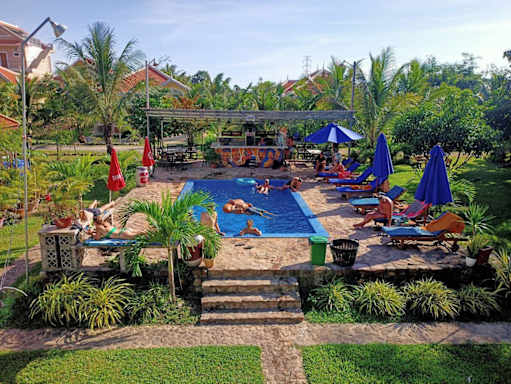
November to April is dry. The wet season, May to October, is green and quiet.
Average highs.
Pick how you travel. Per person per night, in euros.
Prices are in dollars and riel locally; these are euro equivalents.
The ones we get asked most.

Compare Kampot hostels — live prices, real reviews and free cancellation on most bookings. Then meet the people already there in the app.

 Get the App.
 Get the App.