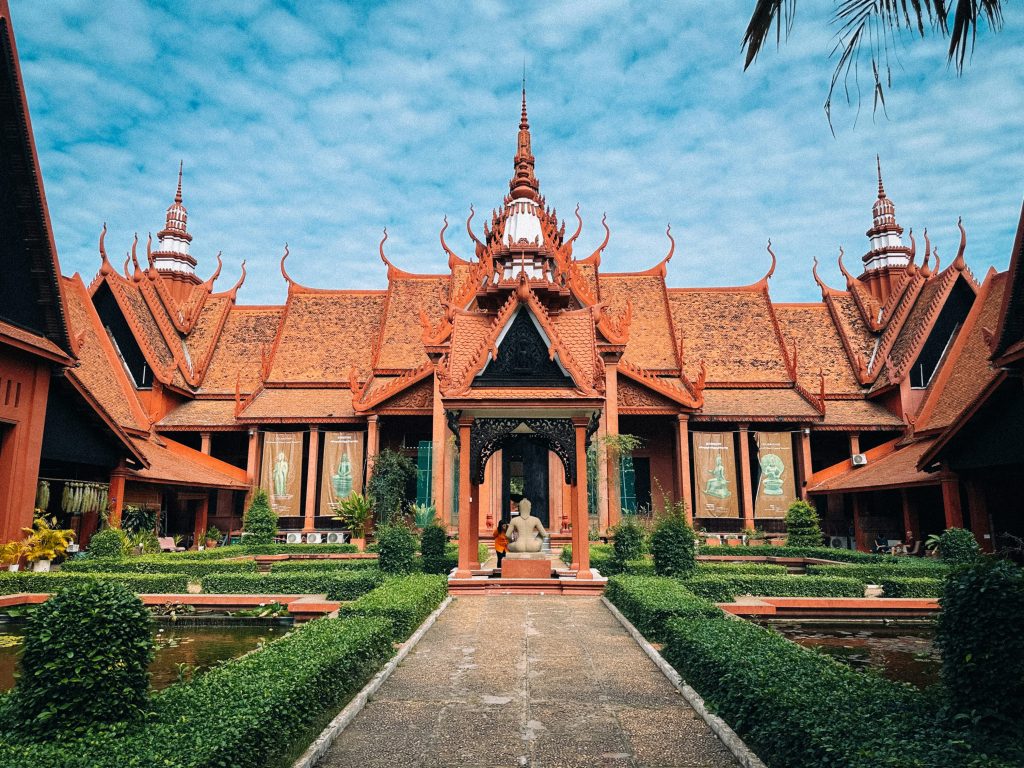
Phnom Penh
37 hostels · dorms from €8
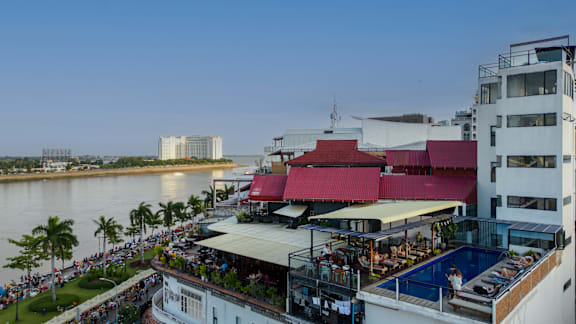
The capital: riverside, markets, and the two sites that document the Khmer Rouge years.

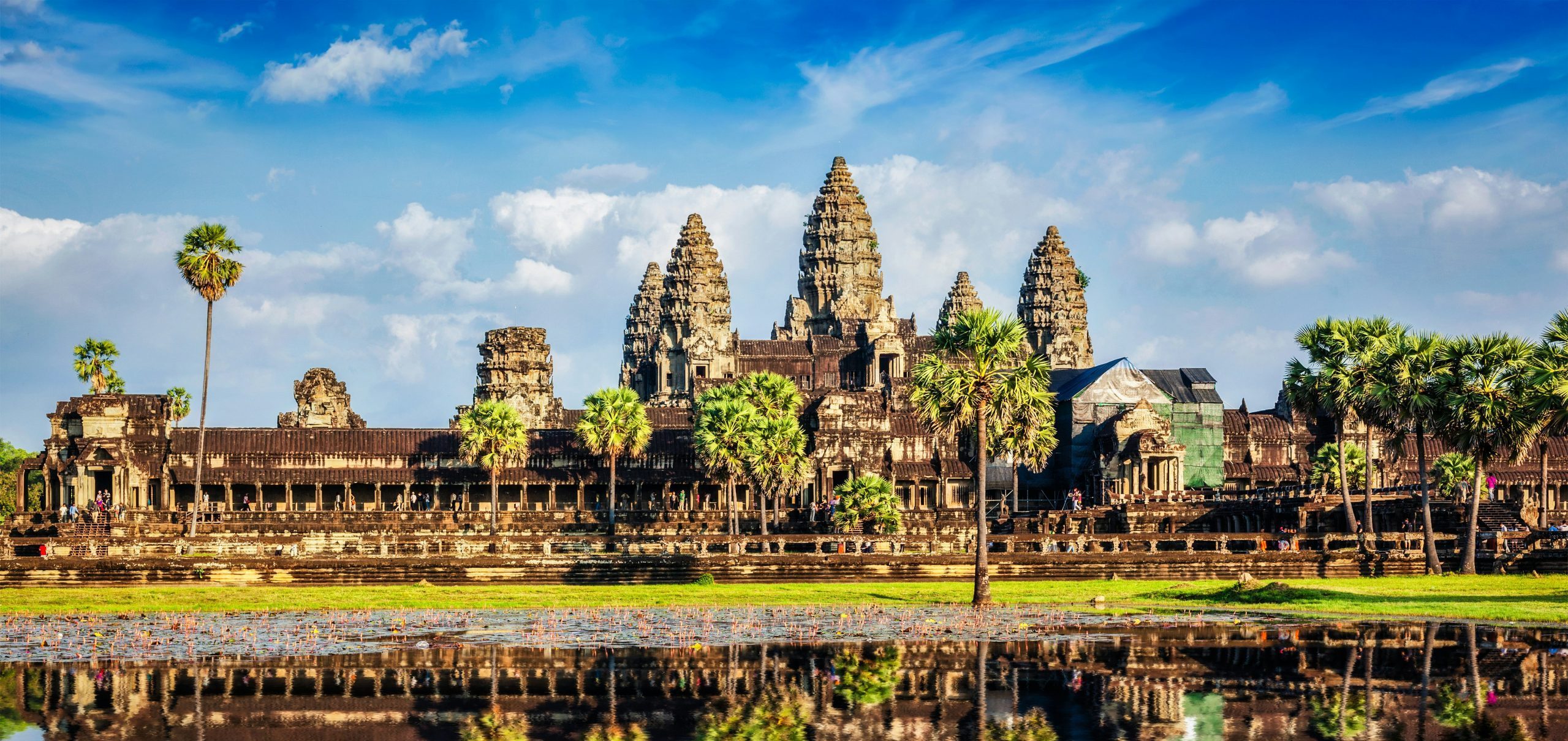
The largest religious monument on earth, a history that ended within living memory, and islands most people do not know exist. Cheap, flat and easy to travel.
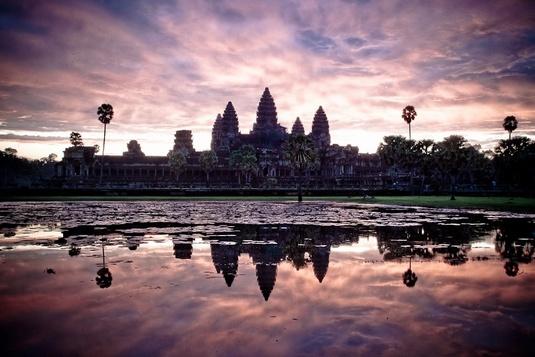
Most visits to Cambodia are built around Angkor, and that is reasonable — it is the largest religious monument in the world and the temple complex around it covers 400 square kilometres, with hundreds of structures spread through forest. Three days there is the standard and it is not too many.
Phnom Penh is the counterweight and it is harder. The Tuol Sleng genocide museum and the Choeung Ek killing fields document the Khmer Rouge period, which ended in 1979 and is therefore within the memory of almost everyone over fifty here. Both are essential and both are difficult, and most people find they need the rest of the day afterwards.
The south is where people relax: Kampot and Kep on the river and coast, and the islands of Koh Rong and Koh Rong Samloem, which have white sand, bioluminescence and, on the quieter island, very little else.
Buses link everything cheaply and the country is small. Boats reach the islands from Sihanoukville.
The capital: riverside, markets, and the two sites that document the Khmer Rouge years.
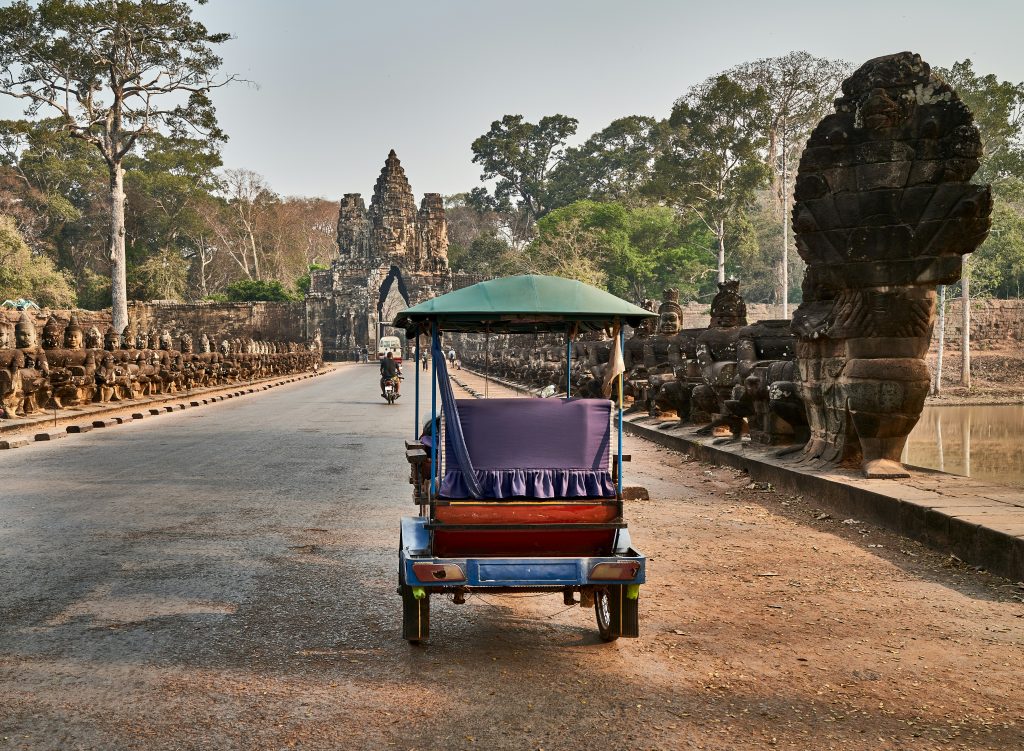
The base for Angkor: a walkable town with a big hostel scene and the temples on its doorstep.
Colonial architecture, the bamboo train and a circus school, with few visitors.
A riverside town of colonial shophouses, pepper farms and a very slow pace.
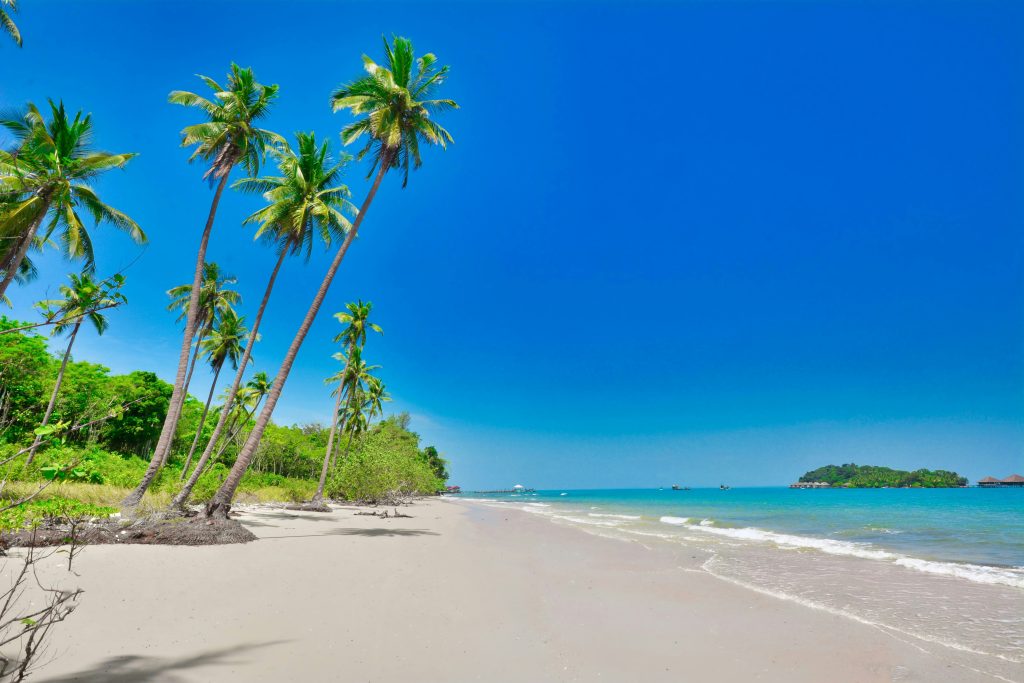
The busier island: white sand, beach bars, bioluminescent plankton and a party end.
The quiet sister island, with limited electricity and almost nothing to do, deliberately.
Cambodia is temples, difficult history and islands, in roughly that order.
The largest religious monument in the world, and a history that demands attention.
Islands that are still cheap and still quiet.
One of the cheapest countries in Asia.
Bokor mountain, caves and the Cardamom forests.
Milder than its neighbours, and built on Kampot pepper.
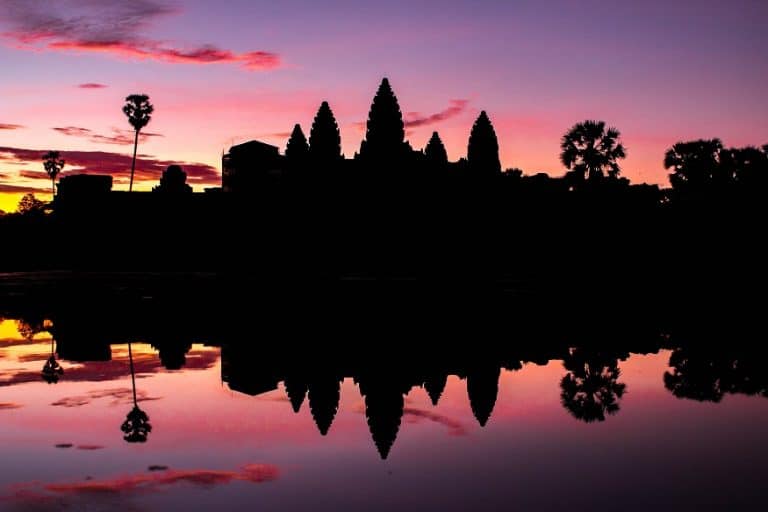
Angkor needs three days and a plan. A one-day pass covers the main circuit, a three-day pass lets you see Angkor Wat, Bayon's faces, Ta Prohm's roots and the outlying temples like Banteay Srei without rushing. Sunrise at Angkor Wat is beautiful and shared with several thousand people; the temples at eleven in the morning are surprisingly empty because everyone has gone for lunch.
In Phnom Penh, Tuol Sleng and Choeung Ek should be done together and early in the day. The audio guide at Choeung Ek is among the best at any memorial anywhere, and both sites are places for quiet rather than photographs.
In the south, Kampot's pepper farms and Bokor mountain fill a couple of days, and the islands do nothing at all, well.
Khmer food is milder than Thai and less sweet than Vietnamese, built on fresh herbs, fish and pepper. Fish amok — a coconut curry steamed in a banana leaf — is the national dish, lok lak is stir-fried beef with rice and a fried egg, and both cost €2 to €5 at a local place.
Kampot pepper is a genuine speciality with protected status, and pepper crab in nearby Kep is the meal to plan a day around.
Markets do noodle soup breakfasts for about a euro, and the night markets in Siem Reap and Phnom Penh are cheap and good. Street barbecue and fried insects are both widely available, the latter more for visitors than locals these days.
Siem Reap's Pub Street is the obvious centre: a few blocks of bars with 50-cent draught beer and a crowd that turns over every night. It is worth one evening, and the quieter bars on the surrounding streets are better for the rest.
Phnom Penh has a riverside strip, rooftop bars and a more mixed scene, and it runs later than Siem Reap.
Koh Rong has the island party version, with beach bars and bonfires, while Koh Rong Samloem deliberately has almost none. Beer is among the cheapest in the world here — draught at 50 cents to a euro — which is a fact that shapes a lot of evenings.
Buses do everything and they are cheap: Siem Reap to Phnom Penh is about six hours and €8 to €15, and Giant Ibis and Mekong Express are the reliable operators. Night buses exist with flat beds. Siem Reap's airport is now the new Siem Reap Angkor International, about an hour from town, and Phnom Penh's flights moved to the new Techo International Airport in 2025.
There is a limited train service, including Phnom Penh to Sihanoukville and to Battambang, which is slow, cheap and pleasant.
In towns, tuk-tuks are the transport and the PassApp and Grab apps work in the cities, which removes the negotiation. For the islands, fast ferries from Sihanoukville take 45 minutes to an hour and run several times a day, weather permitting.
Cambodia is among the cheapest countries in Asia. Dorms start around €6, a local meal is €2 to €5, draught beer is under a euro, and a cross-country bus is €8 to €15.
The one significant cost is the Angkor pass: a three-day ticket is around $62, which is a large chunk of a week's budget here and worth planning for.
The US dollar circulates alongside the riel and most prices are quoted in dollars, with riel given as change for amounts under a dollar. ATMs dispense dollars and charge fees of around $5 per withdrawal, so take out larger amounts.
Cambodia is generally safe for travellers, with bag snatching from motorbikes in Phnom Penh the most common problem — keep bags on the inside shoulder and phones away from the road.
Landmines and unexploded ordnance remain in some rural areas, particularly near the Thai border in the northwest. They are marked and the tourist areas are cleared, but the rule holds: stay on marked paths and roads in the countryside. The Thai border itself has seen armed clashes since 2025 and is closed; follow current government advice and stay away from the border areas.
Two practical cautions. Scams around Angkor tickets and "closed" attractions are common, and buying from the official ticket centre avoids them. And begging involving children, including orphanage tourism, is an industry here — the widely recommended approach is to give to established organisations rather than individuals, and to avoid orphanage visits entirely.
Most nationalities can get a visa on arrival at the airports and main land borders, or an e-visa online in advance. The e-visa costs slightly more but avoids queues and the small unofficial fees sometimes requested at land crossings.
Passports need six months' validity from entry and a blank page.
The land border with Thailand has been closed since mid-2025, after armed clashes, and several governments advise against travel near it. Travellers arriving overland use the crossings with Vietnam and Laos, where overcharging is common — the official fee is published, and paying it rather than the quoted price is usually just a matter of asking for a receipt.
November to March is dry and cooler and the obvious answer. April is brutally hot, and the wet season from May brings afternoon rain and a much greener Angkor.
Average highs for Siem Reap. The wet season means heavy afternoon rain rather than all-day drizzle, and Angkor is greener and quieter then, with the moats full.
Pick how you travel and how long for. Per night, for one person, in euro equivalents.
Excludes the Angkor pass at around $62 for three days, which is the single biggest cost of a Cambodian trip.
Khmer new year and the Water Festival are the two that fill the country.
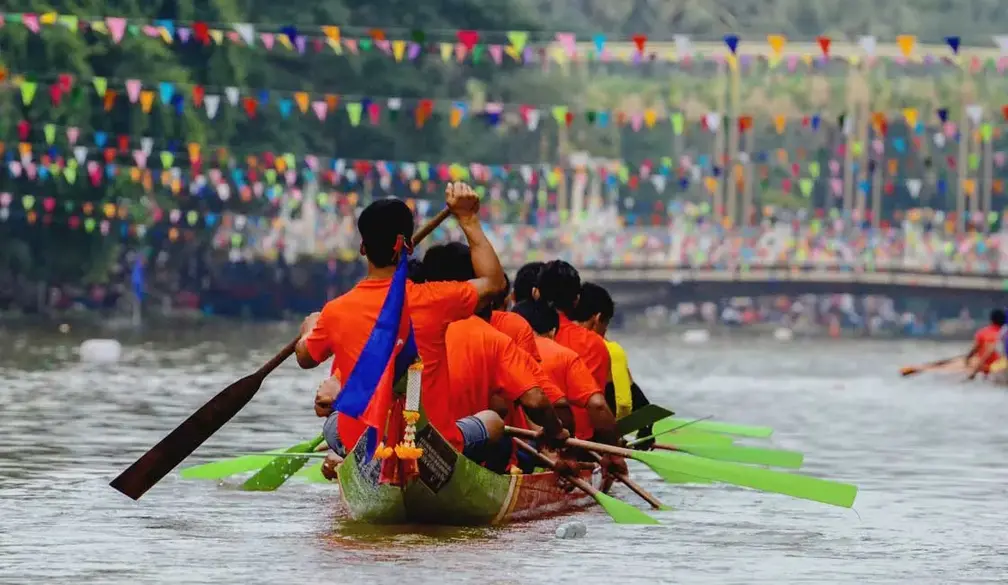 Staff pick
Bon Om Touk, the Water Festival in Phnom Penh, Cambodia, is a spectacular celebration marking the changing flow of the Tonlé Sap and Mekong…
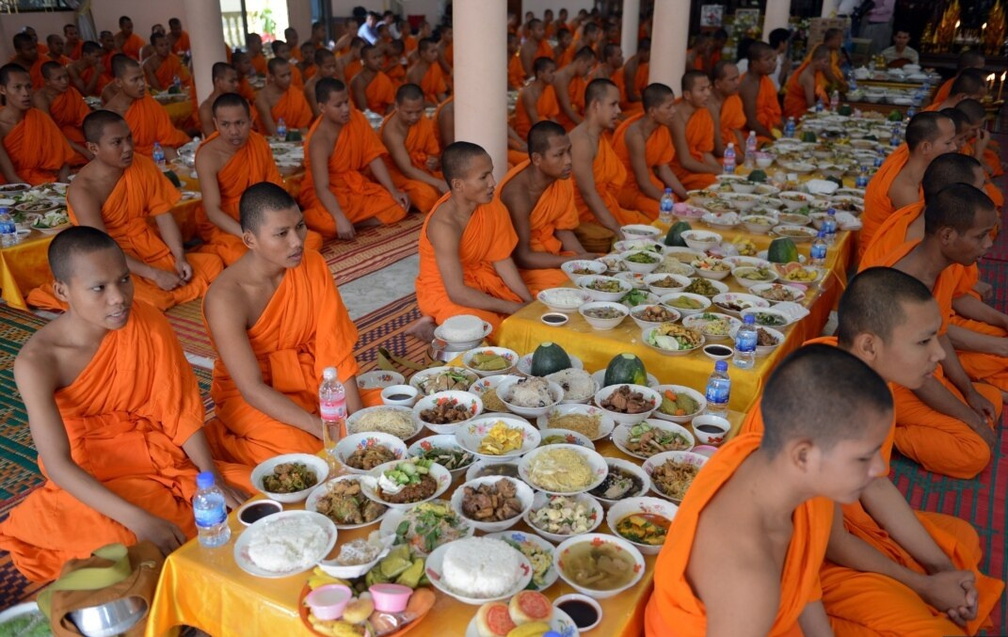 Staff pick
Pchum Ben in Phnom Penh, Cambodia, is a deeply meaningful festival where families gather at pagodas to honor their ancestors through prayers, candle lighting,…
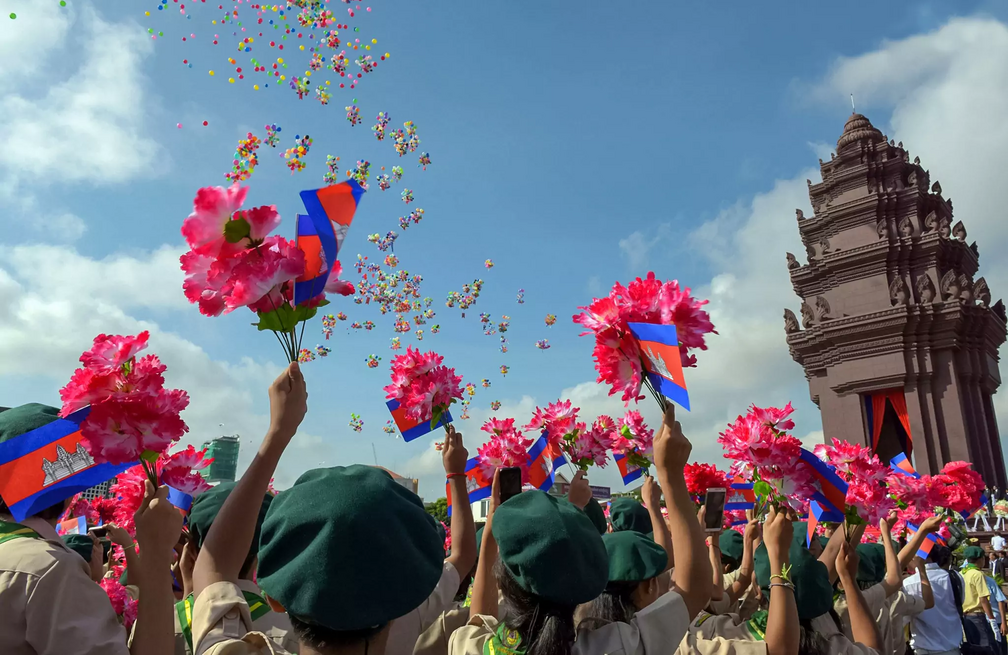 Staff pick
Cambodian Independence Day in Phnom Penh, Cambodia, is a major national celebration honoring the country’s freedom from French colonial rule. The festivities begin with…
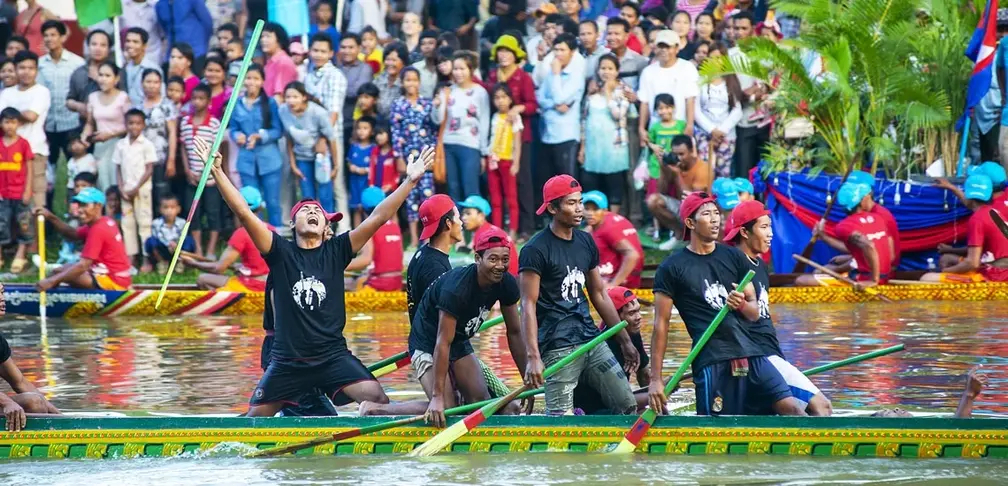 Staff pick
Experience the magic of Bon Om Touk, the Water Festival in Siem Reap, Cambodia, where the city comes alive with glowing lanterns, floating markets,…
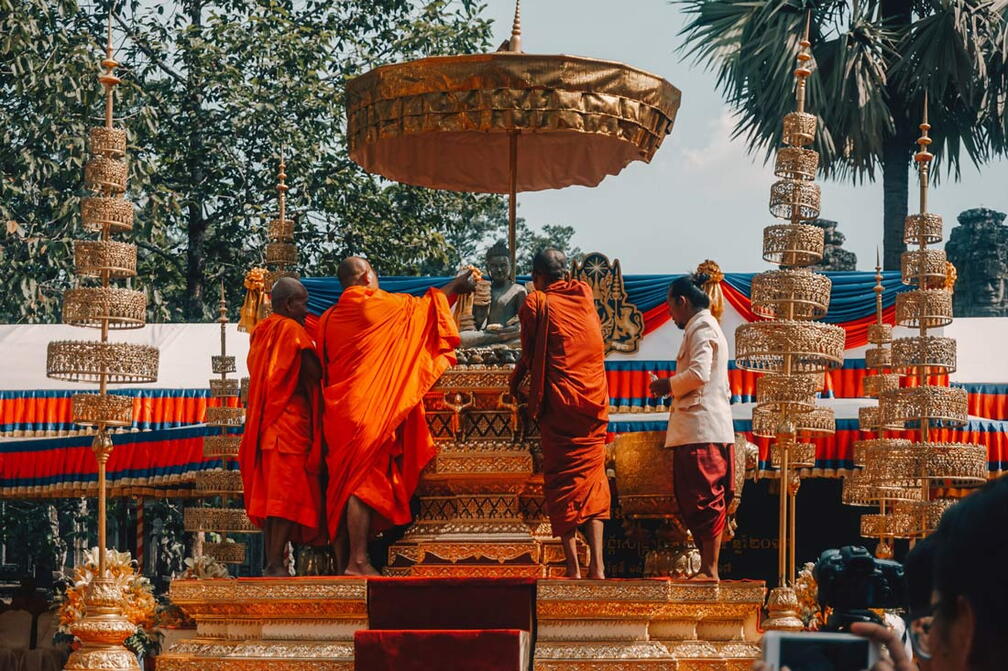 Staff pick
Pchum Ben in Kampot, Cambodia, is a deeply meaningful Buddhist festival where families gather at local pagodas to honor their ancestors through prayers and…
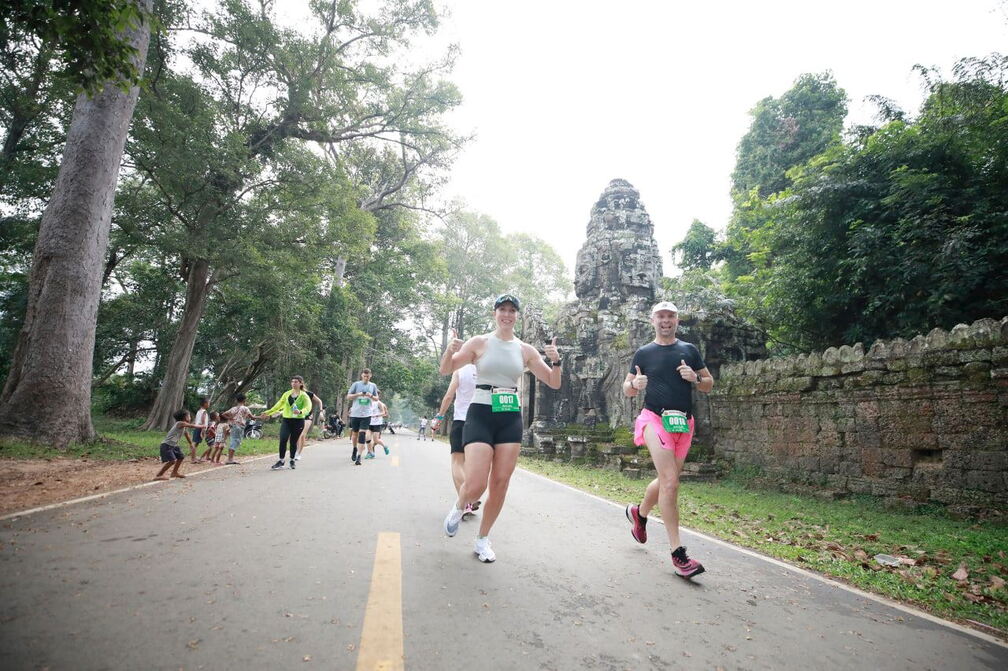 Staff pick
The Angkor Wat International Half Marathon in Siem Reap, Cambodia, invites runners from around the globe to race through the breathtaking ruins of the…
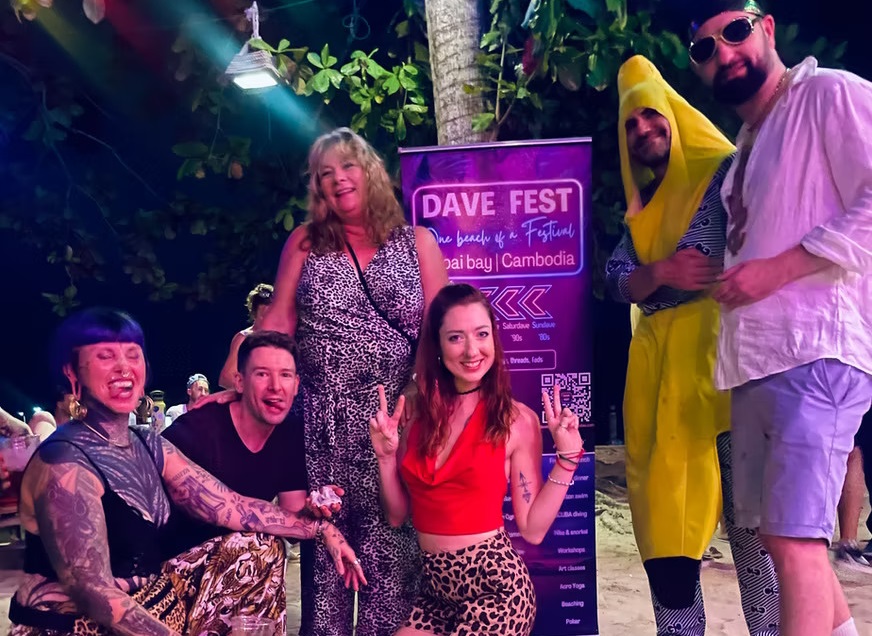 Staff pick
Dave Fest on Koh Rong Sanloem, Cambodia, is an immersive island festival that brings together backpackers, travelers, and creatives for several days of music,…
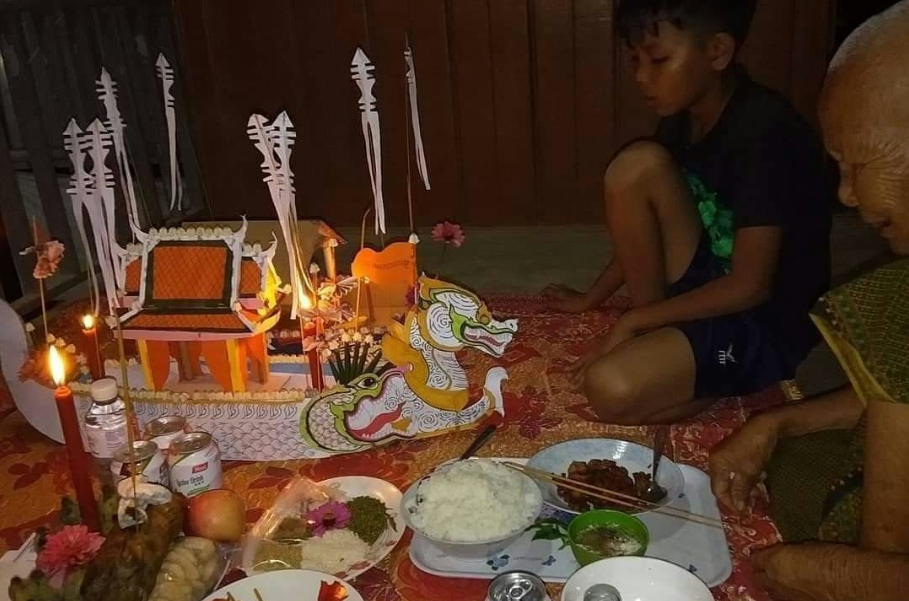
Pchum Ben is a 15-day festival culminating in three public holidays where families visit pagodas to offer food to their ancestors. It is one…
The highest-rated hostels in the country, live from Hostelworld. Siem Reap has the biggest scene, and the islands book out in dry season.
 Sustainable

 Sustainable
 Sustainable
The ones we get asked most.

Compare hostels across Cambodia — live prices, real reviews and free cancellation on most bookings. Then meet the people already there in the app.

 Get the App.
 Get the App.