Riverside
First-timersSisowath Quay, near the palace and museum.

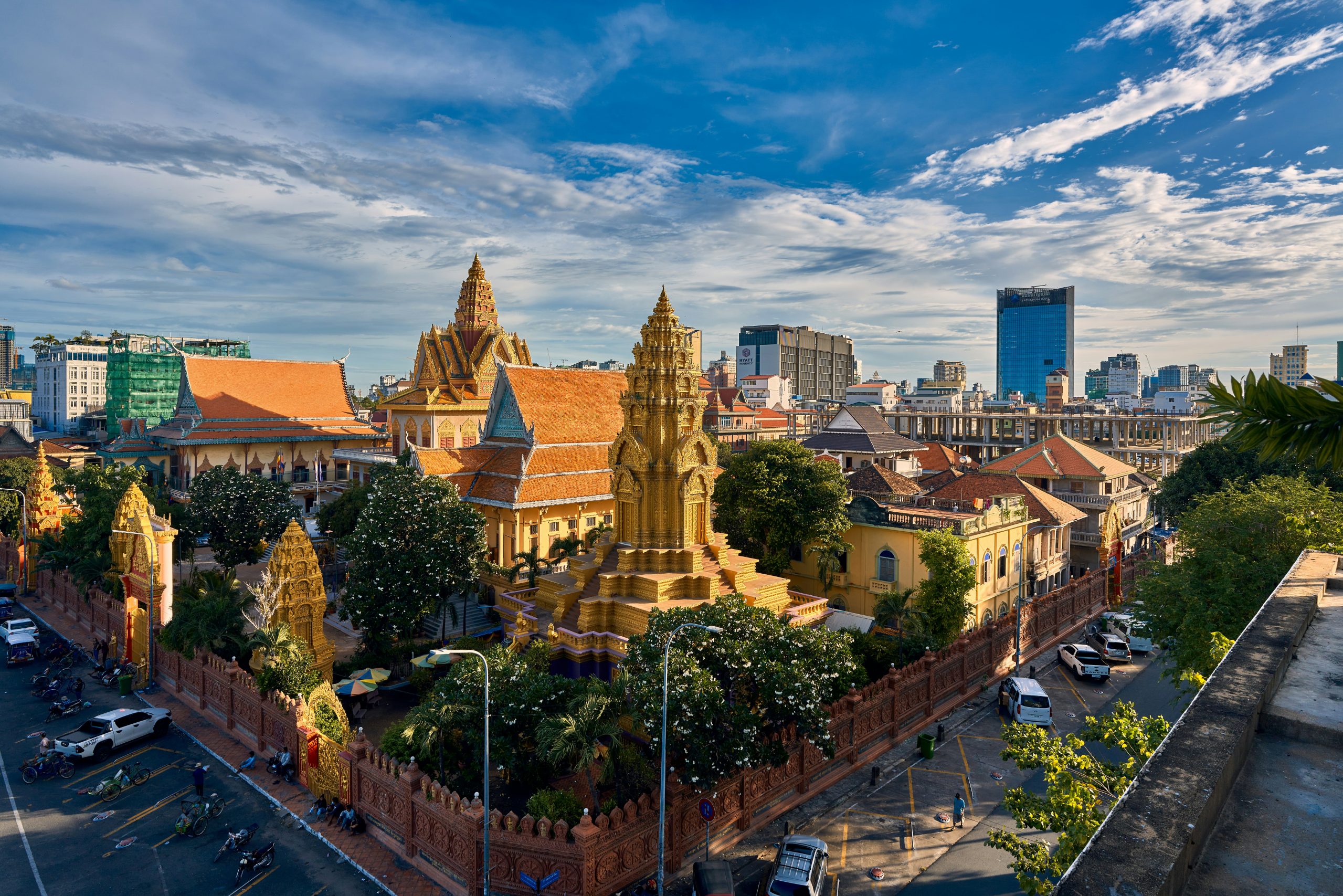
A riverfront capital of golden palaces, art deco markets and street food, and the place to understand what Cambodia went through under the Khmer Rouge.
Phnom Penh stands where the Mekong meets the Tonlé Sap river. Under French rule it was called the Pearl of Asia, and some of its colonial buildings and art deco markets survive.
In 1975 the Khmer Rouge emptied the city in a single day, and between 1975 and 1979 around a fifth of Cambodia's population died. The Tuol Sleng prison and the Choeung Ek killing fields are the places to understand that history, and they are harrowing and essential.
Today the city is fast-changing, busy and full of rooftop bars and street food. Two or three days is right.
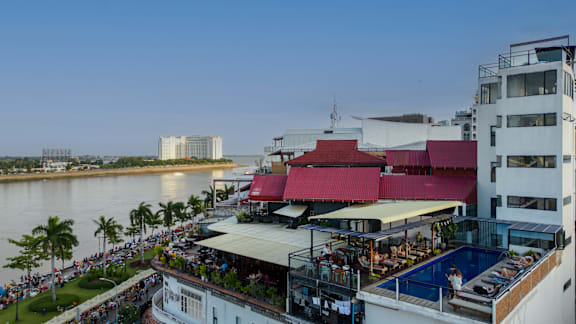
The Riverside, along Sisowath Quay, is the classic first base, close to the Royal Palace, the National Museum and the night market. BKK1, south of the Independence Monument, has the cafés, restaurants and bars. Bassac Lane and the streets around it are small and stylish, and the area around the Russian Market is more local and cheaper.
Sisowath Quay, near the palace and museum.
South of the Independence Monument.
Around Tuol Tom Poung, cheaper and more local.
Orange labels are neighbourhoods, dots are the 7 top-rated hostels. Map data from OpenStreetMap contributors.
Phnom Penh, on the banks of the Mekong and Tonlé Sap rivers, is a city of French colonial streets, gilded pagodas and fast-growing towers, with a painful recent history.
The Royal Palace, with its golden spires, and the Silver Pagoda, whose floor is covered in silver tiles, are the city's grandest sights; cover shoulders and knees. The National Museum, in a red Khmer-style building beside it, holds the finest collection of Angkorian sculpture anywhere.
The Tuol Sleng Genocide Museum, S-21, a former school turned prison where the Khmer Rouge interrogated and tortured thousands, and the killing fields of Choeung Ek, where most were executed, about 30 minutes out of the city, tell the story of 1975 to 1979, when around a quarter of the population died. Both are harrowing and essential; take the audio guides, and allow time to process.
The Central Market, an Art Deco dome from 1937, and the Russian Market, Tuol Tom Poung, are the best places to shop and eat. Wat Phnom, on the city's only hill, is where Phnom Penh was founded.
Take a sunset cruise on the river, and a ferry and bicycle to Koh Dach, an island of silk-weaving villages.
The Riverside promenade, the Independence Monument and the parks around it are free, especially lively at sunset, when families exercise and fly kites.
The markets are free to wander, and so are many pagodas, such as Wat Ounalom by the river. The night market on the riverfront, at weekends, is free to browse.
Khmer food is fragrant rather than fiery. Fish amok, steamed fish curry in banana leaf with coconut and kroeung spice paste, is the national dish. Lok lak, stir-fried beef with a lime and pepper dip, and kuy teav, noodle soup, are everyday staples. Nom banh chok, rice noodles with fish curry, is the breakfast.
The markets have the cheapest and best food: try the stalls at the Russian Market and Central Market. Romdeng and Friends, training restaurants run by an organisation working with street youth, serve excellent Khmer food.
A street meal is €1.50 to €3; a restaurant meal €5 to €12.
Phnom Penh has a lively nightlife: rooftop bars along the river and in BKK1, cocktail bars on Bassac Lane, and pubs and clubs in the centre.
Around Street 136 and parts of the riverside, some bars are hostess bars; they are easy to spot and avoid.
A beer is €1 to €3; happy-hour draught beer is under €1.
Techo International Airport, opened in 2025 south of the city, has replaced the old airport; allow about an hour to the centre by taxi or the airport bus.
Tuk-tuks are the way around. Book tuk-tuks through PassApp or Grab to avoid haggling. Hold bags and phones tightly in open tuk-tuks.
Buses reach Siem Reap in about six hours, Kampot in three to four, and Sihanoukville, for Koh Rong, in about four. A slow train runs to Kampot and Sihanoukville several days a week. Buses also cross to Ho Chi Minh City in Vietnam.
Land crossings with Thailand have been closed or heavily restricted since mid-2025 because of a border dispute and fighting; check the current situation before planning to travel overland, and expect to fly between the two countries.
Phnom Penh is cheap. Dorms start around €6 and a careful day is €20 to €30.
The Royal Palace and the genocide sites charge foreigners a few euros to about €10 each, with audio guides. A tuk-tuk across the city is €1.50 to €4.
Cambodia uses two currencies: US dollars for most prices, and the riel (about 4,000 to the dollar) for small change. Prices here are euro equivalents. Bring clean, untorn dollar notes; ATMs dispense dollars but charge fees. Cards work only in hotels and upmarket places.
Phnom Penh is generally safe, but bag and phone snatching from passing motorbikes is common. Keep your bag on the side away from the road, and hold your phone tightly in tuk-tuks.
At the genocide sites, be respectful. At the Royal Palace and pagodas, cover shoulders and knees.
Emergency: 117 police, 119 ambulance.
The killing fields, an old royal capital, the pepper coast and silk islands.
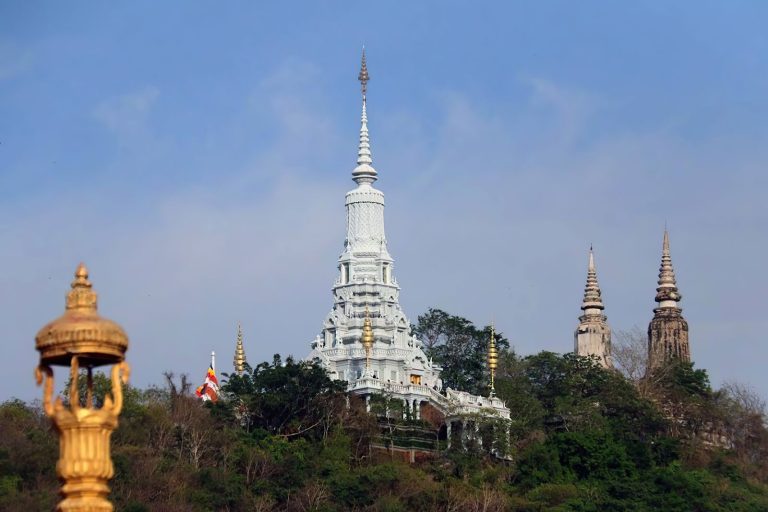
The old royal capital on a hill of stupas.
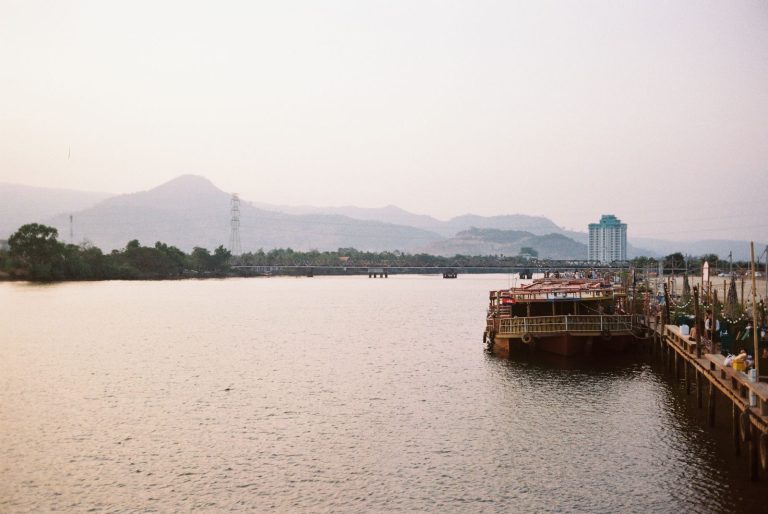
The riverside pepper town.
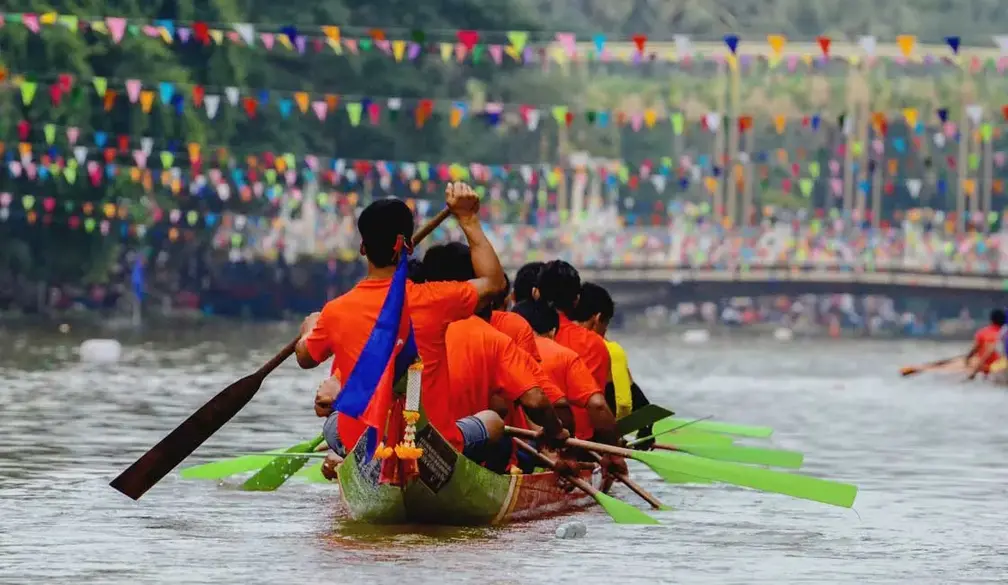
The Water Festival fills the riverfront in November.
 Staff pick
Bon Om Touk, the Water Festival in Phnom Penh, Cambodia, is a spectacular celebration marking the changing flow of the Tonlé Sap and Mekong…
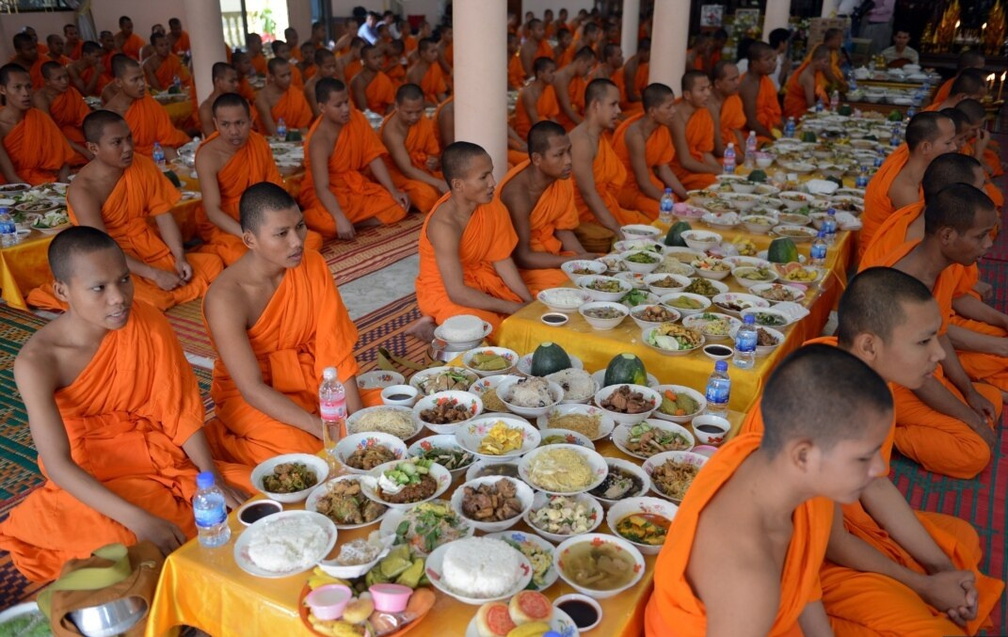 Staff pick
Pchum Ben in Phnom Penh, Cambodia, is a deeply meaningful festival where families gather at pagodas to honor their ancestors through prayers, candle lighting,…
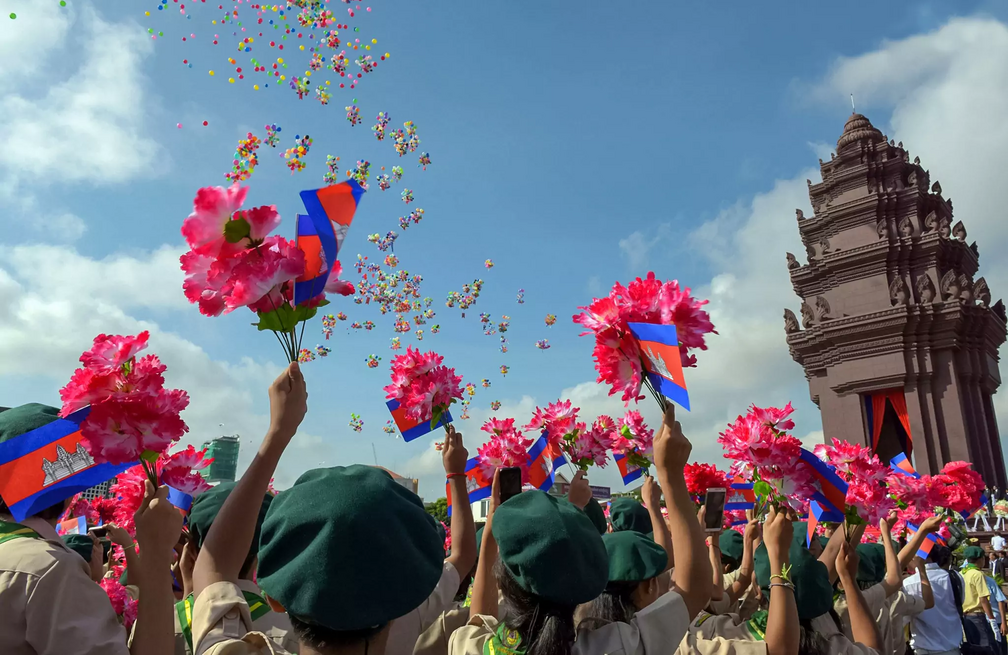 Staff pick
Cambodian Independence Day in Phnom Penh, Cambodia, is a major national celebration honoring the country’s freedom from French colonial rule. The festivities begin with…
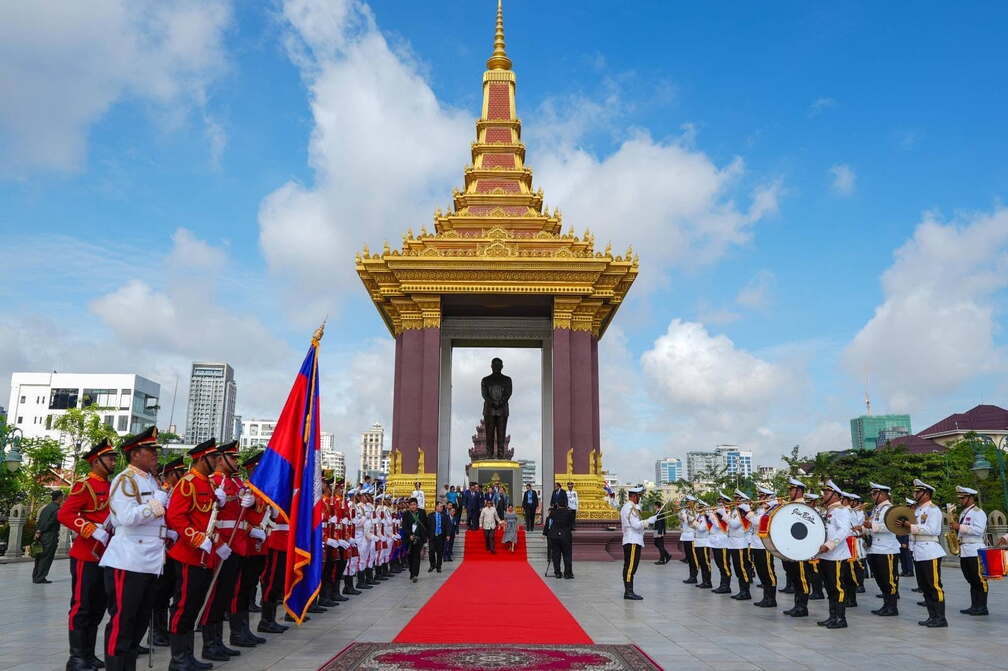
Late King Father Norodom Sihanouk Memorial Day honors one of Cambodia's most respected leaders who played a key role in the country's independence and…
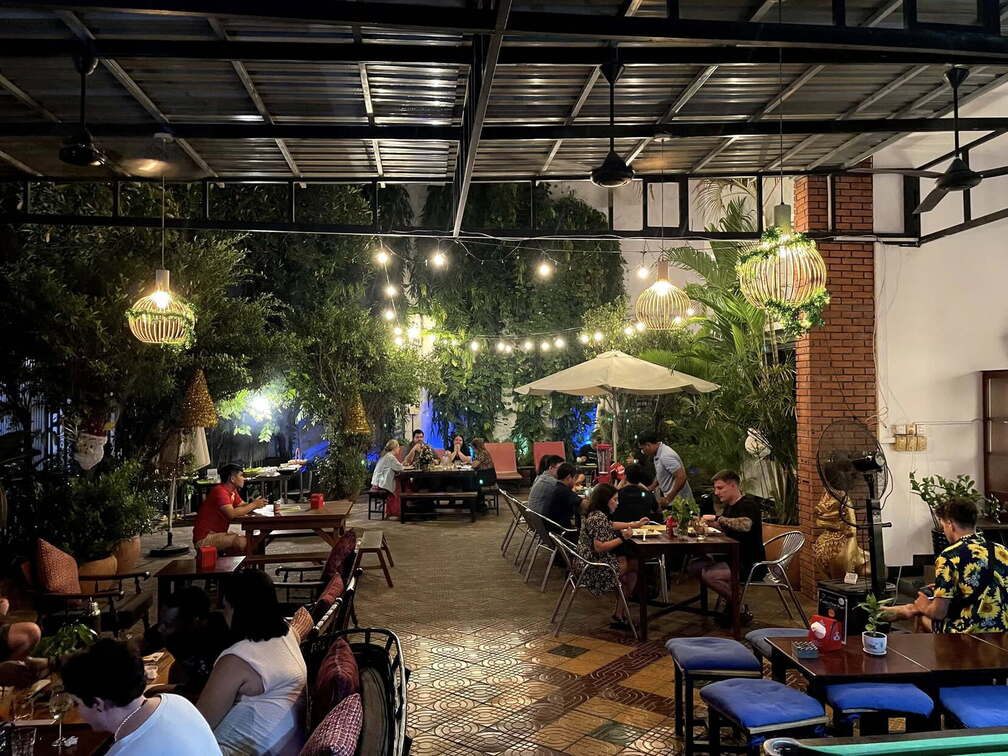
A free weekly pool day brings families, friends, and neighbors together every Sunday starting at 10 AM. Kids splash around while parents unwind, with…
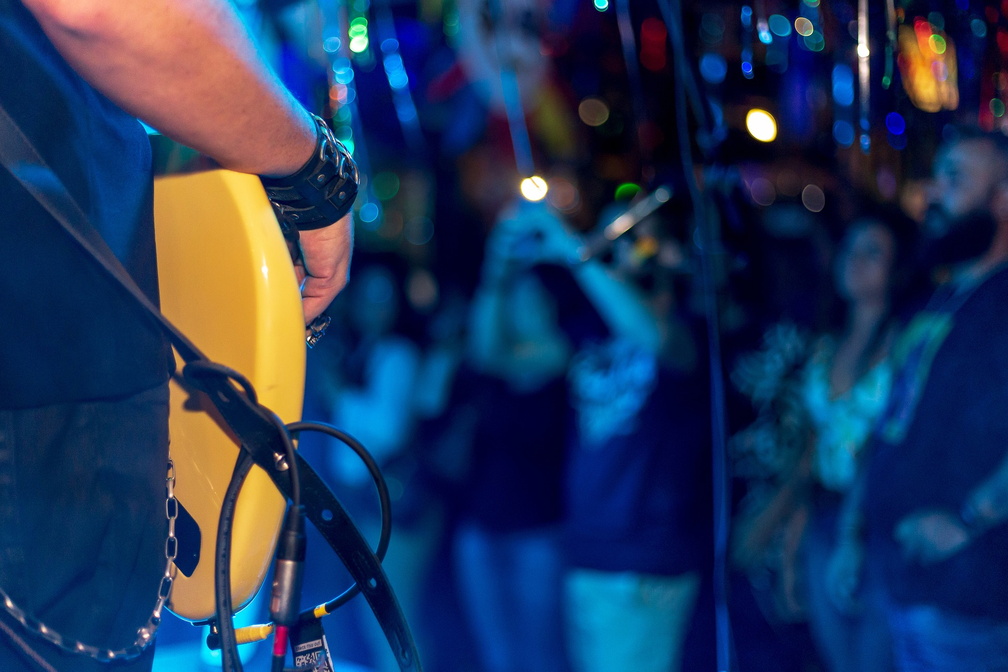
Cambodia's 1960s rock 'n' roll scene was a vibrant explosion of surf rock and psychedelia before it was tragically silenced by the Khmer Rouge…
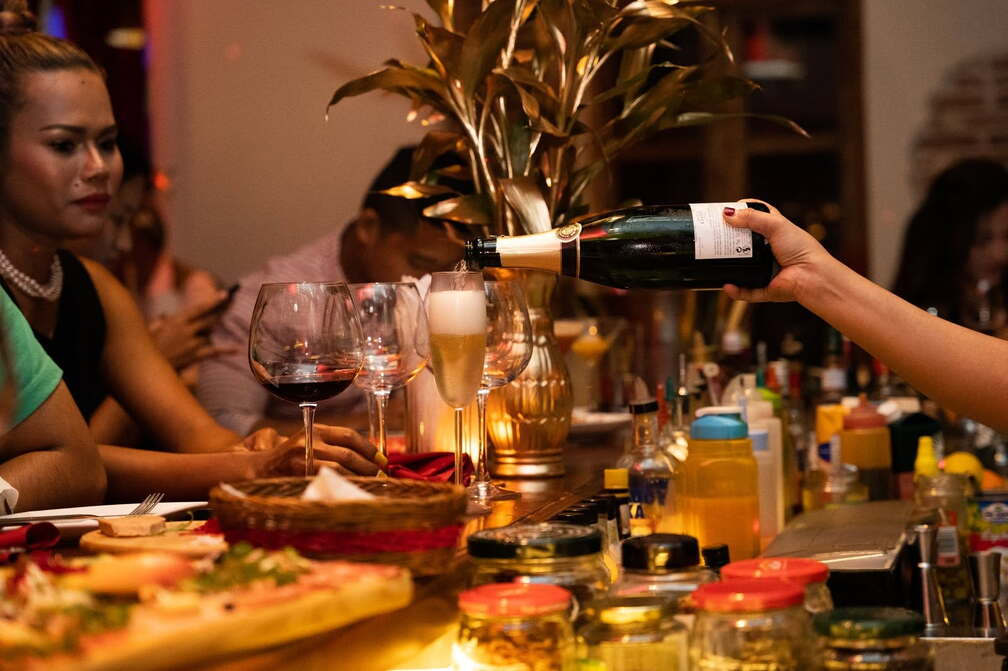
Live musicians bring Cambodia's 1960s rock 'n' roll scene back to life every Friday, playing classics from Sinn Sisamouth, Ros Serey Sothea, Pan Ron,…
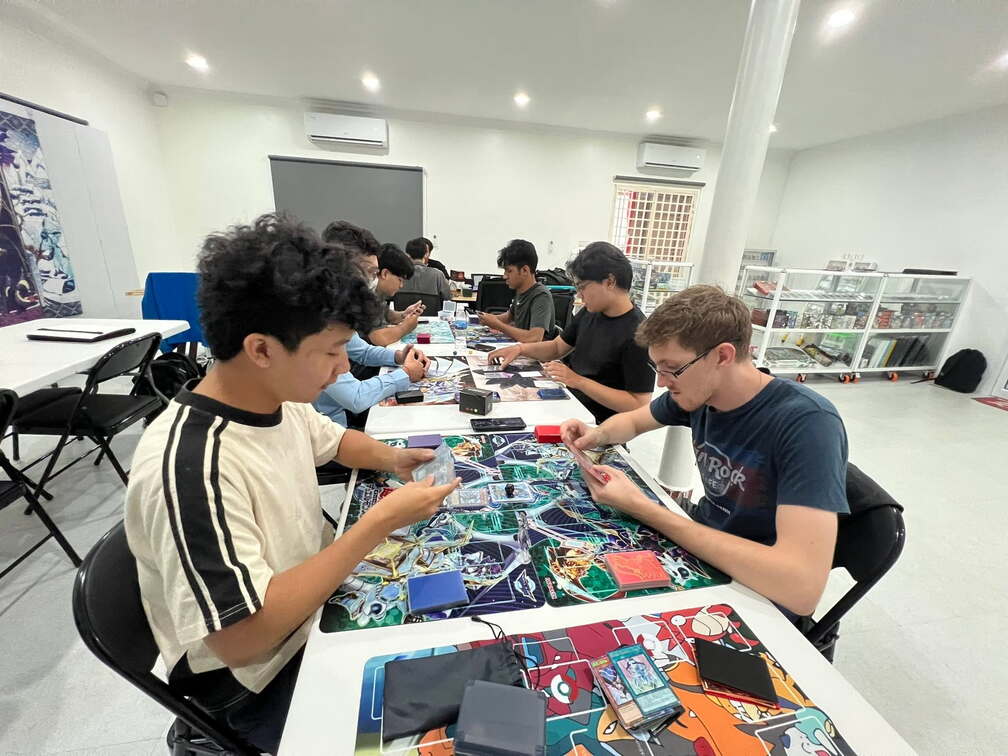
Friday Night Magic brings together trading card game fans for weekly MTG sessions at TCG Vault Games in Phnom Penh. You can jump into…
The top-rated places to stay in Phnom Penh right now, live from Hostelworld.
 Sustainable
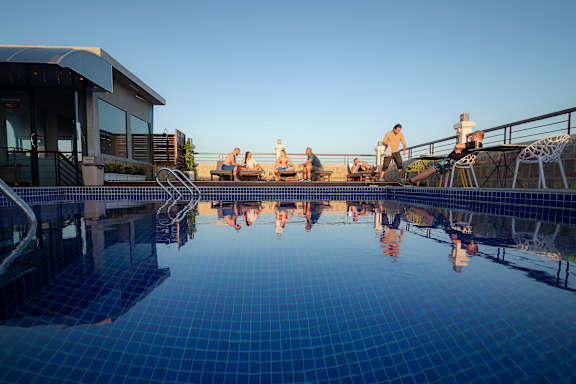
 Sustainable
November to February is the cool, dry season. March to May is very hot; May to October is the wet season.
Average highs.
Pick how you travel. Per person per night, in euros.
Prices are in dollars and riel locally; these are euro equivalents.
The ones we get asked most.

Compare Phnom Penh hostels — live prices, real reviews and free cancellation on most bookings. Then meet the people already there in the app.

 Get the App.
 Get the App.