Centre
First-timersAround Panfilov Park, near the metro.

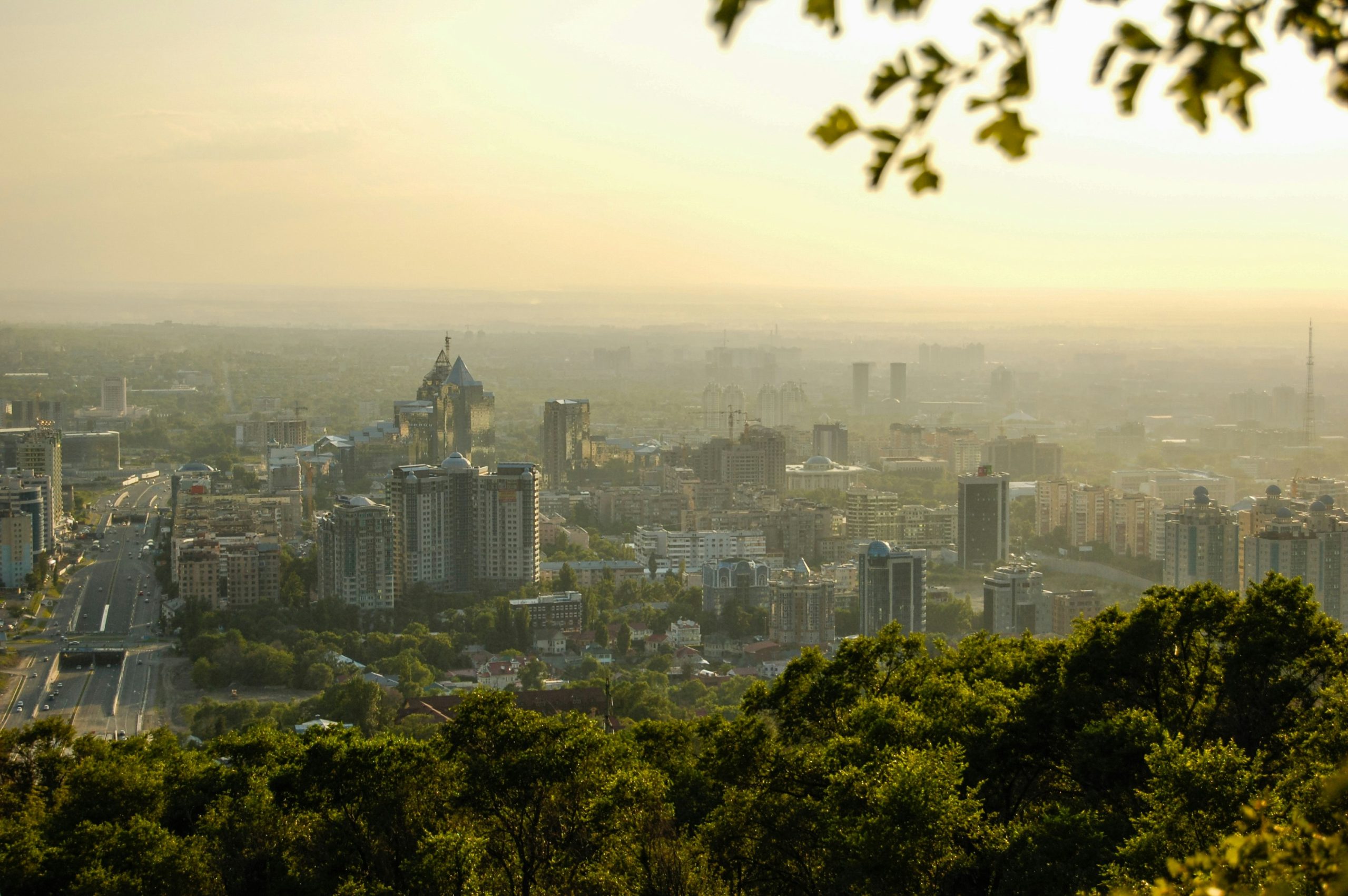
A green city of tree-lined avenues at the foot of the Tian Shan, with a ski resort at the end of a bus route, canyons and mountain lakes within a day, and the best food and café scene in Central Asia.
Almaty was Kazakhstan's capital until 1997, and it is still its biggest city and cultural centre. It sits at the foot of the Trans-Ili Alatau range of the Tian Shan, whose snowy peaks rise straight behind the city.
The Soviet grid of leafy avenues is walkable, and the city has the liveliest cafés, restaurants and nightlife in Central Asia.
The mountains are the draw: Medeu and Shymbulak are a bus ride away, and Charyn Canyon and the Kolsai Lakes are day or overnight trips. Four or five days is right.
Stay in the centre, around Panfilov Park and the Arbat, the pedestrian Zhibek Zholy street, where the hostels, cafés and metro are. Almaty slopes uphill to the south, towards the mountains; the higher you stay, the nearer the buses to Medeu and Kok-Tobe, and the further from the bazaar and stations.
Around Panfilov Park, near the metro.
The pedestrian street, with cafés and shops.
Orange labels are neighbourhoods, dots are the 12 top-rated hostels. Map data from OpenStreetMap contributors.
Almaty, Kazakhstan's largest city and its capital until 1997, sits at the foot of the snow-capped Zailiysky Alatau, and the mountains are the reason to come.
Take bus 12 up to Medeu, a high-altitude outdoor skating rink at about 1,700 metres, then the gondola on to Shymbulak, a ski resort in winter and a hiking base in summer, with cable cars up to over 3,000 metres. The Kok-Tobe cable car, from the centre, climbs a hill for views over the city and the peaks.
In town, Panfilov Park holds the Ascension Cathedral, built in 1907 almost entirely of wood and one of the few buildings to survive the 1911 earthquake. The Green Bazaar sells dried fruit, nuts, horse meat, kurt cheese balls and Korean salads. The Central State Museum covers Kazakh history, nomadic culture and the Golden Man, a warrior's gold-covered costume. The Arasan baths, a Soviet-era bathhouse, have Russian, Turkish and Finnish steam rooms.
Big Almaty Lake, a turquoise reservoir at about 2,500 metres, is about an hour and a half away; swimming is not allowed, and access depends on the road and season. Charyn Canyon, about three hours east, has red rock walls and the Valley of Castles. The Kolsai Lakes and Kaindy, a lake with a sunken forest of spruce trunks, are a two-day trip.
Panfilov Park and the Ascension Cathedral are free, and so are the Arbat and the city's many leafy parks and boulevards.
The Green Bazaar is free to wander, and the Medeu area is free to walk around in summer, apart from the bus fare. Big Almaty Lake costs only the taxi; there is no entry fee to the viewpoint, though the road can close.
Kazakh food comes from the nomadic tradition: beshbarmak, boiled meat on flat noodles, is the national dish, and kazy, horse-meat sausage, is a delicacy at celebrations. Plov, lagman and manty are everyday food, and baursak, puffy fried dough, is served with tea.
Kumis, fermented mare's milk, and shubat, fermented camel's milk, are traditional drinks. Almaty also has a large Korean community, and Korean salads and dishes are sold everywhere.
The city has some of Central Asia's best restaurants and cafés. A meal is €4 to €10.
Almaty has the liveliest nightlife in Central Asia: bars, cocktail bars and clubs in the centre, a craft beer scene, and rooftop bars with mountain views. Weekends are busy and nights run late.
A beer is €2 to €4.
Almaty International Airport is about 30 minutes from the centre by Yandex Go, or longer by bus 92.
The metro has one line through the centre, and buses go everywhere, including bus 12 to Medeu; pay by card or the Onay transport card. Yandex Go taxis are cheap.
Astana is a two-hour flight or an overnight train. Trains also run to Shymkent and Turkistan. Shared drivers and tours from hostels reach Charyn, the Kolsai Lakes and Big Almaty Lake. Buses cross to Bishkek, in Kyrgyzstan, in about four hours.
Almaty is mid-priced, the most expensive city in Central Asia. Dorms start around €10 and a careful day is €25 to €40.
The Shymbulak gondola and cable cars cost several euros each, Kok-Tobe a few euros, and day trips to the canyons and lakes €30 to €60 shared. A metro ride is under €0.50.
The currency is the tenge (KZT); prices here are euro equivalents. Cards and the Kaspi app are used almost everywhere in the cities; carry some cash for markets, villages and the mountains.
Almaty is safe, with ordinary care at night.
In the mountains, weather changes fast; carry warm layers even in summer, and check avalanche warnings in winter. Do not hike alone in remote areas, and tell someone your plans.
Almaty is in an earthquake zone; know your hotel's exits.
Emergency number is 112, or 102 police and 103 ambulance.
Canyons, mountain lakes and a singing dune.
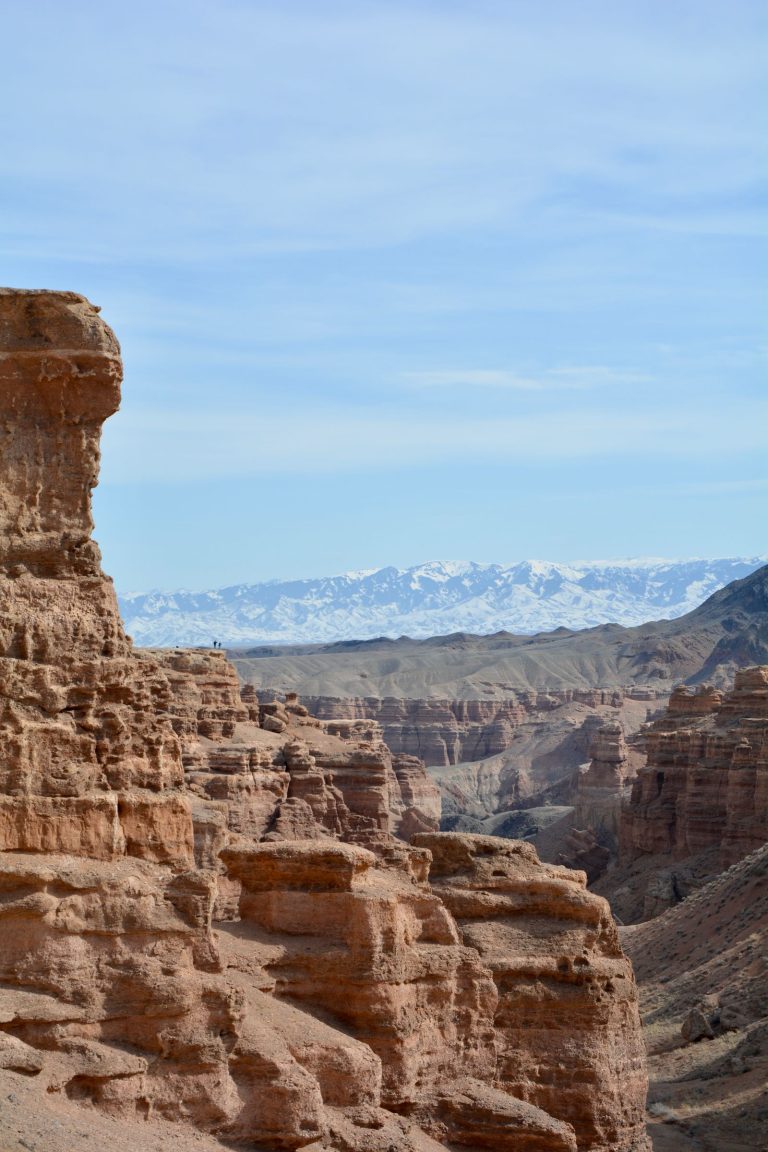
Red rock walls and the Valley of Castles.
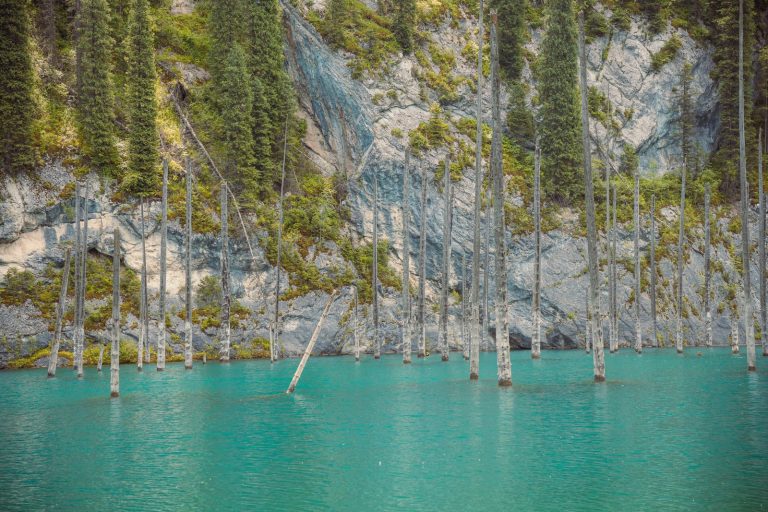
Mountain lakes and a sunken forest.
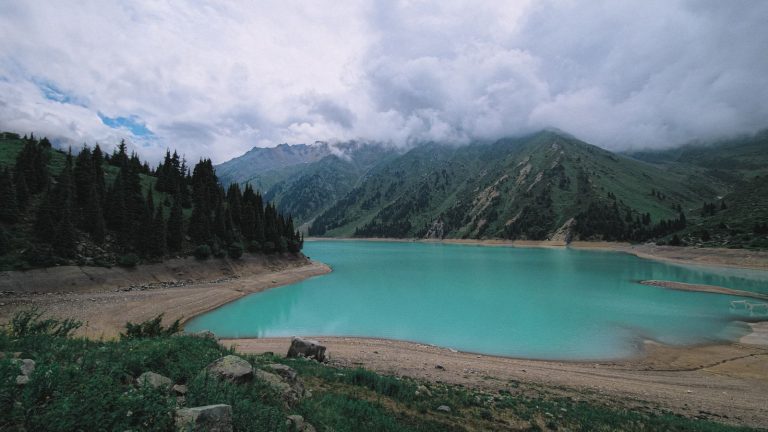
A turquoise reservoir; no swimming.
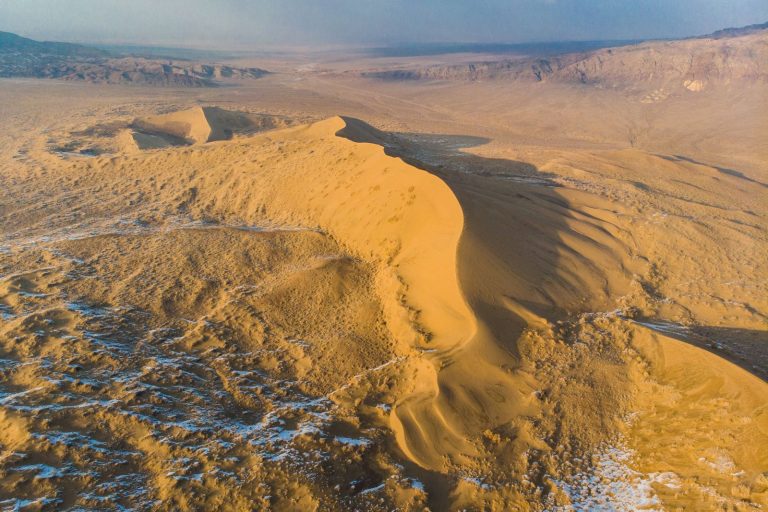
The Singing Dune, which hums in the wind.
Nauryz fills the city in March.
The spring new year.
Cheap skiing.
The top-rated places to stay in Almaty right now, live from Hostelworld.
 Sustainable
 Sustainable

 Sustainable
 Sustainable
 Sustainable
May, June and September are best. Winter is for skiing.
Average highs.
Pick how you travel. Per person per night, in euros.
Prices are in tenge locally; these are euro equivalents. Excludes day trips.
The ones we get asked most.

Compare Almaty hostels — live prices, real reviews and free cancellation on most bookings. Then meet the people already there in the app.

 Get the App.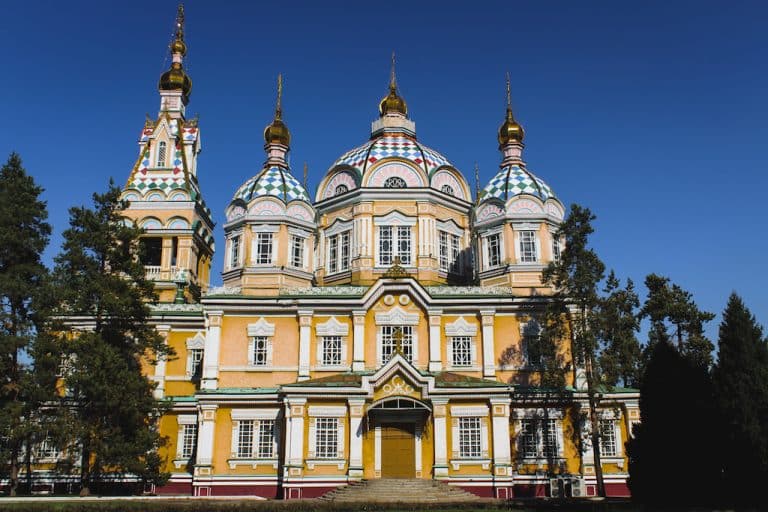
 Get the App.