Centre
First-timersBetween the riverfront and Nam Phou fountain, all walkable.

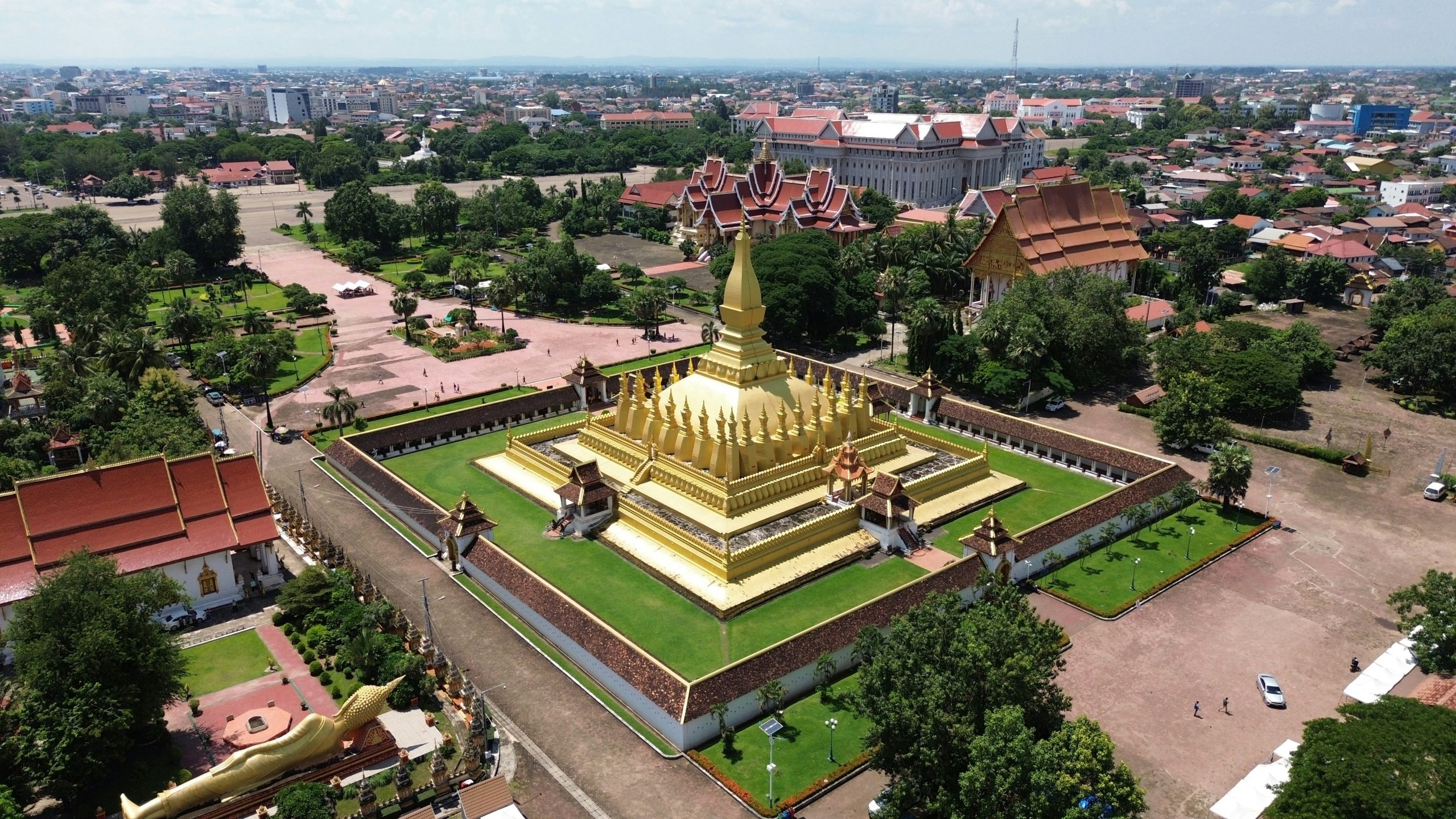
Possibly the most relaxed capital in Asia: golden stupas, a Buddha park of giant concrete statues, French bakeries and sunset over the Mekong, with Thailand across the river.
Vientiane sits on a bend of the Mekong, with Thailand on the opposite bank. It is small, quiet and easy-going, a capital of temples, French colonial villas and riverside restaurants.
Its symbols are That Luang, the golden stupa that is Laos's national emblem, and Patuxai, a victory arch built with concrete meant for an airport runway.
The COPE centre tells the sobering story of the unexploded bombs that still litter the country. Two days is right, and the new railway puts Vang Vieng and Luang Prabang within two hours.
Stay in the centre, between the Mekong riverfront and Nam Phou fountain, where the guesthouses, cafés, temples and night market are all walkable. It is the most compact capital in Southeast Asia, and there is little reason to stay further out.
Between the riverfront and Nam Phou fountain, all walkable.
Orange labels are neighbourhoods, dots are the 7 top-rated hostels. Map data from OpenStreetMap contributors.
Vientiane is one of the most relaxed capitals in Asia, a low-rise city of French colonial buildings, Buddhist temples and cafés along the Mekong.
Pha That Luang, a gold-covered stupa on the edge of the centre, is the national symbol of Laos and the site of the That Luang Festival every November. Patuxai, the Victory Gate, is a monument modelled on the Arc de Triomphe and famously built with cement donated by the United States for a new airport; climb it for the view down Lane Xang Avenue.
Wat Si Saket, built in 1818, is the oldest surviving temple in the city, its cloisters lined with thousands of small Buddha images. Haw Phra Kaew, across the road, once housed the Emerald Buddha before it was taken to Bangkok.
The COPE Visitor Centre tells the story of the unexploded bombs left from the 1960s and 1970s, when Laos became the most heavily bombed country per person in history, and of the people still injured today; it is free and essential.
In the evening, the riverfront fills with a night market, street food and people exercising. Buddha Park, Xieng Khuan, about 25 kilometres south-east, is a garden of giant concrete Hindu and Buddhist sculptures.
The COPE Visitor Centre is free, and so is the riverfront promenade along the Mekong, with its evening night market and street food.
Most temples are free or ask a small donation; Wat Si Saket and Pha That Luang charge a small fee. Walking the French colonial streets around Nam Phou costs nothing.
Lao food is fresh, herby and spicy, eaten with sticky rice, khao niao, rolled into balls with your fingers. Laap, a salad of minced meat or fish with herbs, lime and roasted rice powder, is the national dish, and tam mak hoong, green papaya salad, is everywhere.
Vientiane's French past means good baguettes: khao jee pâté, a baguette sandwich with pâté and vegetables, is the street breakfast, alongside strong Lao coffee. Feu, noodle soup, is the Lao take on pho.
The riverfront night market has grilled fish and meats. A street meal is €1.50 to €3; a restaurant meal €4 to €8.
Vientiane is quiet by night. Riverfront bars and beer gardens serve cold Beerlao, the national beer, and a few bars and clubs stay open later. There is an official closing time around midnight.
A large Beerlao is €1 to €2 in a local place.
Wattay International Airport is about 15 minutes from the centre by taxi.
Tuk-tuks and the LOCA ride-hailing app cover the city; agree tuk-tuk fares first. The centre is walkable, and bicycles are easy to rent.
The Laos–China Railway reaches Vang Vieng in about an hour and Luang Prabang in about two. Laos–China Railway tickets go on sale a few days ahead and sell out, especially at weekends and holidays; buy them on the LCR Ticket app or at the station with your passport, and arrive early, as there are airport-style security checks. Stations are outside town centres.
The Friendship Bridge crosses the Mekong to Nong Khai in Thailand, about 30 minutes away by bus; Thai trains run from there to Bangkok.
Vientiane is cheap. Dorms start around €5 and a careful day is €15 to €25.
Temple entry fees are under €1 to €2, the COPE centre is free, and a tuk-tuk across the centre €1 to €3. The train to Vang Vieng is a few euros, and to Luang Prabang about €10 to €15 in second class.
The currency is the Lao kip (LAK), which loses value quickly; prices here are euro equivalents, and many places also quote in US dollars or Thai baht. Carry cash: cards work only in larger hotels and restaurants, and ATMs have low withdrawal limits and fees.
Vientiane is very safe. Watch for bag snatching from passing motorbikes at night, and keep phones away from the roadside.
At temples, cover shoulders and knees and remove shoes. Women should not touch monks or hand things to them directly.
Outside the city, unexploded ordnance remains a risk in rural areas; stay on paths.
Emergency: 1191 police, 1195 ambulance.
Giant sculptures, karst country and across the river to Thailand.
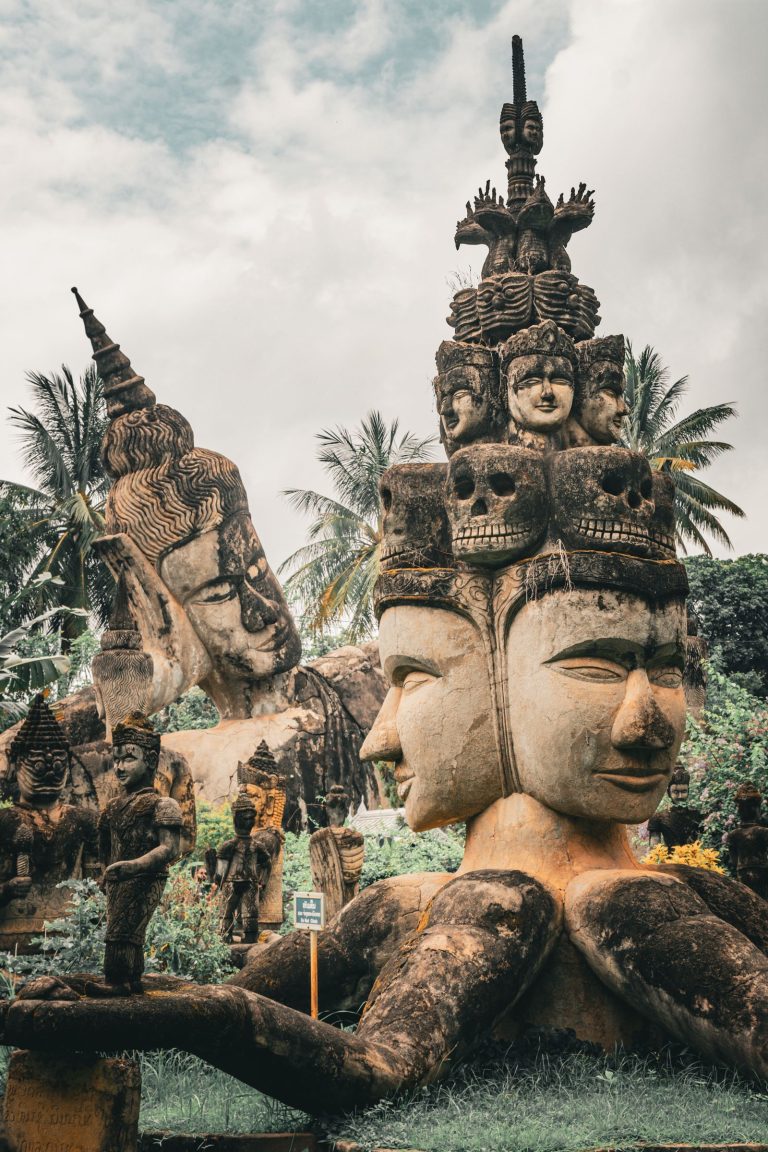
A garden of giant concrete Hindu and Buddhist sculptures.
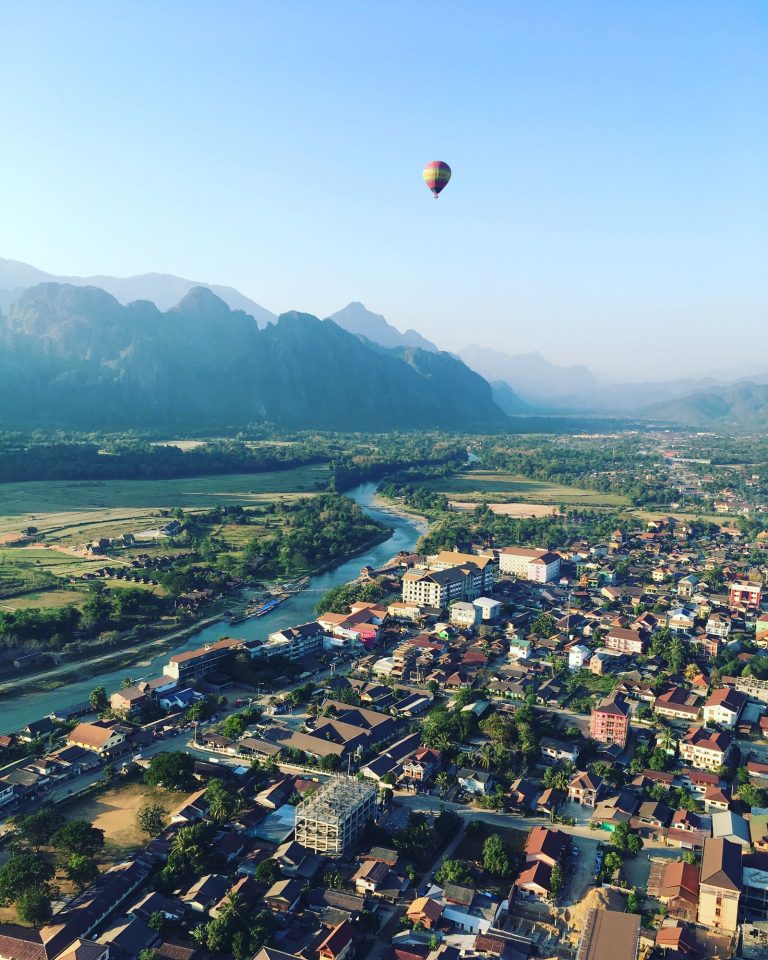
Karst mountains, lagoons and the river.
The That Luang Festival is the biggest in Laos.
Lao New Year water festival.
Races on the river.
The biggest festival in Laos.
The top-rated places to stay in Vientiane right now, live from Hostelworld.
November to February is cool and dry.
Average highs.
Pick how you travel. Per person per night, in euros.
Prices are in kip locally; these are euro equivalents.
The ones we get asked most.

Compare Vientiane hostels — live prices, real reviews and free cancellation on most bookings. Then meet the people already there in the app.

 Get the App.
 Get the App.