Olaya
First-timersThe central district, near the metro and the Kingdom Centre.

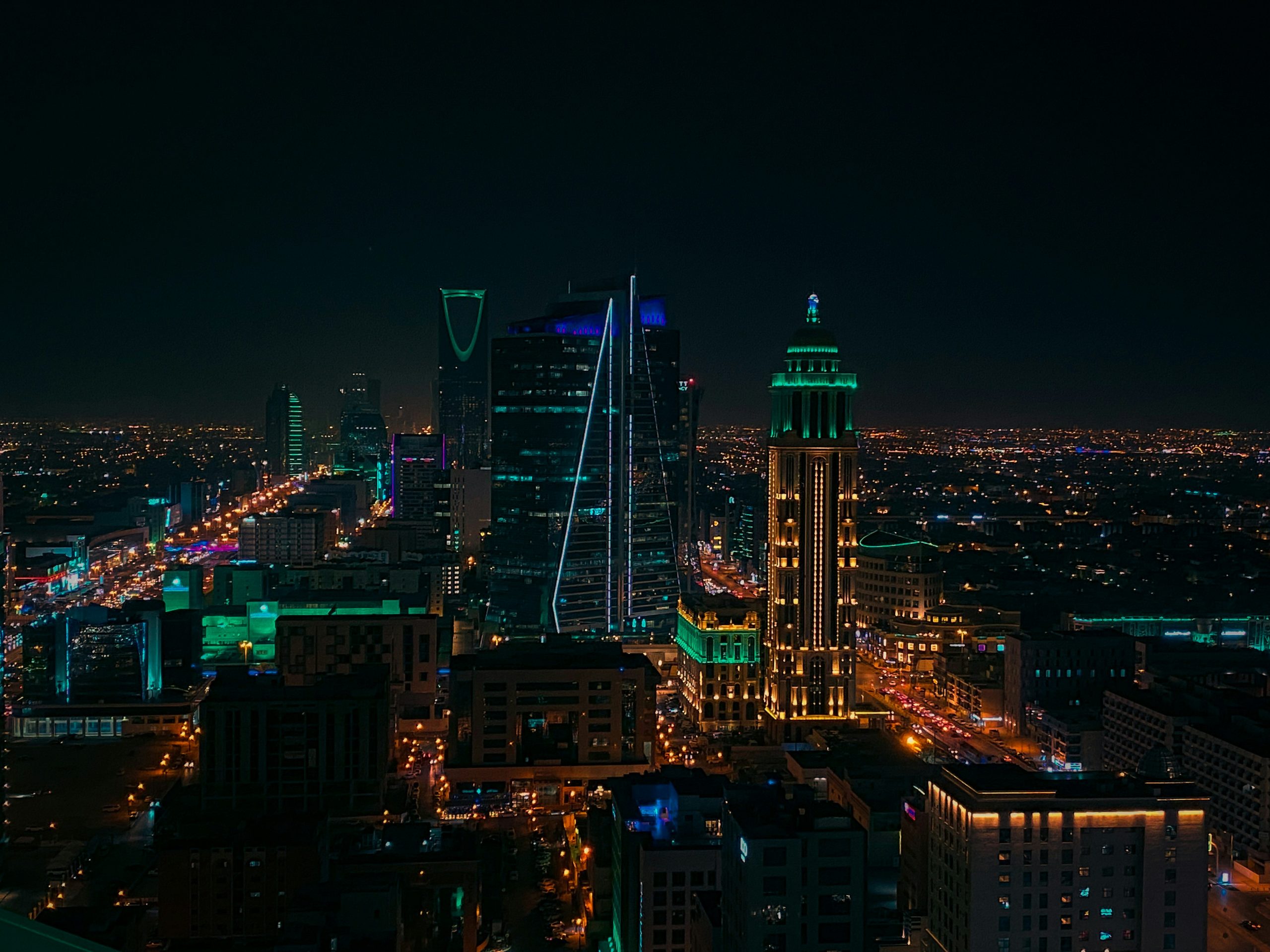
The fast-changing Saudi capital: a mud-brick fortress, the restored birthplace of the Saudi state at Diriyah, a brand-new metro, and a sheer escarpment in the desert called the Edge of the World.
Riyadh grew from a walled mud-brick town into a city of more than seven million in a few decades, and it is changing faster than anywhere in the region, with a new metro, entertainment districts and museums.
Its roots are in the old town: the Masmak Fortress, taken in 1902 by Ibn Saud in the raid that began the modern kingdom, and Diriyah, the mud-brick capital of the first Saudi state, now restored as a UNESCO World Heritage Site.
Two or three days is right, with the Edge of the World as a day trip.
Olaya, the central business district, is the most practical base: near the metro, the Kingdom Centre and plenty of restaurants. Diriyah, on the north-western edge, puts you beside the old capital and its restaurants, but is further from everything else. Al Malaz and the old centre around Masmak are cheaper and closer to the souqs.
The central district, near the metro and the Kingdom Centre.
Beside the restored old capital and its restaurants.
Around Masmak and the souqs, cheaper and more traditional.
Orange labels are neighbourhoods, dots are the 8 top-rated hostels. Map data from OpenStreetMap contributors.
Start in the old centre. The Masmak Fortress, a mud-brick fort with watchtowers and a heavy palm-wood door, is where Ibn Saud's raid in 1902 began the modern kingdom; the spearhead of that raid is still lodged in the doorway. The souqs around it, including Souq Al Zal, sell carpets, daggers, incense and antiques. The National Museum, a short walk away, is the best introduction to Arabia, from rock art to the founding of the state.
Diriyah, on the city's edge, was the capital of the first Saudi state in the eighteenth century. Its At-Turaif district, a citadel of mud-brick palaces, is a UNESCO World Heritage Site and has been restored with galleries and museums inside. Visit in the late afternoon, then eat at the Bujairi Terrace, a row of restaurants facing it across the wadi.
The Kingdom Centre's Sky Bridge, 300 metres up, gives the best view over the city's spread. Riyadh Season, from about October to March, brings concerts, festivals and huge entertainment zones such as Boulevard City.
The Edge of the World, about two hours north-west, is a sheer escarpment where the Tuwaiq cliffs drop away to the desert plain. The last stretch is off-road; go with a tour or a four-wheel drive and a guide, and check it is open, as it closes in extreme heat.
The Masmak Fortress is free, and so are the old souqs around it and Deera Square, the old centre beside them.
The Wadi Hanifa park, a long green valley along the city's western side, is free for walking and picnics. Boulevards like Tahlia Street and King Abdullah Park are where locals walk in the evening.
Some events in Riyadh Season are free, but most of the big zones charge entry.
Kabsa, rice cooked with spices and topped with chicken or lamb, is the national dish; mandi, meat slow-cooked in an underground oven, is just as popular. Many traditional restaurants serve on the floor, with families in separate sections.
Arabic coffee, gahwa, flavoured with cardamom and served with dates, is offered everywhere as a sign of hospitality. Jareesh, a cracked-wheat porridge, and saleeg, rice cooked in milk, are Najdi dishes from the region around Riyadh.
Riyadh also has a huge, fast-growing international restaurant and café scene, especially in Olaya and around Diriyah, and speciality coffee is a local obsession.
A meal in a local restaurant is €6 to €15.
Alcohol is not available to visitors. There are no bars, and bringing alcohol into the country is banned; the one licensed shop, in Riyadh, serves only diplomats and some premium residents.
Evenings are about cafés, which stay open late, restaurants and shisha lounges, and alcohol-free beer and mocktail bars are increasingly popular. In the cooler months, Riyadh Season's concerts, festivals and entertainment zones run until late at night.
The city comes alive after dark, especially in summer, when it is too hot during the day.
King Khalid International Airport is about 35 kilometres north of the centre, connected by the Riyadh Metro and by Uber, Careem and taxis.
The Riyadh Metro, with six lines that opened in late 2024 and early 2025, covers much of the city; pay with a contactless card or the Darb app. Uber and Careem fill the gaps, and Riyadh is not built for walking, especially in the heat.
Flights reach Jeddah in under two hours and AlUla in about an hour and a half. Trains run east to Dammam and north towards Qassim, Hail and the Jordanian border.
Riyadh is expensive, and budget beds are scarce, from about €30. A careful day is €50 to €70.
The metro is cheap, and Uber rides across the city are €5 to €15. At-Turaif in Diriyah and the Sky Bridge charge entry, and the Riyadh Season zones charge per event. A tour to the Edge of the World is the biggest expense, often €50 or more per person.
The currency is the Saudi riyal (SAR), pegged to the US dollar; prices here are euro equivalents. Cards and phone payments work almost everywhere, even at small cafés.
Riyadh is very safe, with very low crime.
Alcohol is not available to visitors. There are no bars, and bringing alcohol into the country is banned; the one licensed shop, in Riyadh, serves only diplomats and some premium residents. Dress modestly, covering shoulders and knees; foreign women do not need an abaya or headscarf except in mosques. During Ramadan, do not eat, drink or smoke in public in daylight. Public displays of affection are frowned upon, and photographing people, especially women, without permission is not acceptable.
Summer heat regularly passes 45°C; limit time outdoors between late morning and late afternoon, and carry water.
Emergency number is 911.
The cliffs at the edge of the plateau, the old capital and the tombs of Hegra.
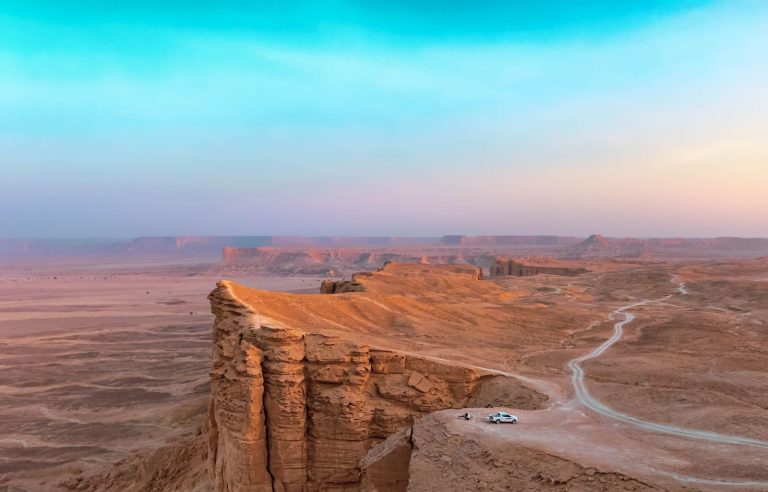
Cliffs dropping away to the desert plain. Closes in extreme heat.
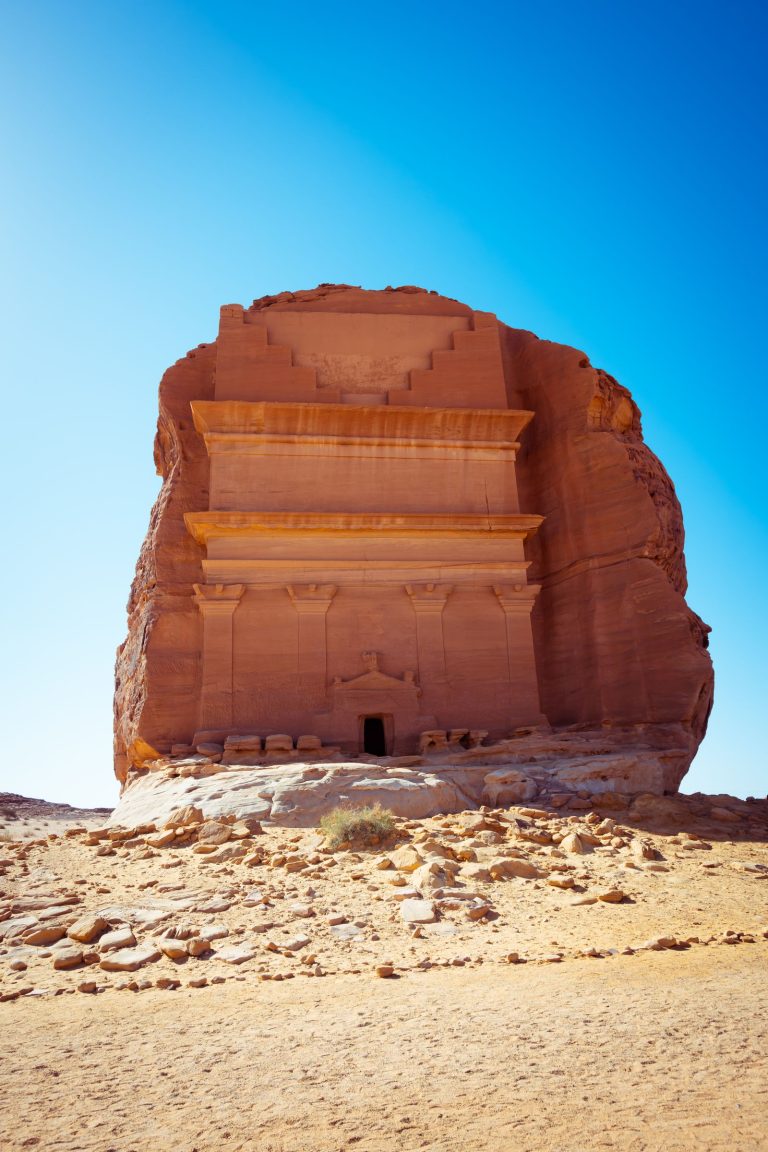
Hegra's Nabataean tombs and desert canyons.
Riyadh Season brings concerts and events through the cooler months.
Concerts and entertainment.
Green lights and celebrations.
Celebrating the first Saudi state.
The top-rated places to stay in Riyadh right now, live from Hostelworld.
November to March. Summers are extremely hot.
Average highs.
Pick how you travel. Per person per night, in euros.
Prices are in riyals locally; these are euro equivalents.
The ones we get asked most.

Compare Riyadh hostels — live prices, real reviews and free cancellation on most bookings. Then meet the people already there in the app.

 Get the App.
 Get the App.