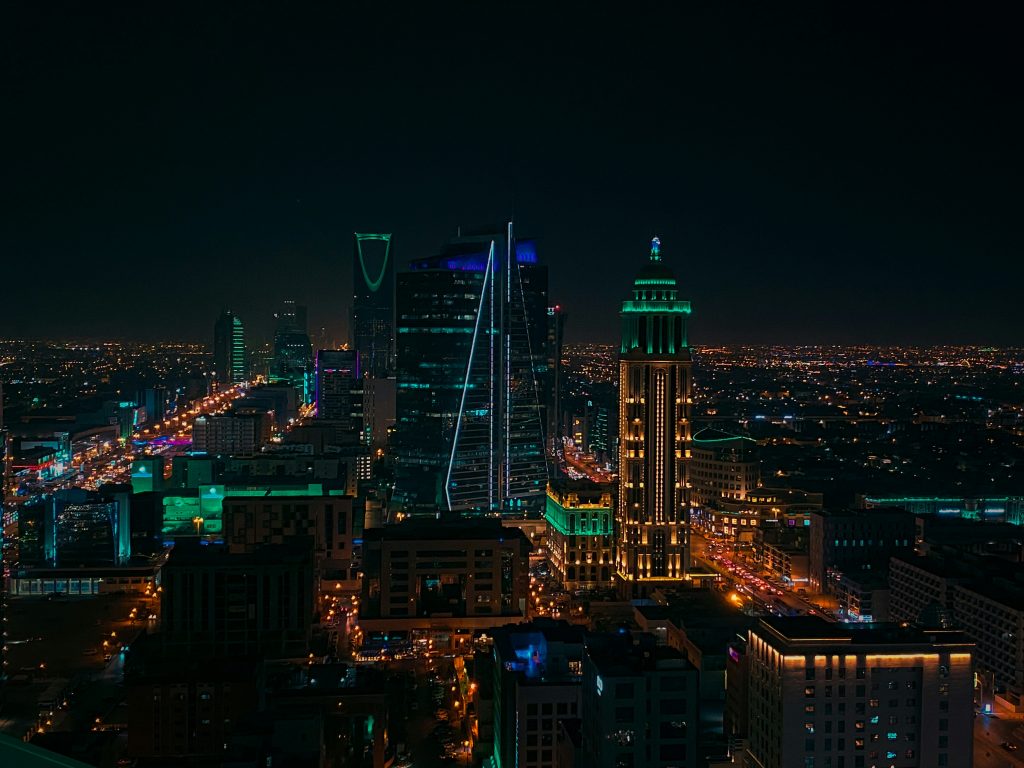
Riyadh
8 hostels · dorms from €16
The capital: museums, the Edge of the World escarpment nearby, and the fastest-changing city here.

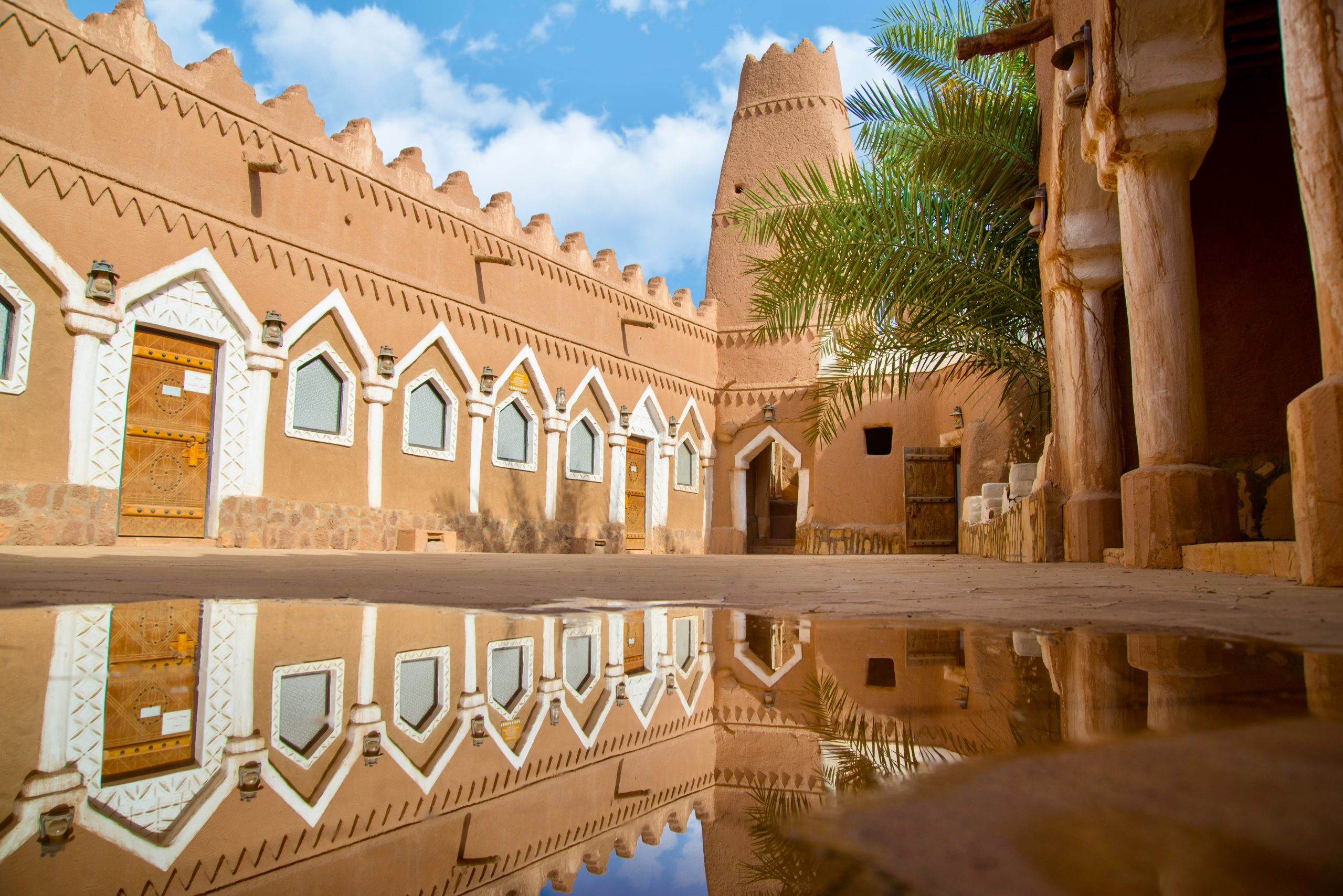
Closed to tourists until 2019, and now issuing visas online in minutes. Nabataean tombs cut into desert rock, a Red Sea coast with untouched reefs, and a country changing faster than anything can document.
Saudi Arabia issued its first tourist visas in 2019, and almost everything about travelling here is newer than that. Infrastructure, rules and social norms are all shifting quickly, which makes it one of the most interesting and least predictable places in this guide.
AlUla is the reason most people come: Hegra, a Nabataean city of 111 tombs carved into sandstone outcrops, built by the same civilisation as Petra and receiving a fraction of the visitors. The desert around it has rock formations, canyons and a growing set of festivals.
Jeddah on the Red Sea has the restored Al-Balad old town, coral-block houses with wooden balconies, and diving on reefs that have barely been touched. Riyadh is the modern capital, with the Edge of the World escarpment two hours out. Ten days covers all three.
Note that Mecca and Medina are closed to non-Muslims, which shapes routes through the west of the country.
Domestic flights do the distances, and the high-speed railway runs Jeddah to Medina.
The capital: museums, the Edge of the World escarpment nearby, and the fastest-changing city here.
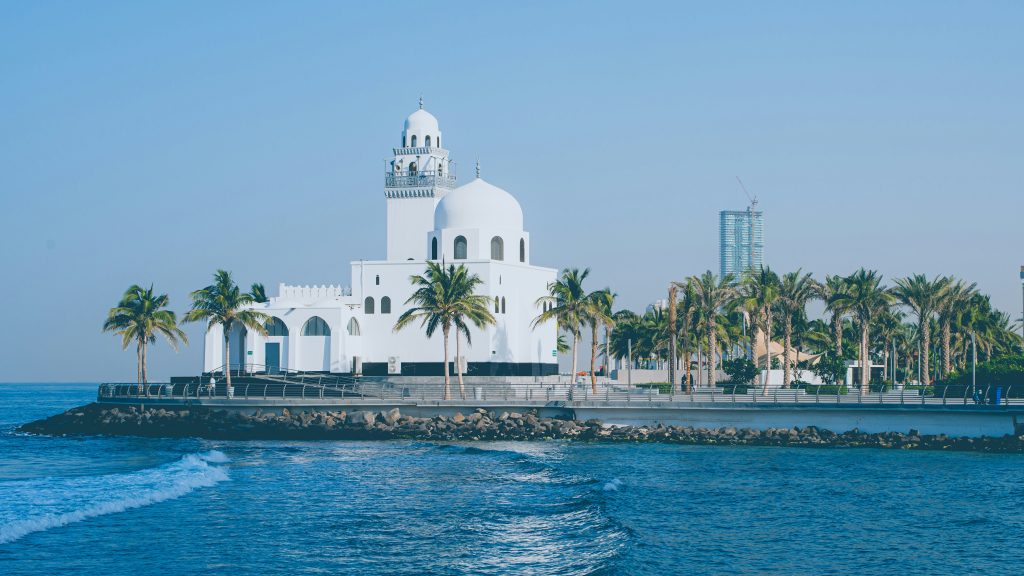
The Red Sea city: the restored Al-Balad old town, a corniche and world-class diving offshore.
Saudi is a desert and heritage trip with a Red Sea coast attached, and it is still finding its shape.
Nabataean tombs and a restored coral-stone old town.
Desert escarpments, canyons and highland hiking.
Red Sea reefs that have barely been dived.
Riyadh or Jeddah over three days.
Kabsa, Red Sea fish and serious coffee culture.
Hegra at AlUla is the country's single great sight: 111 Nabataean tombs cut into sandstone outcrops across a desert plain, carved by the same people who built Petra and seen by a tiny fraction of the numbers. Access is through timed official tours booked in advance, and the site is managed tightly.
AlUla's surroundings — Elephant Rock, the old town, canyons and desert camps — fill several more days, and the area now hosts winter festivals that bring international acts.
In Jeddah, Al-Balad is a UNESCO-listed old town of coral-stone houses with carved wooden balconies, currently under heavy restoration, and it is best walked in the evening. The Red Sea diving offshore is genuinely world-class and undersubscribed.
Near Riyadh, the Edge of the World is a dramatic escarpment about two hours out, reached on a rough track and usually done as an organised trip.
Kabsa — spiced rice with meat, often eaten communally from a shared platter — is the national dish, and mandi and mutabbaq fill the everyday bracket. Portions are large and sharing is the norm.
The cheapest eating comes from the expatriate workforce: Yemeni, Egyptian, Pakistani and Filipino restaurants serve full meals for €3 to €7 and are everywhere in the cities.
Jeddah has the best food in the country, with Red Sea fish grilled to order and a growing café scene. Coffee is a serious matter — Saudi coffee is light, cardamom-heavy and served with dates, and refusing a second cup takes practice. Alcohol is illegal throughout the country and there is no visitor exception.
There is no bar or club scene, because alcohol is illegal throughout the country and penalties are serious. Anyone expecting the UAE model should reset before arriving.
What exists instead, and has grown very fast since 2019, is an entertainment sector: concerts, festivals, sporting events and Riyadh Season, a months-long programme of shows and installations that draws international acts. AlUla hosts winter festivals in the desert.
Day to day, evenings are cafés, shisha, restaurants and shopping malls, which stay open very late. Cities are genuinely nocturnal in summer because daytime heat makes outdoor life impossible until after dark.
The country is enormous and domestic flights do the work: Riyadh to Jeddah is two hours, and AlUla has its own airport with connections from both. Booking early keeps fares at €50 to €100.
The Haramain high-speed railway runs Jeddah to Medina via King Abdullah Economic City, though note that the Medina end is within the area restricted to Muslims.
Within cities, Uber and Careem are cheap and universal, and Riyadh has opened a metro. Hire cars are inexpensive with very cheap fuel, and driving is straightforward on excellent roads, though Saudi driving is assertive. Women have been able to drive since 2018, and hire companies rent to female drivers.
Saudi is mid-priced and harder to do cheaply than its neighbours, because hostel supply is thin, distances force flights, and the headline sights are ticketed.
Dorms start around €18 in Jeddah and Riyadh, and there is very little budget accommodation in AlUla, which is developing as a high-end destination. Expat canteen meals at €3 to €7 keep food costs low.
A day comes to €50 to €80 including a share of transport. Hegra tours, domestic flights and organised desert trips are the main extras, and there is no alcohol spend, which removes a line that dominates budgets in the UAE.
Crime against visitors is very low and the cities feel secure. As with the UAE, the thing to understand is the law rather than crime, and here it is stricter.
Alcohol and drugs are illegal, with severe penalties including for possession. Public behaviour rules apply to everyone: modest dress is expected, though the requirement for foreign women to wear an abaya was relaxed in 2019 — loose clothing covering shoulders and knees is the current expectation, and a headscarf is not required except in mosques.
Same-sex relationships are criminalised, and travellers affected by that should read current government advice before booking. Photographing people without permission, and government or military sites, causes real problems. Mecca and Medina are closed to non-Muslims and the restriction is enforced on the approach roads.
Summer heat is extreme, reaching 45°C or more inland.
Saudi Arabia introduced tourist visas in 2019 and the process is now among the easiest in the region: citizens of around sixty countries can apply for an e-visa online, often approved within minutes, or get a visa on arrival. It is valid for a year with multiple entries.
Because the system is new, details change. Check the official Visit Saudi portal before booking rather than relying on any secondary source.
Passports need six months' validity. Note that the tourist visa does not permit Hajj, that Umrah has its own arrangements, and that Mecca and Medina remain closed to non-Muslims regardless of visa type.
November to March. Summer inland is genuinely dangerous heat, and the only exception is the southern highlands around Abha, which are cooler year-round.
Average highs for Riyadh, which is extreme in summer. Jeddah is more humid and slightly cooler; Abha in the southern highlands sits at 2,200m and stays mild all year, with monsoon mist in summer.
Pick how you travel and how long for. Per night, for one person, in euro equivalents of riyals.
Domestic flights at €50–100 a leg are effectively necessary given the distances, and Hegra tours are ticketed separately.
The entertainment calendar is new and expanding fast, and Ramadan and Hajj shape the year around it.
No eating, drinking or smoking in public during daylight, for everyone. Evenings are busy and social.
The pilgrimage fills the west of the country. Non-Muslims cannot attend and travel around Jeddah is affected.
A months-long entertainment programme with concerts, shows and installations.
Desert concerts, art installations and food events around Hegra.
Festivals and events on the Red Sea coast.
A heritage and culture festival with traditional crafts and performance.
The highest-rated hostels in the country, live from Hostelworld. Supply is thin and concentrated in Riyadh and Jeddah — AlUla is developing as a higher-end destination.
The ones we get asked most.

Compare hostels across Saudi Arabia — live prices, real reviews and free cancellation on most bookings. Then meet the people already there in the app.

 Get the App.
 Get the App.