Jeju City
First-timersThe island's main city: close to the airport, with the central bus terminal, Dongmun Market and the most hostels.

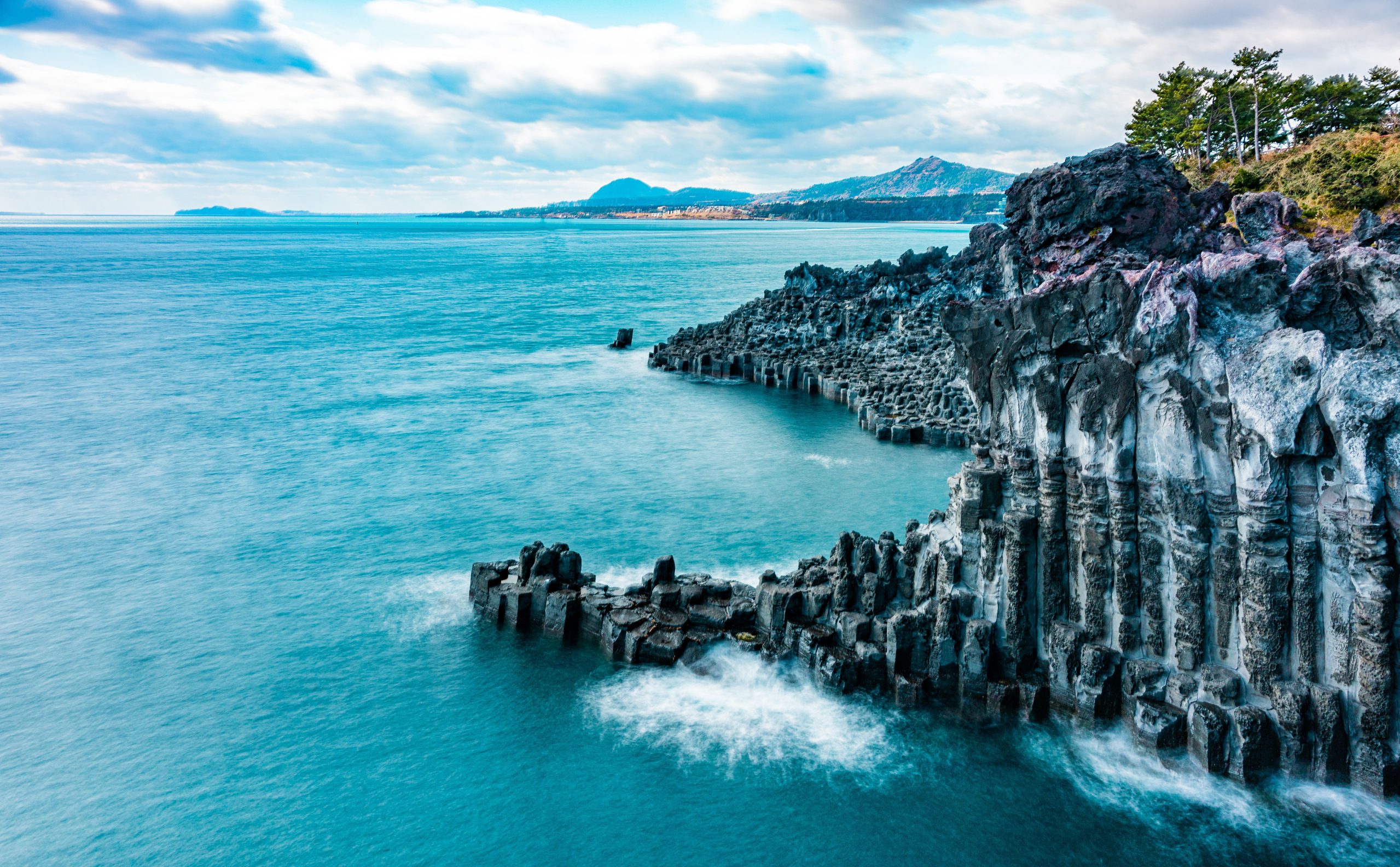
The main city on Jeju, Korea's volcanic island: the base for Hallasan, a crater rising from the sea, lava tubes, coastal walking trails and the haenyeo, the island's women divers.
Jeju is a volcanic island off Korea's south coast, and the country's favourite holiday spot. Its volcanic landscapes, including Hallasan, South Korea's highest mountain at 1,947 metres, the Seongsan Ilchulbong crater and the lava tube caves, are a UNESCO World Heritage Site.
The island is also home to the haenyeo, women who free-dive for shellfish and seaweed without oxygen tanks, many of them into their seventies and eighties. Their tradition is on UNESCO's intangible heritage list.
Jeju City, in the north, has the airport, the markets and most of the hostels, and it's the easiest base for buses around the island. Three or four days is right: one for Hallasan, one for the east coast and Seongsan, and time to walk the Olle trails.
Stay in Jeju City for transport, or around the island for scenery.
The island's main city: close to the airport, with the central bus terminal, Dongmun Market and the most hostels.
Map data from OpenStreetMap contributors.
Climb Hallasan. Only two trails reach the crater lake at the summit, Seongpanak (9.6 km one way) and the steeper Gwaneumsa (8.7 km). Both are free, but you must book a slot on visithalla.jeju.go.kr: bookings open on the 1st of each month for the following month. Rangers close the upper trail around midday, so start by 7am and allow seven to nine hours. Bus 281 runs to the Seongpanak trailhead.
On the east coast, climb Seongsan Ilchulbong (5,000 won), a crater rising straight out of the sea, in about 15 minutes. Locals climb it for sunrise, before the ticket office opens. Below it, the haenyeo give diving demonstrations at 1:30pm and 3pm.
Walk the lava tube of Manjanggul, which reopened in May 2026 after safety work: a 1 km section of one of the world's longest lava caves (about €3, closed on the first Wednesday of each month).
Walk sections of the Jeju Olle Trail, more than 20 marked routes around the coast and countryside. In the evening, eat at Dongmun Market's night market in Jeju City.
The Olle trails are free and run right around the island, with blue and orange ribbons marking the way. Routes 6 and 7, near Seogwipo on the south coast, are among the most scenic.
Hallasan is free to climb, though the summit trails need a booking. The beaches cost nothing, from Hyeopjae and Geumneung in the west to Woljeongri in the east.
Get to Seongsan Ilchulbong before the ticket office opens and you can walk up for free.
Jeju black pork (heukdwaeji) is the island's barbecue, thicker and chewier than mainland pork, grilled at the table and dipped in anchovy sauce. Gogi guksu, noodles in pork broth, is the cheap local lunch.
The haenyeo's catch shows up everywhere: abalone porridge (jeonbokjuk), sea urchin and seaweed soup. Jeju is also famous for its citrus, especially hallabong, a big, sweet tangerine sold at every market from winter into spring.
Dongmun Market's night market is the best place to graze. A meal is €6 to €15 (about 9,000 to 23,000 won), and there's no tipping.
Jeju City has the island's most nightlife, with bars and pubs around City Hall and the Nohyeong-dong area, popular with young Koreans and travellers. Dongmun night market is the best start to the evening.
Outside Jeju City the island is quiet after dark, apart from a few beach bars in summer. A beer is €3 to €6.
Flights from Seoul's Gimpo Airport take about 1 hour 10 minutes, on one of the busiest air routes in the world, and are often cheap if you book ahead. Jeju Airport is on the edge of Jeju City.
Buses cover the whole island from the Jeju City bus terminal and are cheap with a T-money card, but journeys to the far side take one to two hours. A hire car is much easier for the east coast and the inland craters. You need an International Driving Permit.
Use Naver Map or KakaoMap for bus times; Google Maps doesn't work properly in Korea.
Jeju is mid-priced. Dorms start around €15 and a careful day costs €35 to €55, more if you hire a car.
Most of the big sights are cheap or free: Hallasan and the Olle trails cost nothing, and Seongsan Ilchulbong is 5,000 won.
The currency is the won (KRW): about 1,530 to the euro. Cards work almost everywhere and there's no tipping. A T-money card covers the island buses and convenience stores.
Jeju is very safe. On Hallasan, the weather changes quickly and the summit can be cold and windy even in summer, so bring layers, water and food, and start early.
The Olle trails follow sea cliffs in places: stay on the path and don't go onto wet rocks. Typhoons can hit between July and September; check the forecast.
Emergency: 112 police, 119 fire and ambulance. 1330 is the free tourist helpline, in English.
Craters, lava caves and coast, an hour or so from Jeju City.
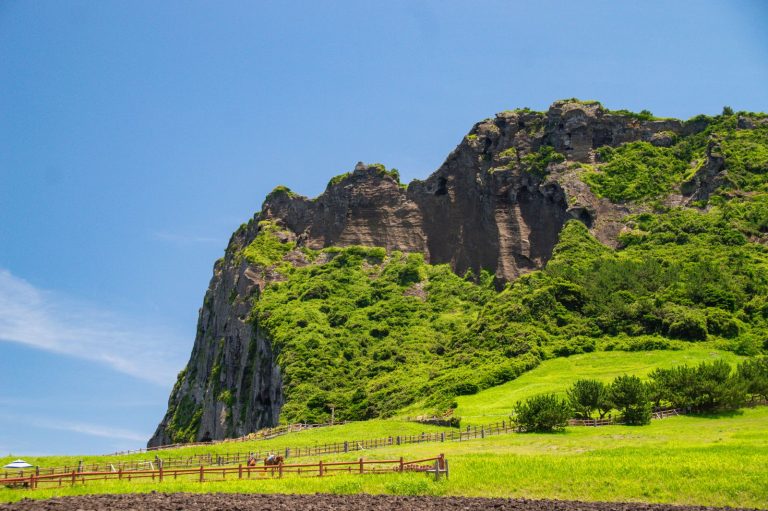
A 15-minute climb to the rim of a crater rising from the sea (5,000 won), with haenyeo diving shows below at 1:30pm and 3pm.
The Jeju Fire Festival lights up the hills in spring.
Burning the hillside grass.
Yellow flowers.
April to June and September to November. Spring brings canola flowers and cherry blossom; July and August are hot, busy and in typhoon season.
Average highs. Milder than the mainland.
Pick how you travel. Per person per night, in euros.
Prices are in won locally; these are euro equivalents.
The ones we get asked most.

Compare Jeju City hostels — live prices, real reviews and free cancellation on most bookings. Then meet the people already there in the app.

 Get the App.
 Get the App.