Old town
First-timersThe stone maze between the cathedral and St Michael's fortress: guesthouses, restaurants and steps.

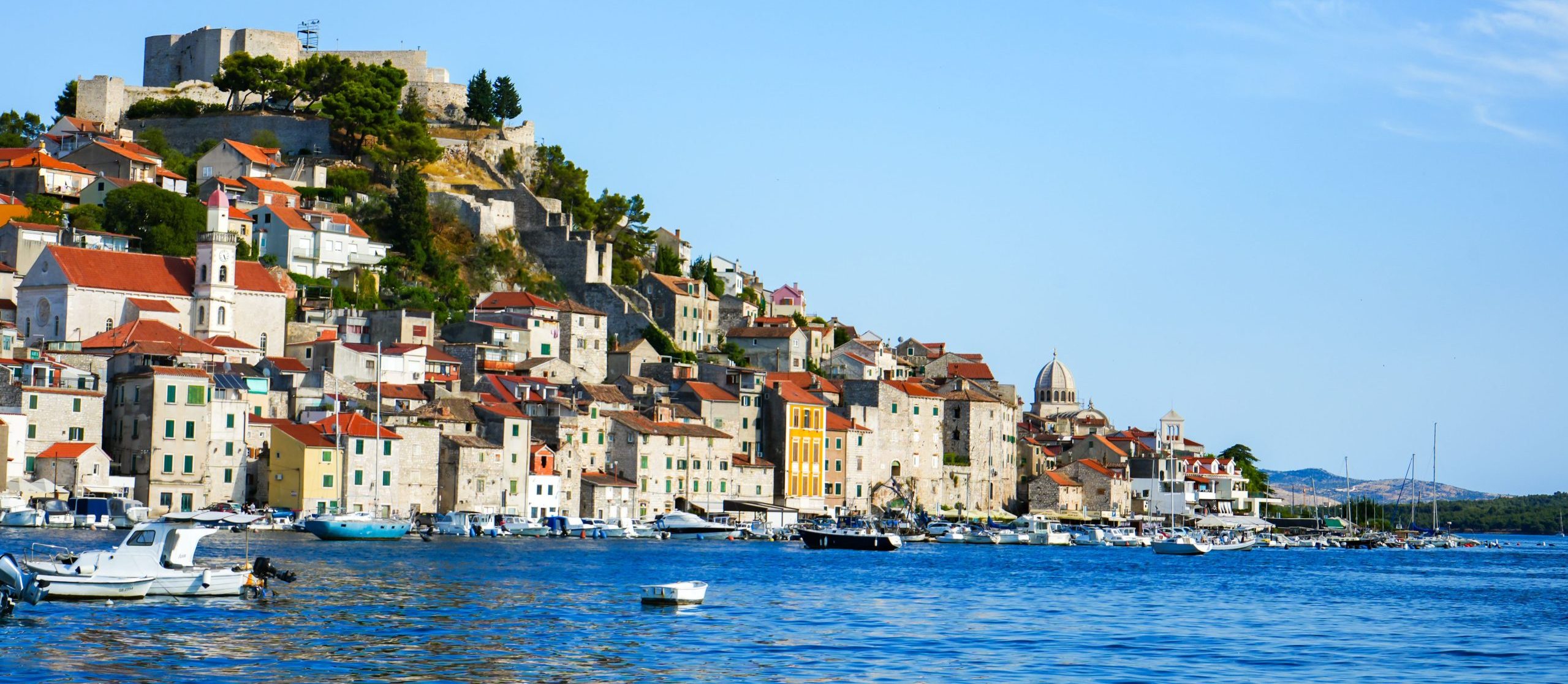
A stone city between two national parks, with a cathedral built entirely without mortar and 71 carved heads staring out of its walls.
Šibenik is the only major Dalmatian town founded by Croats rather than Romans or Greeks, and it sits where the Krka river meets the sea, behind a channel that made it a natural fortress.
Its cathedral is the reason to stop: built over a century from the 1430s entirely in stone, with no mortar and no brick anywhere, including the roof and dome, which is unique. Around the outside, 71 carved heads of ordinary fifteenth-century citizens stare out of the apse walls.
Four fortresses sit above the town, two of them restored as venues, and one — St Michael's — now hosts summer concerts with the sea behind the stage.
It gets a fraction of Split's visitors, and it sits between Krka and Kornati national parks.
A day and a night, or two as a base for the parks.
A stone old town climbing from the waterfront to the fortresses.
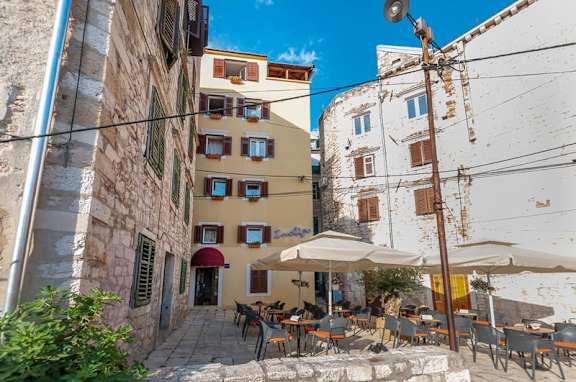
The stone maze between the cathedral and St Michael's fortress: guesthouses, restaurants and steps.
The riva and the streets behind it, flat, with the ferry dock and most of the restaurants.
South of the city, with beaches, resorts and cheaper rooms, and a bus into town.
Orange labels are neighbourhoods, dots are the 4 top-rated hostels. Map © MapTiler © OpenStreetMap contributors.
The Cathedral of St James is the thing. Built between 1431 and 1536 entirely from stone — no mortar, no brick, no wood, including the barrel roof and the dome, assembled from interlocking slabs like joinery. It is UNESCO-listed, and the frieze of 71 carved heads around the apse are portraits of ordinary citizens of the time, which is unusual and oddly moving.
St Michael's Fortress above the old town has been restored as an open-air venue with a stage and the sea behind it; entry is a few euros and the view over the channel and the islands is excellent.
Barone Fortress, higher again, has an augmented reality guide and a wine and cheese terrace.
The old town itself is a stone maze of stairs and alleys that takes an hour to get lost in, and St Nicholas Fortress out in the channel is reached by boat.
Walking the old town costs nothing and is most of the appeal — stone stairs, alleys and courtyards with almost no traffic.
The cathedral exterior, including the frieze of 71 heads, is free to look at from the square.
The waterfront promenade and the walk up to the fortresses are free, and you can reach the walls of St John's without paying.
Beaches at Banj, just east of the centre, and along the coast south are free.
The old town churches, several of them medieval, are generally free to enter.
Dalmatian, and cheaper than Split an hour away. A konoba meal is €14 to €22, and the restaurants in the old town lanes are noticeably better value than the waterfront.
Šibenik is known for its shellfish, and the oysters and mussels from the Krka estuary are farmed a few kilometres upriver.
Skradinski rižot, a slow-cooked veal risotto from the town at the edge of Krka park, is the local speciality and takes hours to make.
Local wine from the Šibenik hinterland — Babić, a red grown on stony terraces at Primošten — is €4 to €6 a glass and worth trying.
A beer is €3 to €4.
Small and pleasant. Bars in the old town courtyards and along the waterfront fill in the evening, and there is a young crowd because the city has a college.
A beer is €3 to €4 and cocktails €7 to €9, well below Split.
The fortresses are the distinctive option: St Michael's hosts summer concerts on a stage cut into the hillside with the sea behind it, and Barone has a terrace serving local wine and cheese with the same view.
For a bigger night, Split is an hour and a half away, and the Garden festivals at Tisno are half an hour up the coast in summer.
The old town is walkable and extremely steep — stone stairs are the main form of street, which is worth knowing if you have luggage or knees.
Buses connect Split in an hour and a half, Zadar in an hour and a half, and Zagreb in five, with Split airport 45 minutes away.
For Krka national park, buses run to Skradin in 30 minutes, where boats used to take visitors into the park — check the current arrangement, as access rules and transport within the park have changed in recent years.
Boats from the waterfront reach the Šibenik archipelago, including Zlarin and Prvić, small car-free islands twenty to forty minutes offshore.
Noticeably cheaper than Split and Zadar. Dorms are €15 to €30, a konoba meal €14 to €22, and a beer €3 to €4.
A day is €40 to €70 in season.
The cathedral and the fortresses are a few euros each. The main expense is Krka national park entry, which varies sharply by season and is highest in July and August — book online.
Croatia has used the euro since 2023.
Šibenik is a quiet, safe city with very little crime.
The stone stairs are the hazard: hundreds of them, worn smooth, steep and slippery in rain, and many unlit at night.
Swimming is off rocks and concrete, with sea urchins in places.
Summer heat is significant and the stone old town holds it, with very little shade on the climbs to the fortresses — do them early or late.
If you head to Krka, swimming is no longer permitted at the main falls and the rules are enforced. Emergency number is 112.
Two national parks and a string of car-free islands.
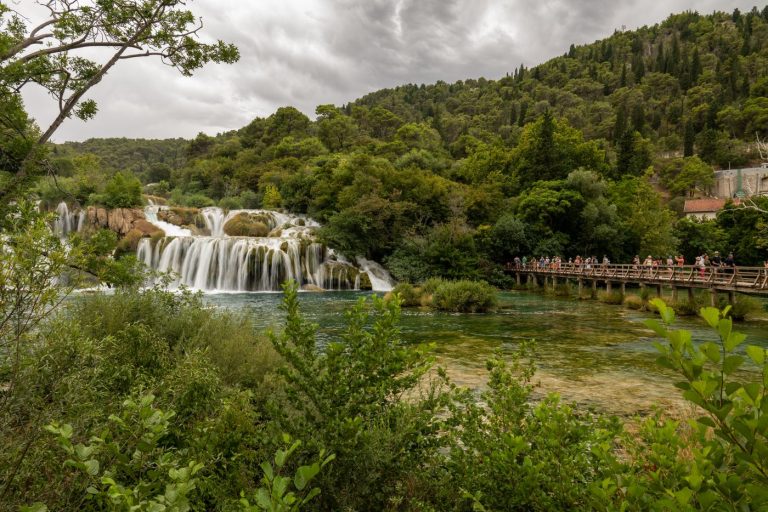
Waterfalls and boardwalks along a river gorge, with a monastery on an island upstream. Swimming at the main falls is no longer allowed.
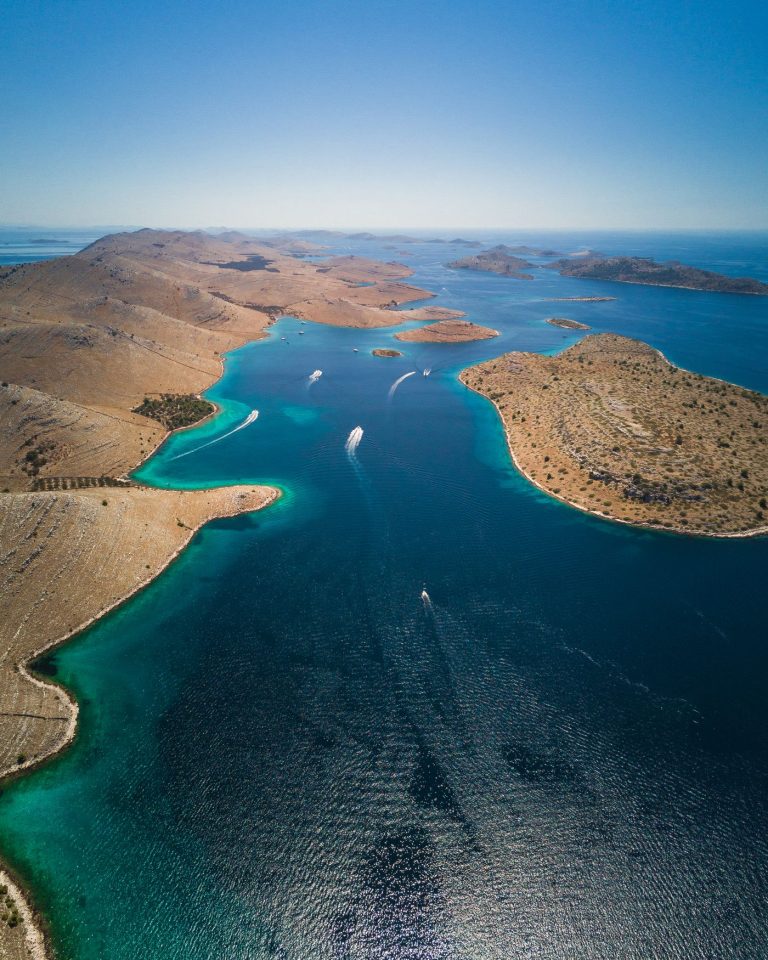
Eighty-nine largely bare islands in a national park archipelago, usually with lunch on board.
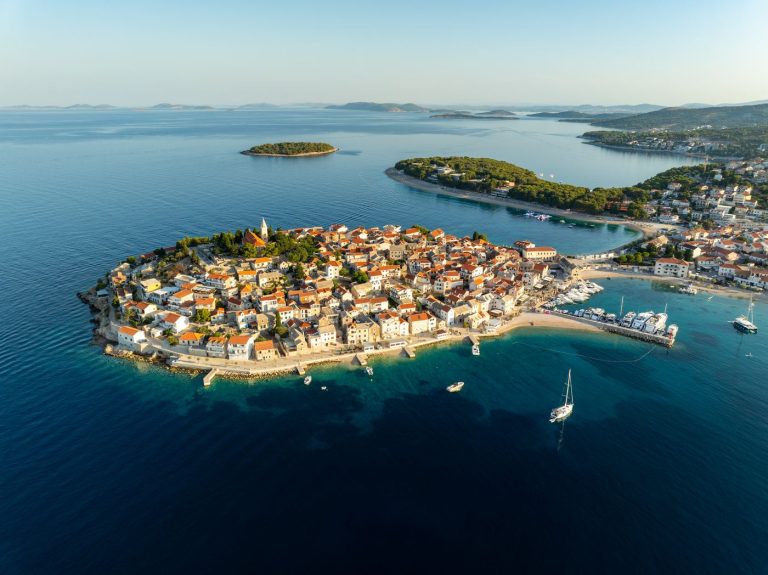
A stone town on a small peninsula, with the dry-stone vineyard terraces that grow Babić wine behind it.
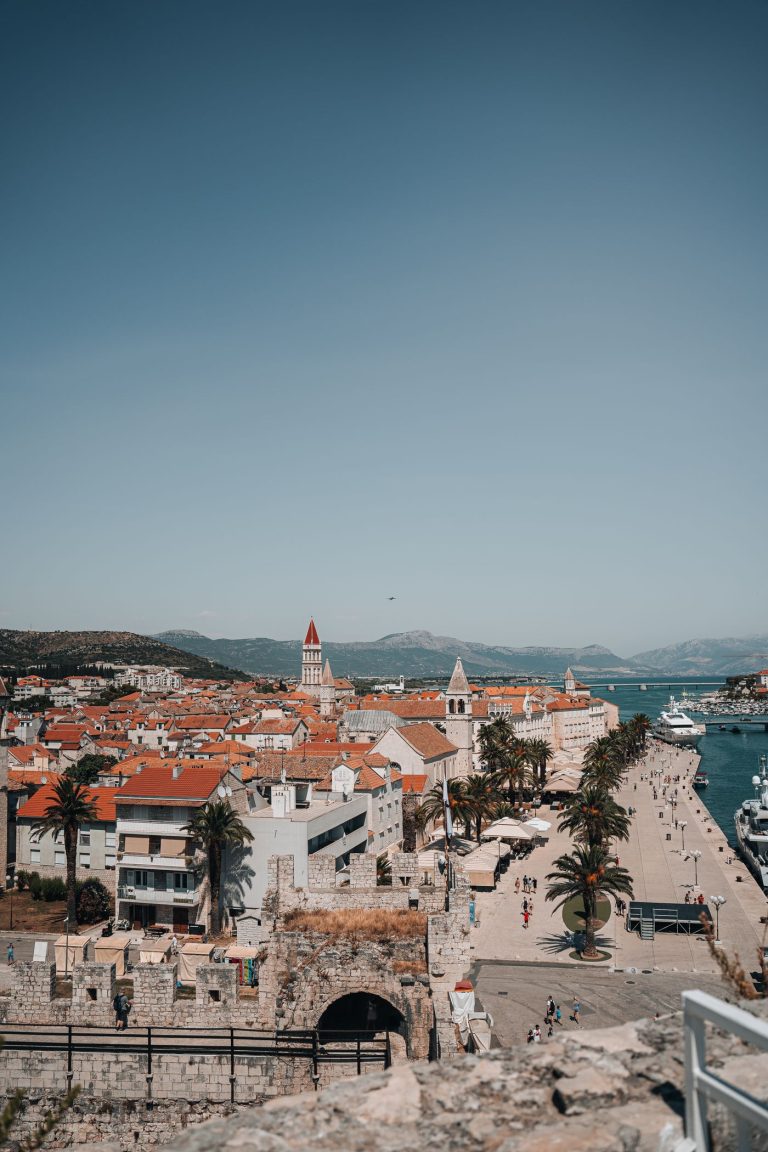
A UNESCO-listed island town of Venetian stone between here and Split.
Concerts in a hillside fortress, and a children's festival that has run since 1958.
Music on a stage cut into the hillside with the channel and islands behind it.
Running since 1958, filling the old town with theatre, puppetry and workshops.
A cluster of boutique electronic festivals on a beach site up the coast.
When the waterfalls run hardest and the crowds have not arrived.
A small market in the stone squares, in a city that is otherwise empty.
A small scene in the old town and along the waterfront, at prices below Split and Zadar. Live from Hostelworld.
May, June and September. Krka is at its best in spring when the water is high.
Average highs. The waterfalls at Krka run hardest in spring after the snowmelt, and park entry costs considerably less outside July and August.
Pick how you travel. Per person per night, in euros, in season.
Krka entry is the main variable and rises steeply in July and August. Book online whatever the month.
The ones we get asked most.

Compare Šibenik hostels — live prices, real reviews and free cancellation on most bookings. Then meet the people already there in the app.

 Get the App.
 Get the App.