Intra-muros
First-timersInside the walls: the palace, the squares, the restaurants and nearly everything. Small and walkable.

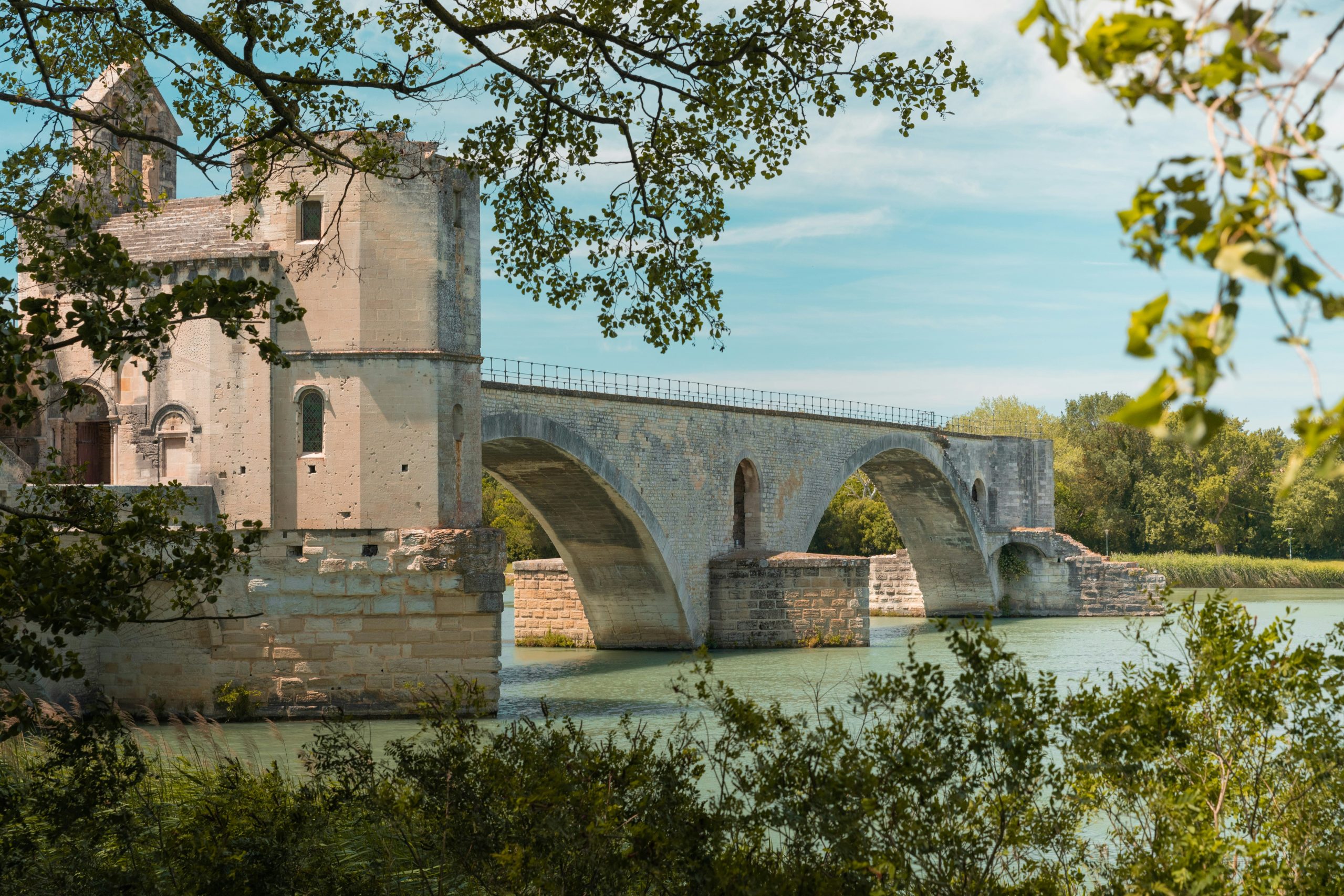
A papal palace the size of a small town, a bridge that stops halfway across the river, and the best base in Provence — plus a festival in July that takes over everything.
For most of the fourteenth century the papacy was not in Rome. Seven popes ruled from Avignon between 1309 and 1377, and the Palais des Papes they built is the largest Gothic palace in the world — a fortress and a court at once, and vast enough that walking it takes a couple of hours.
The Pont Saint-Bénézet is the bridge from the song. Twenty-two arches once crossed the Rhône; four remain, stopping abruptly over the water, because the river kept washing the rest away until the town stopped rebuilding it in the seventeenth century.
The ramparts are intact for more than four kilometres and enclose the whole old town.
In July the Festival d'Avignon fills every venue, courtyard and doorway in the city — the official programme plus a fringe of well over a thousand shows — and the population roughly doubles.
Two days, and it is the natural base for the rest of Provence.
A small walled town, with the island and Villeneuve across the river.
Inside the walls: the palace, the squares, the restaurants and nearly everything. Small and walkable.
Just outside the southern wall: cheaper beds, the local station and five minutes on foot into town.
The river island: campsites, cheaper rooms and the classic view back at the palace and the bridge.
Orange labels are neighbourhoods, dots are the 3 top-rated hostels. Map © MapTiler © OpenStreetMap contributors.
The Palais des Papes, about €12, is the largest Gothic palace in the world. It is mostly empty of furnishings, which some people find disappointing and others find the point — the scale of the halls and the surviving frescoes in the papal chambers carry it. A combined ticket with the bridge costs a little more.
The Pont Saint-Bénézet, about €5 alone, is four arches ending over the Rhône. You can walk out onto it. The honest advice is that the better view is from the Île de la Barthelasse or Villeneuve across the water, where you see the bridge, the palace and the walls together — and that costs nothing.
The Rocher des Doms, the gardens on the rock above the palace, is free and gives the view over the river and towards Mont Ventoux.
Walk the ramparts. More than four kilometres, intact, and free.
The Collection Lambert, about €10, is a strong contemporary art museum in two eighteenth-century mansions.
The Rocher des Doms gardens above the palace are free and give the view over the Rhône, the bridge and, on a clear day, Mont Ventoux.
The ramparts are free and run more than four kilometres around the whole old town.
The Île de la Barthelasse, reached by a free ferry across the river in season, gives the classic postcard view of the bridge and palace together without paying for either.
Place de l'Horloge and the old town squares cost nothing and are where the town sits in the evening.
Les Halles, the covered market, has a free cooking demonstration most Saturday mornings, and is the best place to eat cheaply the rest of the week.
Provençal cooking: olive oil, tomato, herbs, lamb, aubergine. Ratatouille and daube provençale, the slow beef and red wine stew, are the plates to look for at €16 to €24.
Les Halles, the covered market, is the best value in the city — counters doing oysters, charcuterie and cooked plates at €10 to €16, with a free cooking demonstration on Saturday mornings.
The old town squares are lined with terraces that are pleasant and priced for visitors; one street back is better.
A lunch formule is €14 to €19.
The wine is the real draw. Châteauneuf-du-Pape is fifteen kilometres away, Gigondas and Vacqueyras not much further, and a glass of good southern Rhône is €4 to €6.50.
Quiet for eleven months and extraordinary for one.
Outside July, the evening is terraces on Place de l'Horloge and Place Pie, a handful of bars in the old town, and a small student presence from the university.
A beer is €4 to €6.50 and cocktails €8 to €12.
In July the Festival d'Avignon and its fringe turn every courtyard, chapel and doorway into a venue. Performers hand out flyers in the streets all day, shows run from morning to well past midnight, and the whole walled town becomes one continuous event. It is genuinely one of the great festivals in Europe.
Outside the festival, Avignon is a place to eat well and go to bed.
The walled town is small — twenty minutes across on foot — and almost everything is inside it.
There are two stations and this catches people out constantly. Avignon TGV sits outside the city and takes the fast Paris services; Avignon Centre is beside the walls and takes regional trains. A shuttle train links them in about five minutes.
Buses cost about €1.40 and a free ferry crosses to the Île de la Barthelasse in season.
Paris is two hours forty by TGV, Marseille an hour, Nîmes and Arles about twenty minutes each.
For Provence proper — the Luberon villages, Mont Ventoux, the lavender country — you need a car or a tour, since bus services are thin and slow.
Reasonable for eleven months and severe in July. Dorms are €22 to €38 normally and €50 to €90 during the festival, when the whole city books out.
A lunch formule is €14 to €19 and a beer €4 to €6.50.
A day is €50 to €90, and considerably more in July.
The ramparts, the Rocher des Doms and the island ferry are free, and the view of the bridge from across the river costs nothing where the bridge itself is about €5.
The Palais des Papes at about €12 is the one entry worth paying, and a combined palace and bridge ticket saves a little.
Avignon is a safe small city and the crime affecting visitors is petty theft.
Pickpocketing happens around the palace, at both stations and in the festival crowds, which are dense enough in July to be the main risk of the year.
The area immediately around Avignon Centre station is scruffier at night without being dangerous.
The Rhône is fast, cold and deep, and the riverbank below the ramparts is unlit in places.
The mistral blows hard for days at a time, mostly in winter and spring — strong enough to blow over café furniture and make cycling unpleasant. Summers are hot, often above 33°C, with little shade on the ramparts. Emergency number is 112.
Roman ruins, hill villages and the best wine in the southern Rhône.
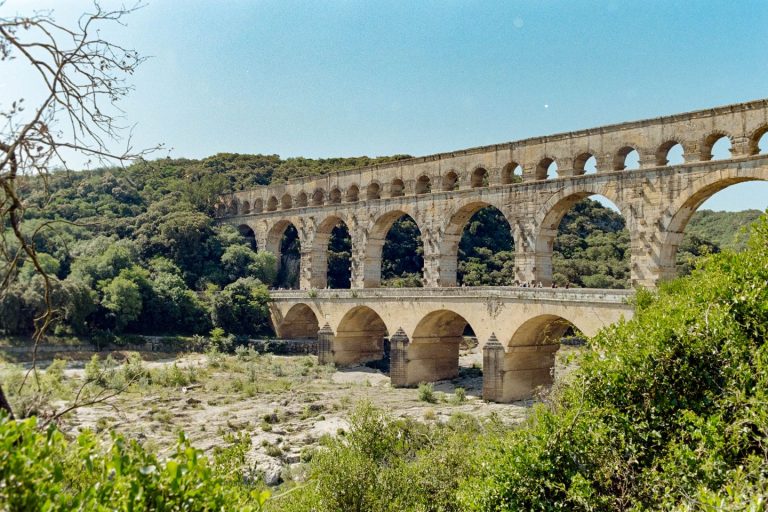
A three-tier Roman aqueduct bridge, UNESCO-listed, with swimming in the river beneath it in summer.
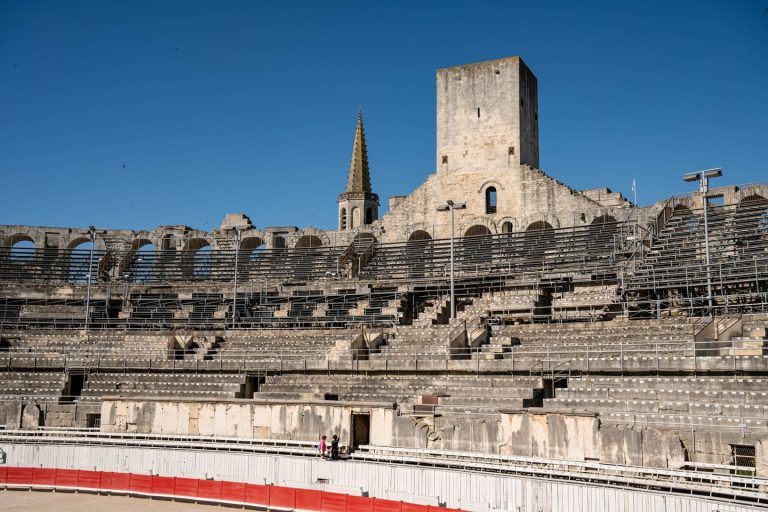
A Roman amphitheatre still in use, and the town where Van Gogh painted more than two hundred canvases in fifteen months.
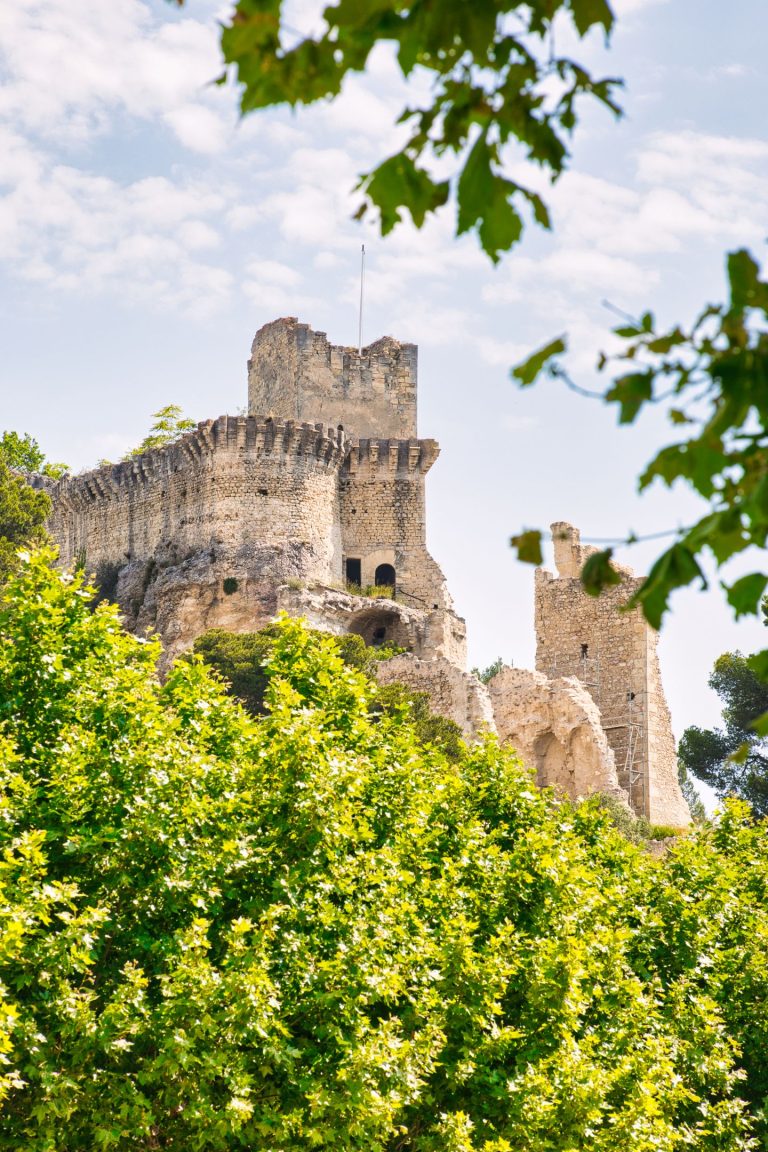
A ruined fortress on a limestone spur, with the Carrières des Lumières projecting art onto quarry walls below.
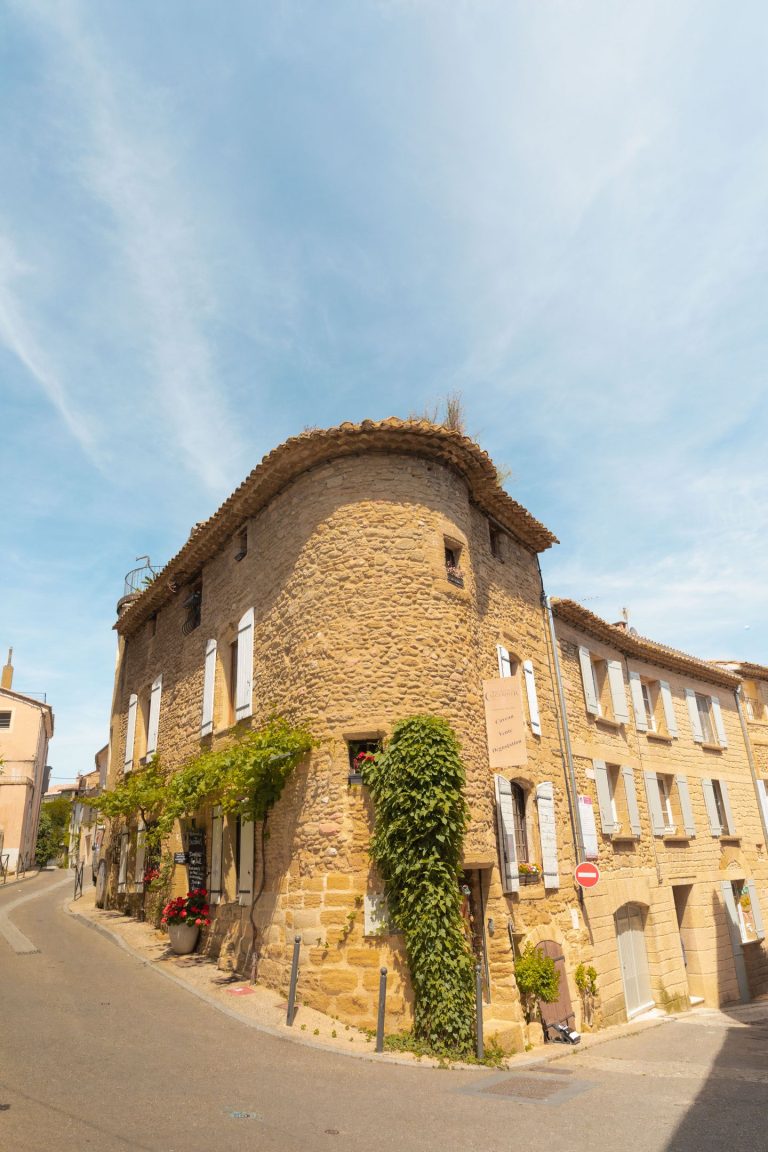
The pope's vineyard, fifteen kilometres north, with tasting rooms through the village and a ruined castle above.
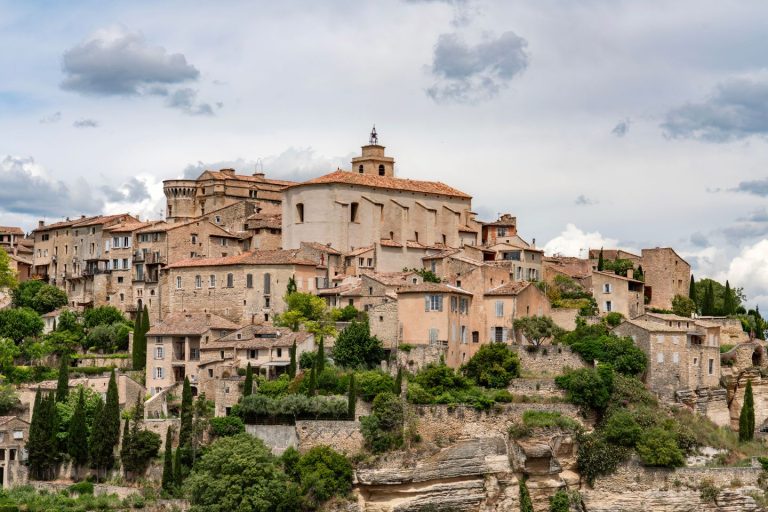
Gordes, Roussillon and the ochre villages, plus lavender fields in late June and July.
One of the great theatre festivals in the world, every July.
The official programme in the Palais des Papes courtyard and major venues, plus a fringe of well over a thousand shows in every courtyard, chapel and doorway. Book beds months ahead.
When the fields flower. The timing shifts each year with the weather and altitude.
The vendange across the vineyards around the city.
A market with santons, the Provençal painted clay figures.
A contemporary dance festival, and the main reason to be here in winter.
A small scene inside and just outside the walls, which disappears entirely in July. Live from Hostelworld.
May, June, September and October. July is the festival, which doubles the population and the prices.
Average highs. The festival in July is the single biggest variable here — it roughly doubles the town's population, fills every bed for a hundred kilometres, and is either exactly why you came or exactly why you should come in September instead.
Pick how you travel. Per person per night, in euros.
These are ordinary-season figures. July runs roughly double on beds, and day tours into the Luberon sit outside them at €50 to €90.
The ones we get asked most.

Compare Avignon hostels — live prices, real reviews and free cancellation on most bookings. Then meet the people already there in the app.

 Get the App.
 Get the App.