Kastro
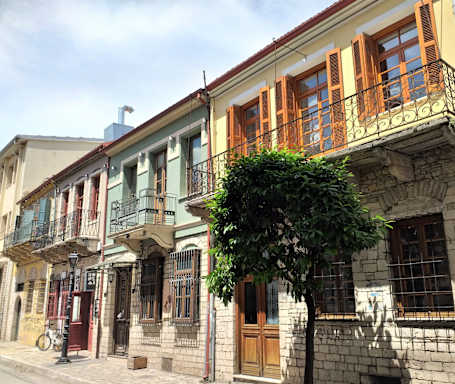
AtmosphereThe walled old town on the lake, with mosques, museums and quiet lanes.

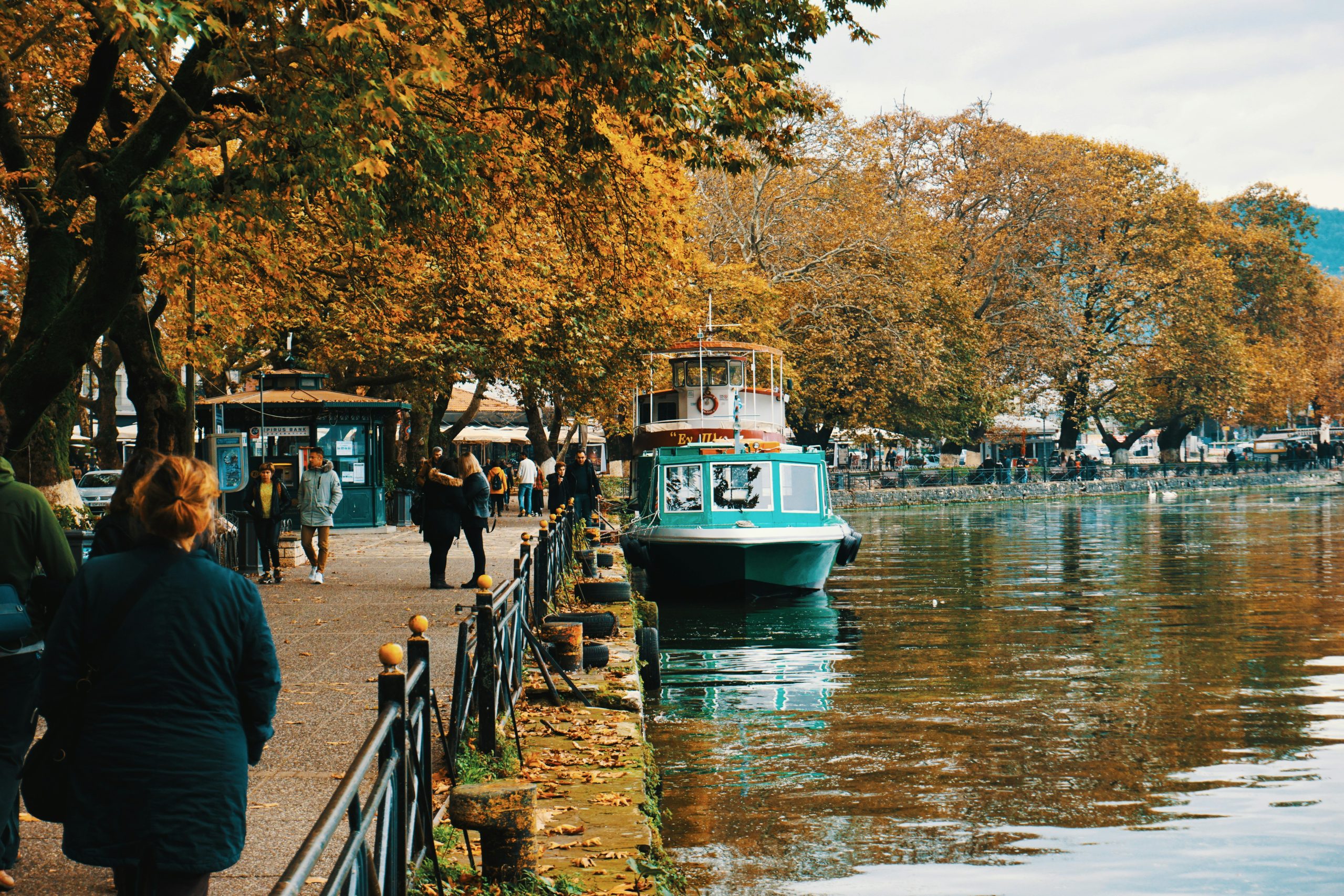
A lake city in the mountains of Epirus, with an Ottoman citadel on the water, an island you reach by boat, and the Zagori villages above it. Cheap, cold in winter, and almost undiscovered by foreign visitors.
Ioannina sits on the shore of Lake Pamvotida, ringed by mountains, in the north-west corner of Greece. For thirty years around 1800 it was the capital of Ali Pasha, an Albanian-born Ottoman governor who ruled most of western Greece from here as a near-independent state, and his citadel still juts into the lake.
The city stayed Ottoman until 1913, a century longer than southern Greece, and it shows: minarets over the old town, a tradition of silversmiths, and a Romaniote Jewish community that lived here for centuries.
Today it is a university city and the capital of Epirus, lively all year and cheap by any standard. Two days covers the city and the island. Add two more for the Zagori villages and the Vikos Gorge, which are the reason many people come.
The old town inside the castle walls and the streets just outside it are where to stay. It is all walkable.
The walled old town on the lake, with mosques, museums and quiet lanes.
The streets around the main squares, just outside the walls. Shops, cafés and the bus stations.
The promenade below the walls, lined with bars and cafés, and the boats to the island.
The lake island: a car-free village, monasteries and fish tavernas. A few rooms to rent.
Orange labels are neighbourhoods, dots are the 2 top-rated hostels. Map © MapTiler © OpenStreetMap contributors.
Start in the Kastro, the walled old town on the promontory. The inner citadel, Its Kale, holds the Fethiye mosque, the tomb of Ali Pasha and the Byzantine Museum. The Aslan Pasha mosque, at the other end of the walls, overlooks the lake and is now the Municipal Ethnographic Museum. The Silversmithing Museum, in one of the bastions, tells the story of the craft the city is known for.
Then take the boat to the island, Nisaki, about ten minutes across the lake. It has a car-free village, Byzantine monasteries with frescoes, and the house where Ali Pasha was killed in 1822 — the bullet holes are still in the floor.
The Perama cave, a few kilometres from the centre, is one of the largest show caves in Greece, with stalactites and a guided route through it.
The lakefront promenade is where the whole city walks in the evening.
The Kastro is free to walk through, and the lanes inside the walls, the Jewish quarter and the views over the lake cost nothing.
The lakefront promenade runs for kilometres and is the city's evening habit. The old bazaar streets below the castle, with silversmiths' workshops, are free to browse.
The university campus and the hills around the lake have walking paths, and the view from the Kastro walls at sunset is the best free thing in town.
State museums and sites are free on the first Sunday of the month from November to March.
Epirus is pie country. Pites — filo pies of greens, cheese, leeks, chicken or meat — are the regional speciality, and every bakery has several. Ioannina bougatsa, with cream or cheese, is the breakfast.
The lake gives the city its traditional dishes, trout, eel and frogs' legs, and the mountains give lamb and goat.
The local way to drink is in a tsipouradiko: order a small bottle of tsipouro, the grape spirit, and small plates of meze arrive with it, often free, with more coming with each round. It is the best-value night out in Greece.
A taverna meal is €12 to €18. The city's sweet shops, selling baklava and syrup pastries, are famous across the country.
Ioannina is a university city, and the nightlife runs all year. The bars along the lakefront and in the streets around the Kastro fill late, and prices are student prices.
The tsipouradika are the heart of it: small bars where a bottle of tsipouro brings plates of meze and the evening goes on for hours.
A beer is €3 to €5, and a night out costs a fraction of Athens or the islands.
The centre is compact and walkable. The boat to the island leaves from the lakefront below the Kastro every half hour or so in summer, less often in winter, and takes about ten minutes.
Ioannina has a small airport with flights from Athens, and KTEL buses to Athens take around six hours, to Thessaloniki about three and a half, and to Igoumenitsa, for ferries to Corfu and Italy, about an hour.
For the Zagori villages and the Vikos Gorge, a hire car is by far the best option. Some KTEL buses reach the villages, but only a few times a week.
The Perama cave is reachable by city bus.
Ioannina is one of the cheapest cities in Greece. The two hostels in town have dorms from about €14 to €15, a taverna meal is €12 to €18, and a round of tsipouro with meze costs almost nothing.
A careful day is €35 to €50. The costs to plan for are a car for Zagori, which is well worth sharing, and the entry to the Perama cave.
The tsipouradika, where the meze comes with the drink, are the single biggest saving in the city.
Ioannina is very safe, with almost no crime affecting visitors.
The hazards are the mountains. The Vikos Gorge is a long, rough walk with few exits, and the weather in Zagori changes fast. Start early, carry water and tell someone your route.
Winters are cold, with snow in the mountains and fog over the lake, and mountain roads can close. Check conditions before driving to Zagori from November to March. Emergency number is 112.
The mountains of Epirus are the reason many people come. Most of these are best with a car.
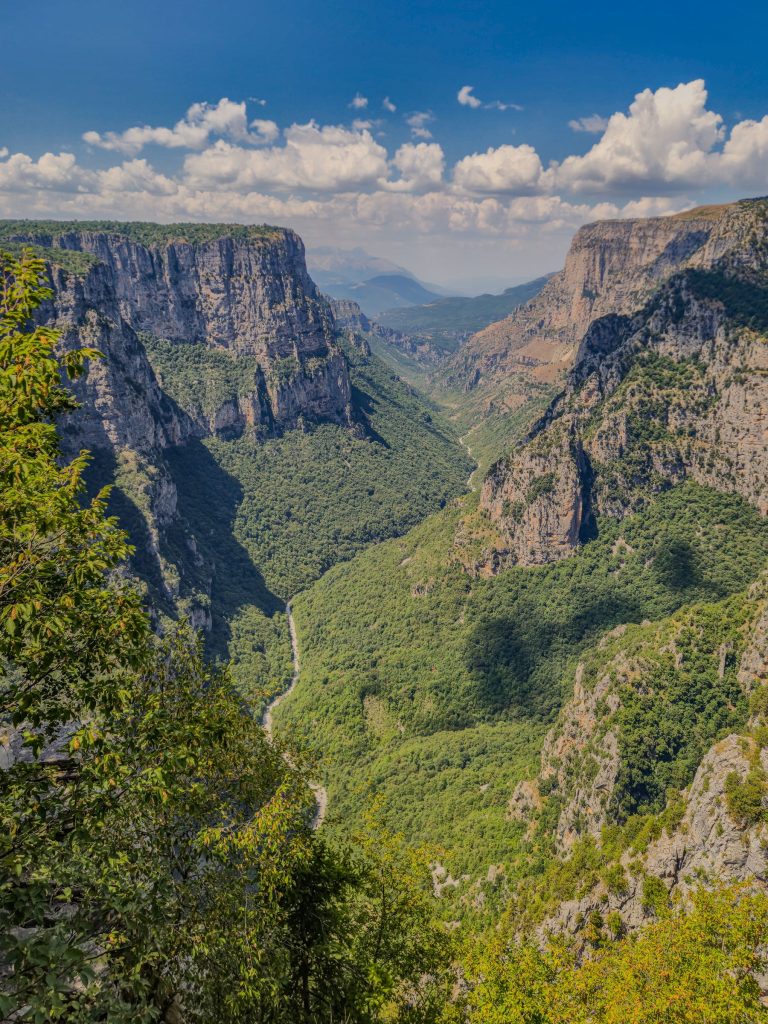
One of the deepest gorges in the world relative to its width. The Oxya viewpoint is a short walk; the full hike to Vikos village is a long day.
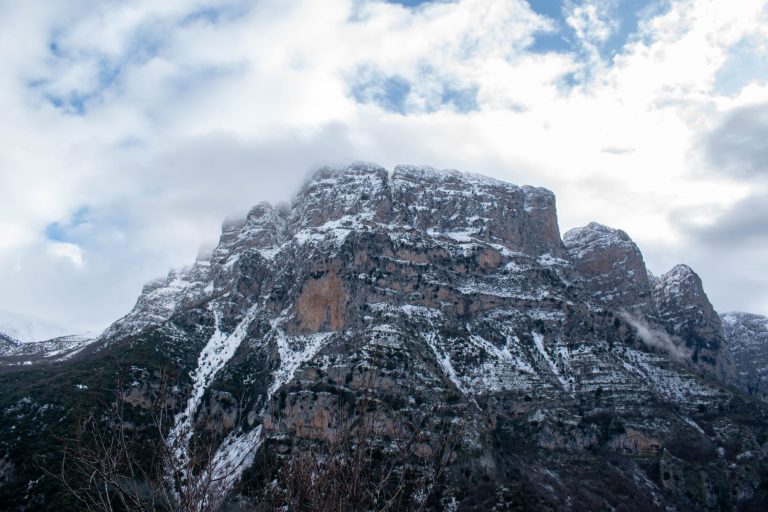
The two Papingo villages under the Towers of Astraka, with the natural rock pools nearby.
The city's liberation day in February is the big local celebration.
The anniversary of the city joining Greece in 1913, with parades and celebrations.
Processions, midnight fireworks and lamb on the spit. The Zagori villages do it beautifully.
Panigyria with Epirot clarinet music and dancing, peaking around 15 August.
Ioannina has two hostels, both close to the Kastro and the lake. These are live from Hostelworld.
Ioannina has real seasons. Spring and autumn are ideal for the mountains, and winter is cold and often foggy.
Average highs. Ioannina is much colder than southern Greece in winter, with frequent fog over the lake and snow in the surrounding mountains.
Pick how you travel. Per person per night, in euros.
Transport assumes local buses. Car hire for Zagori, shared between two, adds about €15 to €25 a day each.
The ones we get asked most.

Compare Ioannina hostels — live prices, real reviews and free cancellation on most bookings. Then meet the people already there in the app.

 Get the App.
 Get the App.