Chora
First-timersThe main town, from the port up to the Venetian castle. Everything walkable.

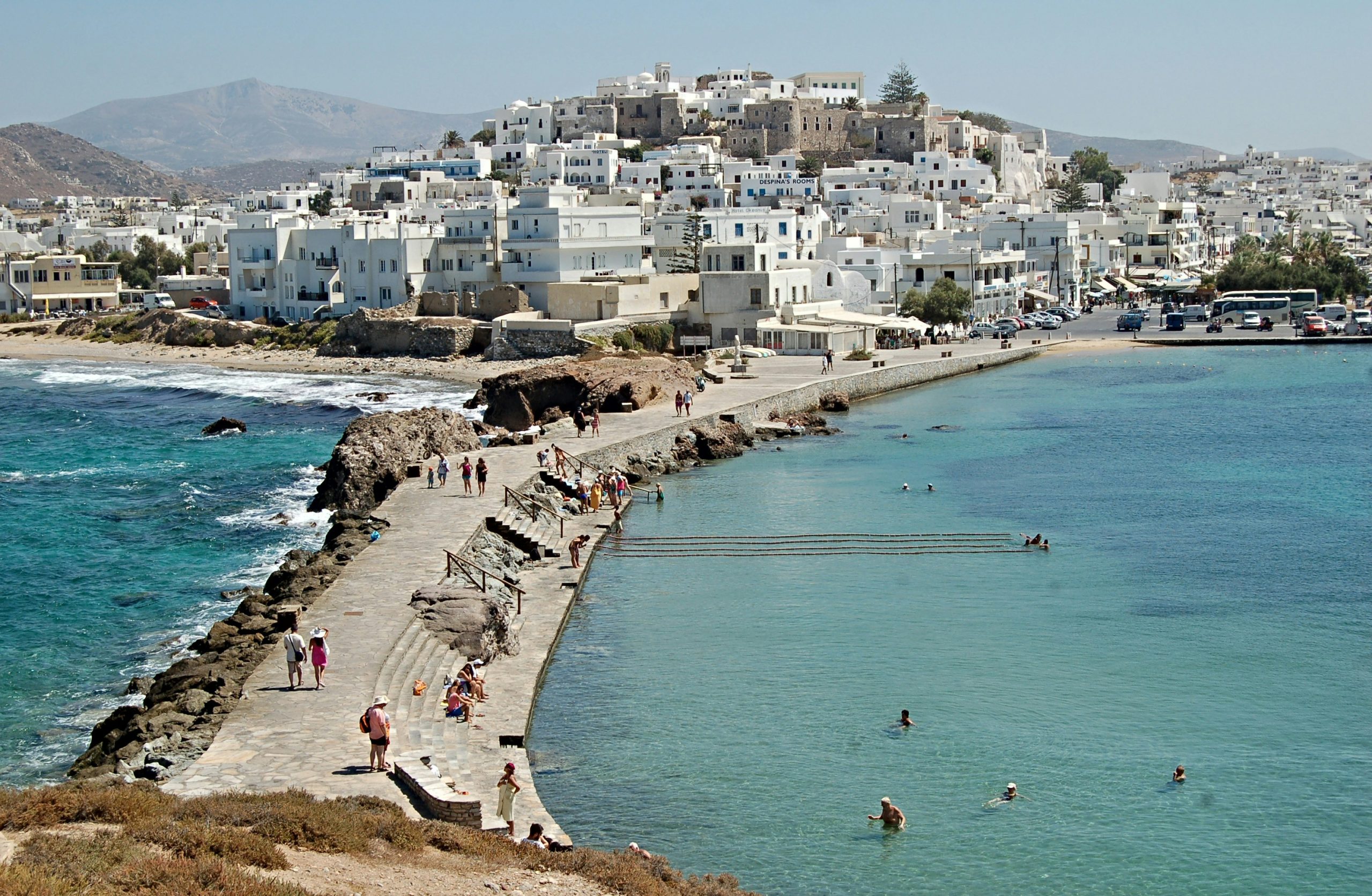
The biggest of the Cyclades and the one that still farms. Long sandy beaches, marble mountain villages, the tallest peak in the group and proper food, without the Santorini mark-up.
Naxos is the largest island in the Cyclades and the most self-sufficient. It grows its own potatoes, makes its own cheese and raises its own cattle, and for much of the year it lives off that rather than tourism. That is why it feels different from its neighbours: bigger, greener and less made-up for visitors.
The main town, Chora, rises from the port to a Venetian castle, and the Portara, the huge marble doorway of an unfinished temple, stands on an islet at the harbour entrance. South of town, a coast of long sandy beaches runs for kilometres. Inland are mountain villages built of marble and Mount Zas, the highest point in the Cyclades.
It pairs naturally with Paros, half an hour away, and with Santorini, and it is the cheaper base. Four days is a good start; a week with a scooter or car is better.
Chora and the beaches just south of it are where to stay. The inland villages are for day trips.
The main town, from the port up to the Venetian castle. Everything walkable.
The town beach, a short walk south of the centre. Cafés and shallow water.
A long sandy beach with clear water and beach bars, a short bus ride from Chora.
Long, sandy and wilder the further you walk. A few tavernas and rooms.
The old inland capital in the olive groves of the Tragea valley.
Orange labels are neighbourhoods, dots are the 7 top-rated hostels. Map © MapTiler © OpenStreetMap contributors.
Start at the Portara at sunset. The six-metre marble doorway is all that was built of a temple to Apollo begun around 530 BC and never finished, and it frames the sun as it drops into the sea.
Climb into the Kastro, the Venetian castle quarter at the top of Chora, where Catholic families still live in the old mansions. The Archaeological Museum, in a former Jesuit school inside the walls, has Cycladic figurines.
Then go inland. Halki, in the Tragea valley, has the Vallindras distillery, where kitron, the island's citrus liqueur, has been made since the 1890s. Apeiranthos is a village of marble lanes on the mountainside. Filoti is the starting point for Mount Zas, at just over a thousand metres — a steep climb of about three hours there and back, with a view over the whole Cyclades.
The ancient kouroi, giant marble statues abandoned in the quarries where they were carved, lie at Melanes and Apollonas.
The Portara is free and always open, and the sunset there is the town's evening ritual.
The Kastro lanes, the old market streets below them and the harbour front are free to wander.
The beaches are free if you skip the sunbeds, and Agios Georgios is a short walk from town. Plaka, further south, is long, sandy and wild at its far end.
The kouroi at Melanes and Apollonas are free to visit, lying where they were left in the quarries. The villages of Halki, Apeiranthos and Filoti cost nothing to walk through.
Naxos is the best island in the Cyclades to eat on, because it produces so much of its own food. The potatoes are famous across Greece. Graviera and arseniko are the local cheeses. Island beef and lamb are on every menu.
The tavernas in Chora's back lanes and in the inland villages are where to eat, with a meal and wine for €15 to €22. Gyros is €4 to €5.
Kitron, the island's citrus liqueur, comes in three strengths, marked by colour. Try it at the Vallindras distillery in Halki, where they will explain which is which.
Naxos has a relaxed night out. The harbour front and the lanes of Chora have bars that stay open late in summer, and the Kastro has a few cocktail bars with views.
The beach bars at Agios Prokopios and Plaka are busy in the late afternoon and into sunset.
It is not a party island. For that, Ios is a short ferry away. A beer is €4 to €6.
KTEL buses leave from the port in Chora for the beaches and the villages. The beach routes south of town run frequently in summer; the villages have fewer buses, especially outside July and August.
The airport is small and a few kilometres south of town, with flights from Athens.
Ferries from Piraeus take around four to six hours depending on the boat. Paros is thirty to forty-five minutes away, Santorini about two hours, and the small Cyclades, like Koufonisia, are close.
The island is big and the mountain villages are spread out, so a scooter or car is worth it for a day or two.
Naxos is one of the best-value islands in the Cyclades. Dorms are typically €18 to €35, depending on the season, taverna meals €15 to €22 and a gyros €4 to €5.
A careful day is €45 to €65. The costs that add up are ferries, which are the big budget line in the Cyclades, and scooter or car hire.
The beaches are free, the villages are free, and the food is cheaper than on Paros or Santorini. Use Naxos as the cheaper base and day-trip from it.
Naxos is very safe, with almost no crime affecting visitors.
The risks are on the road and in the mountains. Scooters and quad bikes cause the most injuries; mountain roads are narrow and winding. Mount Zas is steep and rocky, so carry water and wear proper shoes.
The Meltemi wind blows hard in July and August. It is good for kitesurfing at Mikri Vigla and bad for small boats. Emergency number is 112.
Naxos is in the middle of the Cyclades, which makes it a good hub.
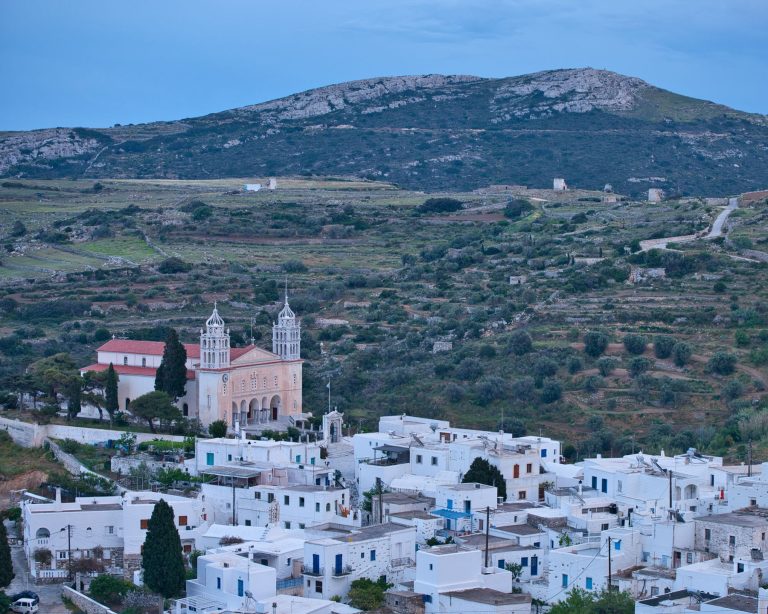
The neighbouring island: Naoussa's harbour, Lefkes and a livelier night out.
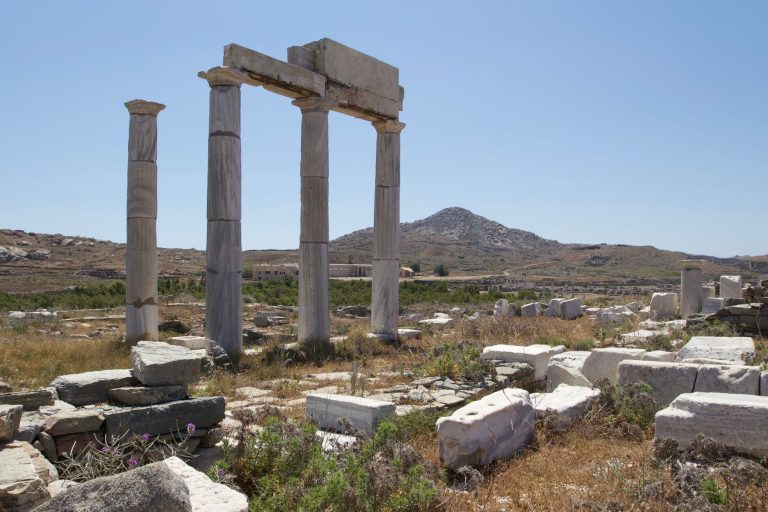
The sacred island of Apollo, one of the most important ancient sites in Greece. €20 entry.
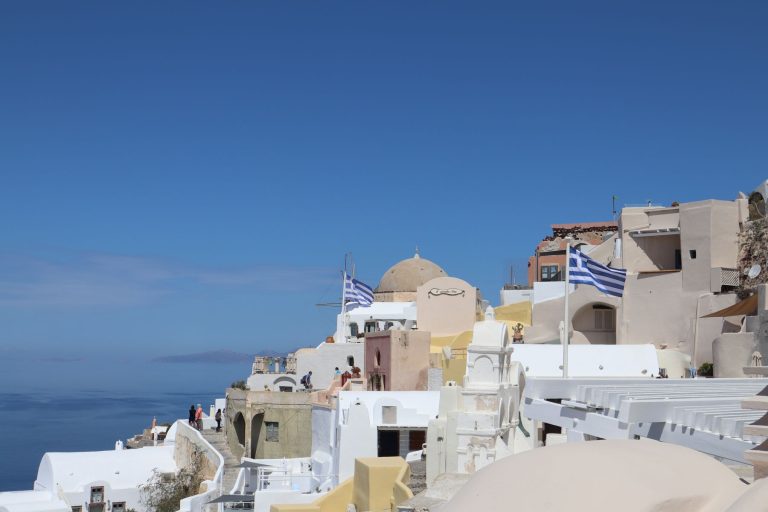
Possible as a long day trip in summer. Better as a stay.
The summer festivals are the best of the island's calendar.
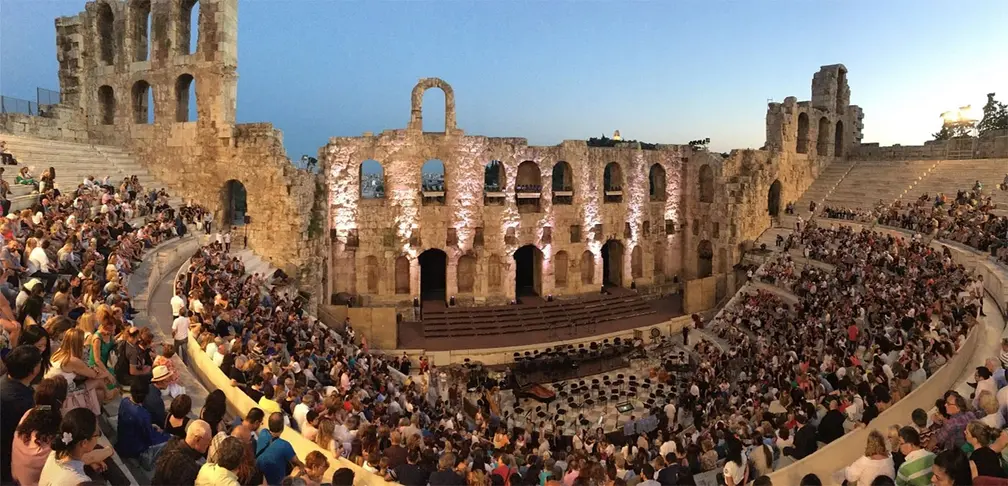
The Feast of Agios Artemios is celebrated in Kynidaro, Naxos, within the Cyclades region. This religious festivity honors Agios Artemios with traditional ceremonies and…
Naxos has a small number of hostels, most near Chora and the beaches south of it. These are the top-rated right now, live from Hostelworld.
May, June and September are ideal. July and August are busy but still less crowded than the famous islands.
Average highs. The Meltemi wind blows in July and August, cooling the air and cancelling small boats.
Pick how you travel. Per person per night, in euros.
Transport assumes KTEL buses. Scooter hire adds about €20 to €25 a day.
The ones we get asked most.

Compare Naxos hostels — live prices, real reviews and free cancellation on most bookings. Then meet the people already there in the app.

 Get the App.
 Get the App.