Town centre
First-timersAround Hafnarstraeti and the harbour: shops, restaurants, tour departures and most beds.

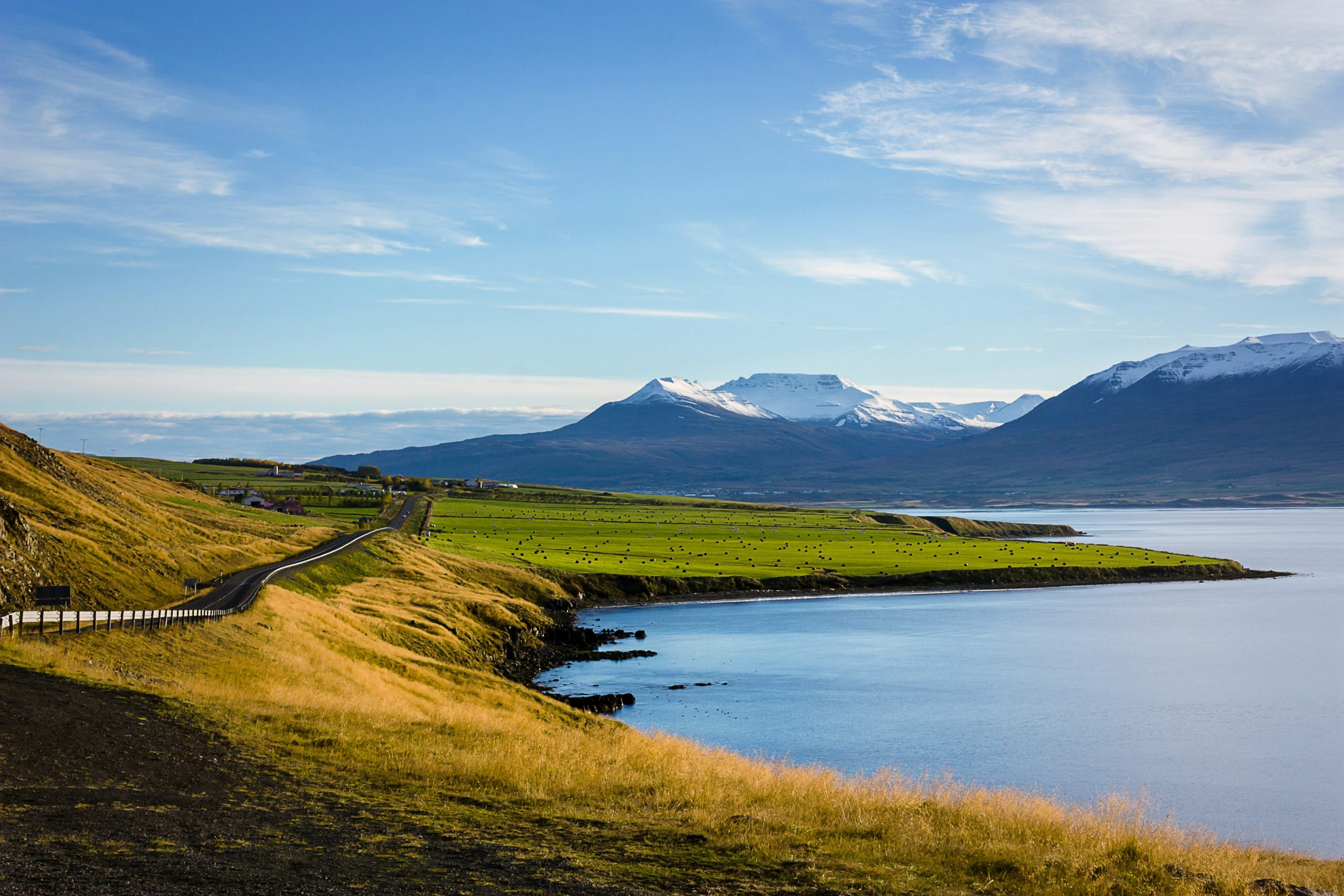
Iceland's northern capital: a town of 19,000 at the head of a long fjord, with heart-shaped red traffic lights, whales offshore and the Myvatn volcanic country an hour east.
Akureyri has about nineteen thousand people, which makes it Iceland's second city by a wide margin and still smaller than most European towns.
It sits at the head of Eyjafjordur, a sixty-kilometre fjord with mountains on both sides, about fifty kilometres south of the Arctic Circle. The setting does most of the work.
The town is known for two small things that say a lot about it. The red traffic lights are heart-shaped, added after the 2008 financial crash as a deliberate piece of civic cheering-up and never removed. And the botanical garden, opened in 1912, grows several thousand species this far north, which should not be possible and is.
What people actually come for is what surrounds it: whale watching in the fjord, the Myvatn volcanic area an hour east with its lava formations and geothermal baths, Godafoss waterfall on the road between them, and skiing at Hlidarfjall in winter.
Two days here, more if you are driving the north.
A small town on a slope above the fjord.
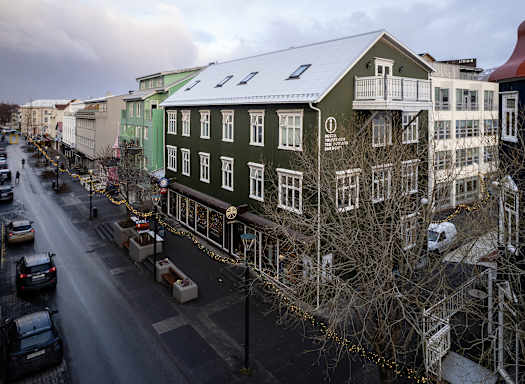
Around Hafnarstraeti and the harbour: shops, restaurants, tour departures and most beds.
The slope towards the church and the botanical garden, with views down the fjord.
Orange labels are neighbourhoods, dots are the 2 top-rated hostels. Map © MapTiler © OpenStreetMap contributors.
Go whale watching. Eyjafjordur is deep and sheltered, humpbacks feed here through the summer, and trips run around 11,000 to 14,000 ISK — €75 to €95 — for about three hours. Husavik, an hour north-east, has the bigger reputation and the higher sighting rates, and is worth the extra drive if whales are the reason you came north.
Akureyri's swimming pool is one of the best in the country: outdoor, geothermal, with hot tubs, water slides and a view. Around 1,200 ISK, about €8.
The botanical garden is free and holds thousands of species at 65 degrees north, which is the sort of quiet achievement Iceland does well.
Akureyrarkirkja, the church on the steps above the town, is free and worth the climb for the fjord view.
Then drive east. Godafoss is thirty minutes away, Myvatn an hour, and the Myvatn Nature Baths are the north's answer to the Blue Lagoon at roughly half the price and a fraction of the crowd.
The botanical garden is free and is the best thing in the town itself.
The town buses are free — an unusual municipal policy and genuinely useful if you are staying up the hill.
Akureyrarkirkja and the steps up to it cost nothing, and the view down Eyjafjordur from the top is the postcard.
The harbour front and the walking path along the fjord are free.
Godafoss, thirty minutes east on the road to Myvatn, is free to visit — a wide horseshoe falls named for the moment Iceland's lawspeaker threw his pagan idols into it when the country converted to Christianity around the year 1000.
Expensive, as everywhere in Iceland, and with fewer options than Reykjavik.
A restaurant main is 4,000 to 7,500 ISK, roughly €27 to €50. Fish is the thing to order — the fjord supplies it and the quality is high.
Bonus and Kronan supermarkets are the budget answer and most hostels have kitchens.
The hot dog stand by the harbour does the same lamb pylsa as Reykjavik for around 800 ISK, about €5.50.
A beer is 1,300 to 1,800 ISK, about €9 to €13, and alcohol comes from the state Vinbudin shop with limited hours — buy duty-free at the airport when you arrive in the country.
Local ice cream is a genuine northern Icelandic habit, eaten year-round including in snow.
Small but real. Nineteen thousand people, a university, and a handful of bars along Hafnarstraeti that fill at weekends.
Like Reykjavik, the night starts late — people arrive around midnight and things run to three or four at weekends.
A beer is €9 to €13, so pre-drinking at home with duty-free is the standard local approach.
In summer the light changes everything. The sun barely sets in June and July this far north, and the town stays out accordingly.
In winter it is the opposite: a few hours of dim daylight, and the evening is a pool, a bar and the aurora if the sky is clear.
The town is small and walkable, and the local buses are free, which is worth knowing if your bed is up the slope.
Flights from Reykjavik take 45 minutes and are often cheaper than they look. The bus takes about six hours and driving the north road takes five.
Almost everything worth doing is outside the town, so a rental car or tours are necessary. Godafoss is thirty minutes east and Myvatn an hour, both on the Ring Road.
Husavik, for the better whale watching, is about an hour north-east.
In winter check road.is before any drive. The road east can close, and conditions in the north are more severe than in the south-west.
Expensive, marginally less so than Reykjavik. Dorms are €35 to €60, a main €27 to €50, and a beer €9 to €13.
A day is €80 to €140 before tours.
Tours set the budget as everywhere in Iceland: whale watching €75 to €95, a Myvatn day tour €100 to €150, and the nature baths about €45.
The savings are the same as in the capital — the town pool at €8, free buses, free botanical garden, duty-free alcohol bought on arrival in the country, and a hostel kitchen.
The Myvatn Nature Baths at roughly €45 are about half the Blue Lagoon and considerably quieter, which makes them the better version of the same idea.
Akureyri is extremely safe in terms of crime. The risks here are entirely weather and terrain.
Northern Iceland gets more severe winters than the south-west. Roads close, storms arrive quickly, and the daylight window in December is a few dim hours. Check road.is and safetravel.is before every drive, not once at the start of a trip.
At Myvatn, the geothermal areas at Hverir and around the lake have boiling mud and unstable ground. Stay on the marked paths and boardwalks — the crust is thin in places and burns are serious.
Never walk on a glacier or into a lava tube without a guide.
The fjord is cold enough to incapacitate quickly, and whale watching boats can be rough — take the overalls they offer.
Emergency number is 112.
A volcanic lake, a whale town and the most powerful waterfall in Europe.
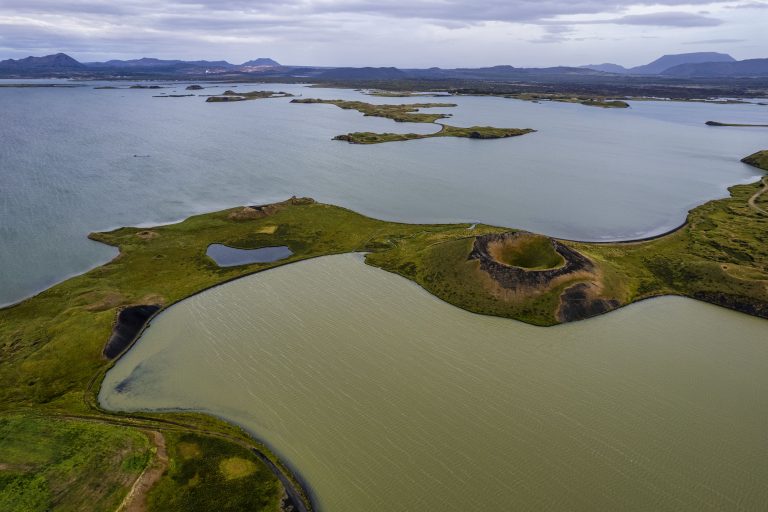
A volcanic lake with pseudocraters, the Dimmuborgir lava formations, the Hverir mud pools and the Nature Baths.
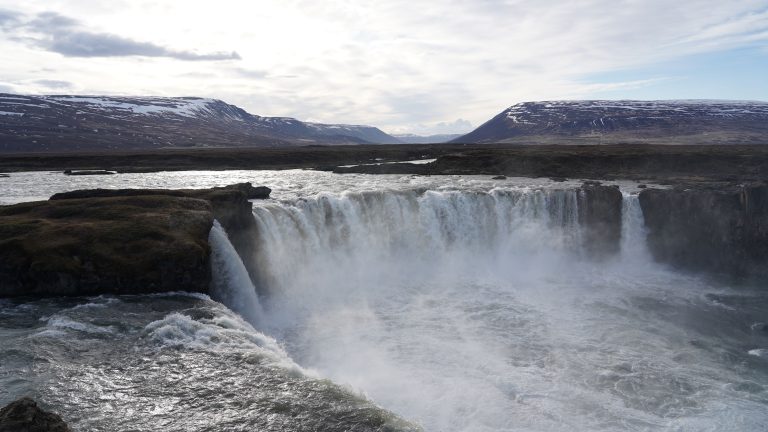
A wide horseshoe waterfall where the lawspeaker threw his pagan idols when Iceland converted around the year 1000.
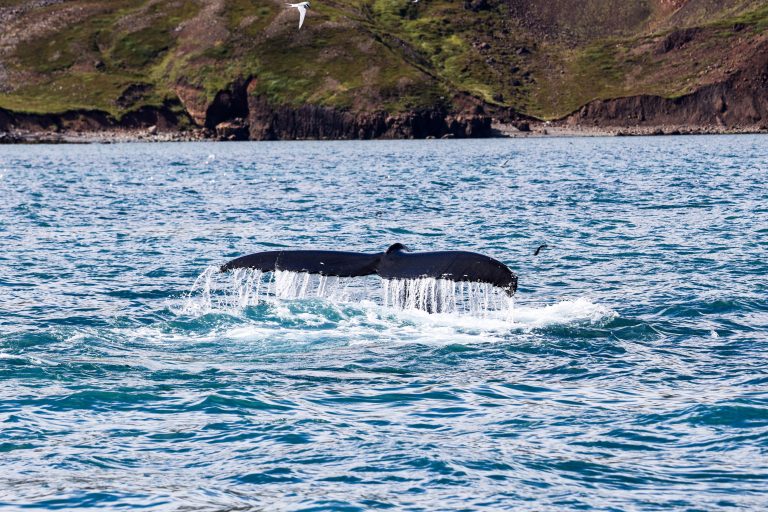
Iceland's whale watching capital, with higher sighting rates than the fjord and a good whale museum.
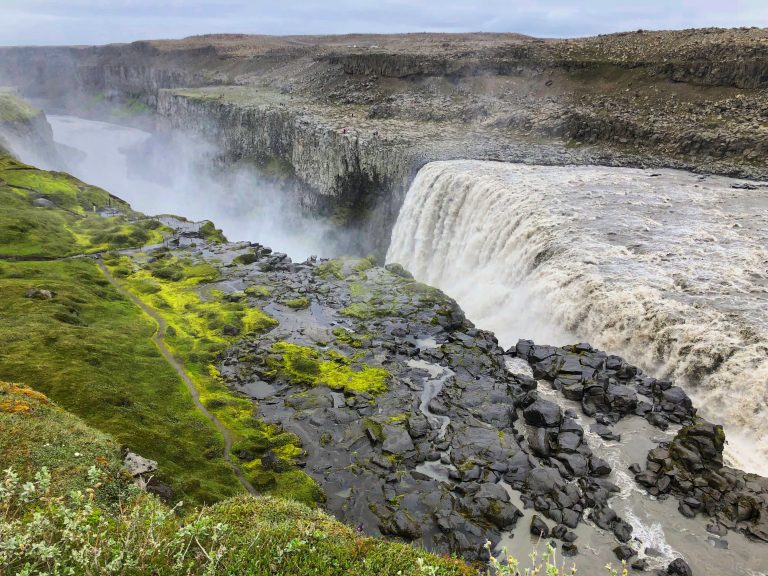
Among the most powerful waterfalls in Europe by volume, in a canyon east of Myvatn. Road access is seasonal.
Whales in summer, aurora in winter, and not a great deal else.
When humpbacks feed in the fjord and the trips run daily. June to August is peak.
Long northern nights and less light pollution than the capital make this a strong base for it.
Iceland's main ski area, fifteen minutes above the town.
A season of music and art events through the light months.
Fifty kilometres south of the Arctic Circle, the sun barely sets.
A small scene in and just above the centre, and expensive by any standard. Live from Hostelworld.
June to August for whales and light, February to March for aurora and skiing.
Average highs, and the north runs colder and more severe than Reykjavik in winter while often being sunnier and drier in summer. Whale watching is roughly April to October, with June to August the peak.
Pick how you travel. Per person per night, in euros — you will pay in krónur.
Shown in euros for comparison; you pay in Icelandic krónur. The shoestring transport line is zero because town buses are free.
The ones we get asked most.

Compare Akureyri hostels — live prices, real reviews and free cancellation on most bookings. Then meet the people already there in the app.

 Get the App.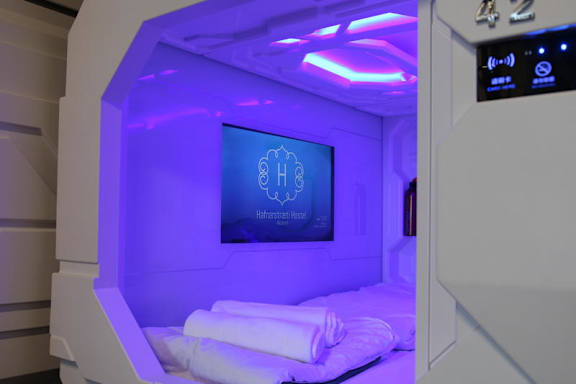
 Get the App.