Centro
First-timersThe canals, the art nouveau streets, the fish market and almost all the beds. Walkable in fifteen minutes.

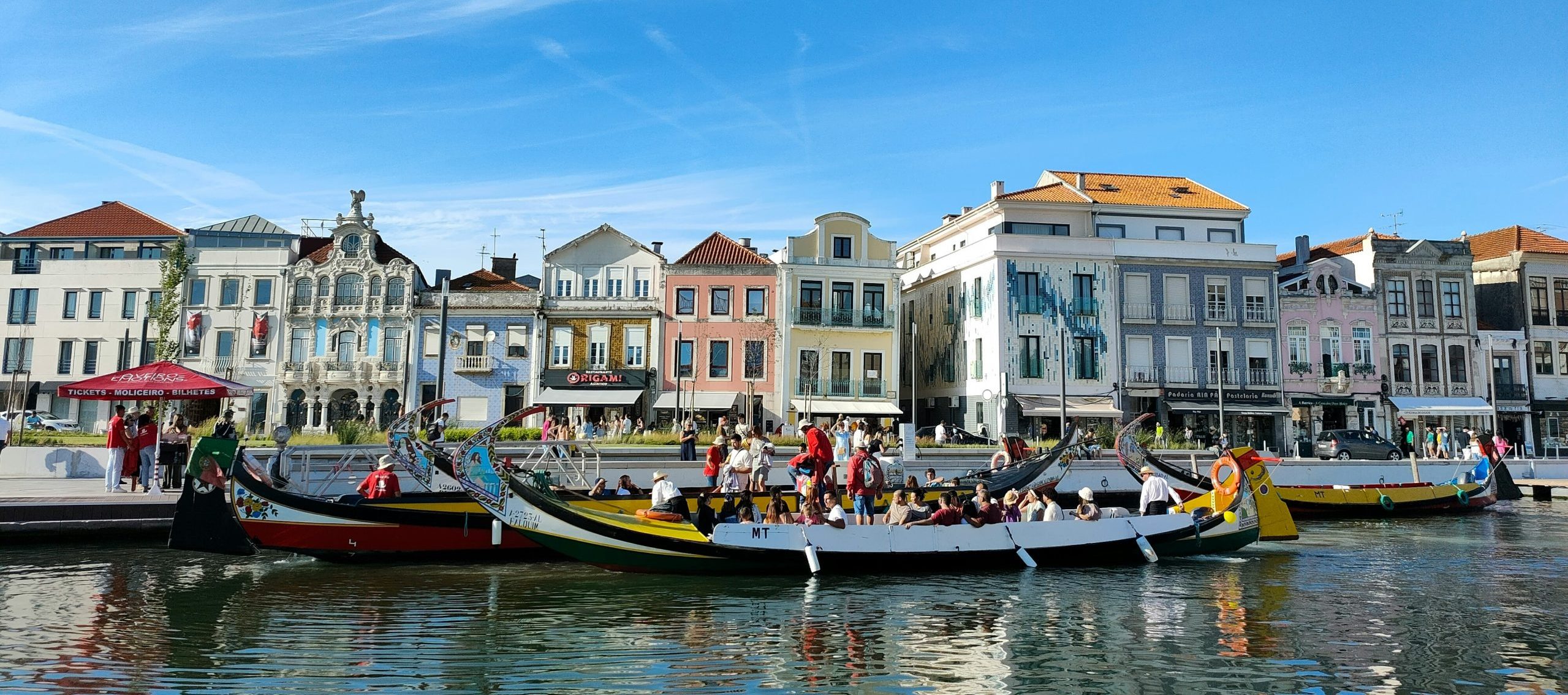
Canals, painted moliceiro boats, art nouveau facades and a lagoon full of salt pans. Called the Venice of Portugal by everyone except the people who live there.
Aveiro sits on a lagoon, the Ria de Aveiro, and the canals through the centre were cut to move salt and seaweed rather than to be pretty. The moliceiros, the curved painted boats now full of tourists, were built to harvest seaweed for fertiliser, and the paintings on their prows are traditionally rude.
The city got rich in the nineteenth century and spent it on art nouveau, so the streets along the central canal are a run of tiled and curled facades that most visitors do not expect.
Costa Nova, fifteen minutes away, is the row of striped wooden houses on the beach that fills Instagram. A day covers both comfortably, and Aveiro sits on the main line an hour from Porto, which makes it an easy stop rather than a destination people plan around.
The city is small and flat. Centre for the canals, Costa Nova for the beach.
The canals, the art nouveau streets, the fish market and almost all the beds. Walkable in fifteen minutes.
The old fishing quarter across the canal, with the market, the best seafood and a quieter feel.
Fifteen minutes out: striped houses, a long Atlantic beach and the lagoon on the other side of the road.
Orange labels are neighbourhoods, dots are the 4 top-rated hostels. Map © MapTiler © OpenStreetMap contributors.
A moliceiro ride along the canals takes 45 minutes and costs about €15, and it is the thing everyone does. Look at the paintings on the prows: they are traditionally satirical and frequently obscene, which the commentary usually skirts around.
The art nouveau museum sits in one of the best houses on the central canal, and the streets around it are the actual attraction — free, and better than the museum.
The old fish market in Beira-Mar still works in the mornings and has bars around it that fill in the evening.
Costa Nova's striped houses are a fifteen-minute bus ride, and the beach behind them runs for kilometres. The salt pans between the city and the sea are still worked by hand and some offer tours and salt baths.
Walking the canals and the art nouveau streets costs nothing and is most of what makes Aveiro worth a stop.
The Bugas city bikes are free with an ID deposit, and the flat cycle paths run out along the lagoon and towards the salt pans.
The fish market in the morning is free to wander, and Costa Nova's beach and striped houses only cost the €2.50 bus.
The university campus south of the centre is an open-air collection of buildings by Portugal's best modern architects, including Siza Vieira, and nobody charges to walk through it.
Ovos moles are the city's sweet: egg yolk and sugar in a thin wafer shell, shaped like fish and shells, sold by the tray for a couple of euros and protected by EU designation.
Seafood is the savoury half. Eels from the lagoon, cooked in caldeirada or fried, are the traditional dish, and the market restaurants in Beira-Mar do them properly.
A prato do dia is €7 to €11, and the university keeps prices honest.
Tripas de Aveiro, which are sweet pancakes rather than anything to do with tripe, are the street snack, and the leitão of Bairrada is twenty minutes down the road.
The bars around the old fish market in Beira-Mar are the centre of it, busiest from Thursday and full of students from the university.
It is a small scene — a few streets, a couple of clubs — and it runs on student prices, with a beer at €1.50 to €2.50.
In summer the action moves out to Costa Nova and Barra, where beach bars run late.
Outside term time it is quiet, and in winter the canals at night are the attraction rather than anything on them.
Aveiro is flat, which after the rest of northern Portugal is the headline. The Bugas scheme lends city bikes free with an ID deposit, and the cycle paths run out to the lagoon.
Trains from Porto Campanhã take about an hour for €4, and the station is ten minutes north of the centre. Coimbra is an hour south on the same line.
Buses to Costa Nova and Barra take fifteen to twenty minutes and cost about €2.50, running frequently in summer and less so in winter.
Everything in the centre is within a fifteen-minute walk.
Cheap, and cheaper than Porto an hour up the line. Dorms are €14 to €24, a prato do dia is €7 to €11, and a beer is €1.50 to €2.50.
A day is €35 to €48.
The moliceiro ride at €15 is the one fixed cost, the bikes are free, and the beach costs a €2.50 bus. Aveiro is the sort of place where the free things are the good ones.
Aveiro is a quiet, safe small city with very little crime affecting visitors.
The canals have no railings in most places and people do fall in after a night out. The water is shallow, dirty and cold.
Costa Nova and Barra are Atlantic beaches with strong rips and lifeguards only in season. Swim between the flags.
The lagoon fog rolls in fast and cycling out along the salt pans in it is disorienting. Emergency number is 112.
Beaches, a sand-buried village and the best suckling pig in Portugal.
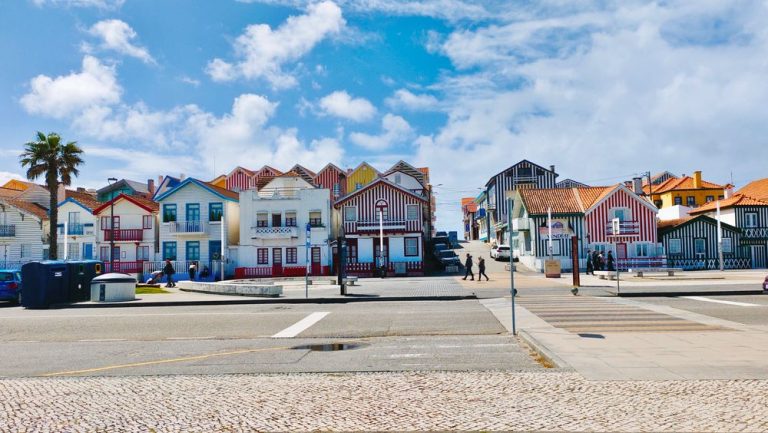
The striped wooden houses, a long Atlantic beach, and the lagoon across the road for calmer water.
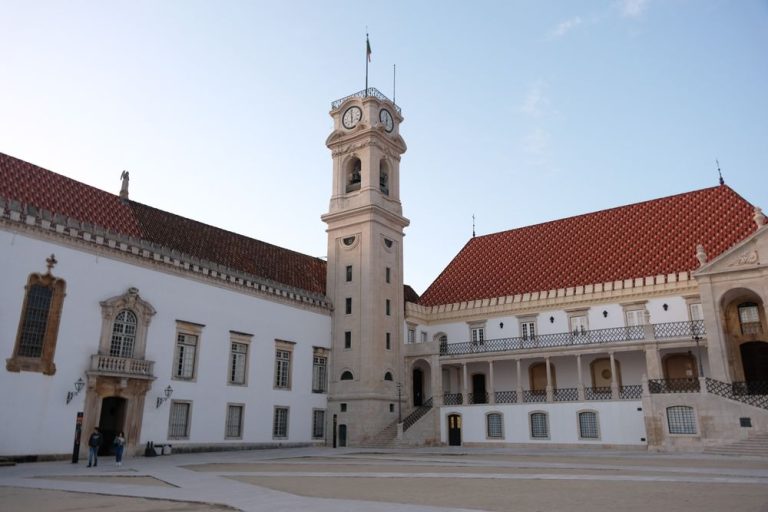
The university city, its baroque library and the Roman ruins at Conímbriga beyond it.
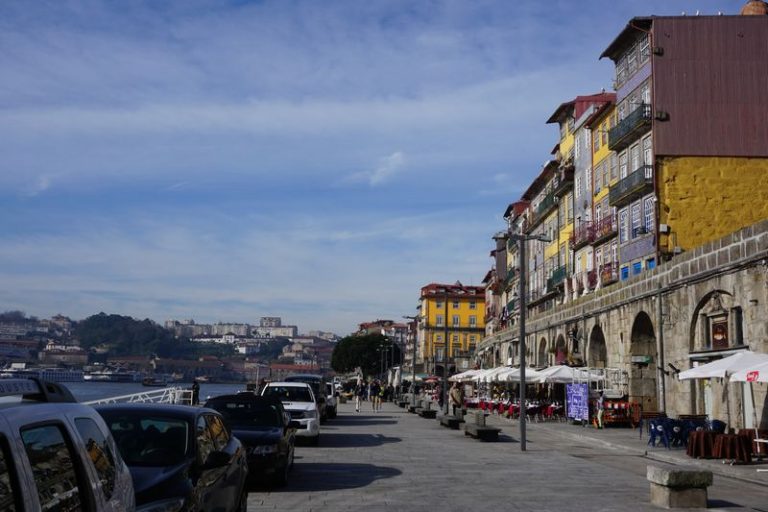
Close enough that Aveiro works as a cheaper base if Porto is full.
A small calendar built around the lagoon and the boats.
Moliceiro races, boat decorating competitions and the lagoon celebrated over several weeks.
One of the oldest fairs in Portugal, running for over five centuries.
Locals throw cakes from a chapel rooftop to crowds below. Genuinely, and bring a bag.
When the beach bars open and the buses run frequently.
Hand-harvesting on the marinhas, with tours and salt baths available.
A handful of places in the centre, all within walking distance of the canals and the station. Live from Hostelworld.
Spring and early autumn. The lagoon makes winter damp and summer mild.
Average highs. The lagoon keeps Aveiro cooler than inland Portugal in summer and damper in winter, with genuine fog most mornings from November to February.
Pick how you travel. Per person per night, in euros.
The bikes are free and the canals cost nothing, so a day here can be very cheap indeed.
The ones we get asked most.

Compare Aveiro hostels — live prices, real reviews and free cancellation on most bookings. Then meet the people already there in the app.

 Get the App.
 Get the App.