City centre
First-timersAround Union Square and the Black Eagle Palace: the restored architecture, cafés and most beds.

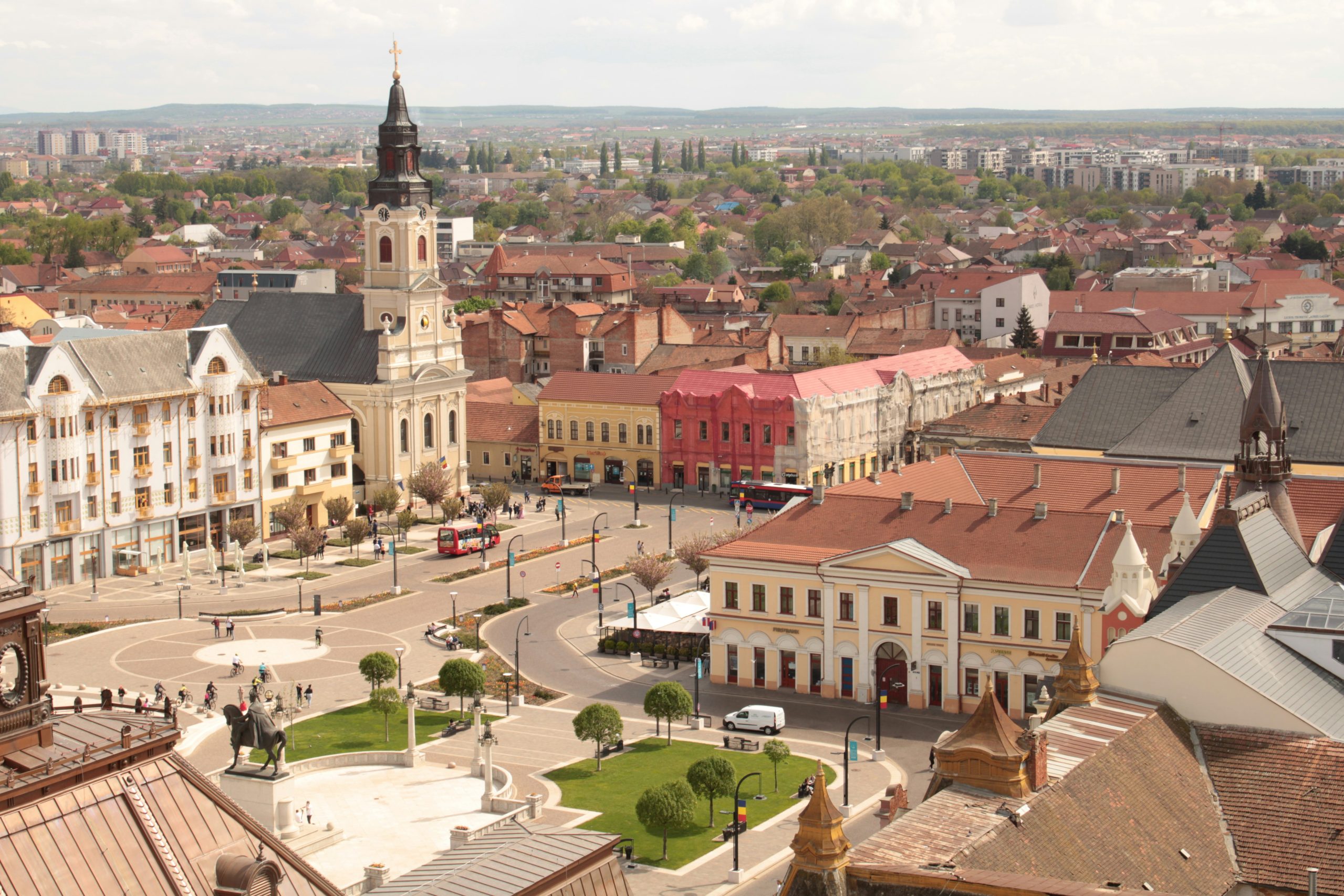
Art nouveau on the Hungarian border, restored street by street over the past decade into one of the best-looking cities in Romania — and one most visitors have never heard of.
Oradea sits a few kilometres from the Hungarian border and was for much of its history Nagyvarad, a prosperous Hungarian city. It grew rich at the turn of the twentieth century and built almost entirely in art nouveau and Vienna Secession styles.
For decades most of that architecture decayed. Over the past ten years or so the city has restored it street by street, largely with EU funding, and the result is one of the most attractive city centres in Romania — facades in green, pink and yellow with extravagant ornament, around squares and along the river.
The Black Eagle Palace is the centrepiece: a 1908 building with a glass-roofed shopping arcade running through it in the shape of a Y.
The fortress, a five-pointed star, has been restored and holds museums and cafés. The Zion synagogue, restored after years of neglect, is among the finest in the region and tells the story of a community that was nearly wiped out in 1944.
Most visitors to Romania never come here. Two days.
A compact restored centre along the river, with the fortress just beyond.
Around Union Square and the Black Eagle Palace: the restored architecture, cafés and most beds.
South-east: the star fortress, green space and a short walk to the centre.
Orange labels are neighbourhoods, dots are the 1 top-rated hostels. Map © MapTiler © OpenStreetMap contributors.
Walk the centre and look up. Union Square and Independence Square, and the pedestrian Republicii street between them, hold the densest run of restored art nouveau in Romania, and it is free.
The Black Eagle Palace, built in 1908, has a glass-roofed arcade running through it in a Y shape with a stained-glass eagle overhead. It is free to walk through and is the single best building in the city.
Climb the City Hall tower for the view over the roofs, for a few lei.
The Zion Neolog Synagogue, restored and reopened, is a remarkable building and a small museum telling the story of Oradea's Jewish community, most of whom were deported to Auschwitz in 1944. A few lei, and worth the time.
The fortress, star-shaped and restored, holds museums and is free to walk around.
Then take the bus fifteen minutes out to Baile Felix, a thermal spa resort with outdoor pools, for a cheap afternoon in warm water.
The restored art nouveau centre is free — Union Square, Independence Square and Republicii street are the core.
The Black Eagle Palace arcade is free to walk through.
The star fortress is free to walk around, with only the museums inside charging.
The Crisul Repede riverbank runs through the centre and is free, with the restored facades reflected in it.
The city's many churches, including the Baroque Roman Catholic Cathedral, one of the largest in Romania, are free to enter.
Cheap, with a strong Hungarian influence given the history and the border. A main is 35 to 60 lei (€7–12).
Goulash, paprika dishes and langos sit alongside the Romanian standards — sarmale, mici and ciorba.
Oradea has a good café culture, much of it in restored buildings, and the cafés are a large part of the pleasure of the city.
A beer is 10 to 18 lei (€2–3.50), and the Crisana wine region nearby produces reasonable local wine.
The city is not a food destination in itself, but eating here is cheap and good.
Modest. Oradea has a university and a student crowd in term, and the bars and terraces around the main squares carry most of the evening.
A beer is 10 to 18 lei (€2–3.50) and cocktails 25 to 40 lei (€5–8).
The restored centre is at its best on summer evenings, when the squares are full and the facades are lit.
There is a small club scene, but nobody travels here for it.
The Oradea Festival and summer events fill the squares, and the rest of the year it is a place for a drink in a handsome square rather than a big night.
The restored centre is flat and walkable, and trams cost about 3 lei (€0.60).
Oradea sits a few kilometres from the Hungarian border, which makes it an easy entry point to Romania from the west. Budapest is about three and a half hours by train.
Within Romania, Cluj is about two and a half to three hours by train, and the rest of Transylvania further.
Baile Felix, the thermal spa resort, is fifteen kilometres south and reachable by local bus.
The Apuseni mountains, with caves and karst plateaus, begin to the east.
Cheap. Beds are 45 to 100 lei (€9–20), a main 35 to 60 lei (€7–12), and a beer 10 to 18 lei (€2–3.50).
A day is €26 to €48.
You pay in lei. Cards work widely in the centre.
The restored architecture, the Black Eagle arcade, the fortress grounds and the churches are free, so the doing line is small. The synagogue and the City Hall tower are a few lei each.
Baile Felix's thermal pools are cheap by any European spa standard.
Because Oradea is still largely off the main tourist route, it has not developed the tourist premium of Brasov or Sighisoara.
Oradea is a safe city and crime against visitors is low.
Petty theft happens around the station at ordinary levels.
The river has open banks in places through the centre.
At Baile Felix, the thermal water is warm enough that long soaks can cause dizziness — drink water and take breaks, particularly in hot weather.
The synagogue and the Jewish history presented there cover the deportation of the city's community in 1944. Treat it as the memorial it partly is.
Romanian roads remain among the most dangerous in the EU if you are driving. Emergency number is 112.
Thermal springs, caves and the Hungarian border.
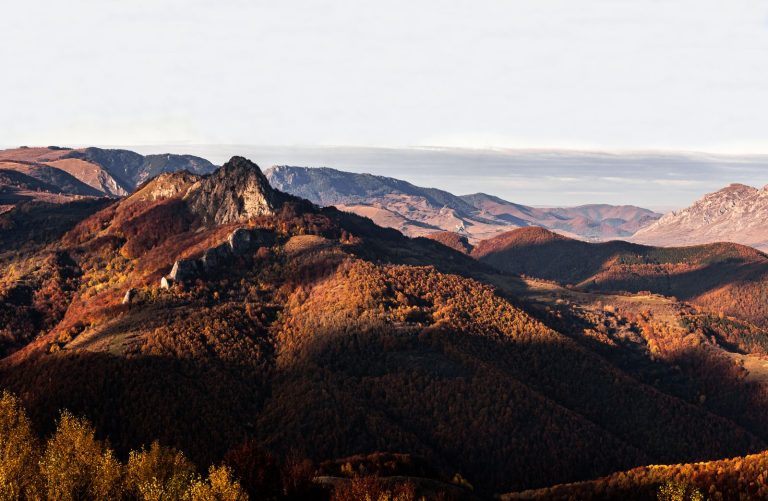
Karst plateaus, caves including an ice cave at Scarisoara, and mountain villages.
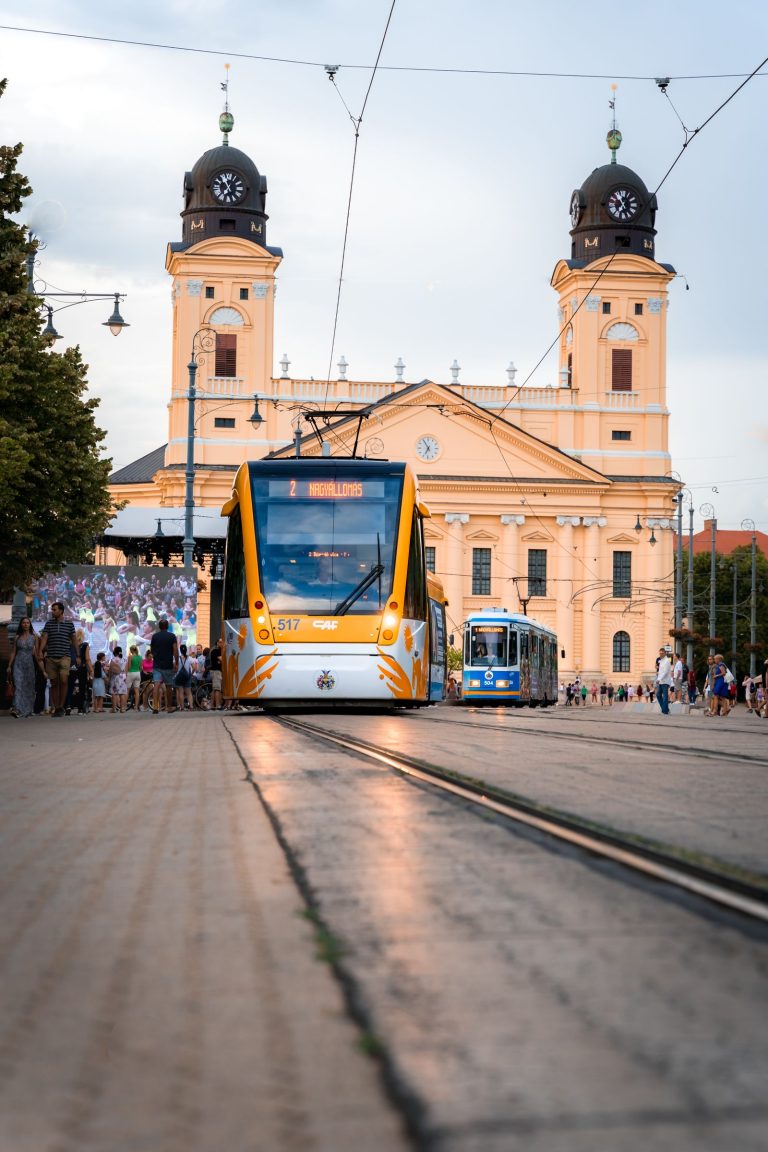
Hungary's second city, just over the border, with a large reformed church and thermal baths.
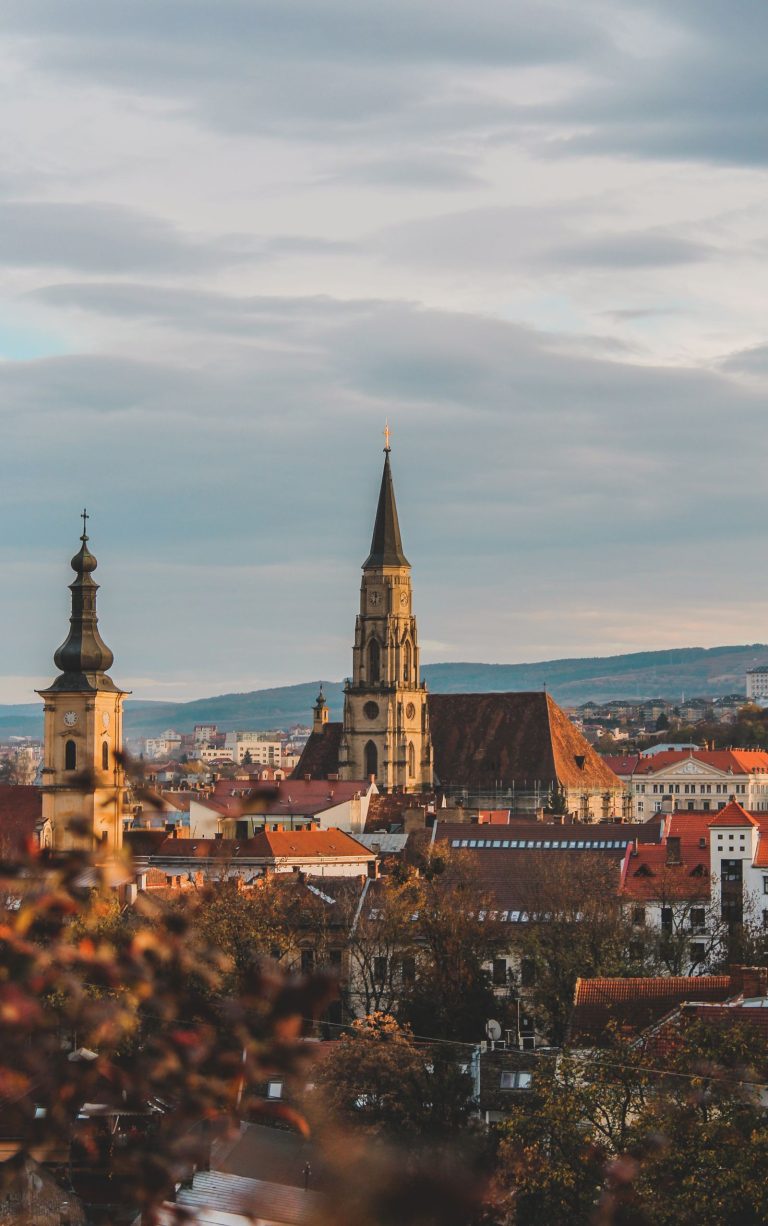
The student city with the best nightlife in Romania.
Summer festivals in the restored squares, and a Christmas market in winter.
The city festival, with music and events across the restored squares.
A market in front of the Black Eagle Palace.
When the squares fill and the restored facades are lit.
The outdoor thermal pools are open through the year, and best in the cold.
When the university brings a student crowd to the bars.
A small scene in the restored centre, at low prices with no tourist premium. Live from Hostelworld.
May to June and September to October. Summer evenings in the squares are the best of it.
Average highs. Oradea sits on the edge of the Pannonian plain and runs warmer than most of Transylvania in summer.
Pick how you travel. Per person per night, in euros — you will pay in lei, at roughly 5 to the euro.
Shown in euros for comparison; you pay in lei. The doing line is small because the architecture is free.
The ones we get asked most.

Compare Oradea hostels — live prices, real reviews and free cancellation on most bookings. Then meet the people already there in the app.

 Get the App.
 Get the App.