City centre
First-timersAround King Milan Square and the fortress: restaurants, bars and most of the beds.

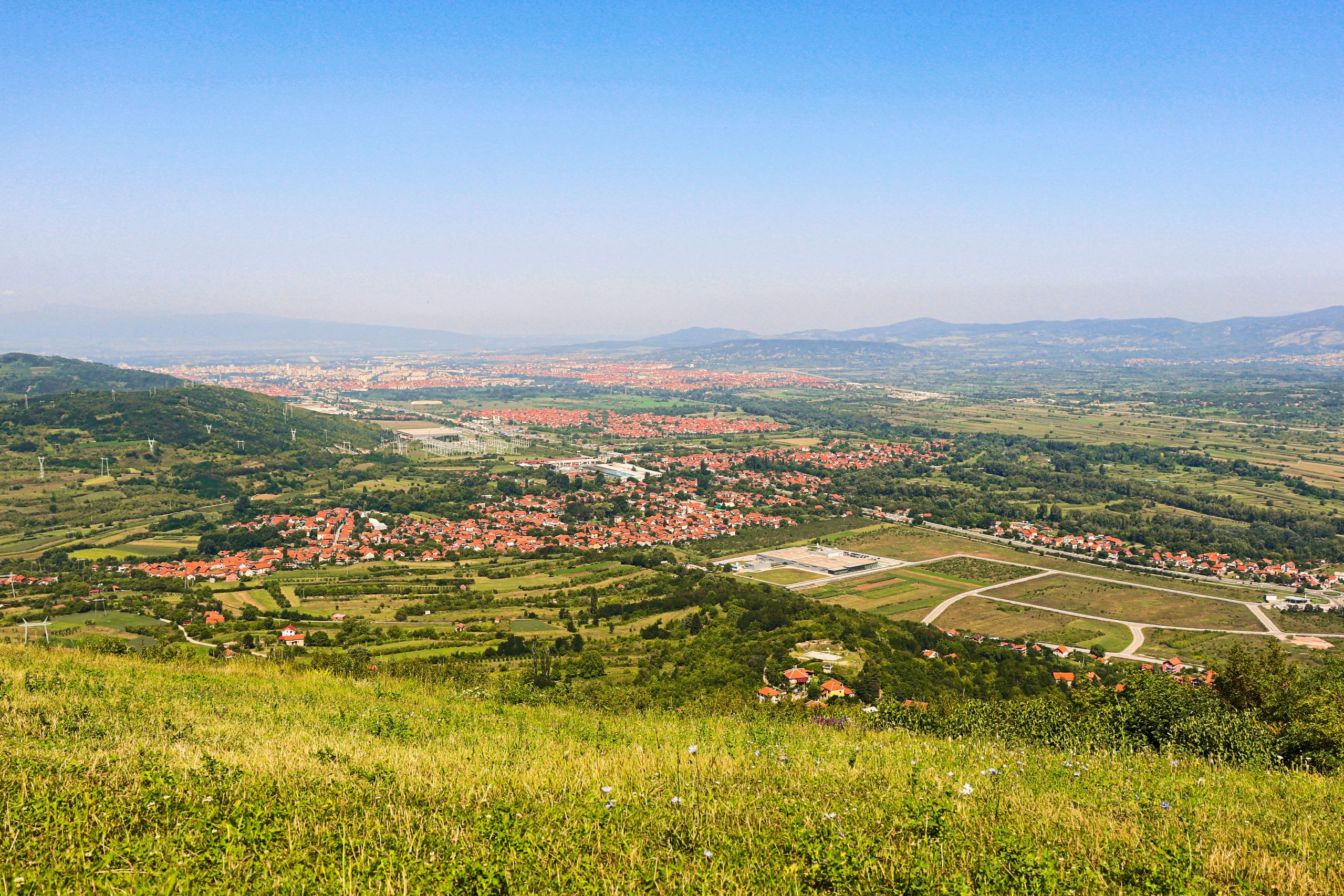
Southern Serbia's city: the birthplace of Constantine the Great, an Ottoman fortress in the centre, a tower built of rebels' skulls, and a jazz festival every August.
Niš is one of the oldest cities in the Balkans. As the Roman town of Naissus it was the birthplace of Constantine the Great, the emperor who legalised Christianity, and the remains of his imperial villa at Mediana lie on the edge of the city.
The Ottomans held it for centuries and built the fortress that still stands in the centre, now a park.
The city's most confronting monument is Ćele Kula, the Skull Tower. After a Serbian rebel force was defeated nearby in 1809, the Ottoman commander had a tower built from the skulls of the dead as a warning. Some of the skulls remain embedded in it, under a protective chapel.
The Second World War left the Crveni Krst concentration camp, preserved as a memorial.
Niš is also known for its food — southern Serbia's grill culture is taken seriously — and for Nišville, a jazz festival held in the fortress each August.
It is a working city rather than a tourist one, and cheap. Two days.
A compact centre on the Nišava river, with the fortress beside it.
Around King Milan Square and the fortress: restaurants, bars and most of the beds.
The old coppersmiths' lane near the centre, now lined with restaurants and cafés.
Orange labels are neighbourhoods, dots are the 2 top-rated hostels. Map © MapTiler © OpenStreetMap contributors.
The fortress in the centre is free and is a park now — Ottoman walls and gates, a Roman archaeological layer beneath, and the Nišville stage in August.
Ćele Kula, the Skull Tower, is a few hundred dinars and a short bus ride from the centre. Built in 1809 from the skulls of Serbian rebels killed at the Battle of Čegar, it now stands inside a small chapel with a number of skulls still embedded in the walls. It is sobering, small and important to understanding the region.
Mediana, on the edge of the city, preserves the remains of an imperial villa connected with Constantine, including mosaics, for a small fee.
The Crveni Krst concentration camp, used during the Second World War, is preserved as a memorial and museum.
Then eat. Southern Serbian grill culture is at its strongest in and around Niš.
The fortress and its park are free and are the heart of the city.
The Nišava riverbank and King Milan Square cost nothing.
Kazandžijsko sokače, the old coppersmiths' lane, is free to walk and is the most characterful street in the centre.
The Bubanj memorial park, marking the site of wartime executions, is free.
The market is free to browse and is a good look at southern Serbian produce.
Niš is the capital of southern Serbian grilling, and the food is the best reason to be here. A main is 700 to 1,300 RSD (€6–11).
Pljeskavica and ćevapi are done properly here, and the nearby town of Leskovac holds a large annual grill festival.
Burek from a bakery is 200 to 300 RSD (€2–2.50) and is breakfast.
Kajmak and ajvar, the roasted pepper relish, are on every table.
A beer is 200 to 350 RSD (€2–3), and rakija, often homemade, appears at the end of most meals.
Indoor smoking is common.
Relaxed and cheap. The bars and cafés are around the centre and Kazandžijsko sokače.
A beer is 200 to 350 RSD (€2–3) and cocktails 500 to 900 RSD (€4–8).
The university brings a student crowd in term.
Nišville, held in the fortress each August, is the highlight — a long-running jazz festival that draws international acts and fills the city.
Indoor smoking is common in bars.
The centre is walkable, and buses cover the rest of the city, including Ćele Kula and Mediana.
Buses from Belgrade take about three hours, and trains are slower.
Niš Constantine the Great airport has budget routes from several European cities, which makes it a practical entry point to southern Serbia and the wider region.
Sofia in Bulgaria is about three hours by bus, and Skopje about four.
Use a ride app or a venue-called taxi.
Among the cheapest cities in Serbia. Dorms are 1,000 to 2,000 RSD (€8–17), a main 700 to 1,300 RSD (€6–11), and a beer 200 to 350 RSD (€2–3).
A day is €22 to €40.
You pay in dinars. Carry cash — card acceptance is less reliable than in Belgrade.
The fortress is free and the other sites cost a few hundred dinars each.
Nišville week in August raises bed prices.
Niš is a safe city and crime against visitors is low.
Petty theft happens around the bus station at ordinary levels.
Ćele Kula and the Crveni Krst camp are memorials to large numbers of dead. Behave accordingly, and do not photograph yourself posing with the skulls.
Demonstrations have taken place across Serbia since late 2024. They are usually announced — check local news.
If Kosovo is part of your route, see the routing advice in our Belgrade guide — entering Kosovo from a third country can lead to being refused entry to Serbia afterwards.
Emergency numbers are 192 for police and 194 for ambulance, with 112 also working.
A jazz festival in the fortress, and a grill festival down the road.
A long-running international jazz festival held in the fortress, drawing large crowds.
A large festival of southern Serbian barbecue, including attempts at record-breaking pljeskavica.
Events marking the emperor's connection to the city.
Serbian Christmas, following the Orthodox calendar.
When the university brings a student crowd.
A small scene in the centre, at very low prices. Live from Hostelworld.
April to June and September to October. August brings Nišville.
Average highs. Niš is in the south and runs hotter than Belgrade in summer.
Pick how you travel. Per person per night, in euros — you will pay in dinars, at roughly 117 to the euro.
Shown in euros for comparison; you pay in dinars and should carry cash.
The ones we get asked most.

Compare Niš hostels — live prices, real reviews and free cancellation on most bookings. Then meet the people already there in the app.

 Get the App.
 Get the App.