City centre
First-timersAround Liberty Square and Zmaj Jovina street: the cathedral, cafés, bars and most of the beds.

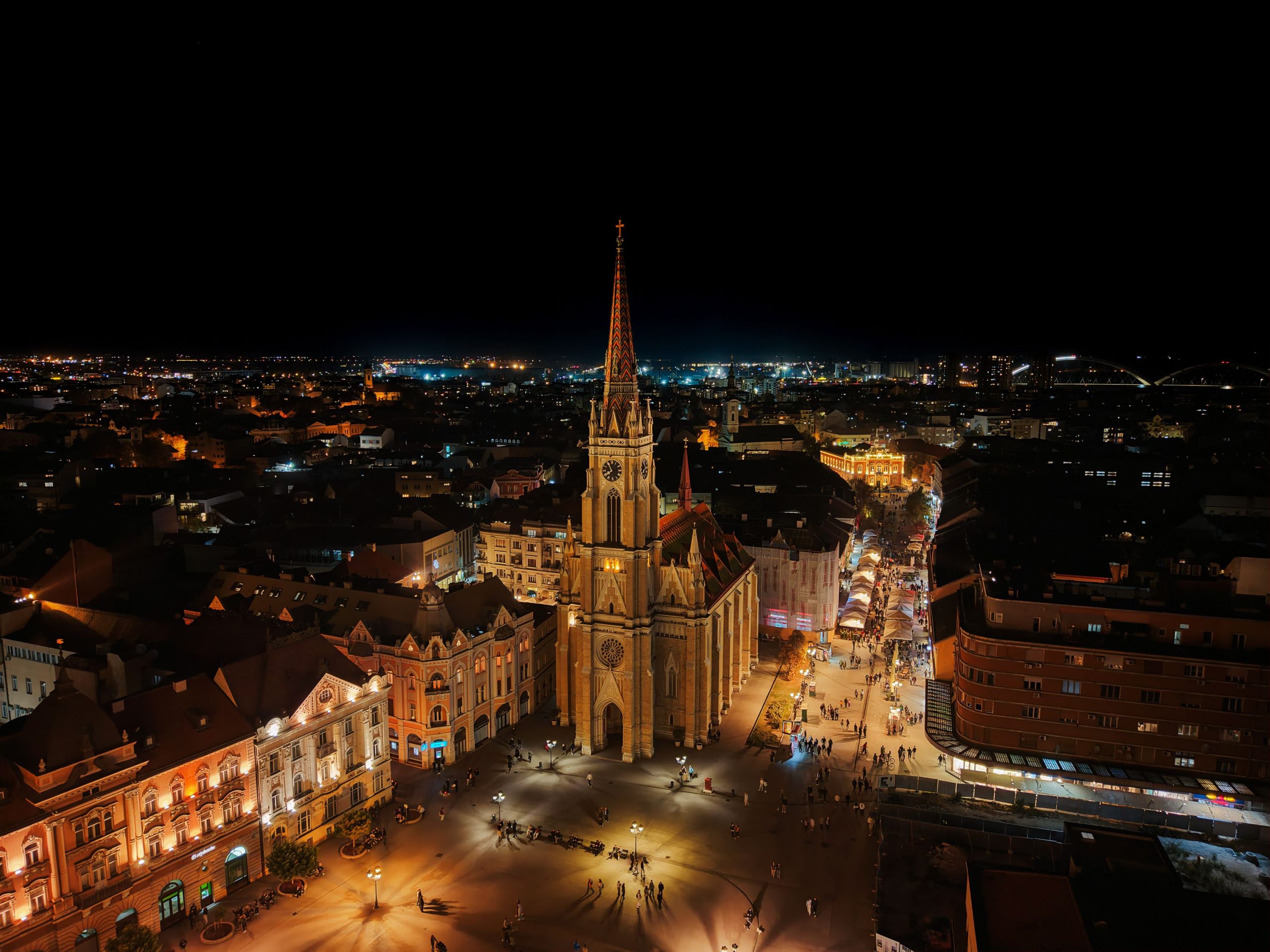
Habsburg, calmer and prettier than Belgrade, with a vast fortress above the Danube, a wine and monastery ridge behind it, and half an hour from the capital by high-speed train.
Novi Sad was a Habsburg frontier town for most of its history, and it shows — pastel baroque and neoclassical buildings, a Catholic cathedral on the main square, and a relaxed, orderly feel that sets it apart from Belgrade.
Across the Danube stands Petrovaradin, an enormous eighteenth-century fortress built by the Austrians against the Ottomans, with around sixteen kilometres of tunnels beneath it and a clock tower whose hands are reversed, so that boatmen on the river could read the hour at a distance.
Behind the city rises Fruška Gora, a wooded ridge holding more than a dozen Orthodox monasteries and a string of vineyards, with Sremski Karlovci, a baroque wine town, at its foot.
Novi Sad was European Capital of Culture in 2022. In November 2024 the canopy of the city's railway station collapsed, killing sixteen people, and the event set off the nationwide protests that have continued since. A memorial stands at the station and it remains deeply felt in the city.
Two days.
A compact old centre on one bank, the fortress on the other.
Around Liberty Square and Zmaj Jovina street: the cathedral, cafés, bars and most of the beds.
Across the Danube: the fortress, its tunnels, and guesthouses in the old lower town below it.
Orange labels are neighbourhoods, dots are the 4 top-rated hostels. Map © MapTiler © OpenStreetMap contributors.
Cross the Danube to Petrovaradin fortress. The walls and grounds are free and the views over the river and the city are the best here. Look at the clock tower: its hands are reversed, with the hour hand longer than the minute hand, so boatmen could tell the time from the water. Tours of the underground tunnels, about 600 RSD (€5), take you into part of a sixteen-kilometre network.
Walk the centre — Liberty Square, the neo-Gothic Name of Mary Church, and the pedestrian Zmaj Jovina and Dunavska streets.
The Museum of Vojvodina, a few hundred dinars, covers the region's mixed history.
Go out to Fruška Gora for a day. More than a dozen Orthodox monasteries sit on the wooded ridge, several with medieval frescoes, and vineyards run down to Sremski Karlovci, a baroque town known for its wine and for the bermet, a sweet fortified wine.
The Danube beach at Štrand is where the city swims in summer.
Petrovaradin fortress is free to walk, including the walls, the clock tower and the views.
The old centre, Liberty Square and the pedestrian streets cost nothing.
The Danube embankment and the Danube Park in the centre are free.
The Fruška Gora monasteries are free to enter, with modest dress expected.
The station memorial to those killed in the November 2024 canopy collapse is at the main railway station. It is a place of real grief in the city and should be approached accordingly.
Vojvodina food, which is richer and more central European than the south. A main is 800 to 1,500 RSD (€7–13).
Paprikas, goulash-style stews and fish soup reflect the Hungarian influence, alongside the Serbian grill.
Ćevapi and pljeskavica are everywhere and cheap, at 400 to 700 RSD (€3.50–6).
Fruška Gora and Sremski Karlovci produce good wine, and bermet — a sweet fortified wine made there for centuries — is the local speciality.
A beer is 250 to 400 RSD (€2–3.50), and rakija appears at most meals.
Smoking indoors is common in bars and cafés.
Calmer than Belgrade, but lively. The bars and cafés are concentrated around Laze Telečkog street, known locally as the city's bar street, and the centre around it.
A beer is 250 to 400 RSD (€2–3.50) and cocktails 600 to 1,000 RSD (€5–8.50).
The university brings a student crowd in term.
EXIT festival has been held at Petrovaradin fortress every July since 2000 and grew into one of the largest in Europe. Its future in Novi Sad became uncertain in 2025 — check the current position before planning a trip around it.
Indoor smoking is common.
The centre is walkable, and the fortress is a short walk across the Danube.
Buses cover the city, and Fruška Gora and Sremski Karlovci are reachable by local bus in about half an hour.
The high-speed train from Belgrade takes about half an hour, around 600 RSD (€5), which makes a day trip easy in either direction. The line has been extended northwards towards Subotica and the Hungarian border.
Buses reach Subotica in about ninety minutes and Belgrade in about an hour.
Use a ride app or a venue-called taxi.
Cheap. Dorms are 1,100 to 2,300 RSD (€9–20), a main 800 to 1,500 RSD (€7–13), and a beer 250 to 400 RSD (€2–3.50).
A day is €25 to €45.
You pay in dinars. Cards work in the centre; carry cash for small places and the monasteries.
The fortress, the old centre and the monasteries are free, and the tunnel tour is about 600 RSD (€5).
Festival weeks push beds up sharply.
Novi Sad is a safe city and crime against visitors is low.
Large demonstrations have taken place in Novi Sad and across Serbia since the station canopy collapse in November 2024, which killed sixteen people. Most have been peaceful and some have been very large. They are generally announced — check local news and avoid them if you prefer.
The station memorial is a place of mourning. Approach it quietly.
The fortress has unfenced walls and drops, and the tunnels are dark and uneven — use a guided tour for the underground sections.
The Danube is wide and fast with a strong current away from the beach areas. Swim only at Štrand and other supervised spots.
Emergency numbers are 192 for police and 194 for ambulance, with 112 also working.
Monasteries, a baroque wine town and the capital half an hour away.
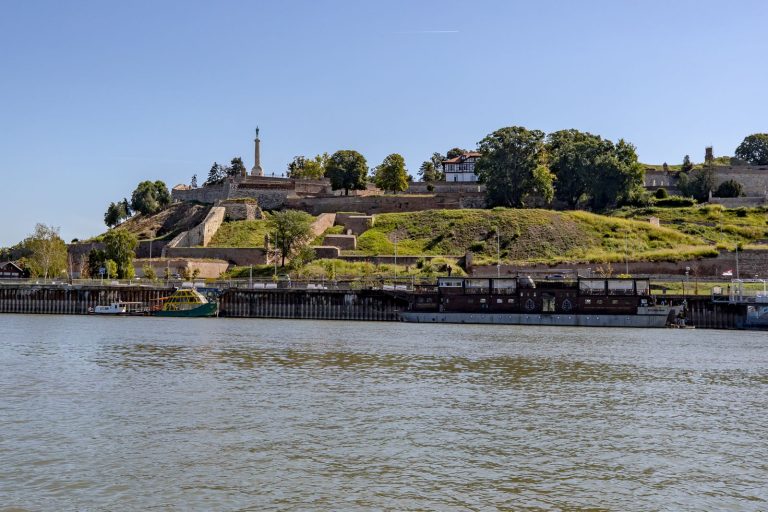
The capital, with Kalemegdan and the barge clubs.
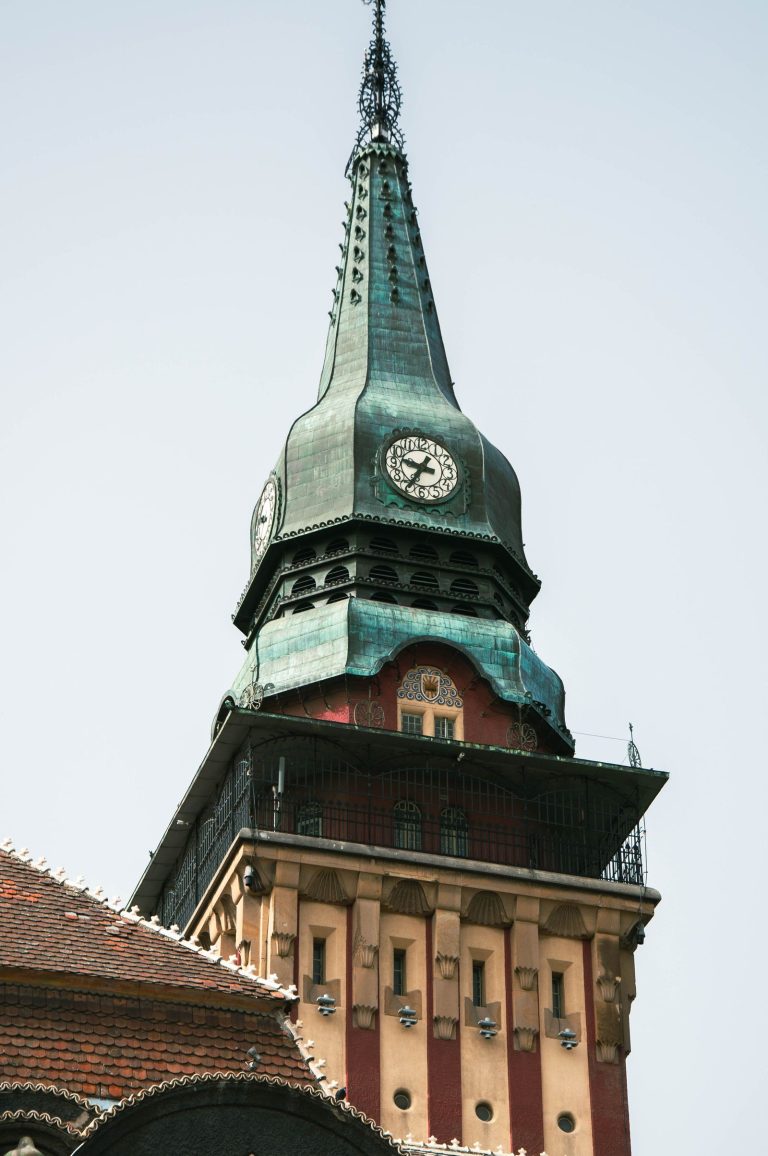
Extraordinary Hungarian art nouveau on the border.
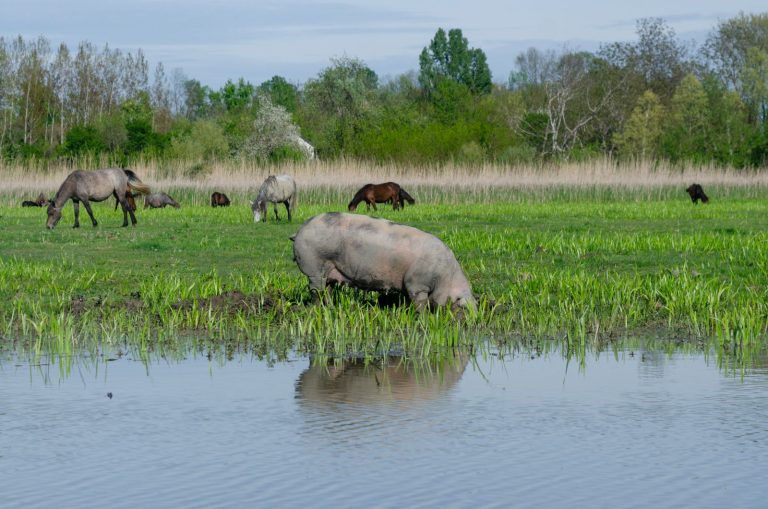
A wetland nature reserve with a herd of Balkan donkeys and a famous, very expensive donkey cheese.
A festival at the fortress in July, and harvest on the ridge in September.
Held at the fortress every July since 2000 and one of the largest festivals in Europe. Its future in Novi Sad became uncertain in 2025 — check before planning.
The vintage across the ridge vineyards, with festivals in Sremski Karlovci.
Marking the canopy collapse of 2024 that killed sixteen people.
Serbian Christmas, following the Orthodox calendar.
When the city's river beach is open.
A modest scene in the old centre and Petrovaradin. Live from Hostelworld.
April to June and September to October. July is festival season.
Average highs. Novi Sad sits on the Pannonian plain and has a continental climate — hot summers, cold winters, and very pleasant springs and autumns.
Pick how you travel. Per person per night, in euros — you will pay in dinars, at roughly 117 to the euro.
Shown in euros for comparison; you pay in dinars. Festival weeks push beds well above these.
The ones we get asked most.

Compare Novi Sad hostels — live prices, real reviews and free cancellation on most bookings. Then meet the people already there in the app.

 Get the App.
 Get the App.