

You can eat Mumbai street food well for a few euros a day, as long as you eat where the locals queue and the food is cooked hot in front of you. The city’s classic snack is still cheap: a vada pav at a Central Railway station stall costs ₹13 (about €0.12), after the railway withdrew a planned rise to ₹20 following complaints from commuters in May 2026, the Free Press Journal reported. Euro figures use the European Central Bank rate of 106.63 rupees to the euro on 4 November 2026.
Below you’ll find the dishes to order first, what they cost, the streets and beaches to eat them on, how to avoid getting ill and a one-day food trail. For the health side in more detail, read our guide to eating in India without getting sick.
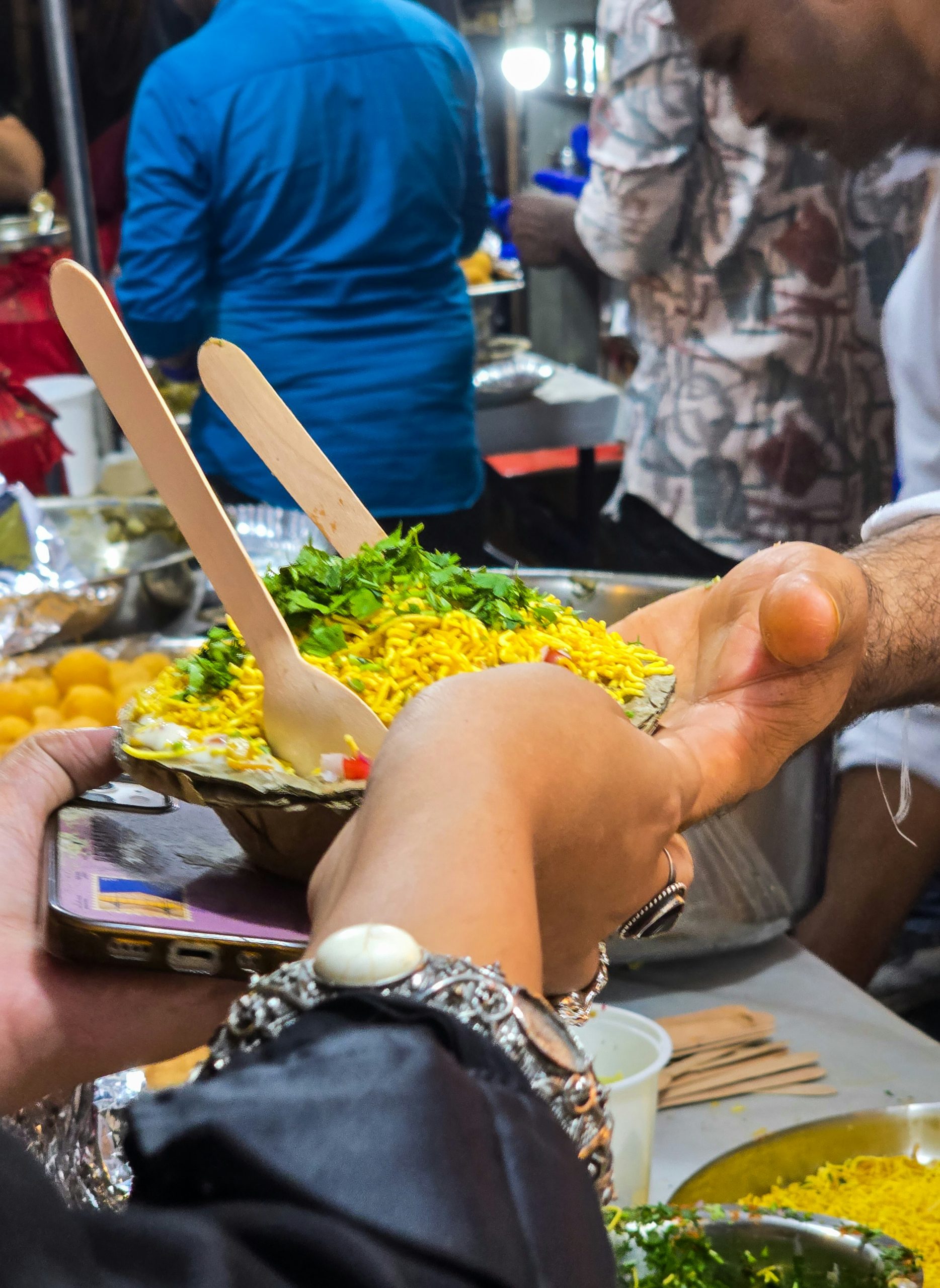
Which Mumbai street foods should you try first?
Start with the snacks Mumbai made its own. Most are vegetarian, built around bread rolls (pav), potatoes and chutneys, and you’ll find them on almost every corner. The street food of Mumbai grew up in the city’s mill district, feeding workers who needed something quick and filling, which is why so much of it comes in a bun.
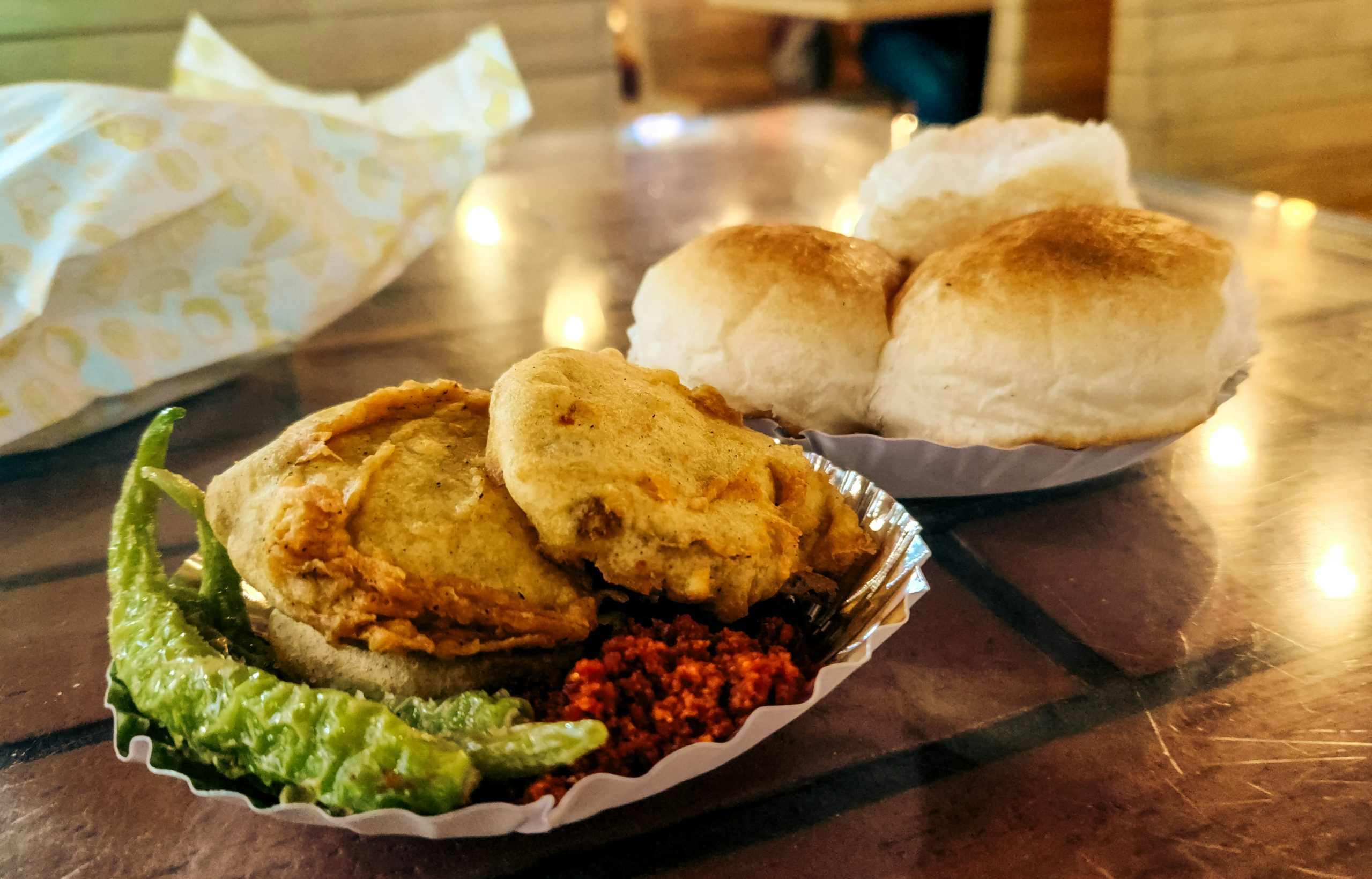
Vada pav
A spiced potato fritter in a soft bread roll, with green chutney and a dry garlic chutney. It’s the city’s everyday snack, eaten standing up near a station.
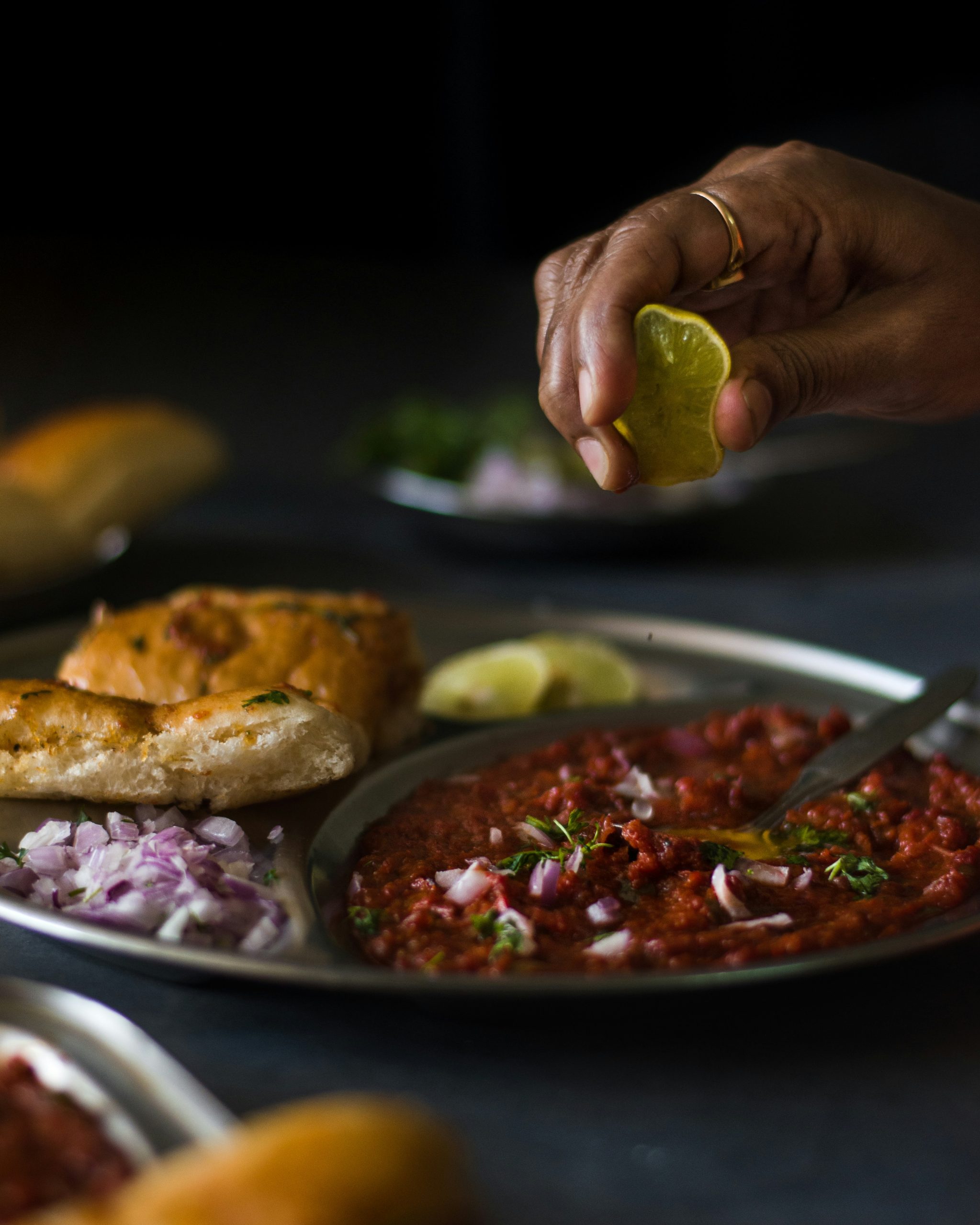
Pav bhaji
A buttery mash of vegetables cooked on a big flat griddle, served with toasted pav, chopped onion and a squeeze of lime. Order it for dinner rather than as a snack.
Bhel puri and pani puri
The beach chaat. Bhel puri mixes puffed rice, sev, onion and tangy chutneys. Pani puri is a crisp hollow shell you fill with spiced water and eat in one bite. Go easy on pani puri for your first few days, because the water is the riskiest part.
Misal pav, kebab rolls and frankies
Misal pav is a spicy sprouted-bean curry with pav, good for breakfast. After dark, look for kebab rolls and frankies, Mumbai’s wraps of spiced meat or paneer in a flatbread. For more on the city beyond the food, browse our Mumbai travel guides.
How much does street food cost in Mumbai?
Very little, if you eat where Mumbai does. At Central Railway station stalls a vada pav costs ₹13 (about €0.12) and a samosa ₹12 (about €0.11). The railway had planned to raise both to ₹20 from 1 June 2026, but dropped the plan and kept the old prices until further notice, according to the Free Press Journal. Four station snacks a day comes to about ₹50 (under €0.50), so even with a sit-down pav bhaji in the evening, food is the cheapest part of your trip.
Famous stalls charge a little more than the carts around them. Tablejourney lists the original Ashok Vada Pav stall outside Dadar station at ₹25 a piece. That’s still a bargain for a stall that came 25th in TasteAtlas’s 2026 list of the world’s most iconic sandwiches, ETV Bharat reported.
Expect prices to creep up. Mumbai bakeries raised a 12-piece pav packet by as much as ₹10 in 2026, taking a single pav from about ₹3 to nearly ₹4, and vendors told the Free Press Journal that vada pav, misal pav and pav bhaji could cost more as a result. Carry small notes and coins, since stalls rarely have change for a ₹500. For the rest of your India budget, see our guide to backpacking India.
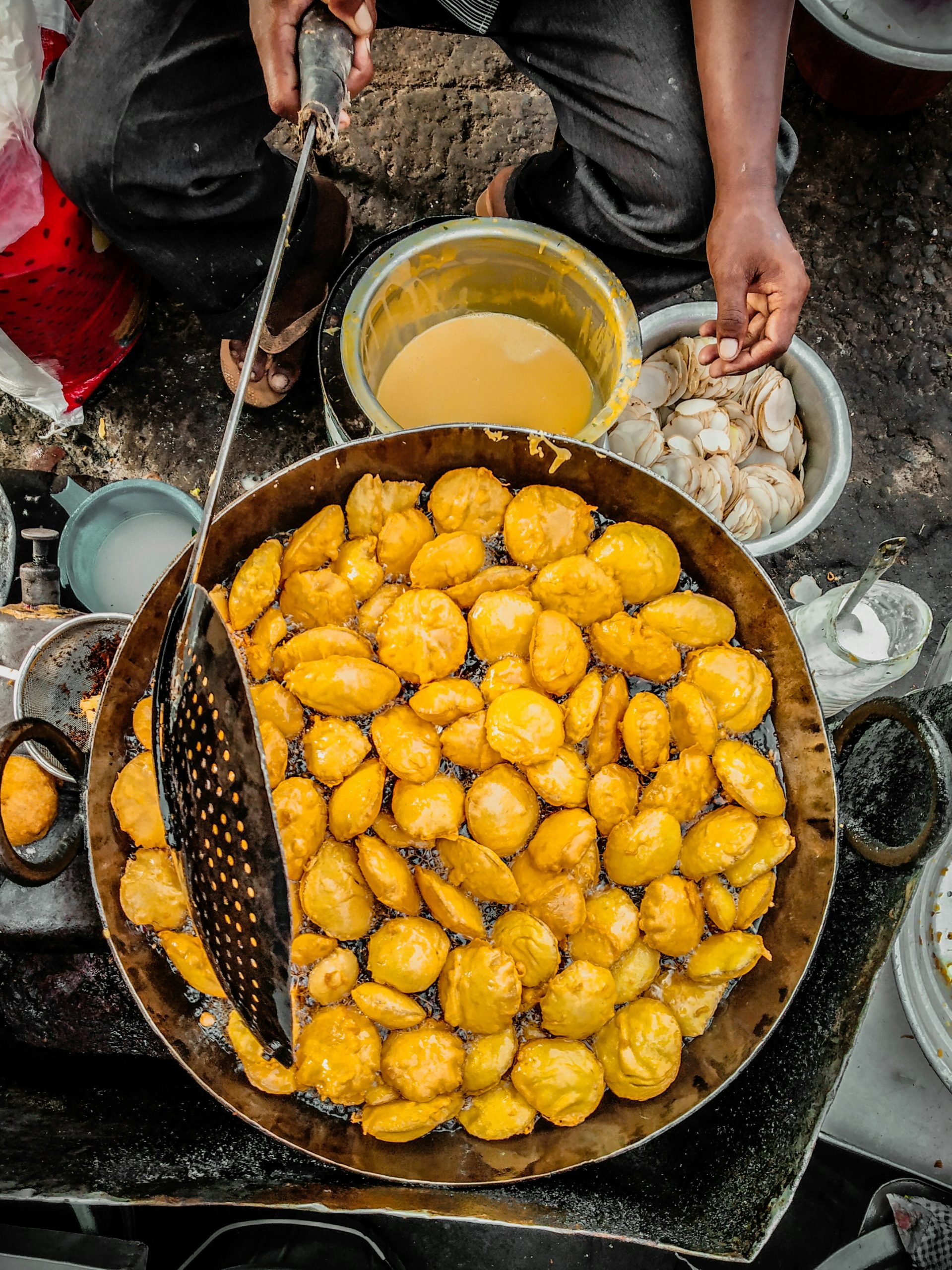
Where to eat street food in Mumbai
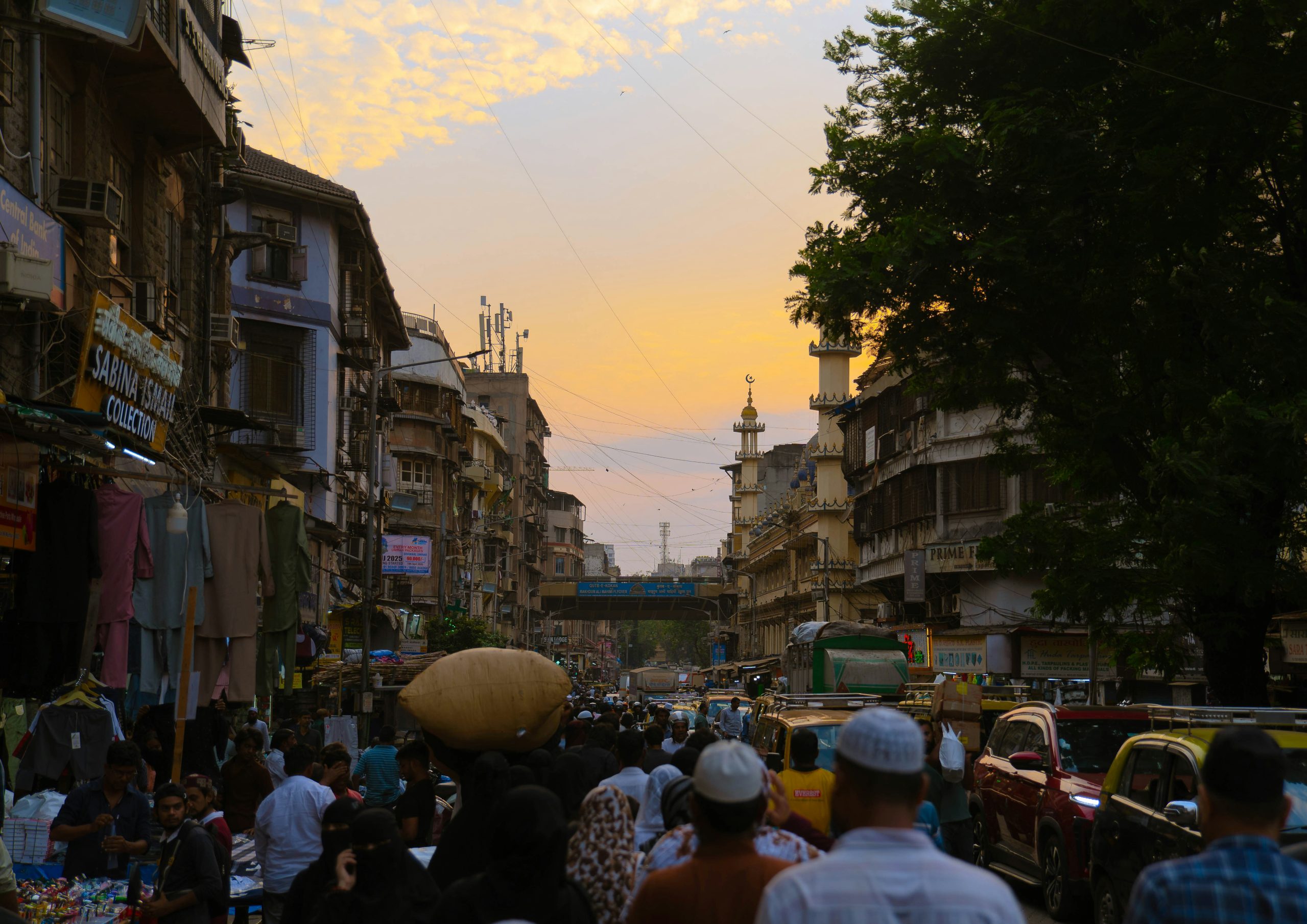
Mumbai’s street food clusters in a few areas, and each one has its best time of day. Go to Dadar for breakfast, the beaches at sunset and Colaba late, and you’ll beat most of the queues.
Girgaum and Juhu Chowpatty
Go to the beaches at sunset for bhel puri, pani puri and pav bhaji, when families come out and the stalls light up. Girgaum Chowpatty sits at the end of Marine Drive in south Mumbai, and Juhu is the one to pick if you’re staying in the western suburbs.
Dadar
Come to Dadar in the morning for vada pav. The stalls around the station serve commuters from early, so the oil is hot and the turnover is fast.
Colaba
Colaba is where to eat late. The kebab and roll stalls behind the Taj hotel, Bademiya being the best known, keep going long after the rest of south Mumbai has closed: Agoda’s Colaba guide lists Bademiya as open until about 4am, though listings differ, so check before you go.
Mohammed Ali Road
This is the big one during Ramadan, when the street around Minara Masjid fills with grills and sweet shops after sunset. Ramadan 2027 is expected to start in India on 9 or 10 February 2027, depending on the moon sighting, according to Wego’s Ramadan calendar for India. In its Ramzan food walk, the Free Press Journal paid ₹260 (about €2.40) for a half tandoori chicken and about ₹1,000 (about €9.40) for two people, and suggested arriving around 9pm, after the iftar rush. It also said to skip the shawarma. If you’ve eaten your way round Bangkok, our Bangkok street food guide shows how the two cities compare, and our tips for planning a trip to India help you time it.
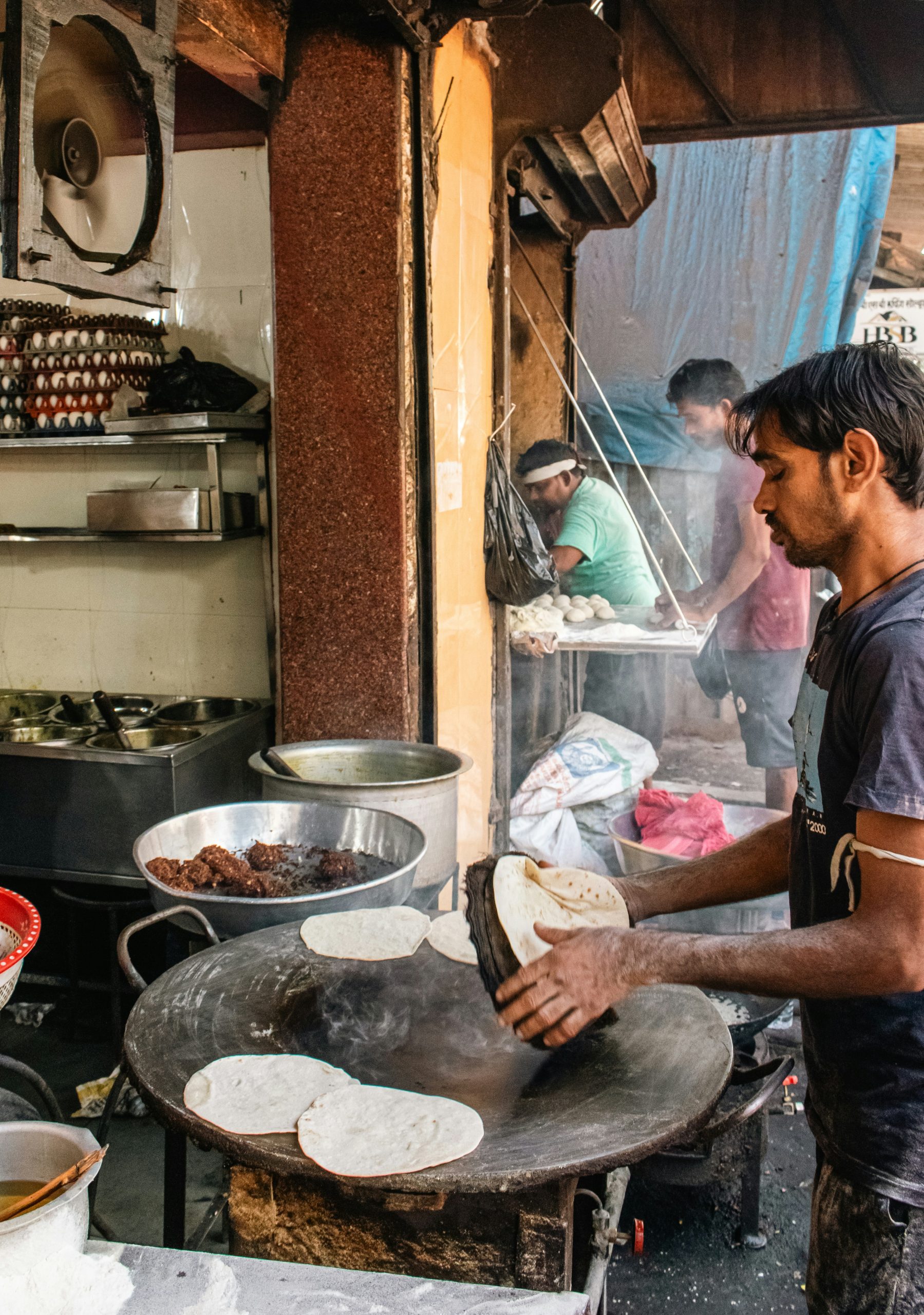
Is Mumbai street food safe for tourists?
Mostly yes, if you choose the stall carefully and ease in over your first few days. The Government of Canada’s travel advice sums up the rule most travel doctors use: “Boil it, cook it, peel it or leave it!” Hot food fried or grilled in front of you is the safest thing on any Mumbai street.
Before you order, run through this checklist:
- Pick the stall with the queue. High turnover means the oil is hot and nothing sits around.
- Watch it cooked. Vada pav, pav bhaji and kebab rolls come straight off the heat.
- Leave pani puri, raw salads, cut fruit and chutneys made with water until your stomach has settled, usually after a few days.
- Skip ice unless you know it’s made from filtered water, and drink sealed bottled or filtered water.
- Clean your hands with sanitiser before you eat, because you’ll eat most of it with your fingers.
If you do get ill, rest, drink plenty of oral rehydration salts and see a doctor if it doesn’t clear up. Our guide to eating street food safely has more on choosing stalls anywhere, and our tips for travelling India alone cover the rest of staying well.
A one-day Mumbai street food trail
You can eat across the city in one day using the local trains, starting in Dadar and finishing late in Colaba. Travel light, because the trains are packed at rush hour, and keep your phone and cash in a front pocket (our tips on keeping your money safe while travelling help here). Avoid the morning and evening peaks if you can, and use the second-class ladies’ compartment if you’re a woman travelling alone and want more space.
- Morning, Dadar. Start with a vada pav from the stalls by Dadar station, where the morning commuter rush keeps the oil hot and the fritters fresh. Add a cutting chai from the nearest tea stall.
- Late morning, the train south. Take a Western line train from Dadar towards Churchgate or a Central line train towards CSMT. Both put you in the Fort area, and outside peak times the trains are much easier to board.
- Lunch, Fort. Walk the lanes between CSMT and Churchgate, where office workers eat at street counters and small canteens. Follow the lunchtime queue and order whatever most people are holding, often a plate of pav bhaji or misal pav.
- Afternoon, rest. Go back to your hostel for a break or a cold shower. Mumbai afternoons are hot even in winter, and the best eating is still ahead.
- Sunset, Girgaum Chowpatty. Take the Western line to Charni Road station and walk to the beach. Order bhel puri at a busy stall, then walk Marine Drive as the lights come on.
- Late evening, Colaba. Take a taxi south to Colaba for a kebab roll at the stalls behind the Taj hotel. It’s the easiest end to the day, since many of the city’s hostels are a short walk away.
If you’re planning this as a solo traveller, read our solo travel safety tips before heading out after dark, then pick a base close to the last stop.
Where to stay in Mumbai for food lovers
Stay in Colaba or Fort if food is the point of your trip. Both are in south Mumbai, so the Colaba kebab stalls, the Fort lunch counters and Girgaum Chowpatty are all a short walk or taxi ride away, and you can finish the trail above without crossing the city late at night. Mohammed Ali Road is close by too, if you’re visiting during Ramadan.
Pick Bandra or Juhu if you’d rather be in the western suburbs. Bandra has cafes, street art and its own evening food stalls, and it’s on the Western line, so getting to Dadar for breakfast vada pav is easy. Juhu puts you by the beach for sunset chaat at Juhu Chowpatty, but it’s a long way from the south Mumbai spots, so plan to do those on a single day out.
Whichever area you choose, check that your hostel has lockers and 24-hour reception if you’ll be coming back late, as our guide to hostel safety explains. For specific picks, see our list of the best hostels in Mumbai, or compare hostels across India if Mumbai is one stop on a longer route.
Find people to share plates with
Three or four of you can order one of everything at a stall and still spend very little. With a group, one stop can cover a pav bhaji, a bhel puri and a round of kebab rolls without anyone overeating. Company also makes the late walk back from Colaba or the crowds on Mohammed Ali Road feel a lot easier.
The quickest way to find eating partners is the Hostelworld app. City Chats connect you with travellers staying at any hostel in Mumbai, so you can ask who fancies Chowpatty at sunset and see who replies. Linkups work differently: they’re activities set up by your hostel, hostels nearby or other backpackers, such as walking tours and group dinners, and you can join them from 14 days before check-in. If nobody has posted a food walk, create your own Linkup using the trail above. Not booked yet? A Social Pass opens up the chats without a stay.
Look at the Mumbai Events page before you go, too. When we checked in November 2026 it listed concerts and festivals such as the Tata Mumbai Marathon on 17 January 2027 and the Mumbai Fringe Festival from 27 January to 7 February 2027, but no dedicated food festivals. Use it to plan your food nights around the big crowds, or to find a group heading out afterwards.
When you’re ready to move on, our India travel guides help you pick the next stop, and if it’s the coast, start with these things to do in Goa and compare hostels in Goa.

 Get the App.
Comments