Old town
First-timersThe steep centre between the two castles: the squares, cafés and most of the guesthouses.

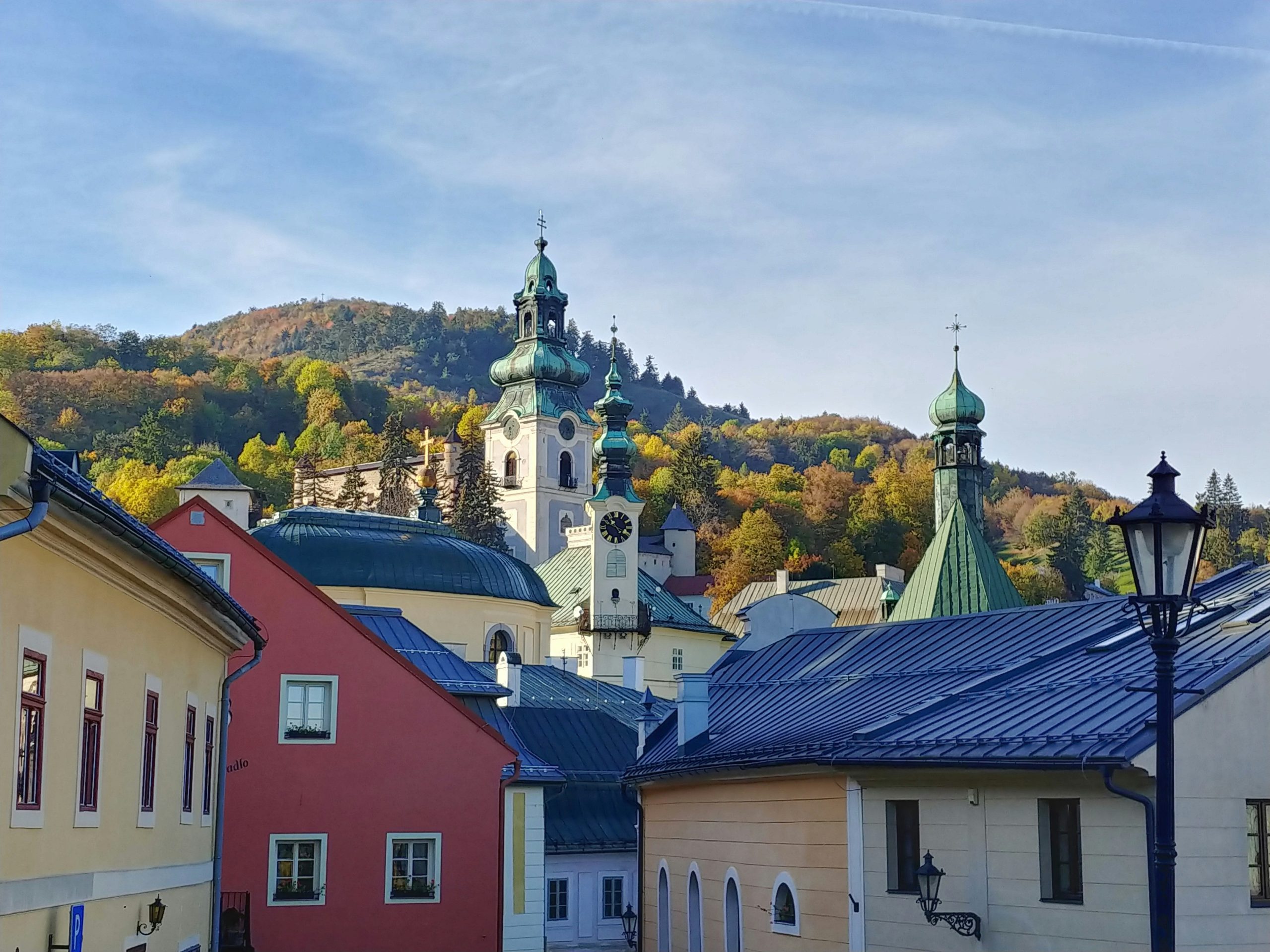
A UNESCO silver-mining town inside the caldera of an ancient volcano, with two castles, a baroque calvary on a hill, and dozens of lakes built by eighteenth-century engineers that you can now swim in.
Banská Štiavnica sits inside the caldera of a long-extinct volcano, and from the Middle Ages the silver and gold beneath it made it one of the wealthiest towns in the Kingdom of Hungary. In the eighteenth century it was a centre of mining technology, and in 1762 the world's first mining academy was founded here.
The engineers built around sixty artificial reservoirs — tajchy — in the hills around the town to power the machinery that pumped water out of the mines. The mining is long gone. The lakes remain, surrounded by forest, and they are where the region swims in summer.
The town itself is built across steep hillsides, with the Old Castle and the New Castle facing each other and a baroque Calvary — a hilltop sequence of chapels and churches — on a hill outside it, among the finest in Europe.
Once one of the largest towns in the kingdom, it now has about ten thousand people, which is part of its appeal. It is UNESCO-listed, quiet, and very little visited by international travellers.
Two days.
A small hillside town, with lakes in the forest around it.
The steep centre between the two castles: the squares, cafés and most of the guesthouses.
Around Počúvadlo and the other tajchy: forest cabins and guesthouses by the water.
Map © MapTiler © OpenStreetMap contributors.
Go underground. The open-air mining museum outside the town, about €10, runs guided tours into a real mine gallery in hard hats, and it is the best way to understand what made the town rich.
The Old Castle, a fortified church complex turned castle, and the New Castle, a white Renaissance tower built as a lookout against the Ottomans, face each other across the town. Both are a few euros and both have museums.
The Calvary on the hill outside town is a baroque complex of chapels and churches climbing a volcanic hill, among the finest in Europe and restored after years of decay. It is free to walk and has one of the best views over the town.
Walk the town itself. It is built across steep slopes, with the Holy Trinity column in the main square and handsome burghers' houses from the mining boom.
In summer, swim in the tajchy. Počúvadlo and Richňava are the popular ones, reached by car, bike or a long walk.
The town is free to walk and is the main attraction — the squares, the burghers' houses and the steep lanes.
The Calvary is free and gives the best view over the town.
The tajchy are free to walk around and to swim in, with small fees at some organised beaches.
The forest trails of the Štiavnica Mountains around the town are free, and Sitno, the highest peak, is a manageable hike with a lookout tower.
The Holy Trinity column in the main square, put up after a plague, is free and the centrepiece of the town.
Small-town and cheap. A main is €7 to €13.
Bryndzové halušky and other Slovak standards are on every menu.
The town has a handful of good cafés and a local brewery or two, and has attracted a small creative community that has improved the food noticeably.
A beer is €2 to €3.50 and Kofola is everywhere.
By the lakes, a few summer restaurants and kiosks serve the swimmers.
Very quiet. It is a town of about ten thousand people and the evening is a meal and a drink in a café.
A beer is €2 to €3.50.
The Salamander festival in September is the exception, with a torchlit parade and crowds, and the Christmas period is also busy.
Otherwise, this is a place for walking, swimming and early nights.
The town is walkable but genuinely steep — it is built across the sides of the caldera.
Buses and trains run via Zvolen, and the journey from Bratislava takes around three hours.
The tajchy are spread through the surrounding hills. A car, a bike or a long walk is needed to reach most of them, and local bus services are limited.
Public transport in the area is sparse, so plan connections ahead.
Cheap. Beds are €15 to €35, a main €7 to €13, and a beer €2 to €3.50.
A day is €28 to €50.
Slovakia uses the euro.
The town, the Calvary and the lakes are free. The mining museum is about €10 and the castles a few euros each.
Festival weekends, particularly Salamander in September, push prices up and beds book out.
Banská Štiavnica is a very safe small town and crime is minimal.
The streets are steep and cobbled, and slippery in rain and ice.
The tajchy are deep, cold reservoirs rather than gentle lakes, often with steep banks. Swim at the organised beaches, and do not swim alone or after drinking.
The mine tours are guided for a reason — do not enter old mine workings or shafts on your own. The hills around the town are riddled with them.
Brown bears live in the forests of central Slovakia. On trails, make noise, and never approach or feed one.
Emergency number is 112.
A torchlit mining parade in September.
A parade rooted in the town's mining traditions, with costumes and torches through the streets. Beds book out.
When the mining lakes are warm enough to swim.
A small market and events in the snow-covered town.
Guided underground tours of a real mine gallery.
When the forest trails around the caldera are at their best.
June to September for the lakes. September brings the Salamander parade.
Average highs. The town sits at altitude in the hills, so it runs cooler than Bratislava, and the lakes are only really warm enough to swim in from late June to August.
Pick how you travel. Per person per night, in euros — Slovakia uses them.
Slovakia is in the eurozone, so these are the prices you will pay. A car or bike to the lakes sits outside these figures.
The ones we get asked most.

Compare accommodation in Banská Štiavnica — live prices, real reviews and free cancellation on most bookings. Then meet the people already there in the app.

 Get the App.
 Get the App.