Belváros
First-timersThe inner city: the Votive Church, the squares, the bars and most of the beds.

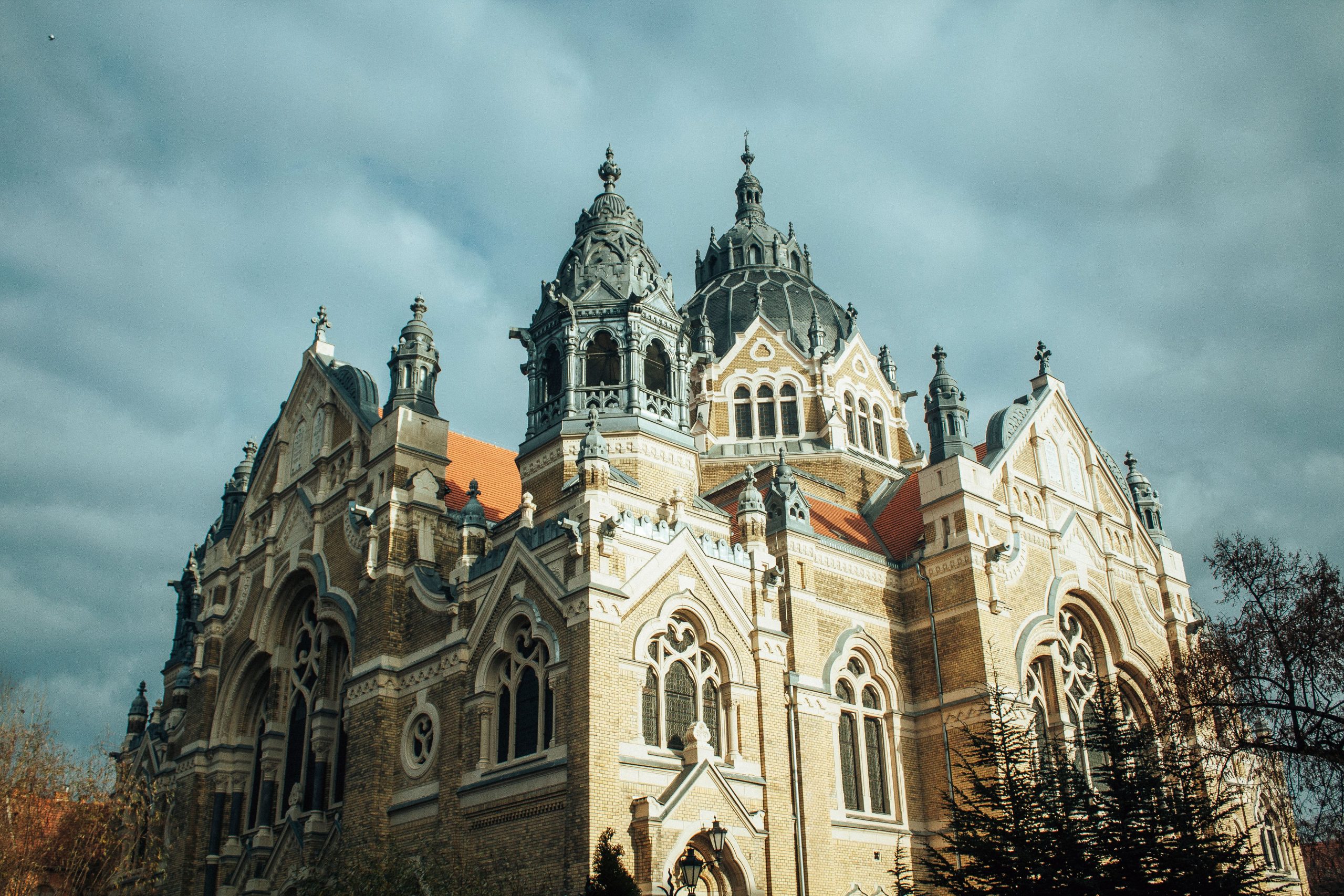
A city rebuilt from nothing after a flood destroyed it, with boulevards named after the European cities that paid for them, paprika in everything, and a very large student population.
In March 1879 the Tisza broke its banks and destroyed Szeged. Of around six thousand buildings, a few hundred survived. The city was rebuilt from scratch over the following decade, which is why it looks nothing like the rest of Hungary — wide ring boulevards, planned squares, and a consistent late nineteenth-century architecture in one sweep.
European cities sent money to help, and the sections of the outer boulevard are named after them: Vienna, Brussels, Rome, Paris, London, Berlin. Walking a ring road and passing through half of Europe is a genuinely odd experience.
The Votive Church, a vast twin-towered brick cathedral, was built in thanks for the city's survival and finished in 1930. Its square hosts an open-air theatre festival every summer.
Szeged is Hungary's paprika capital and the home of its fish soup, both taken seriously enough to argue about.
It is also the sunniest city in the country, with twenty thousand students. Two days.
A planned centre inside a ring boulevard, with the river on one side.
The inner city: the Votive Church, the squares, the bars and most of the beds.
The embankment and the streets behind it, with walks and a short stroll into the centre.
Across the river: parks, the open-air baths and cheaper rooms ten minutes from the middle.
Map © MapTiler © OpenStreetMap contributors.
Walk the ring boulevards and read the street names. The outer ring is divided into sections named for the cities that sent money after the 1879 flood — Vienna, Brussels, Rome, Paris, London, Berlin — and it is the clearest expression of what happened to this city.
The Votive Church on Dóm Square is free to enter, with a tower climb for a small fee. The square in front is one of the largest in Hungary and hosts the open-air festival through the summer.
Next to it stands the Demetrius Tower, one of the few pieces of medieval Szeged to survive the flood.
The New Synagogue is among the finest art nouveau synagogues in Europe, with a blue dome painted with stars, and it is usually open to visitors for a small fee.
Then eat fish soup. Szegedi halászlé is a paprika-red river fish soup, served properly in a small kettle, and the city considers its version definitive — the rival claim from Baja is a live argument.
The Votive Church is free to enter, and Dóm Square around it is free and enormous.
The ring boulevards and the planned squares cost nothing, and the architecture is the attraction.
The Tisza embankment walk is free, and the bridge over to Újszeged gives the view back at the cathedral towers.
Újszeged's parks across the river are free and large, and they are where the city goes in summer.
The Reök Palace, a green art nouveau building that looks like it is melting, is free to look at from outside and is the best single facade in the city.
Paprika is the local industry and has been since the nineteenth century. It is sold ground in every strength at the market, and it is in most of what you will eat.
Szegedi halászlé is the dish: freshwater fish — carp, usually — in a deep red paprika broth, cooked and served in a small kettle. A portion is 3,000 to 5,000 HUF, about €8 to €13.
Pick salami is the other export, made here since 1869 and hung to mature for months.
A restaurant main is 3,500 to 6,000 HUF, about €9 to €15, and the student places do considerably less.
Wine comes from the sandy Kunság vineyards nearby, which is not Hungary's finest region but is cheap and local. A glass is €2 to €3.50 and a beer about the same.
Twenty thousand students in a city of a hundred and sixty thousand, and the nightlife follows from that.
The bars are concentrated in the inner city around Dugonics Square and the streets off Kárász utca, the pedestrian spine.
A beer is €2 to €3.50 and cocktails €5 to €8, among the cheapest in Hungary.
Summer moves everything outdoors — the squares and the riverbank fill, and the Szeged Open-Air Festival puts opera and theatre in front of the cathedral through July and August.
Out of term, July and August are quieter in the bars even as the festival runs, since the students have gone home.
The centre is flat, planned and walkable, with the pedestrian Kárász utca running through the middle.
Trams and buses cost a few hundred forint, and the tram network is good for a city this size.
Trains from Budapest take about two and a half hours for around 4,000 HUF (about €10).
Szeged sits close to both the Serbian and Romanian borders. Buses run to Subotica in Serbia in about an hour and a half and to Timișoara in Romania in around three, which makes this a useful overland point rather than a dead end.
Cycling is excellent — the city is completely flat and has a good network, with hire cheap and widely available.
One of the cheapest cities in Hungary. Beds are €11 to €26, a main €9 to €15, and a beer €2 to €3.50.
A day is €28 to €55.
The cathedral, the boulevards, the embankment and the parks are all free, which covers most of a visit.
The open-air festival in July and August is ticketed and prices vary widely by production — the cheap seats are genuinely cheap.
Paprika and salami from the market make the only souvenirs worth carrying, and both are inexpensive.
Szeged is a safe city and crime against visitors is low.
Petty theft happens around the station and the student bar streets at weekends, at ordinary levels.
The Tisza is the thing to respect. It is a large, fast river with a strong current and it destroyed this city once — swimming in it outside supervised areas is a bad idea, and the embankment has sections without railings.
Summer heat is significant. Szeged is the sunniest and among the hottest places in Hungary, regularly passing 30°C in July and August, and Dóm Square has no shade at all.
Mosquitoes along the river are notable in summer.
Emergency number is 112.
A puszta national park, and two countries within three hours.
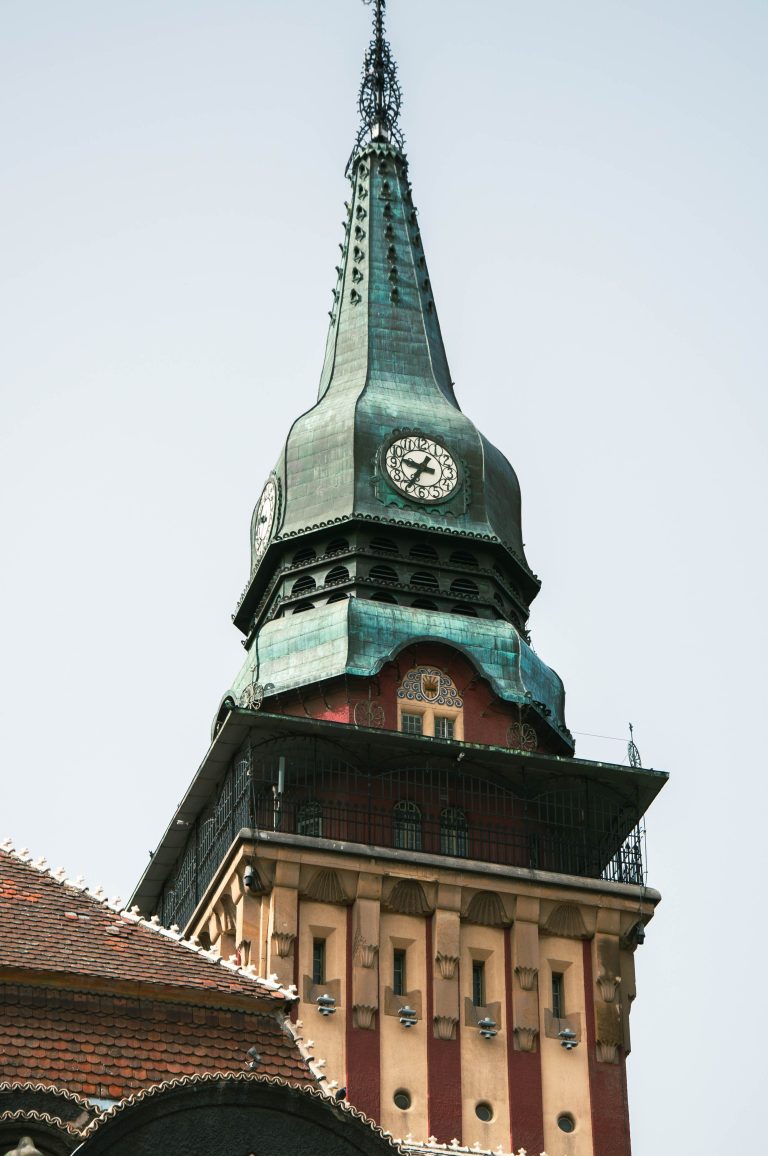
An art nouveau town just over the border, with a synagogue and a town hall in extraordinary condition.
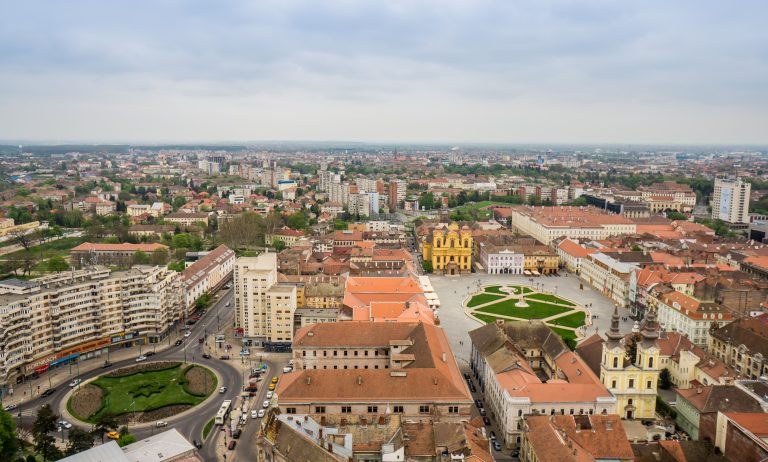
Where the 1989 Romanian revolution began, with baroque squares and a lively arts scene.
Opera in front of a cathedral, all summer.
Opera, musicals and theatre staged in front of the Votive Church, running since 1931 and the largest open-air theatre in Hungary.
Competitive halászlé cooking on the riverbank, which is taken more seriously than it sounds.
The city festival, with events across the squares and the riverbank.
When twenty thousand students fill the bars and the cheap places are open.
A market in front of the cathedral, with an ice rink.
April to June and September. July and August are hot but hold the festival.
Average highs, and the highest in Hungary — Szeged gets over 2,100 hours of sunshine a year on the open plain, which also means no shelter from it in midsummer.
Pick how you travel. Per person per night, in euros — you will pay in forint.
Shown in euros for comparison; you pay in forint. Festival tickets in July and August sit outside these figures.
The ones we get asked most.

Compare Szeged hostels — live prices, real reviews and free cancellation on most bookings. Then meet the people already there in the app.

 Get the App.
 Get the App.