Kumayri
First-timersThe surviving nineteenth-century quarter: carved tufa townhouses, museums, cafés and most of the guesthouses.

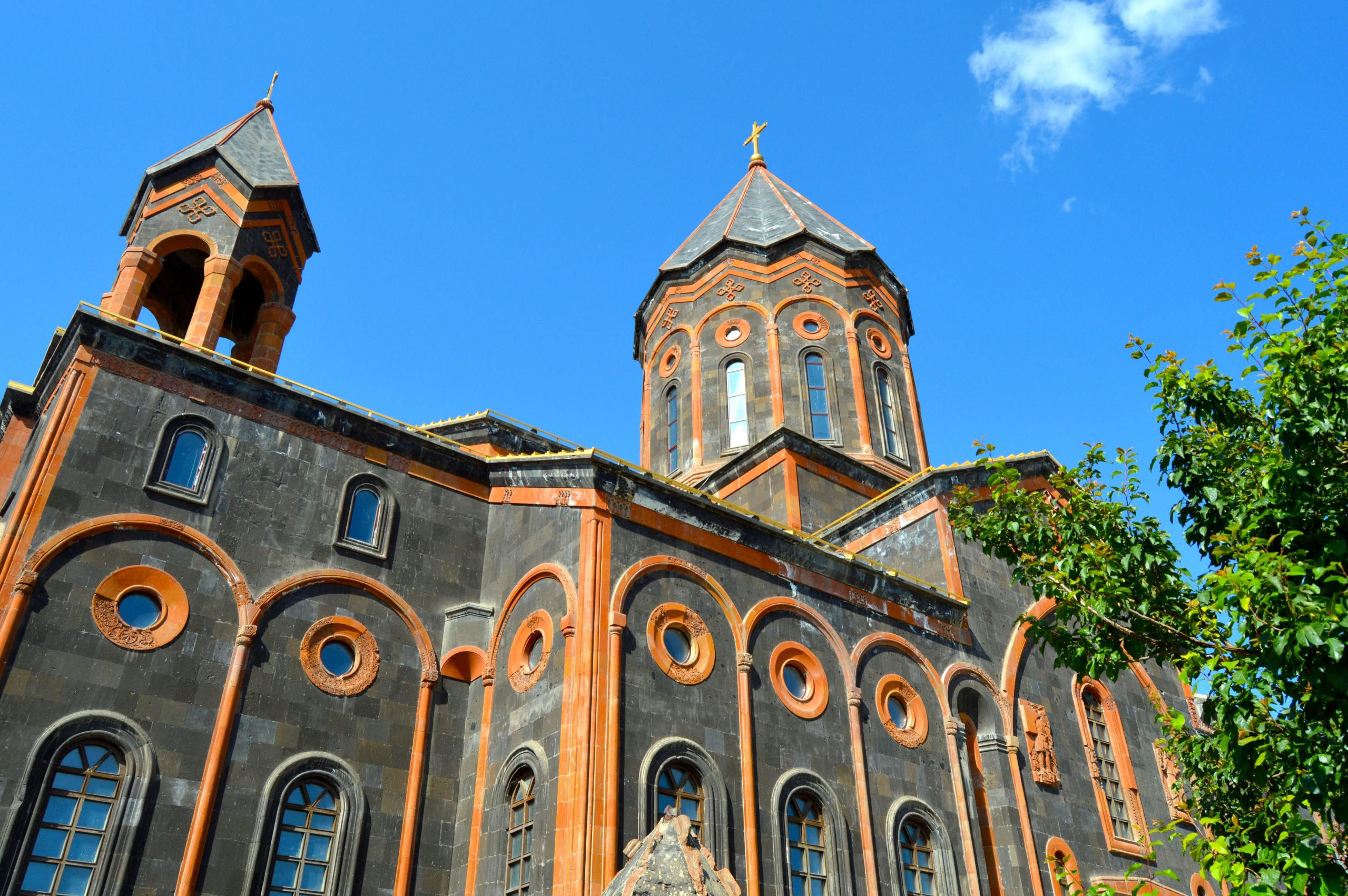
Armenia's second city, levelled by an earthquake in 1988 and still rebuilding, with black tufa streets, a hard humour and the best preserved nineteenth-century architecture in the country.
On 7 December 1988 an earthquake destroyed most of Gyumri and killed tens of thousands of people across the region. Whole districts came down, and reconstruction has taken decades — some families were still in temporary housing thirty years later.
What survived is the reason to come: the Kumayri district is the largest concentration of nineteenth-century urban architecture in Armenia, black and orange tufa townhouses with carved balconies, most of it intact because it was built to withstand what the Soviet blocks could not.
Gyumri has a reputation across Armenia for humour, music and craftsmanship, and it wears the last three decades openly rather than tidying them away.
A day and a night, or two. It is two to three hours from Yerevan by train for about €2, which is one of the best value journeys in the Caucasus.
Stay in or near Kumayri. The rest of the city is Soviet blocks and rebuilding.
The surviving nineteenth-century quarter: carved tufa townhouses, museums, cafés and most of the guesthouses.
The main square with the two churches, the town hall and the restaurants around it. Five minutes from Kumayri.
South of the centre, cheaper, and convenient for the early train back to Yerevan.
Orange labels are neighbourhoods, dots are the 1 top-rated hostels. Map © MapTiler © OpenStreetMap contributors.
Walk Kumayri. Several hundred nineteenth-century buildings in black and orange tufa, with carved wooden balconies and courtyards behind, and it is a working neighbourhood rather than a preserved one — washing lines, workshops and shops among the facades.
The Dzitoghtsyan Museum, in a merchant's house, covers the city's social history and the earthquake, and is the best museum outside Yerevan.
Vardanants Square holds two churches damaged in 1988 and rebuilt, and a monument to the earthquake dead that is not easy to look at.
The Mother Armenia statue on the hill above town has the view over the city towards Turkey, ten kilometres west across a closed border.
Walking Kumayri is free and is the main event. The carved balconies, the courtyards and the workshops cost nothing to look at.
Vardanants Square, the two churches and the earthquake memorial are free.
The Mother Armenia hill has the view west towards the Turkish border and costs nothing to climb.
The central market sells cheese, dried fruit and the local gata pastry, and wandering it is free and involves being handed things to taste.
Gyumri food is heavier and plainer than Yerevan's, which suits the altitude. Kefte, a boiled and pounded meat dish, is the local speciality and is served on occasions rather than casually.
Gata, a sweet layered pastry, comes from here and is sold at the market and on the road out of town.
A full meal in a local restaurant is €4 to €8, noticeably less than the capital, and guesthouse dinners at €5 to €9 are usually better.
The city has a serious brewery and beer culture by Armenian standards, and a glass of local beer is about €1.20.
Modest and local. A handful of bars and beer halls around the centre and Vardanants Square, busiest at weekends, with prices well below Yerevan's.
Gyumri has a strong musical tradition — ashugh minstrel song, jazz and a well-known conservatoire — and live music turns up in venues around the centre more often than the city's size suggests.
A beer is €1.20 to €2.50.
It is not a nightlife destination. Evenings here are a long dinner and a beer hall, and the city is quiet by midnight.
The train from Yerevan takes about three hours and costs €2, which is slow, scenic and absurdly cheap. Marshrutkas do it in two hours for €3 and run more often.
The centre is walkable and flat, and taxis across town cost €1 to €2 — use an app or agree the fare.
Marshrutkas run north to the Georgian border at Bavra and east to Vanadzor and Dilijan, which makes Gyumri a reasonable stop on the way in or out of Georgia.
The airport has a handful of low-cost flights, mostly to Russia and occasionally elsewhere, which is worth checking against Yerevan.
Cheaper than Yerevan across the board. Guesthouse beds are €7 to €16, a meal is €4 to €8, and a beer is €1.20 to €2.50.
A day is €20 to €32.
Museums are €1 to €3 each. The train from Yerevan at €2 is the cheapest intercity journey you will make in the Caucasus.
Cash is the norm. ATMs are in the centre and cards work in newer places but not in most guesthouses or the market.
Gyumri is safe and travellers report no particular problems. The city is poorer than Yerevan and parts of it are still visibly rebuilding, which reads as rough rather than dangerous.
Pavements and street lighting are patchy outside the centre, and unfinished buildings and open ground are common — worth knowing if you are walking back at night.
Winter here is serious. At 1,550 metres and open to the plain, Gyumri regularly drops below minus 15 and the wind makes it worse.
The Turkish border ten kilometres west is closed and there is nothing to see at it. Emergency number is 911.
Monasteries, a Bronze Age site and the mountains on the way back to Yerevan.
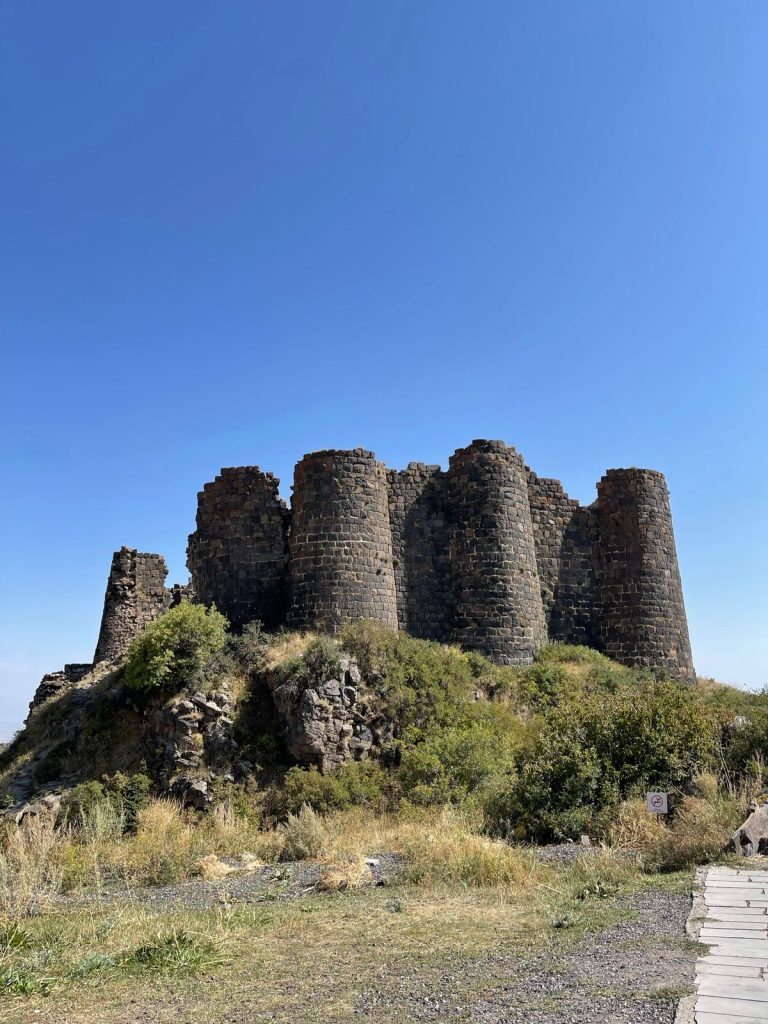
A seventh-century fortress and church at 2,300 metres on the flanks of Aragats.
One date matters more than the rest.
The city marks the 1988 earthquake with a service and a silence. A quiet and significant day to be here.
A contemporary art event held in the old quarter and the imperial fortress.
Concerts and street events marking the city's founding.
The national water festival, observed as everywhere in Armenia.
Families return from Russia and further afield, and the city is at its busiest.
Guesthouses in restored tufa townhouses in and around Kumayri, and cheaper than anywhere in Yerevan. Live from Hostelworld.
May to October. Winter at 1,550 metres on an open plain is severe.
Average highs. Gyumri sits 500m higher than Yerevan on an exposed plain, which makes it several degrees colder year-round and genuinely harsh in winter.
Pick how you travel. Per person per night, in euros.
Taxis to the monasteries at €10–15 return are the main variable. Everything in the city itself is very cheap.
The ones we get asked most.

Compare Gyumri guesthouses and hostels — live prices, real reviews and free cancellation on most bookings. Then meet the people already there in the app.

 Get the App.
 Get the App.