Hvar Town
First-timers and nightlifeThe Venetian square, the fortress, the beach clubs and the catamaran dock. Expensive and loud in August.

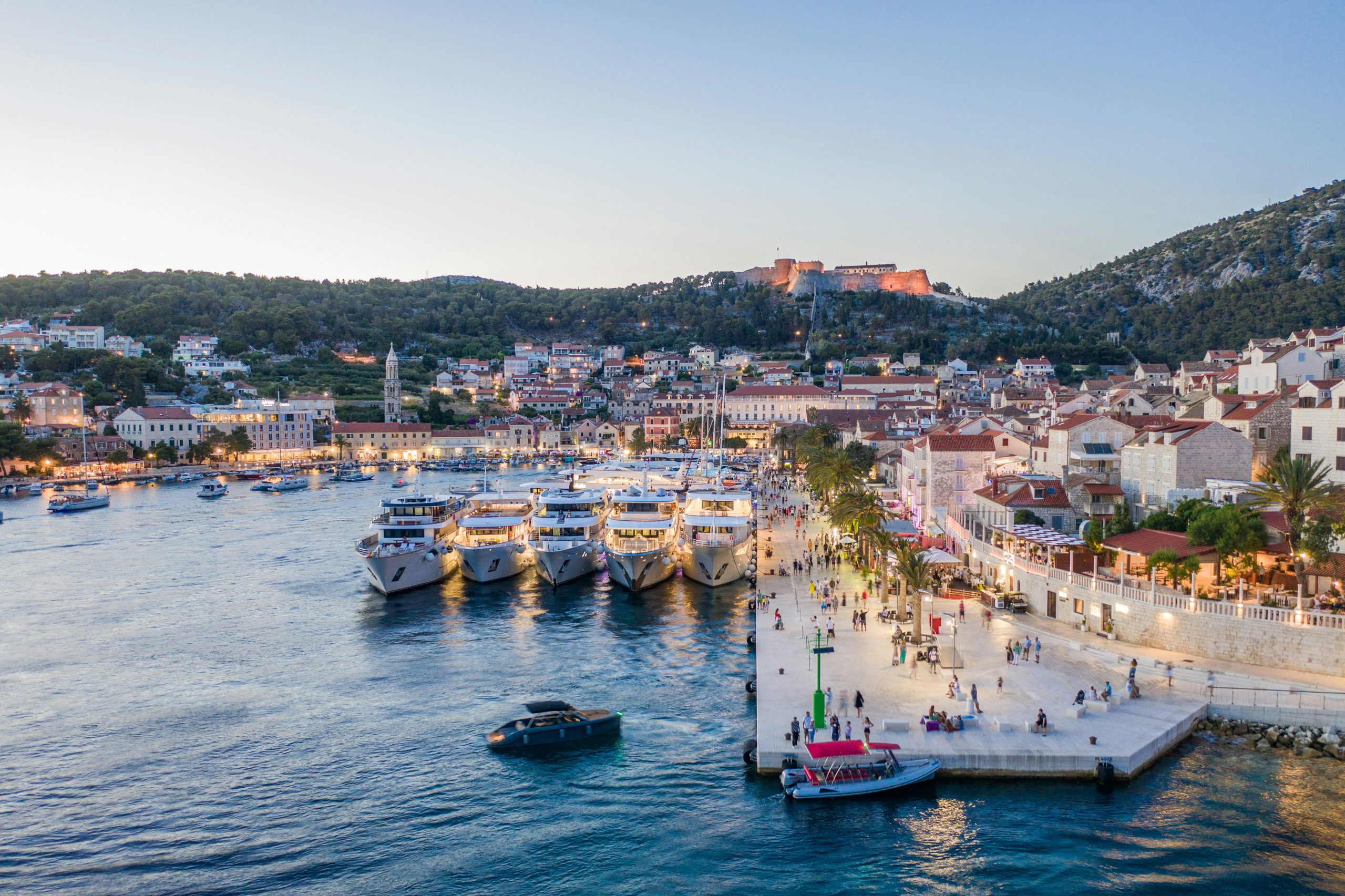
The party island with a Venetian town attached: yacht money and beach clubs in August, lavender fields and empty stone villages the rest of the year.
Hvar Town in August is yacht crews, beach clubs and €15 cocktails, and it has a reputation across the Adriatic to match. Hvar the island, twenty minutes inland, is lavender terraces, abandoned stone hamlets and a UNESCO-listed field system that has been farmed the same way since the Greeks laid it out in the fourth century BC.
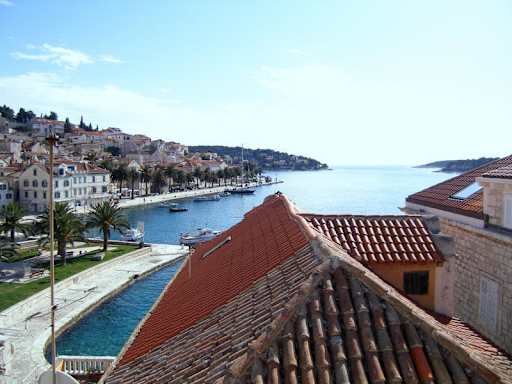
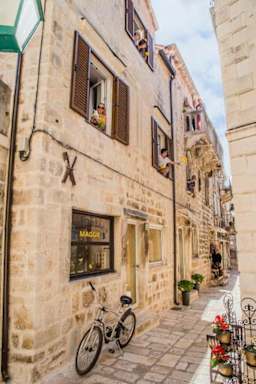
The town itself is genuinely handsome — a Venetian square, a fortress above, and a theatre from 1612 that is among the oldest public theatres in Europe.
It claims the most sunshine in Croatia at around 2,800 hours a year, and some hotels historically refunded guests for snow or excessive rain.
Two or three days for the town and the Pakleni islands offshore, longer if you rent a scooter and go inland, which almost nobody does.
The town, the quieter ports, or inland where nobody goes.
The Venetian square, the fortress, the beach clubs and the catamaran dock. Expensive and loud in August.
Across the island, the car ferry port and one of Europe's oldest towns, with a fraction of the noise.
The north coast: small harbour villages, cheaper beds, and buses to Hvar Town.
Orange labels are neighbourhoods, dots are the 8 top-rated hostels. Map © MapTiler © OpenStreetMap contributors.
Take a boat to the Pakleni islands, a scatter of wooded islets twenty minutes offshore with clear water, beach bars and coves. Taxi boats leave the harbour constantly in season for €5 to €15 return.
The Spanish Fortress above the town is a twenty-minute climb for a few euros, and the view down over the town, the harbour and the Pakleni islands at sunset is the island's best.
Hvar's theatre, built in 1612 above the arsenal, is one of the oldest public theatres in Europe.
Inland, the Stari Grad Plain is a Greek field system from the fourth century BC still farmed on the original boundaries, UNESCO-listed and almost entirely empty of visitors.
Lavender grows across the interior and the hamlets around Velo Grablje were abandoned when the trade collapsed.
The walk up to the fortress is free — only entry to the fort itself charges — and the path has viewpoints all the way.
St Stephen's Square, the largest in Dalmatia, and the harbour cost nothing, and the town is best walked early before the beach clubs open.
Swimming off the rocks below the town and along the coast is free.
The Stari Grad Plain is open farmland with walking and cycling paths through it, free and UNESCO-listed.
Inland roads and the lavender terraces cost nothing beyond the scooter to get there.
Hvar Town's harbourfront is priced for people arriving by yacht — €30 to €50 a main is normal. Walk up into the lanes behind the square and it drops to €18 to €28.
The island makes serious wine: Plavac Mali from the steep southern slopes, and the Zlatan Otok and Tomić cellars run tastings.
Gregada, fish stewed with potatoes, onions and white wine, is the island dish, and peka is worth ordering in a konoba inland.
Lavender honey, olive oil and rosemary products are sold everywhere, and the island's olive oil is excellent.
A beer in town is €4 to €6 and cocktails €12 to €18.
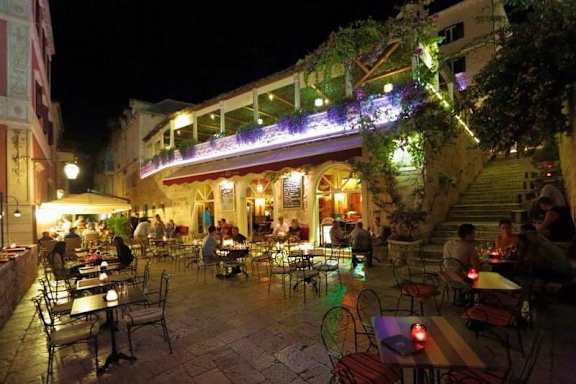
Hvar Town has the biggest nightlife on the Adriatic islands and the prices that come with it. Carpe Diem on the harbour and its beach club on a Pakleni island are the names, with boats running out to the island club until the early hours.
Hula Hula on the coast path west of town does sunset and afternoon drinking, and the bars around the square fill after midnight.
Cocktails are €12 to €18 and beers €4 to €6.
The dress code is worth knowing: walking through the town centre in swimwear carries a fine, and it is enforced. Cover up between the beach and the square.
In May, June and September it is a much calmer and more pleasant place.
Catamarans from Split take an hour to Hvar Town for about €12 as a foot passenger, and car ferries go to Stari Grad, which is a twenty-minute bus from the town.
Hvar Town itself is small and car-free in the centre.
The island is 68 kilometres long and buses between the towns are infrequent — a scooter at €30 to €50 a day or a car is how to see the interior, and almost nobody bothers, which is why the inland is empty.
Taxi boats to the Pakleni islands leave the harbour constantly in season for €5 to €15 return.
Note that catamarans are foot-passenger only; if you have a car it must go to Stari Grad.
Expensive in season, and the most expensive island in Croatia. Dorms are €25 to €55, a main on the harbour €30 to €50, and cocktails €12 to €18.
A day is €60 to €120 in August.
The levers: stay in Jelsa or Stari Grad and bus in, eat in the lanes rather than on the water, take taxi boats rather than organised tours, and go in May, June or September when everything drops by a third or more.
Croatia has used the euro since 2023.
Hvar is safe, and the risks come from the combination of heat, alcohol and rocks.
The swimming is off rocks with sea urchins throughout — water shoes are genuinely useful here.
Cliff jumping around the Pakleni islands and the coast causes injuries every summer; depths vary and rocks move.
Scooter accidents are the other regular problem, usually involving inexperienced riders on unfamiliar roads after a long lunch. Wear a helmet and check what your insurance covers.
The town dress code carries fines. And the sun here is the strongest in Croatia at around 2,800 hours a year. Emergency number is 112.
Islands offshore and an interior almost nobody sees.
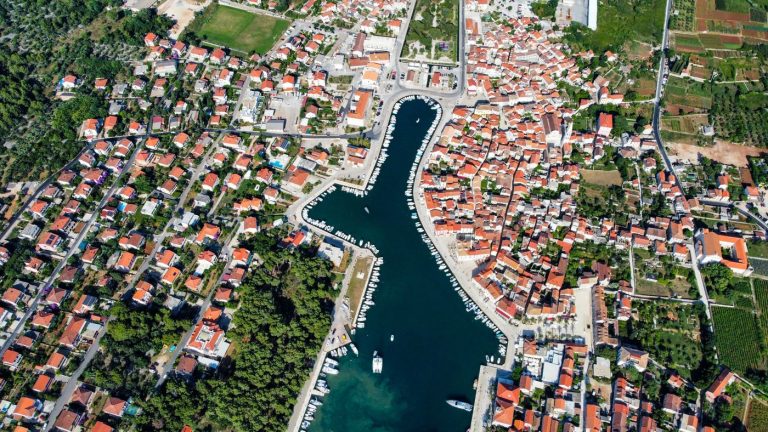
One of the oldest towns in Europe and a Greek field system from 384 BC, still farmed on the original boundaries.
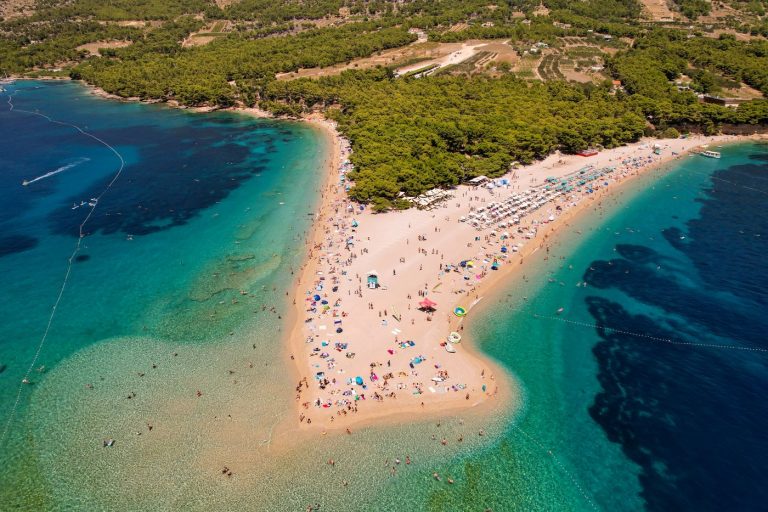
The shingle spit that appears on every Croatian poster.
A party season, a lavender festival and a procession that has run since 1510.
 Staff pick
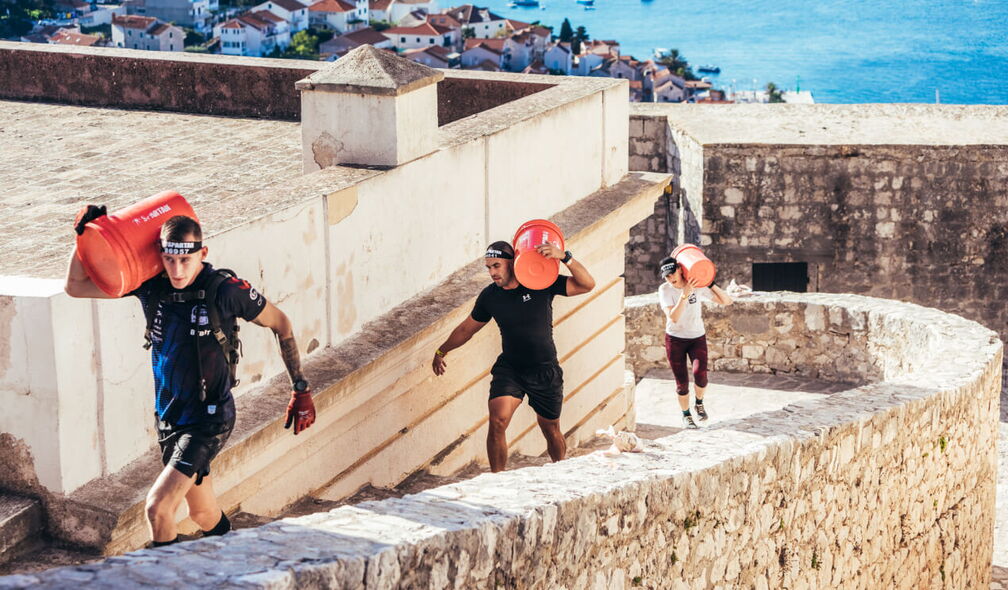
Set against the stunning backdrop of Hvar, Croatia, the Spartan Race Hvar 100 Meter & Sprint World Championship invites athletes to push their limits…
 Staff pick
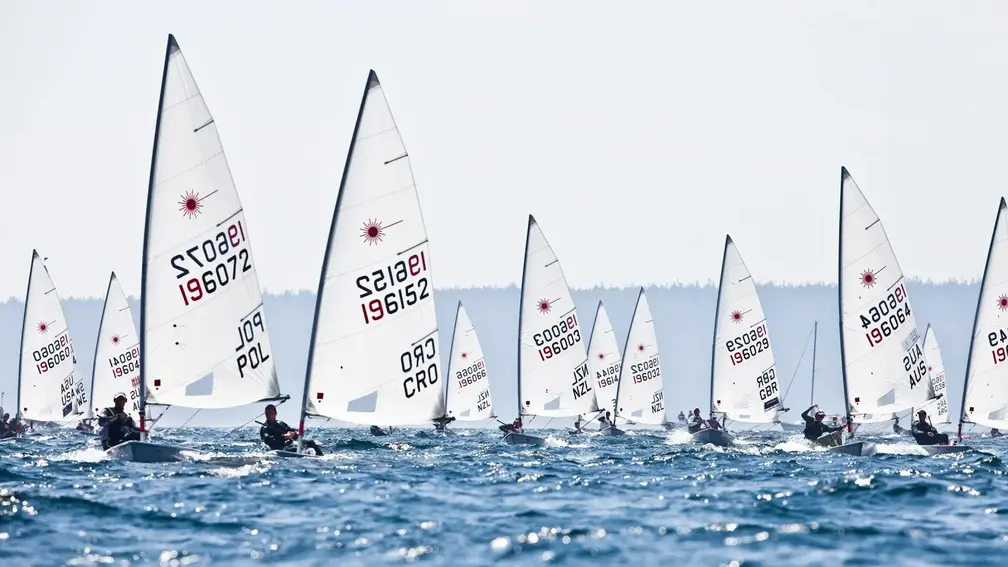
Set against the scenic backdrop of Hvar, Croatia, the International New Year’s Regatta gathers sailors from around the world for a spirited series of…

The Spartan World Championships 2026 will take place in Hvar from October 8 to 11, 2026. This event includes the 100M and Sprint World…
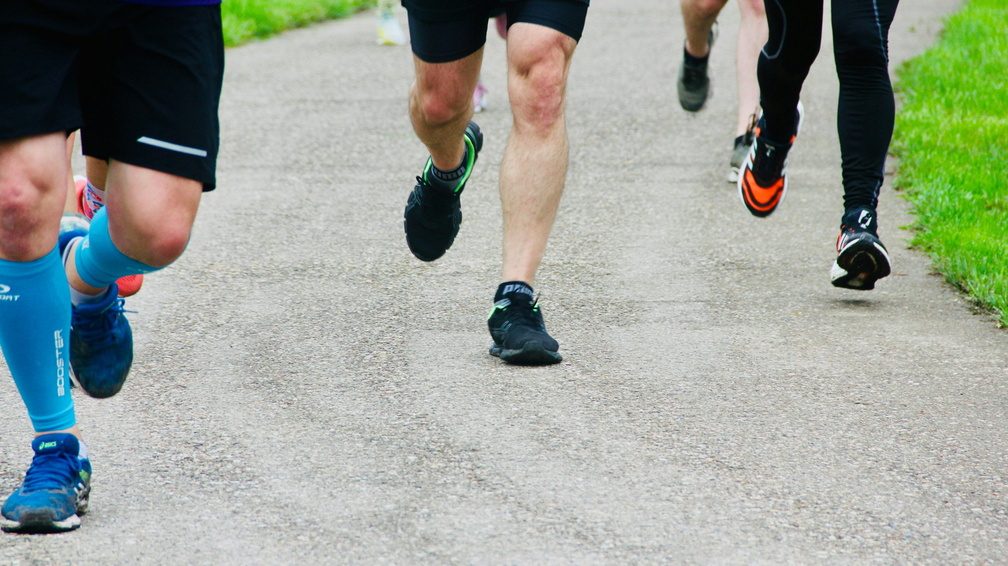
Looking for a race that gets straight to the point and leaves you with a story to tell? The Hvar 100 Meter & Sprint…

Hvarmony Festival 2026 invites you to explore wellbeing through a blend of inspiring talks, workshops, and mindful outdoor experiences. Set on the island of…

A nine-round Swiss system tournament brings classical chess to the historic Arsenal building on this Adriatic island. The 5th Open Hvar welcomes up to…
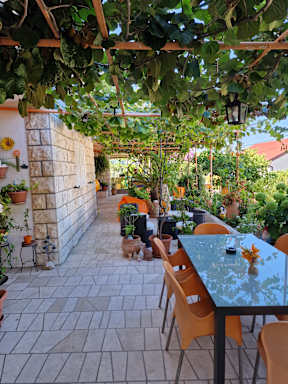
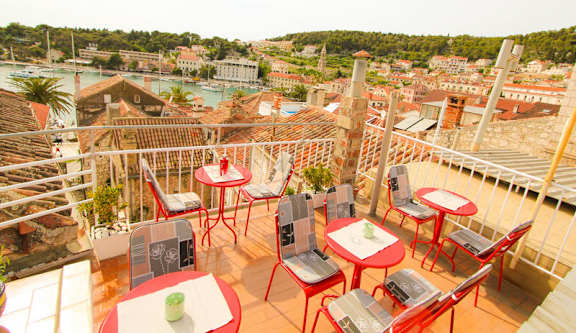
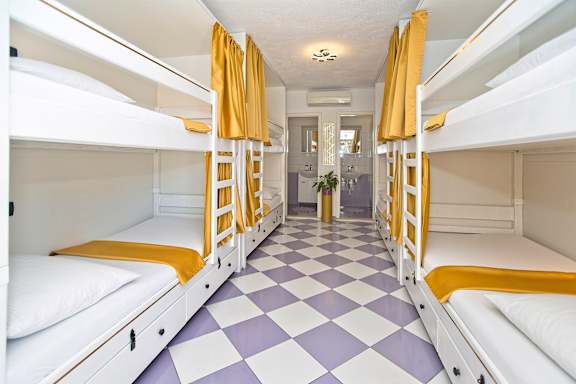
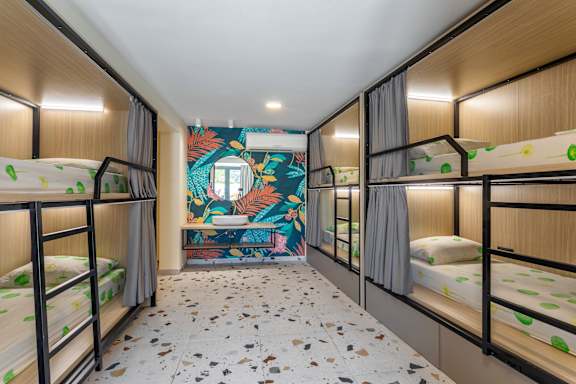
A seasonal scene concentrated in Hvar Town, with better value in Stari Grad and Jelsa. Live from Hostelworld.
May, June and September. July and August are the party season and priced for it.
Average highs. Hvar claims around 2,800 hours of sunshine a year, the most in Croatia, and the lavender is in flower through June and early July.
Pick how you travel. Per person per night, in euros, in season.
August runs well above these figures in Hvar Town. Jelsa and Stari Grad are considerably cheaper for the same island.
The ones we get asked most.

Compare Hvar hostels — live prices, real reviews and free cancellation on most bookings. Then meet the people already there in the app.

 Get the App.
 Get the App.