Inside the walls
EveryoneThe whole UNESCO centre: the temple, the cathedral, the bone chapel and every restaurant worth eating in.

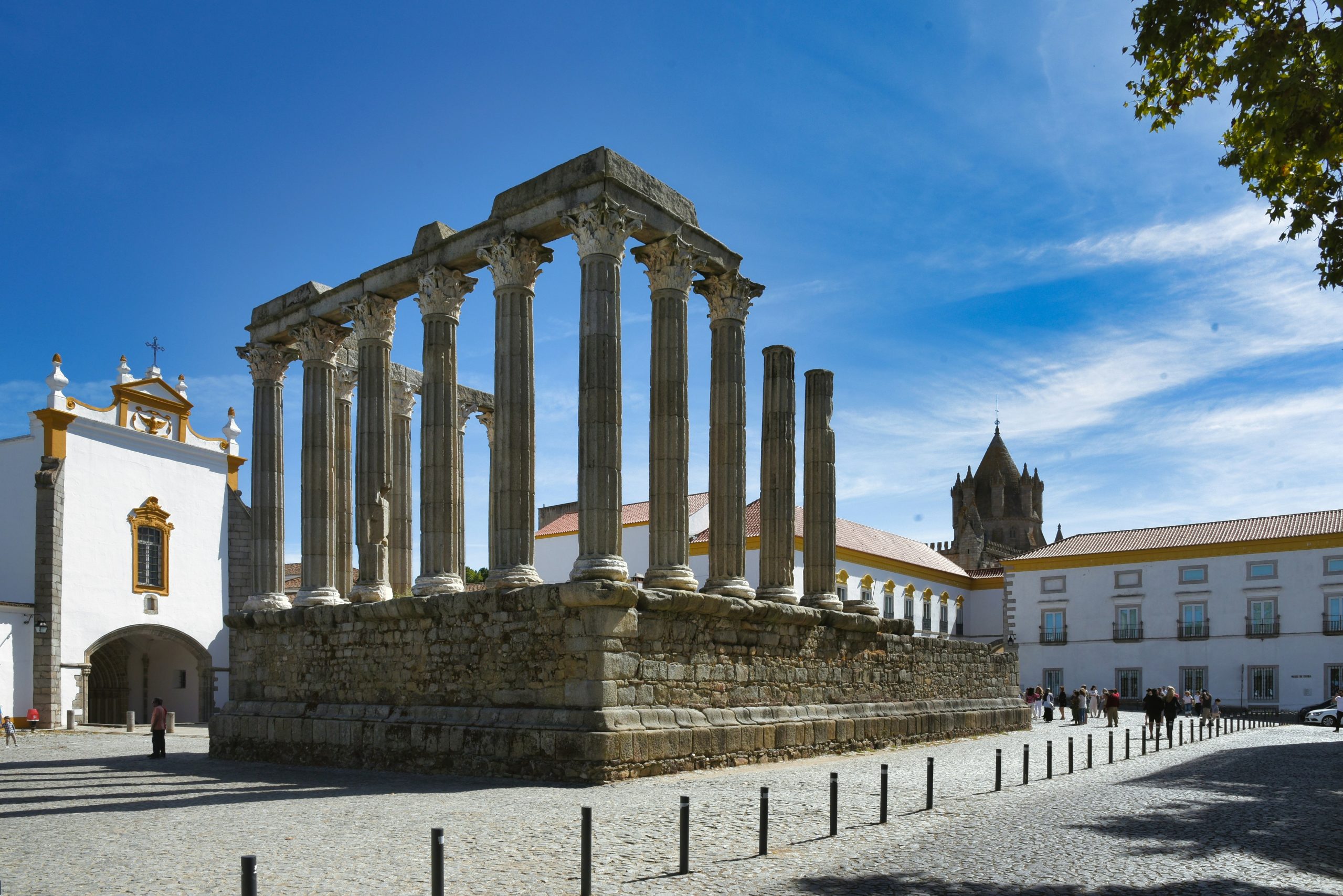
A Roman temple in the middle of a walled town, a chapel built from the bones of 5,000 people, and the food capital of the Alentejo.
Évora is a small city inside intact walls, and the whole centre is UNESCO-listed. A Roman temple stands in the main square, a cathedral looms above it, and the Capela dos Ossos is lined floor to ceiling with the bones of around 5,000 people, under an inscription telling you that they are waiting for yours.
Around it is the Alentejo: cork oaks, wheat, olive groves and the best food in Portugal, eaten slowly and washed down with wine that has become expensive because the rest of the world noticed.
A day and a night does the town properly. Two if you want the megaliths — the Almendres cromlech is older than Stonehenge and you will likely be alone there.
Stay inside the walls. The town is small enough that nothing else makes sense.
The whole UNESCO centre: the temple, the cathedral, the bone chapel and every restaurant worth eating in.
The main square and the streets off it, with the tourist office, buses and most of the beds.
A ten-minute walk from the gates, noticeably cheaper, and quieter in summer.
Orange labels are neighbourhoods, dots are the 2 top-rated hostels. Map © MapTiler © OpenStreetMap contributors.
The Capela dos Ossos is the thing everyone comes for: a chapel lined with the bones and skulls of about 5,000 people, assembled by monks in the sixteenth century to make a point about mortality, with an inscription over the door that translates as "we bones that are here await yours". Entry is a few euros.
The Roman temple, wrongly called the Temple of Diana for centuries, stands almost complete in the upper town, floodlit at night and free to walk around.
The cathedral has a roof terrace worth the climb for the view over the plain, and the Água de Prata aqueduct runs into the town with houses built into its arches.
Out of town, the Almendres cromlech is a stone circle roughly two thousand years older than Stonehenge, in a field with no ticket office and usually nobody else.
The Roman temple costs nothing and is the best thing to look at in town, particularly after dark when it is lit.
Walking the walls, the aqueduct with its houses built into the arches, and the whole UNESCO centre are free.
Praça do Giraldo is where the town sits in the evening, and the Jardim Público with its ruined palace and peacocks costs nothing.
The Almendres cromlech is open, unfenced and free, if you can get the 15km out there.
The Alentejo is the best eating region in Portugal and Évora is where to do it. Porco preto — black Iberian pork from acorn-fed pigs — is the signature, and açorda, a bread and garlic soup with coriander and a poached egg, is the peasant dish that everyone now serves.
Migas, ensopado de borrego and carne de porco à alentejana, which pairs pork with clams, fill the rest of the menu.
A proper Alentejo lunch is €12 to €20 and takes two hours. The couvert here is generous and charged for: cheese, olives, bread and pâtés arrive unasked.
Alentejo wine has become properly good and properly expensive. Herdade do Esporão and Cartuxa are the names, and most restaurants pour local by the glass for €3 to €5.
Évora has a university, which gives a town this size more of an evening than it would otherwise have. Bars around Praça do Giraldo and the streets behind it fill from ten in term time.
It is small and it is not why anyone comes. Most evenings here are a long dinner, a bottle of Alentejo red and a walk around a floodlit Roman temple, which is a perfectly good night.
A glass of wine is €3 to €5 and a beer €2 to €3.
In July and August the students are gone and the town is hot and quiet after dark.
Walk. The walled centre is about fifteen minutes across and cars are largely kept out of it.
Buses from Lisbon's Sete Rios take about ninety minutes and cost around €13, running several times a day. The train is slower and less frequent and arrives further from the centre.
The megaliths and the surrounding villages need a car or a tour: Almendres is 15km out on a dirt road at the end, and tours run from town for €25 to €40.
Within the Alentejo, buses connect Évora to Monsaraz, Estremoz and Elvas, though services are sparse and rarely convenient for a day return.
Évora is cheap to sleep in and worth spending on at the table. Dorms are €15 to €25, and a serious Alentejo lunch is €12 to €20, which is the one thing here worth paying for.
A day is €40 to €55.
The bone chapel, the cathedral roof and the museums are a few euros each. A megalith tour is €25 to €40. Wine is the discretionary cost, and the good Alentejo bottles are no longer cheap.
Évora is a very safe small city with almost no crime that affects visitors, and the walled centre is comfortable at any hour.
Heat is the real risk. The Alentejo regularly passes 38 degrees in July and August, there is very little shade on the plain, and the megalith sites have none at all. Go early, carry water and treat midday as indoors time, which is what locals do.
Driving the back roads at night means cork oaks, no lighting and occasional wild boar.
Emergency number is 112.
A small calendar built around food, wine and one large medieval fair.
Ten days of Alentejo food, wine, music and cante alentejano, the region's UNESCO-listed group singing.
Processions through the walled town, quieter and older than the coastal versions.
Picking and treading across the Alentejo, with estates opening for lunches.
Unaccompanied group singing from the region, UNESCO-listed and still performed in bars.
Small, local, and a good reason to be inland in winter.
A handful of places, almost all inside the walls and within ten minutes of the square. Live from Hostelworld.
Spring and autumn. The Alentejo in August is genuinely punishing.
Average highs. The Alentejo is the hottest part of Portugal in summer and the plain holds the heat well into the evening.
Pick how you travel. Per person per night, in euros.
The food line is deliberately high. A long Alentejo lunch is the main reason to be here.
The ones we get asked most.

Compare Évora hostels — live prices, real reviews and free cancellation on most bookings. Then meet the people already there in the app.

 Get the App.
 Get the App.