Near the rock
First-timersGuesthouses on the main road, a walk from the gate.

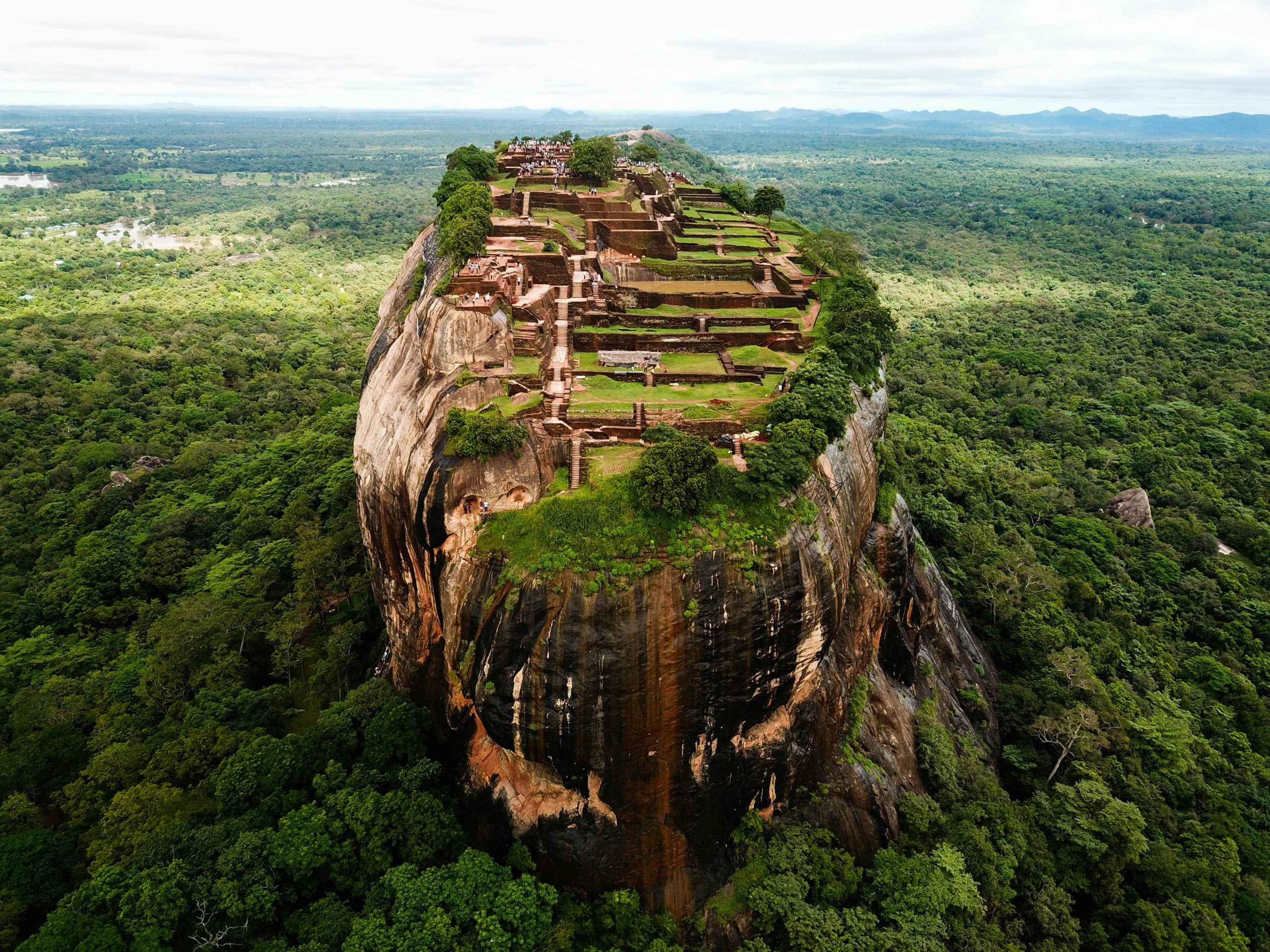
A rock fortress rising two hundred metres from the jungle plain, with frescoes and a lion's-paw gateway, at the heart of the Cultural Triangle of cave temples, ruined cities and elephant herds.
In the fifth century, King Kasyapa built a palace on top of Sigiriya, a sheer granite rock rising from the plain, with frescoes on its walls, gardens at its foot and a gateway through a giant lion's paws. It is a UNESCO World Heritage Site.
Sigiriya is also the base for the Cultural Triangle: the Dambulla cave temples, the ruined city of Polonnaruwa and the elephant gatherings of Minneriya.
Two or three days is right.
Sigiriya village is spread along a few roads around the rock, with guesthouses among the paddy fields. Stay on the main road near the rock to walk to the gate, or on the road towards Pidurangala for quieter places and an easy sunrise climb.
Guesthouses on the main road, a walk from the gate.
Among paddy fields, close to the sunrise climb.
Orange labels are neighbourhoods, dots are the 11 top-rated hostels. Map data from OpenStreetMap contributors.
Climb Sigiriya Rock as soon as the gates open in the morning, before the heat and the tour buses. The route climbs about 1,200 steps: through the water gardens, past the frescoes of the cloud maidens painted in a sheltered gallery fifteen centuries ago, along the Mirror Wall, scratched with visitors' poems from the eighth century on, and through the giant paws of the lion gateway to the palace ruins on the summit. Foreign adults pay USD 35, which includes the museum. Allow two to three hours.
Pidurangala Rock, next door, is the cheaper alternative and has the best view of Sigiriya itself. The climb takes about forty minutes, past a temple and a reclining Buddha, with a scramble over boulders at the end. Go for sunrise and bring a torch.
The Dambulla Cave Temple, half an hour away, is five caves filled with Buddha statues and painted ceilings, a UNESCO World Heritage Site. Polonnaruwa, the medieval capital, is best explored by bicycle; its highlight is the Gal Vihara, four Buddhas carved from a single granite wall.
From roughly July to October, hundreds of elephants gather on the grasslands around Minneriya and Kaudulla reservoirs, one of the largest gatherings of Asian elephants anywhere; jeep safaris leave in the afternoon.
The village and the paddy fields around it are free to cycle, and you can see Sigiriya Rock from the outer moat and the road without a ticket.
Sigiriya Wewa, the reservoir beside the rock, is good for sunset. Pidurangala is not free, but at around LKR 1,000 (about €3) it costs a fraction of the main rock and has the better view.
Food in Sigiriya means guesthouse cooking: a rice-and-curry dinner with a dozen small dishes, often made with jackfruit, pumpkin, dhal and curry leaves from the garden, is one of the best meals of a Sri Lanka trip. Order in the afternoon so the cook can prepare it.
Village restaurants on the main road do kottu, fried rice and hoppers, and fruit stalls sell king coconut, which is the best thing to drink after the climb.
A meal is €3 to €6.
Sigiriya has no nightlife to speak of. Evenings are spent at guesthouses, and most people go to bed early for a sunrise climb.
A few restaurants on the main road serve beer.
A beer is €2.50 to €4. Every full-moon day is a Poya holiday, when alcohol sales are banned and most bars close or serve only quietly; check the calendar before planning a night out.
Dambulla is the transport hub, about thirty minutes away by bus or tuk-tuk, with buses to Kandy (two to two and a half hours), Colombo (about four hours), Anuradhapura and Trincomalee.
The nearest station is Habarana, about twenty minutes away by tuk-tuk, on the line to Trincomalee and Batticaloa.
Around Sigiriya, rent a bicycle or scooter, or take tuk-tuks; guesthouses arrange jeeps for Minneriya and drivers for day trips to Polonnaruwa and Dambulla.
Sigiriya is mid-priced, but the sights are expensive. Dorms start around €7 and a careful day is €20 to €30, plus entry fees.
Sigiriya Rock is USD 35 for foreign adults and Pidurangala about €3. Dambulla Cave Temple and Polonnaruwa have their own tickets, and a jeep safari at Minneriya costs several thousand rupees for the jeep plus park fees. Sharing a jeep with others cuts the cost.
The currency is the Sri Lankan rupee (LKR); prices here are euro equivalents. Tickets priced in dollars are paid in rupees at the day's rate. Take out cash in Dambulla.
Sigiriya is safe, but the climb needs care. Start early to avoid the midday heat and carry water. Wild hornets nest on the rock face and occasionally swarm; staff sometimes close the upper sections, so keep quiet near the nests and follow their instructions.
Wild elephants roam the roads and fields around Sigiriya and Habarana, especially at dusk. Do not walk or cycle on the roads after dark, and never approach them.
At the Dambulla temple, cover shoulders and knees and remove shoes and hats.
Emergency: 119 police, 1990 ambulance (Suwa Seriya, free). Tourist Police: 1912.
The painted caves, the medieval capital and the elephant gathering.
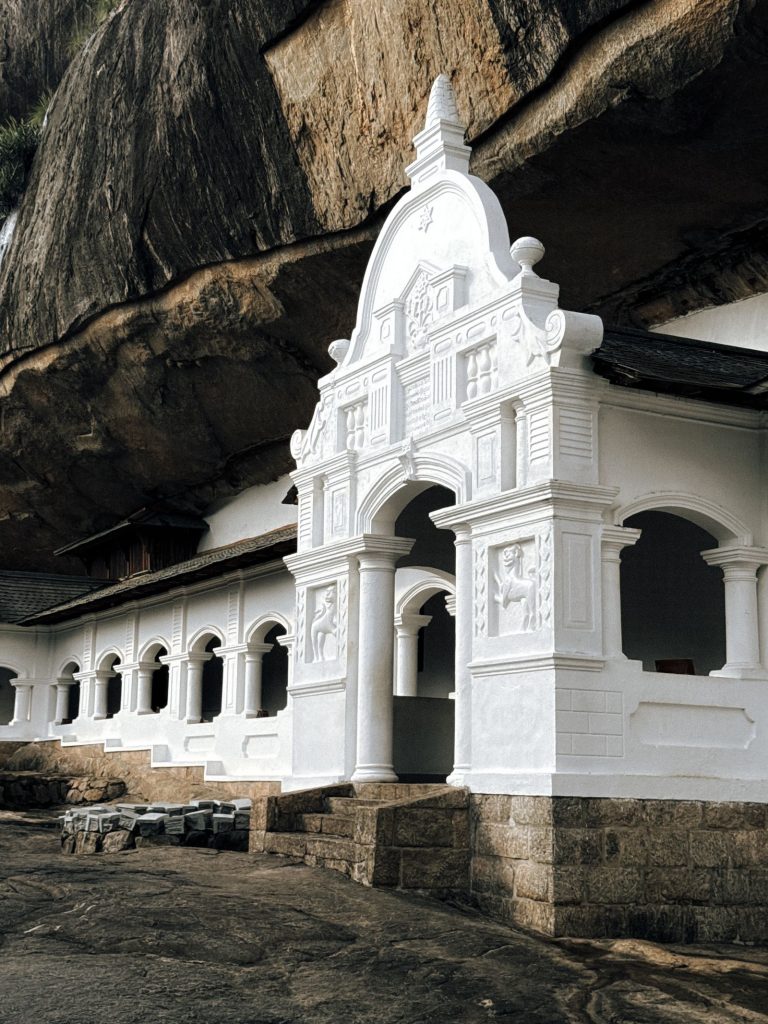
Five caves of Buddha statues and painted ceilings, UNESCO-listed.
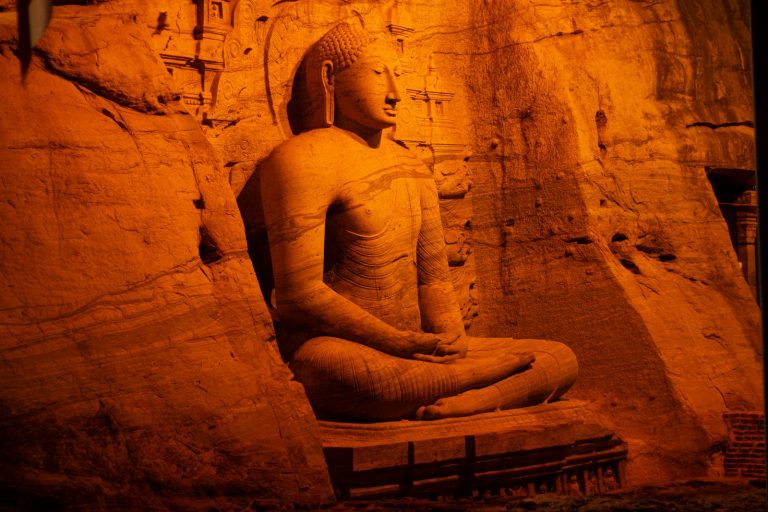
The medieval capital, by bicycle. The Gal Vihara Buddhas are the highlight.
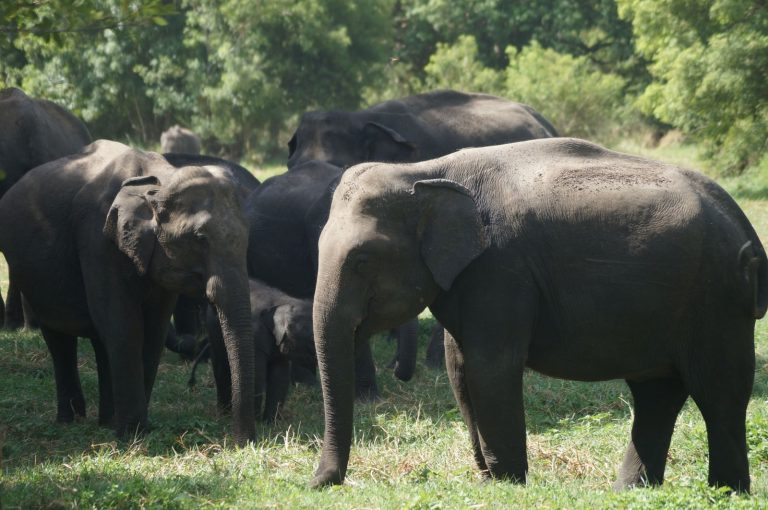
Hundreds of elephants gather on the grasslands from about July to October.
The Gathering of elephants at Minneriya peaks in August and September.
Hundreds of elephants.
Buddhist festival.
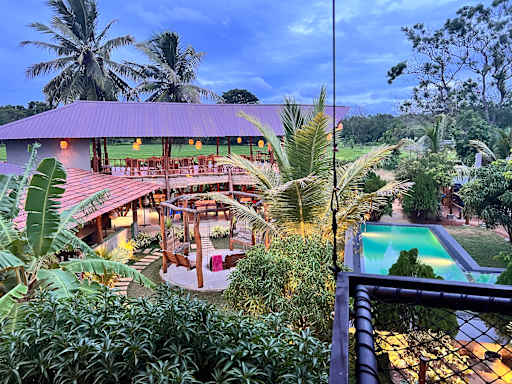
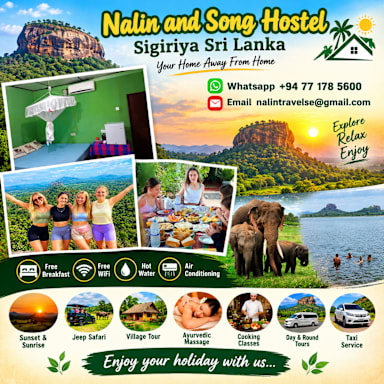
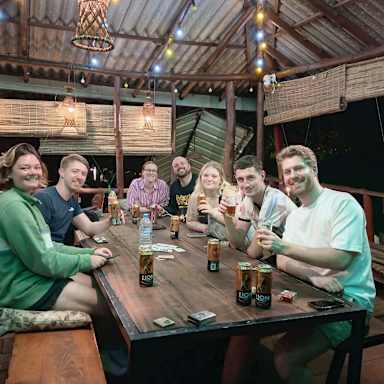
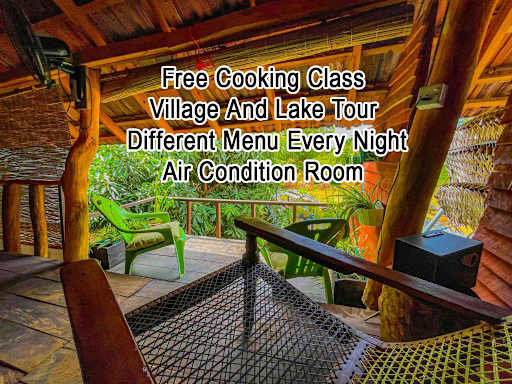
The top-rated places to stay in Sigiriya right now, live from Hostelworld.




 Sustainable
January to September is best here, drier than the south-west in the monsoon.
Average highs.
Pick how you travel. Per person per night, in euros.
Prices are in rupees locally; these are euro equivalents. Excludes entry fees.
The ones we get asked most.

Compare Sigiriya hostels — live prices, real reviews and free cancellation on most bookings. Then meet the people already there in the app.

 Get the App.
 Get the App.