Centro
Everything on footAround the Plaza de Armas and the San Francisco church.

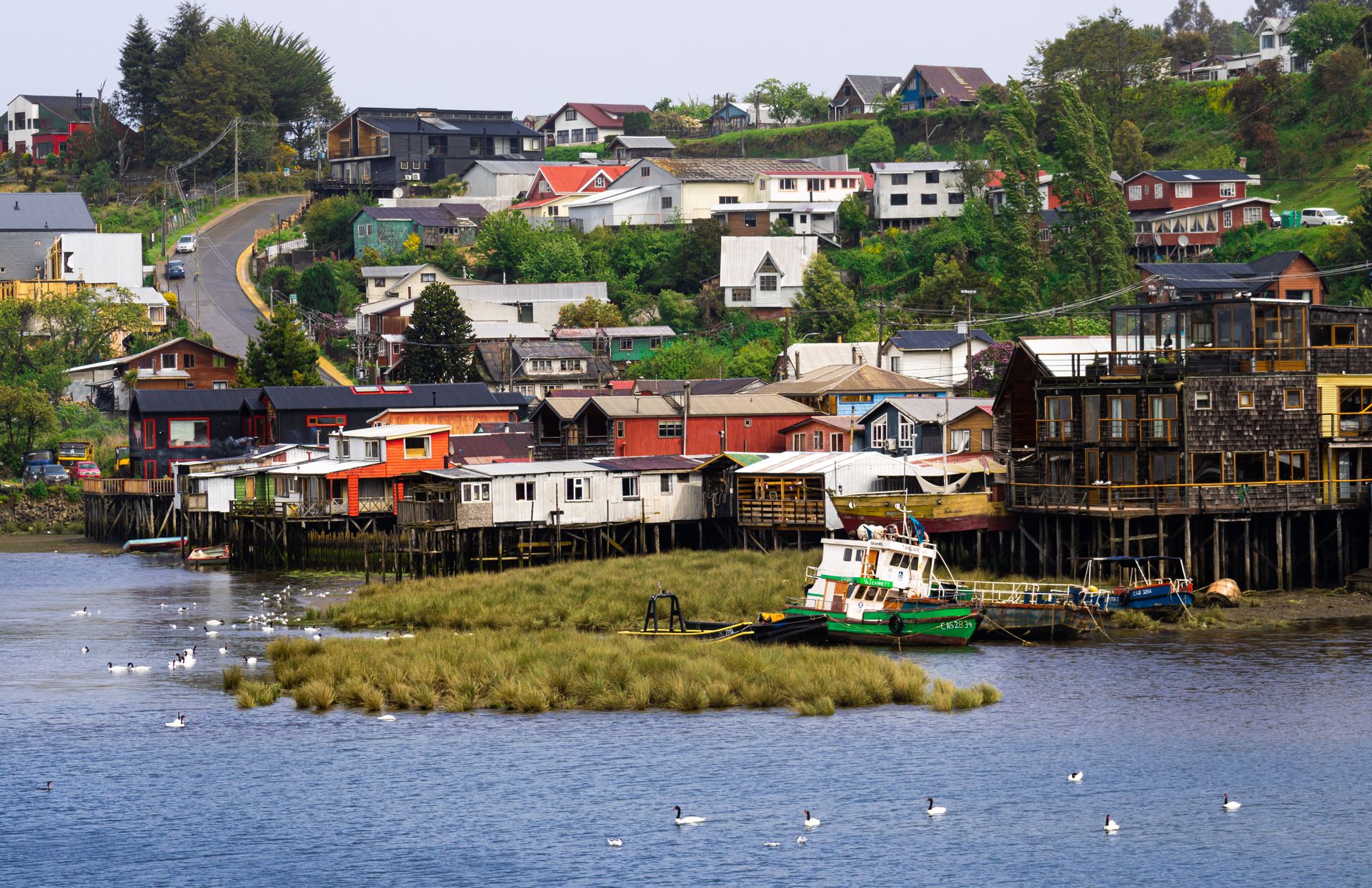
The capital of Chiloé, an island of misty green hills, colourful houses on stilts and wooden churches listed by UNESCO. A world apart from mainland Chile, with its own food, myths and pace of life.
Chiloé is a large island off the coast of southern Chile, separated from the mainland by the narrow Chacao Channel. Its isolation created a culture all of its own: a mix of Huilliche Indigenous and Spanish traditions, a mythology of ghost ships and forest spirits, and a building tradition of wooden churches and shingled houses that is unlike anywhere else.
Castro, the island's capital, sits on a sheltered fjord in the middle of the island. Its palafitos, brightly painted houses built on stilts over the water, are Chiloé's most famous image, and its yellow and purple Iglesia de San Francisco is one of 16 wooden churches across the island listed as a UNESCO World Heritage Site.
Castro is the best base for exploring Chiloé: the churches and markets of the smaller islands, the rugged coast and forests of Chiloé National Park, and the Magellanic and Humboldt penguin colony at Puñihuil. Give it three or four days, and bring a rain jacket: Chiloé is green for a reason.
Stay in the centre near the Plaza de Armas, or in one of the palafitos along the water, many of which are now hostels and guesthouses.
Around the Plaza de Armas and the San Francisco church.
Palafitos across the river, many of them guesthouses and cafés.
Palafitos north of the centre, near the fjord.
Orange labels are neighbourhoods, dots are the 4 top-rated hostels. Map data from OpenStreetMap contributors.
In Castro, start with the Iglesia de San Francisco on the Plaza de Armas, a huge wooden church covered in shingles and painted yellow and purple, with an interior made entirely of native wood. Then walk to the palafitos of Gamboa and Pedro Montt, the best places to see the stilt houses, especially at high tide.
The UNESCO churches are spread across the island, and some of the most beautiful are on the smaller islands. Dalcahue, half an hour north, has a Sunday market and a ferry to Quinchao island, where the church of Achao is the oldest in Chiloé. Chiloé National Park, on the wild Pacific coast near Cucao, has forest trails, dunes and long empty beaches.
Near Ancud, in the north of the island, boats from Puñihuil visit small islands where Magellanic and Humboldt penguins nest together, from around September to March. Learning about Chilote mythology, from the Trauco to the ghost ship Caleuche, is part of the experience.
Castro's best sights are free: the San Francisco church, the Plaza de Armas and the palafitos along the water. The viewpoints over the fjord, especially at the Gamboa palafitos, are beautiful at sunset.
The markets, including the crafts market by the waterfront and the Feria Yumbel, are free to browse, with knitwear, woven baskets and smoked seafood.
The UNESCO churches around the island are free to visit, though some ask for a small donation.
Curanto is Chiloé's great dish: shellfish, meat, sausages, potatoes and milcao (potato bread) cooked in a pit over hot stones and covered with nalca leaves, or in a pot in restaurants (curanto en olla). It is a feast, and one of the island's traditions.
Chiloé is also famous for its potatoes, with hundreds of native varieties, and for seafood, especially mussels, clams and oysters. Milcaos and chapaleles, potato breads, are sold at markets, and licor de oro, a golden liqueur made with whey, is the local drink.
The waterfront markets serve cheap, fresh seafood lunches.
Castro is quiet at night, with a few bars and pubs in the centre and some palafito cafés open in the evening.
Nights on Chiloé are about a good meal, a local beer or licor de oro, and conversation.
In summer, festivals bring music and dancing to the island.
Castro is walkable. Local buses connect it with Dalcahue, Cucao, Ancud and other towns, and car hire is the best way to see the island's churches and coast.
From Puerto Montt, buses take around three and a half hours to Castro, including a ferry across the Chacao Channel of around 30 minutes. Castro also has a small airport, Mocopulli, with flights from Santiago and Puerto Montt.
Ferries leave from Quellón, in the south of the island, towards the Carretera Austral.
Castro is good value by Chilean standards. Dorm beds run from around €10 to €18, and seafood lunches at the markets are cheap.
The main extras are car hire, tours to the national park and the penguin boats at Puñihuil.
Cards are widely accepted, but carry some cash for markets and small places.
Castro and Chiloé are very safe. Take normal care with belongings.
The weather is the main challenge: it rains a lot, even in summer, and the Pacific coast can be stormy. Bring waterproofs and layers, and take care on coastal trails.
In an emergency, call 133 for police or 131 for an ambulance.
The island's churches, coast and penguins.
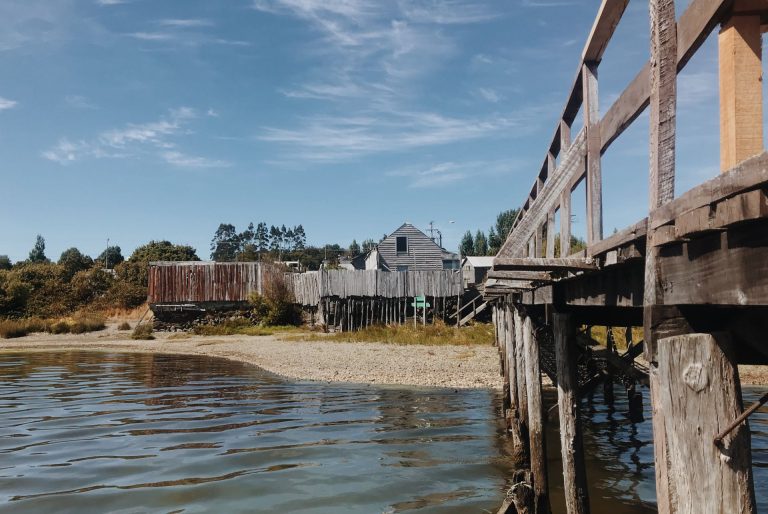
A Sunday market and the oldest church in Chiloé, at Achao.
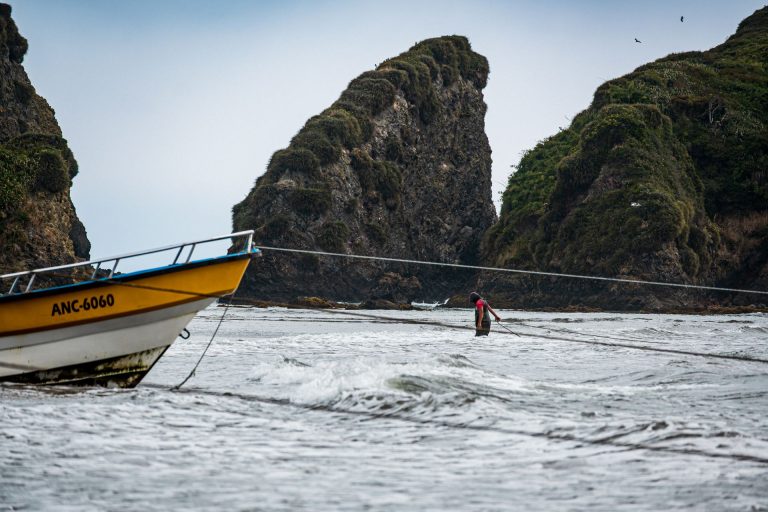
A fortress, a market and the north of the island.
Summer festivals celebrate Chilote food and culture.
A festival of Chilote food, crafts and music.
Magellanic and Humboldt penguins nest together.
The highest-rated hostels in Castro, straight from Hostelworld. Prices and availability are live on each property page.
December to March is the warmest and driest time, with festivals and penguins. The rest of the year is cool and wet, but green and quiet.
Average highs, rounded. Rain is common all year.
Per night, for one person, based on Castro prices.
Treat these as a guide. Car hire costs extra.
The ones we get asked most.

Compare hostels in Castro: live prices, real reviews and free cancellation on most bookings. Then meet the people already there in the app.

 Get the App.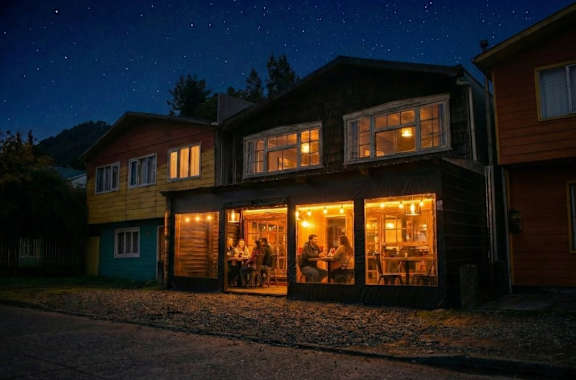




 Get the App.