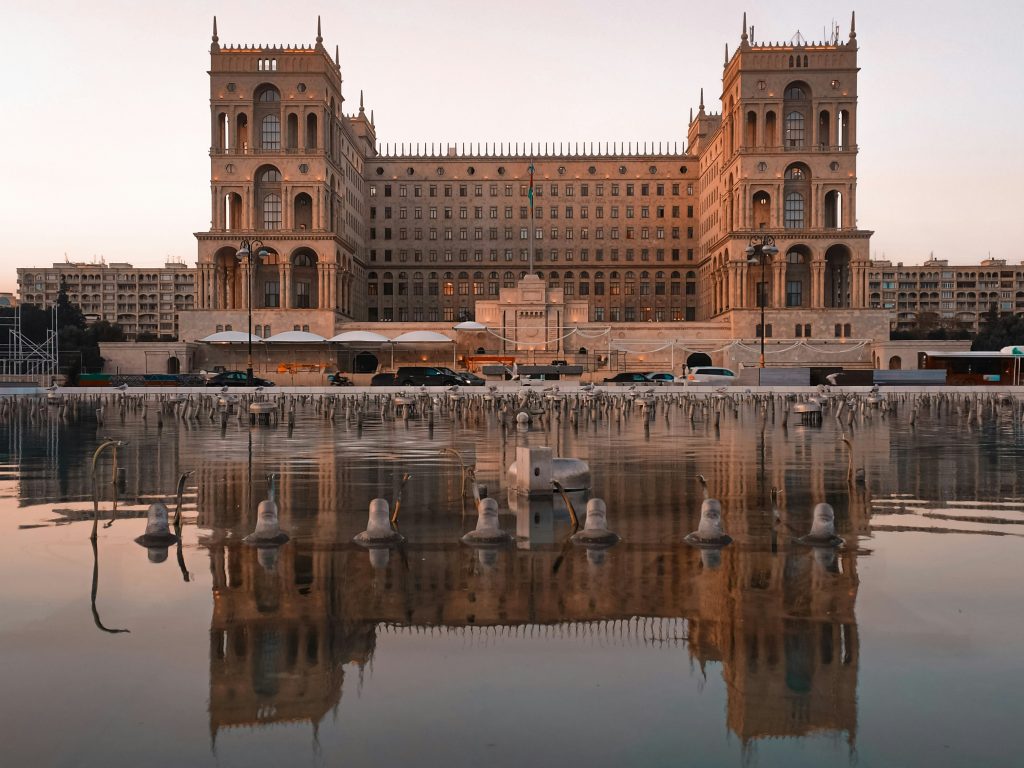
Baku
23 hostels · dorms from €5
A walled old city, a Caspian promenade, oil-boom architecture and the Flame Towers above it all.

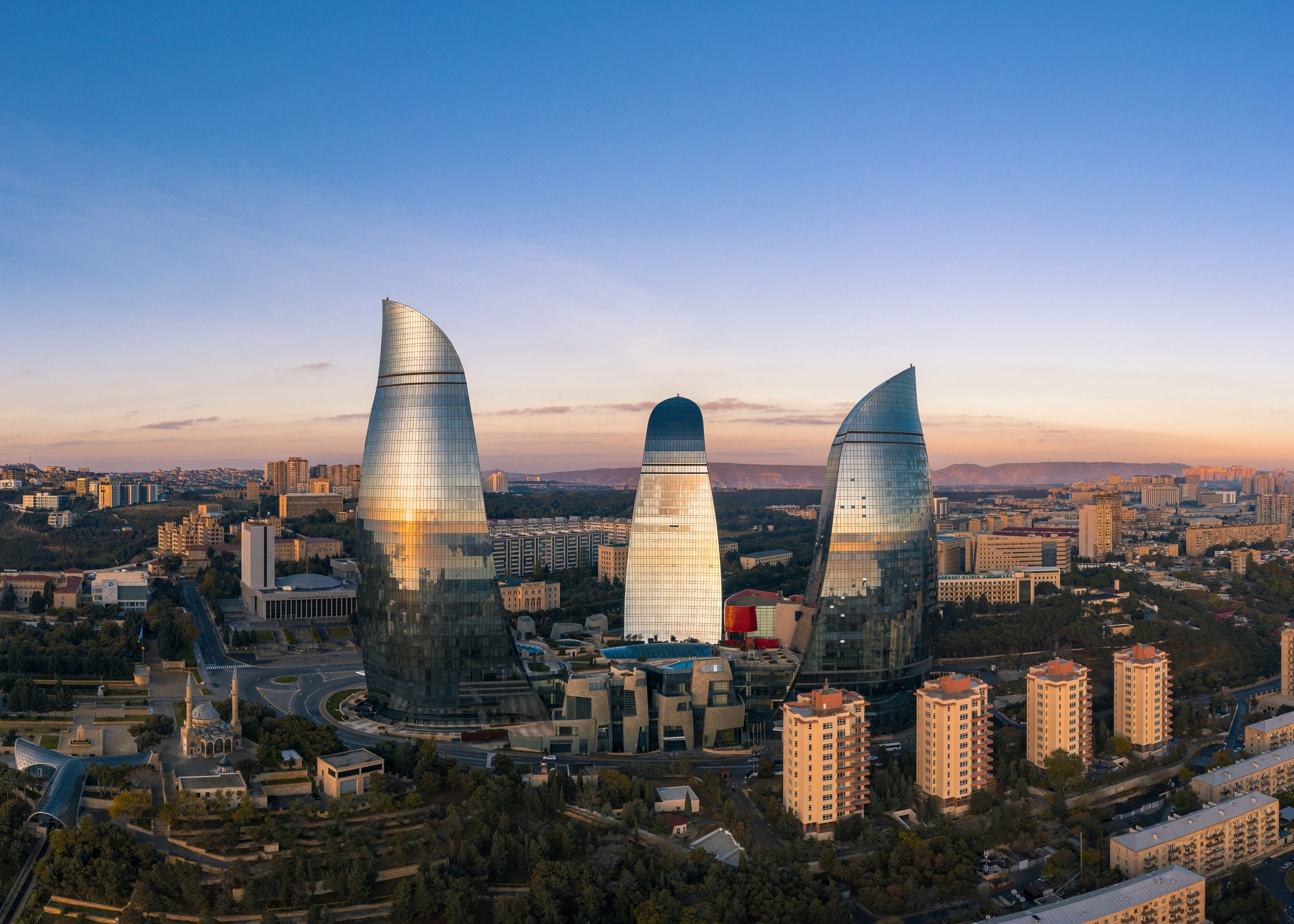
A walled old city on the Caspian, flames coming out of a hillside, and mountain villages where the language predates almost everything. Cheap, close to Europe, and barely visited.
Baku is the reason most people come and it is a genuinely strange and good city: a UNESCO-listed walled old town, a seafront promenade along the Caspian, Soviet apartment blocks, and a skyline of oil-funded towers including the Flame Towers that light up at night.
It sits 28 metres below sea level on the largest lake in the world, and on a peninsula where natural gas seeps from the ground — Yanar Dag, a hillside that has been on fire for centuries, is half an hour away, and the Zoroastrian fire temple nearby explains why this was a sacred place long before oil.
North and west of the capital, the Caucasus rise quickly. Sheki has a Silk Road caravanserai and a khan's palace with stained glass; Quba and Xinaliq lead into mountain villages, one of which sits at 2,300 metres and speaks a language of its own.
Baku is the hub. Trains and shared taxis reach the regions in three to six hours.
A walled old city, a Caspian promenade, oil-boom architecture and the Flame Towers above it all.
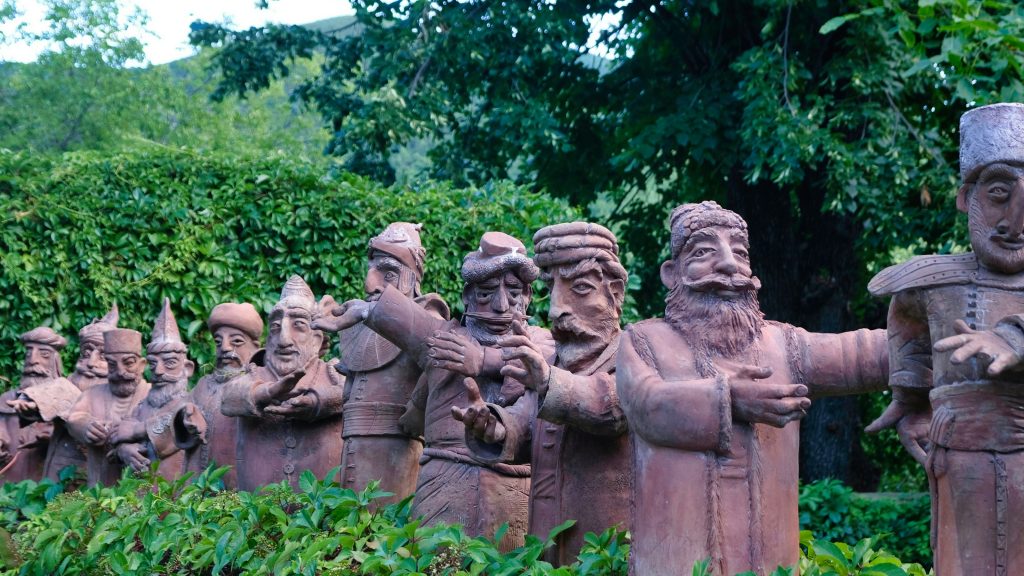
A Silk Road town with a caravanserai, a khan's palace and mountains behind it.
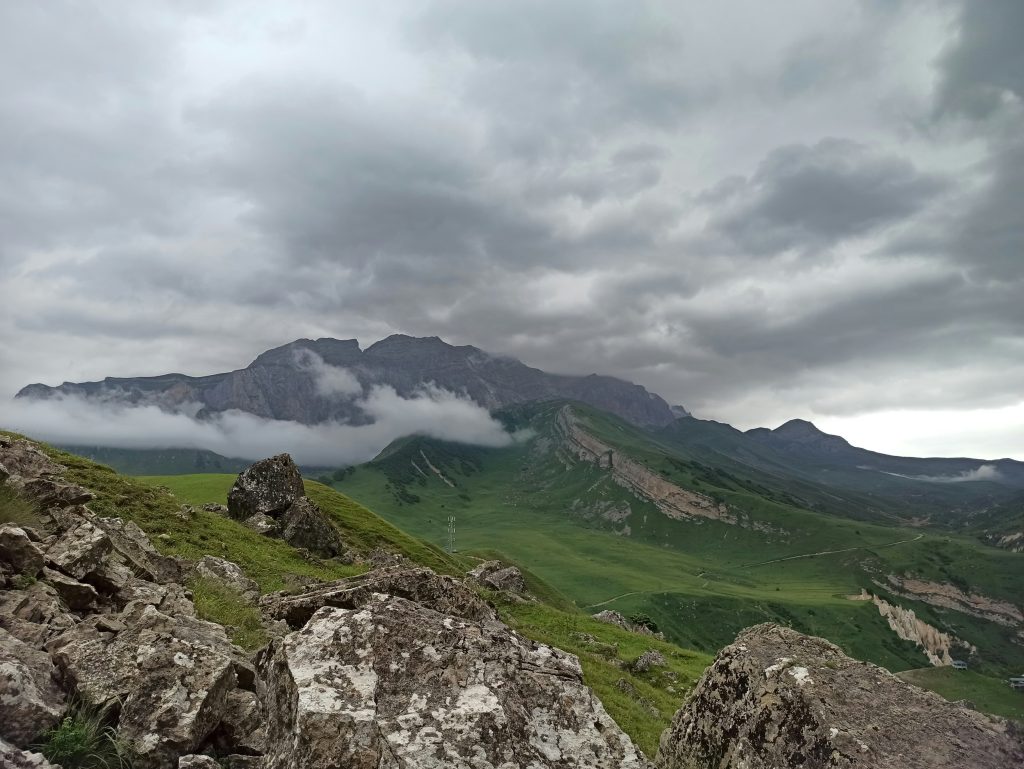
The base for the northern mountains and the road to Xinaliq.
The second city, with a Soviet-era centre, a mosque built from fired brick in 1606, and a bottle house made of 50,000 of them.
Azerbaijan is a city break with mountains and some very odd geology attached.
Baku over three or four days, and it is more interesting than expected.
Zoroastrian fire temples, Silk Road towns and rock art.
The Caucasus, and villages that take a day to reach.
Plov, kebabs and a tea culture with jam in the glass.
Cheap outside Baku's tourist restaurants.
The Caspian, which is a lake and behaves like a sea.
Baku's old city, Icherisheher, is a walled UNESCO quarter with the Maiden Tower and the Shirvanshahs' Palace inside it, and it takes a morning. The Heydar Aliyev Center, a Zaha Hadid building of white curves, is the modern counterpoint and worth the trip out.
The peninsula around the city is where the geology gets strange. Yanar Dag is a hillside that has burned continuously for centuries on escaping natural gas; Ateshgah is a Zoroastrian and Hindu fire temple built around the same phenomenon; and Gobustan, an hour south, has 6,000-year-old rock carvings alongside a field of mud volcanoes.
Inland, Sheki is the highlight: a caravanserai you can sleep in, and the Khan's Palace with a facade of shebeke stained glass assembled without nails or glue. The road from Quba up to Xinaliq, a village at 2,300 metres with its own language, is the best drive in the country.
Azerbaijani food sits between Turkish, Persian and Central Asian. Plov here is not the Uzbek version — it is saffron rice steamed separately from the meat and served with dried fruit — and there are dozens of regional variations.
Dolma, kebabs, dushbara dumplings in broth, and qutab, a thin stuffed flatbread, are the everyday dishes, at €3 to €8. Bakery lavash and fresh herbs come with everything.
Tea is the ritual: served in pear-shaped armudu glasses, taken with jam eaten from a spoon rather than stirred in, and refused only with difficulty. Sheki halva, layered and syrupy, is worth the detour on its own.
Baku has the nightlife and it is more developed than the rest of the Caucasus: bars in the old city, clubs along the boulevard, and a set of cocktail places serving an oil-industry expat crowd. Prices in those are closer to European levels.
Local bars and beer halls are far cheaper, at €2 to €4 a beer, and the tea houses are where most Azerbaijanis actually spend an evening.
Outside the capital there is very little, and in the mountain villages there is nothing at all. Azerbaijan is a secular state and alcohol is widely available, though drinking is less central socially than in the neighbouring Caucasus countries.
Azerbaijan's land borders have been closed for entry since 2020, so almost everyone arrives by air. The one exception is the Tbilisi–Baku passenger train, which resumed in May 2026; check whether it is open to your nationality. Leaving by land into Georgia is allowed.
Baku's metro is cheap and useful, and the city is walkable in the centre. Bolt and Uber both work and cost very little.
For the regions, shared taxis and marshrutkas leave from Baku's bus stations when full: Sheki is five to six hours, Quba three. There is also a comfortable overnight train to Sheki and a fast train to Ganja.
For Xinaliq and the mountain villages, you need a driver — the roads are rough and there is no scheduled service. Hostels in Baku and guesthouses in Quba arrange them, and sharing with others cuts the cost substantially.
Azerbaijan is cheap outside Baku's tourist-facing restaurants. Dorms start around €9, a plate of plov is €3, and shared taxis to the regions cost €5 to €12.
Baku has two price levels: local canteens and tea houses at €3 to €6 a meal, and old city or boulevard restaurants charging €15 to €30 for the same food with a view. Walking two streets makes the difference.
A day is €25 to €40. Hiring a driver for Xinaliq or Gobustan at €40 to €80 for the car is the main extra, and splitting it is standard practice.
Azerbaijan is safe for travellers with low crime, and Baku is comfortable to walk around at any hour. Visitors report few problems beyond occasional taxi overcharging, solved by using Bolt.
The regional politics are the thing to understand. The border with Armenia is closed, and there is no way to travel directly between the two countries — you must go via Georgia, and fly into Azerbaijan, as its land borders are closed for entry. Evidence of travel to Armenia, particularly to Nagorno-Karabakh, can cause difficulties on entry to Azerbaijan, and visiting Karabakh from the Armenian side has historically resulted in entry bans.
In the mountains, roads to villages like Xinaliq are rough and exposed, weather changes quickly at altitude, and rescue is limited. Take a driver who knows the route rather than attempting it in a hire car.
Most Western nationalities need an ASAN e-visa, applied for online through the official portal, which is usually issued within three working days and is straightforward. Avoid the agency sites that charge several times the fee. Land borders have been closed for entry since 2020, so plan to fly in; the Tbilisi–Baku passenger train, which resumed in May 2026, is the only overland exception.
Passports need six months' validity.
The Armenian question matters for entry: the land border is closed, there is no direct travel between the two countries, and Azerbaijan has historically refused entry to people who have visited Nagorno-Karabakh from the Armenian side. If your itinerary includes both countries, route via Georgia and check the current position.
Spring and autumn are best. Baku in summer is hot and very humid, and the mountains are only comfortable from late spring to early autumn.
Average highs for Baku, which sits below sea level on a windy peninsula — it is called the city of winds for good reason. The mountains are far colder, and roads to villages like Xinaliq close with snow.
Pick how you travel and how long for. Per night, for one person, in euro equivalents of manat.
Hiring a driver for Xinaliq or Gobustan is €40–80 for the car and is usually shared between three or four people.
Novruz in March is the big one, and it is celebrated across this whole region.
Persian new year: bonfires, sweets, street celebrations and several days of holiday.
A street circuit through the old city walls. Hotel prices peak for the week.
Observed, though Azerbaijan is strongly secular and daily life changes less than elsewhere.
A week of concerts across the city.
A harvest festival for the fruit the country is known for.
When the beaches north of Baku fill with locals.
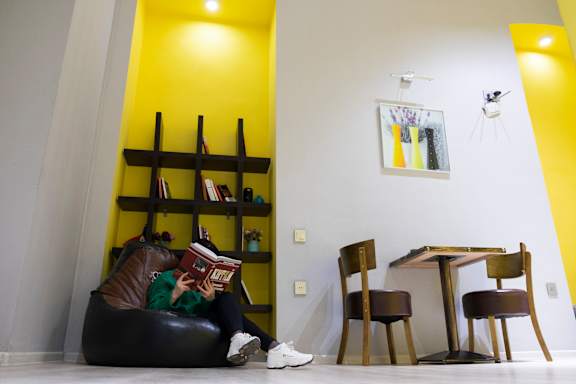
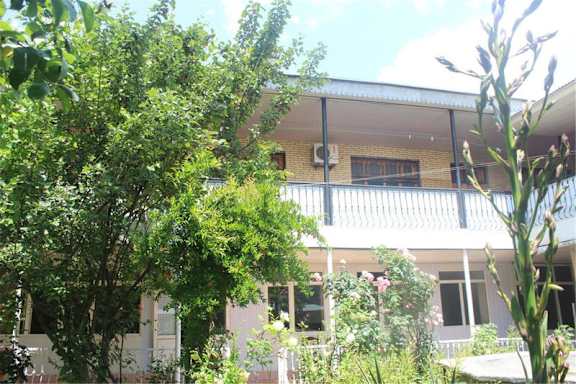
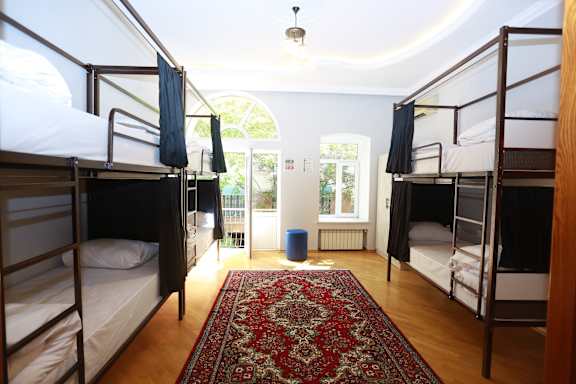
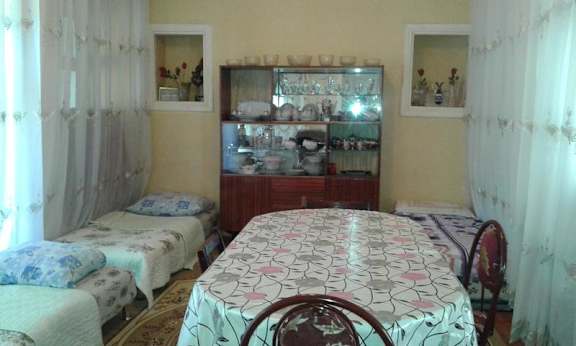
The highest-rated hostels in the country, live from Hostelworld. Almost all are in Baku, with guesthouses in Sheki and Quba booked directly.
 Sustainable
 Sustainable
The ones we get asked most.

Compare hostels across Azerbaijan — live prices, real reviews and free cancellation on most bookings. Then meet the people already there in the app.

 Get the App.
 Get the App.