Centro
EverythingAround Parque Central.

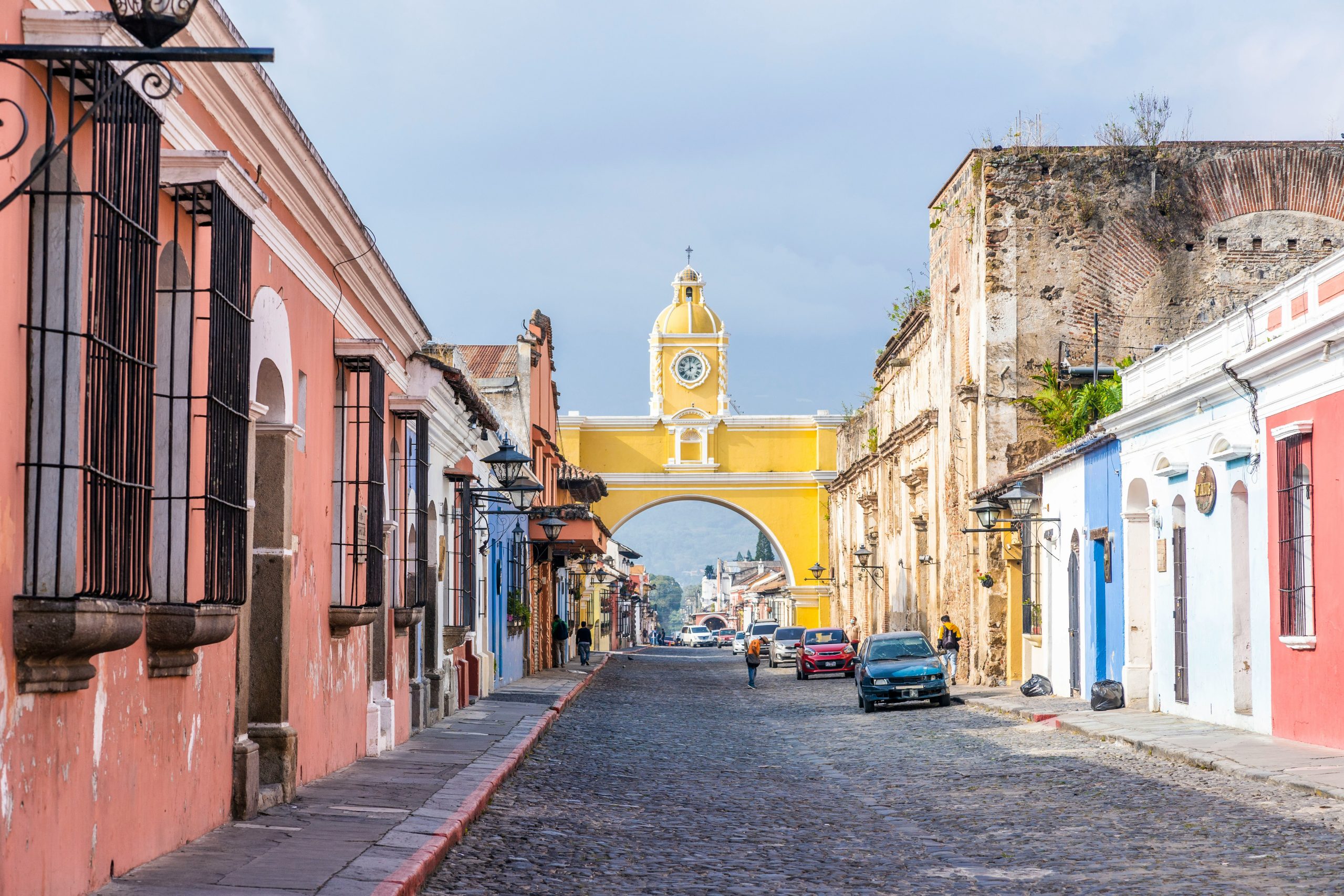
Guatemala's colonial jewel: cobbled streets and ruined churches under three volcanoes, the overnight hike up Acatenango to watch Fuego erupt, coffee farms, rooftop bars and some of the best-value Spanish schools anywhere.
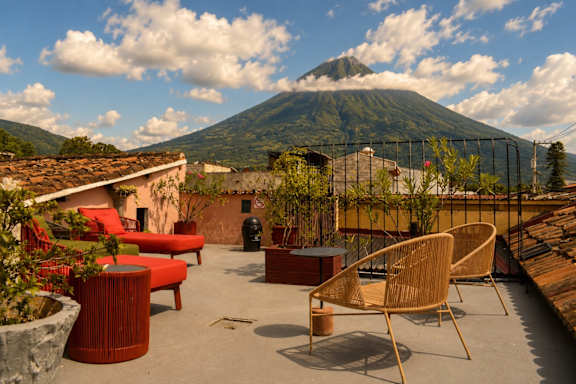
Antigua Guatemala was the capital of Spanish Central America until earthquakes in 1773 led the government to move to what is now Guatemala City. The town was never fully rebuilt, and its grid of cobbled streets, pastel houses and broken baroque churches is now a UNESCO World Heritage Site, at around 1,500 metres, with spring-like days and cool nights.
Three volcanoes surround it: Agua, Acatenango and Fuego, one of the most active in Central America. The overnight hike up Acatenango, camping opposite Fuego as it erupts, is the highlight of many trips, and Pacaya, a shorter active volcano, is an easy afternoon trip.
Antigua is the main hub of the Guatemala backpacker trail, with dozens of Spanish schools, coffee farms on the slopes, markets and rooftop bars. During Semana Santa, its processions over carpets of coloured sawdust are among the most spectacular in the world. Give it four days, or weeks if you study Spanish.
The centre around Parque Central for everything, or the quieter streets to the south and east.
Around Parque Central.
Residential streets near the ruins.
Orange labels are neighbourhoods, dots are the 12 top-rated hostels. Map data from OpenStreetMap contributors.
Climb Acatenango on an overnight trek, camping at around 3,600 metres opposite Fuego as it erupts through the night; go with an operator that provides warm gear. For something shorter, hike Pacaya, an active volcano where you can see old lava fields.
Walk to the Cerro de la Cruz lookout for the view over town and Volcán de Agua, wander the ruins of La Merced, the cathedral and the Convento de las Capuchinas, and pass under the Santa Catalina arch.
Tour a coffee farm on the volcano slopes, browse the market and the Nim Po't textile shop, and take Spanish lessons with a homestay.
Walking the cobbled streets, Parque Central, the Santa Catalina arch and the Cerro de la Cruz lookout costs nothing.
The market and the facades of the ruined churches are free to see.
Some ruins, museums and all volcano hikes charge.
Comedores and the market serve set lunches for €3 to €5, and street stalls sell tostadas, chuchitos and rellenitos for under a euro. Try pepián, the national stew.
Antigua also has some of the best restaurants and cafes in the country, and coffee from the surrounding farms.
A 10 per cent tip is customary in restaurants, and is sometimes already added to the bill.
Antigua has the liveliest nightlife in Guatemala outside the capital, with rooftop bars facing the volcanoes, courtyard bars and salsa nights.
Bars close around one in the morning by local rules.
Gallo beer costs €1.50 to €3. Walk in groups or take a tuk-tuk late at night.
Guatemala City airport is about an hour away by shuttle or Uber, depending on traffic. Tourist shuttles link Antigua with Lake Atitlán, Xela, Semuc Champey, El Paredón and the borders.
Chicken buses are cheap, but avoid them with luggage or after dark.
The town is walkable; tuk-tuks and taxis cover short hops.
Antigua is pricier than the rest of Guatemala, but still cheap. Dorm beds start at around €8 to €15 a night. Comedor lunches cost €3 to €5.
Acatenango treks cost about €60 to €110 with gear and food, Pacaya about €15 to €25, and a week of Spanish school with homestay about €150 to €250.
Cards work in many places, but carry cash for markets and tuk-tuks.
Antigua is one of the safest places in Guatemala, with tourist police on the streets. Still, avoid walking alone late at night and keep phones out of sight.
Only hike volcanoes with registered operators: robberies have happened on trails, and access closes when Fuego is more active. Climbing Fuego itself is banned.
Do not drink the tap water; bottled and purified water is cheap everywhere. In an emergency, call 110 for the police, or 1500 for PROATUR, the tourist assistance line.
Volcanoes, lakes and coffee.
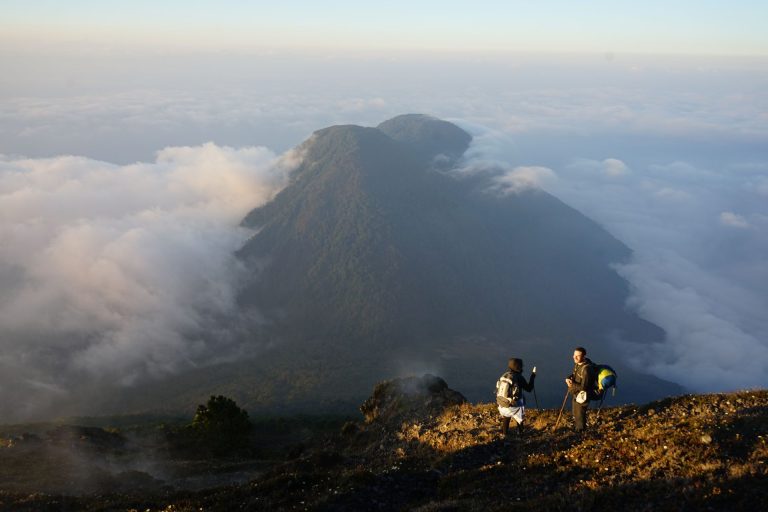
Watch Fuego erupt.
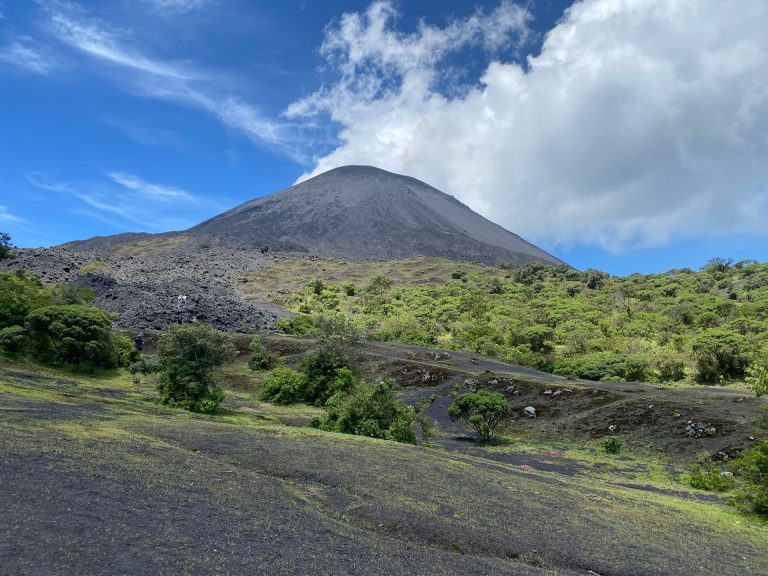
An active volcano.
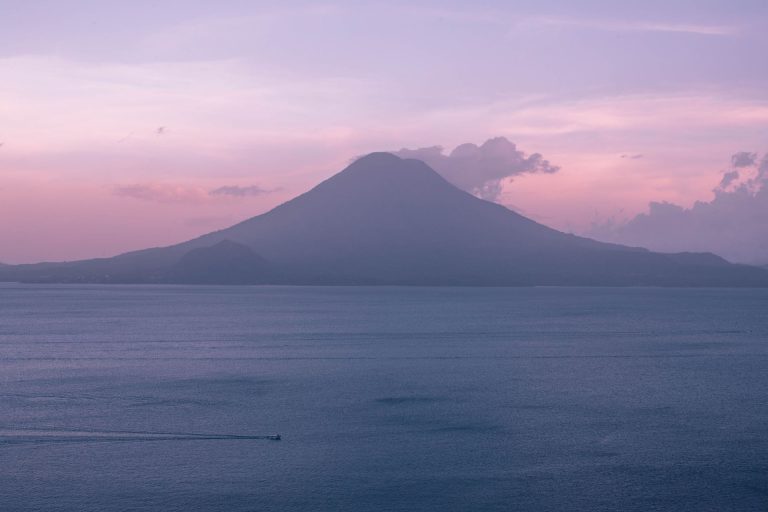
Villages and boats.
Semana Santa, kites and the devil.
Processions over sawdust carpets.
Giant kites over the cemetery.
Bonfires to burn the devil.
The highest-rated hostels in Antigua, live from Hostelworld. Prices and availability are live on each property page.
November to April is the dry season, with clear volcano views. May to October brings afternoon rain, though mornings are often clear. Semana Santa, in March or April, is the busiest week of the year.
Average highs, rounded. Cold nights at 1,500 metres.
Per night, for one person, based on Antigua prices.
Treat these as a guide. Volcano treks and Spanish school cost extra.
The ones we get asked most.

Compare hostels across Guatemala: live prices, real reviews and free cancellation on most bookings. Then meet the people already there in the app.

 Get the App.



 Get the App.